*This column is part of a relay series on circular design produced in collaboration with Mirai wo Oshiete! Amita-san, an owned media platform operated by Amita.
The circular economy is often described as a means of decoupling economic growth from resource use and environmental impact, and it is frequently discussed as a new economic model that reconciles “the environment” with “the economy.”
At the same time, as illustrated by the SDGs Wedding Cake model proposed by Johan Rockström and colleagues at the Stockholm Resilience Centre, there is in reality a layer called “society” between “environment” and “economy,” and the three cannot be considered in isolation. Economic activity exists as part of a social system that is shaped through the process of building a harmonious relationship between the natural environment and human beings.
With that in mind, this article focuses on the social dimension of the transition to a circular economy and examines how the circular economy can create value within communities and society at large.
The Circular Economy and Social Impact
Beyond its environmental impacts—such as reducing CO₂ emissions and waste and conserving and restoring biodiversity—what kinds of social impact can the transition to a circular economy generate?
Interest in the social impact of the circular economy is growing worldwide year by year. According to research by Melanie Valencia and colleagues, “The social contribution of the circular economy” (2023), publications addressing the social dimension of the circular economy began to increase gradually from 2015, and in recent years surged from 94 in 2019 to 443 in 2022.
The social dimensions associated with the circular economy span a wide range of themes: quality-of-life topics such as physical and mental health, education and skills development, and increased employment opportunities; social cohesion topics such as strengthening a sense of belonging in local communities, building connections between different groups, and contributing to the local area; themes related to democracy and governance such as social justice and participatory decision-making; and diversity and inclusion.
Given that the COVID-19 pandemic, which spread in 2020, disrupted global supply chains, restricted movement, and prompted people to rediscover the value of their connections to places, communities, and the land, it is a natural development that over the past several years the circular economy has been reframed as a broader concept capable of addressing a wide range of social challenges as well. A symbolic moment in this shift was Amsterdam’s publication in April 2020 of the “Amsterdam City Doughnut“—the world’s first adoption of the concept of Doughnut Economics within a circular economy strategy.
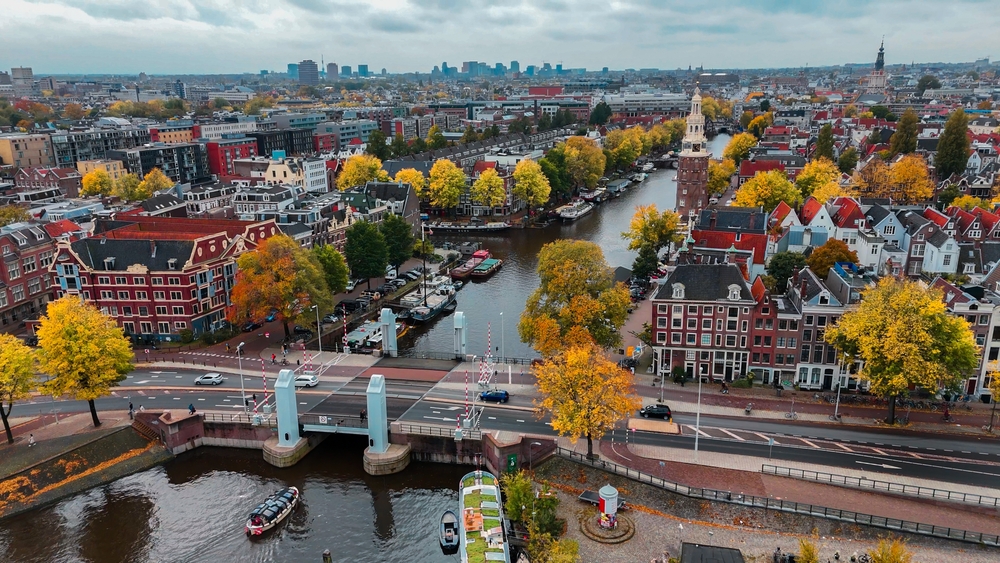
The city adopted the Doughnut Economics framework—which aims to achieve social justice within planetary boundaries—to complement the social dimension of the circular economy, and has developed its own sustainable urban strategy through a “City Portrait” that reconsiders what prosperity means for Amsterdam from four perspectives: environmental, social, local, and global. (Reference: IDEAS FOR GOOD, “[European CE Special Feature #15] Building a Circular City with Doughnut Economics: Amsterdam’s Circle Economy, Part 1“)
Tightening the Loop Amplifies Social Impact
In the circular economy, inner loops—sharing, reuse, and repair, which keep products in use for as long as possible while preserving their value—are prioritised over recycling, which requires energy to break products back down to the raw material level.
Prioritising these inner loops is clearly important both for preventing the loss of economic value and maximising value creation per unit of resource, and for reducing environmental impact. What deserves consideration here, however, is that prioritising inner loops has the potential to maximise not only environmental and economic impact, but social impact as well.
The sharing economy, for example, has the potential to increase opportunities for people to meet and connect through the sharing and lending of goods. Not every sharing business nurtures the relational capital (social bonds) of a local community, yet for anything to keep being shared, a certain stock of trust capital must first accumulate and circulate within that community. The best circular business models of this kind both build the local and social relational capital that is essential to business success and are in turn accelerated by that capital—a mutually reinforcing relationship.
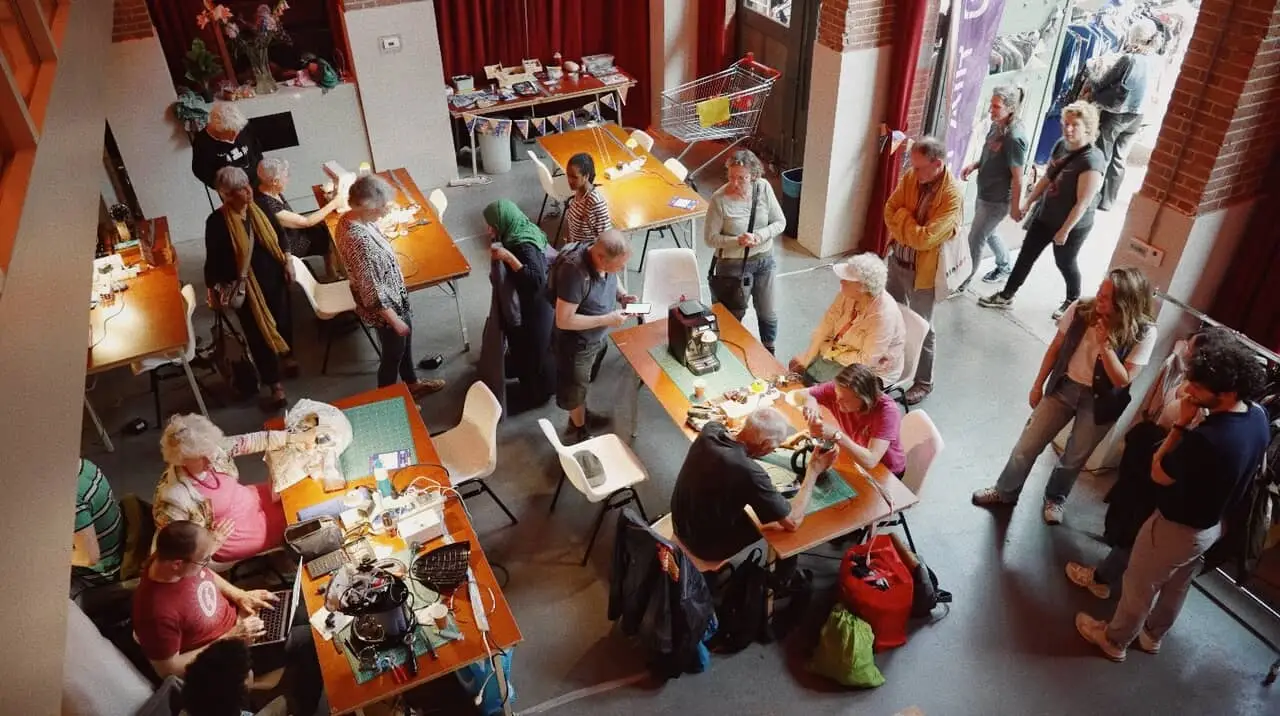
Our company recently produced a documentary, “The Repair Cafe,” about the Repair Café movement that began in Amsterdam and has since spread around the world—and the Repair Café is itself a perfect example of a doughnut-shaped business model.
When local residents visit a café to repair something broken, they not only recover or enhance the value of a cherished object; they also connect with the local community, care for their own wellbeing, and rediscover the creative confidence to make a better future with their own hands. The Repair Café repairs not only broken objects, but also people’s spirits, local communities, cities, and the future itself.
The energy source that keeps the inner loops of the circular economy turning is not fossil fuels but human beings. Unlike recycling, which uses externally supplied energy to break products back down to raw materials, businesses built around sharing, repair, and maintenance place people at the centre of the service engine. These services are also generally labour-intensive, and because service quality improves when provision is close to the customer, they tend to create more jobs near users rather than at manufacturing sites. The result is that capital outflows are suppressed, the rate of economic circulation within the local area rises, and wealth is distributed more broadly across the value chain.
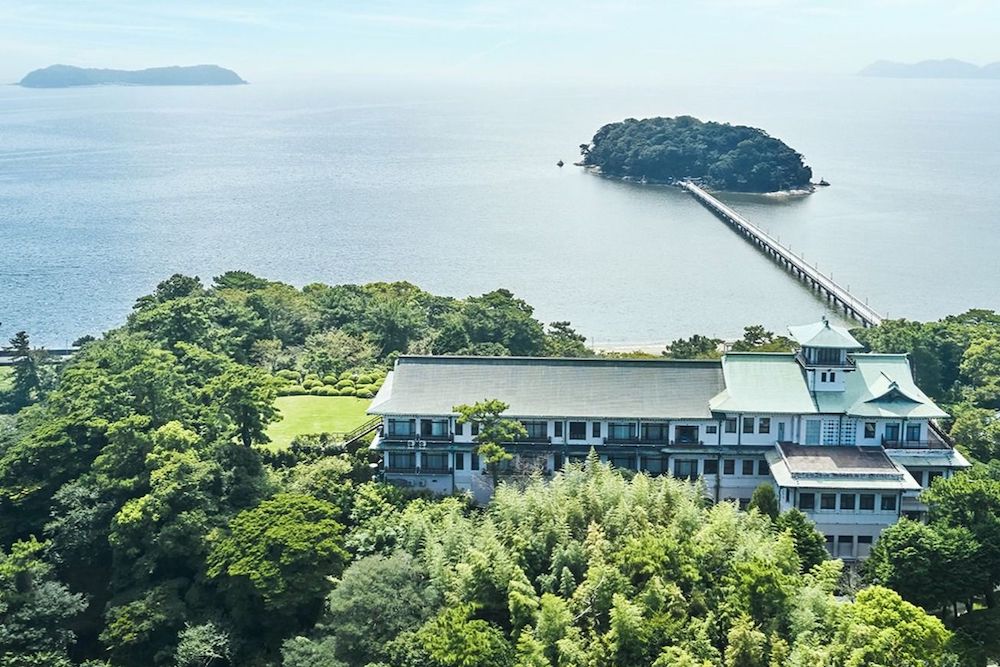
From an employment perspective, the Dutch firm Circle Economy offers the “Circular Jobs Monitor,” which visualises the degree of a city’s circular economy transition through the lens of employment. In Japan, Gamagori City in Aichi Prefecture, Circle Economy, and Harch Inc. recently jointly published Japan’s first circular employment dashboard, the “Gamagori Data Explorer.”
This dashboard defines jobs related to the circular economy transition as “Circular Jobs” and quantitatively shows the proportion of circular jobs within a city’s total employment. By combining the size of employment in each sector with its circular job rate, it is possible to identify which industries should be prioritised for skills development and education toward the circular economy transition—making it a practical indicator for local governments formulating circular city policy. Another attractive feature is that the circular job rate can be calculated using open data from national and local governments.
Regardless of industry or business model, it is always people who drive the transition to a circular economy. Thinking about circularity through the lens of employment is just as important as environmental and economic indicators, and is indispensable from the perspective of achieving a just transition to the circular economy.
French thinker Alexandre Lemille has also proposed the concept of a “Circular Humansphere,” adding a human dimension to the biosphere and technosphere already depicted in the circular economy’s Butterfly Diagram.
Human-derived energy—the capacity to keep moving, replenished by adequate sleep and food—can be understood as a form of renewable energy. Moreover, unlike biological resources such as biomass, which are in continuous decline, or finite technical resources, the human population is projected to grow to around ten billion by 2050, making humanity the one resource that is actually increasing. This line of thinking can also be applied to debates about the shift from car-centred cities to walkable or cycling cities—that is, human-centred cities.
The realisation of the “15-minute city”—where every facility needed for daily life, from shops and hospitals to schools, is accessible within fifteen minutes on foot or by bicycle—is said to benefit the environment, society, and the local economy alike. In the same way, prioritising inner loops in the circular economy has the potential to increase impact across all three dimensions: environment, economy, and society.
Building Circular Neighbourhoods
In urban spaces where large numbers of people live in high density yet remain weakly connected to one another, circular economy models that generate connections between people become all the more important.
A useful concept here is the “Circular Neighbourhood,” proposed by the UK’s Ellen MacArthur Foundation as a way of thinking about locally rooted, community-scale circular economies.
The Foundation describes the neighbourhood as a unit large enough to demonstrate community action and interaction with urban systems, yet small enough to set clear project goals and mobilise local stakeholders—residents, community groups, and local businesses. It emphasises the importance of neighbourhood-level projects as a means by which people can see and feel the transition to a circular economy in their everyday lives.
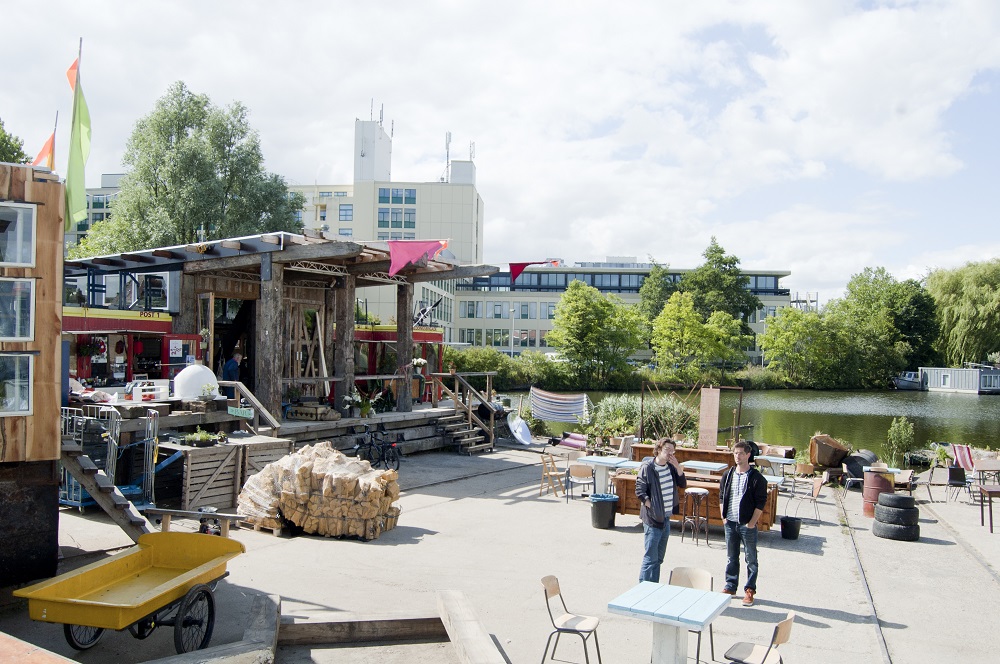
People connect through participation in circular activities within a radius of roughly two kilometres—a scale at which neighbours can recognise one another—and in doing so share visible change and mutual benefit. Here, we translate “Circular Neighbourhood” as 循環地縁 (junkan chien, or “circular local bonds”), going beyond a mere spatial boundary to encompass the loose, neighbourly connections that the circular economy generates within a community.
Even in the major metropolis of Tokyo, there are many activities and hubs that contribute to building exactly these kinds of circular local bonds: “RINNE BAR,” where visitors can enjoy DIY upcycling over a drink; “élab,” a new hub for choosing and practising a circular everyday life; “SHIBAURA HOUSE,” which operates a waterfront circular lab; “Shimokita Engei-bu” (Shimokita Gardening Club), which presents new forms of urban greening and community gardening; “comoris,” a shared-forest initiative that grows urban woodlands; “Tokyo Urban Farming,” whose concept is “Let’s turn Tokyo into an edible forest”; and “CSA LOOP,” which combines community-supported agriculture (CSA) with food circularity.
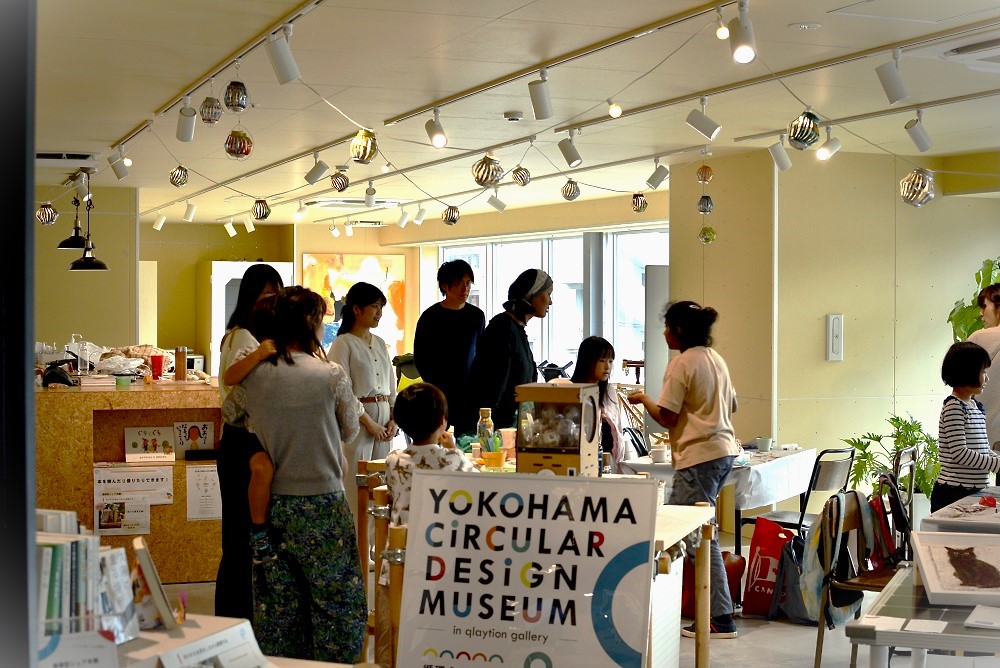
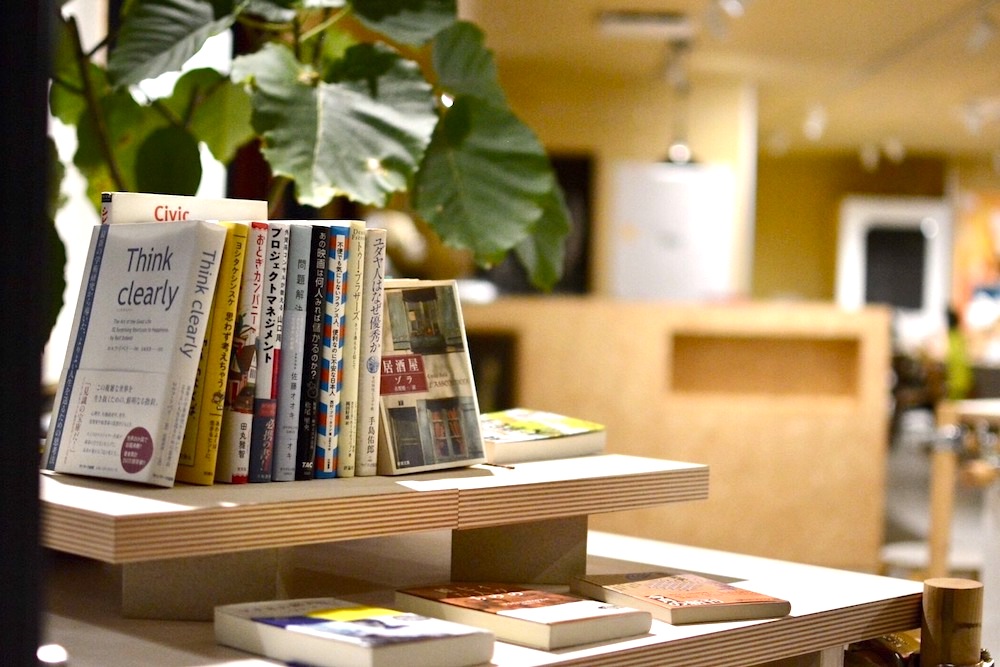
Since 2023, our company has operated “qlaytion gallery,” a local circular hub in Yokohama, Kanagawa Prefecture, running a variety of activities to embed a circular lifestyle in the community—including a local book-sharing service, the sale and collection of reusable bottles, and upcycling workshops using materials brought in by local residents.
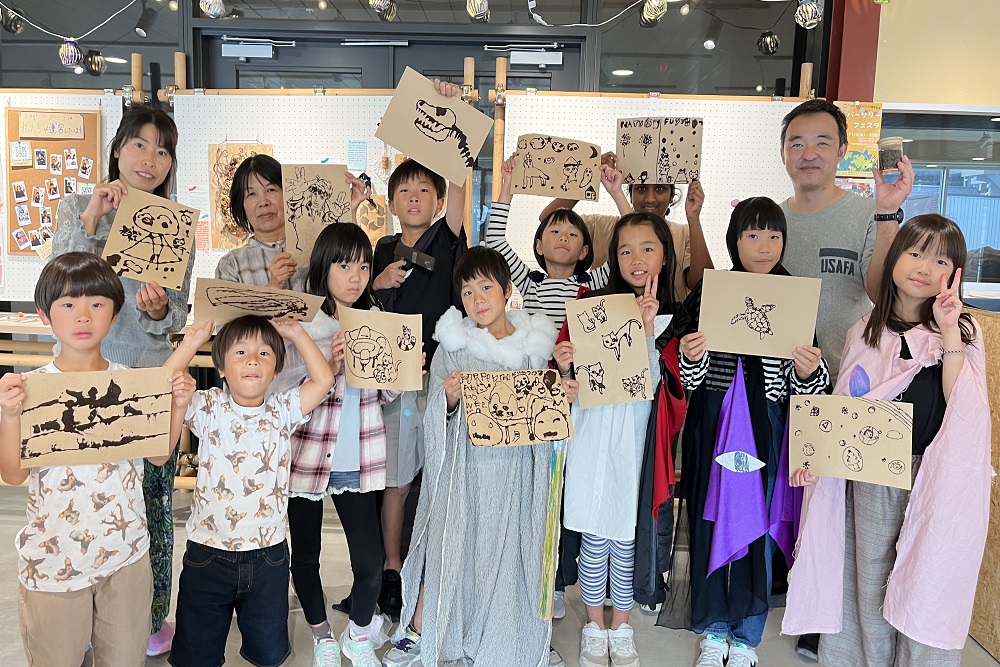
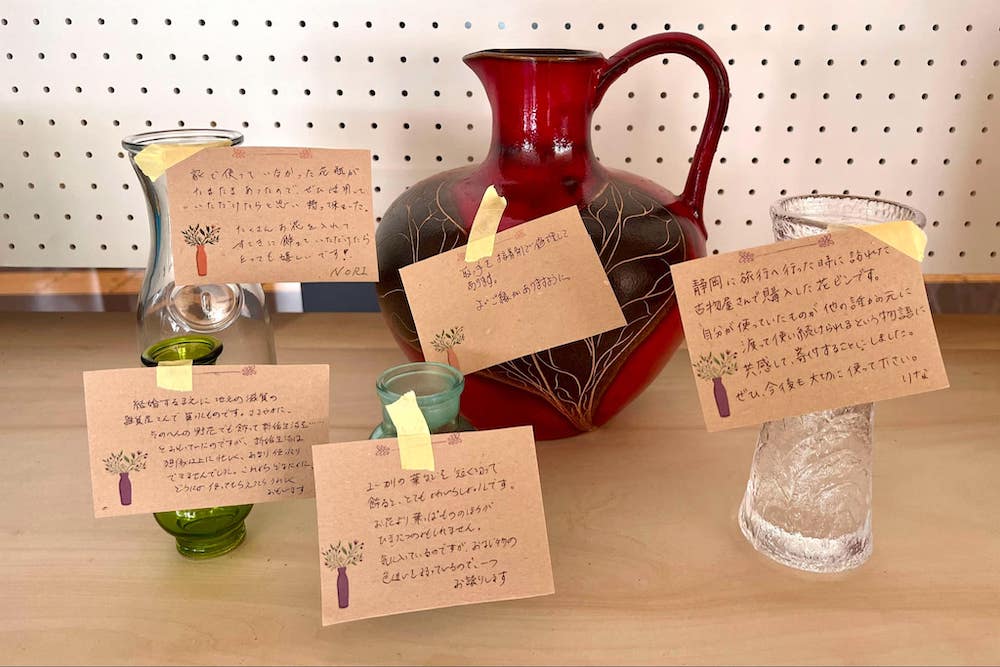
We also recently collaborated with “5% Garden,” a brand that rethinks the living environment of gardens and garden-gazing, to hold a circular workshop in which unwanted vases collected from the local community were used to create bouquets of branches and flowers. The circulation of vases brings more greenery into everyday neighbourhood life, and the process itself generates new connections—making it another effective opportunity to nurture circular local bonds.

“MEGURU STATION®,” operated by Amita, is another excellent example of a initiative that generates social value—including local connections and the promotion of residents’ wellbeing—through participation in the circular economy.
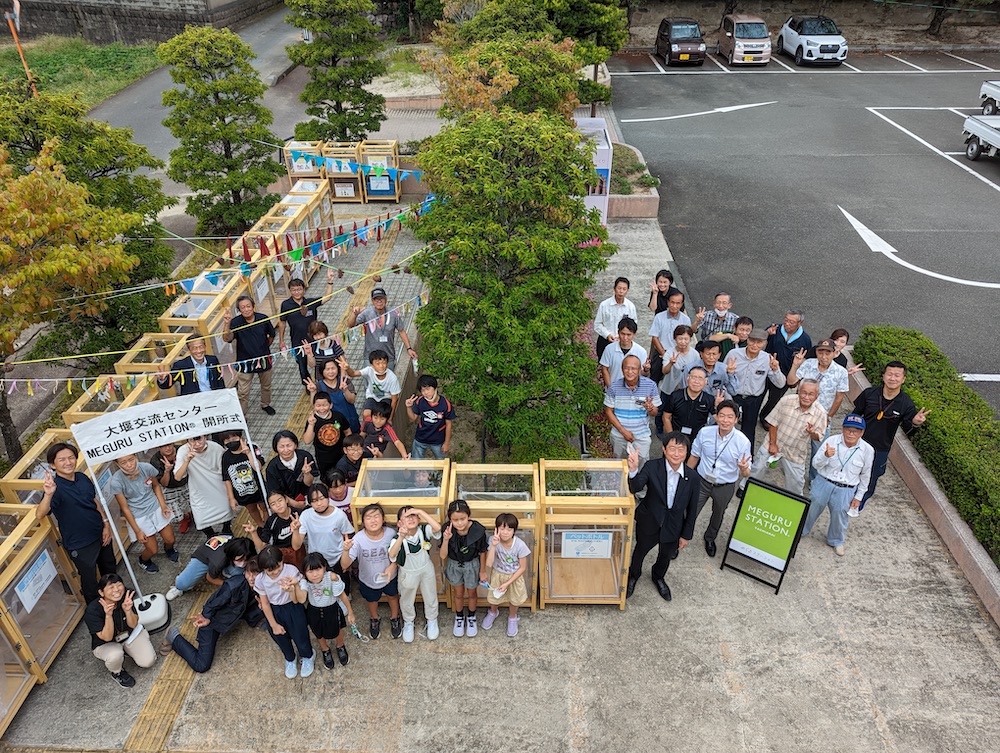
What these hubs share is that, through activities rooted in their localities, they do more than serve as nodes for resource and nutrient circulation that promote urban metabolism—they also bring organic connections to the community and exert a direct influence on people’s lifestyles.
A city that nurtures many such circular local bonds possesses not only hard infrastructure but also the invisible infrastructure of trust and connection among residents—an infrastructure of safety and security—giving it greater resilience in the face of natural disasters and economic downturns, and enabling it to flourish over the long term. It is often said that the circular economy cannot be achieved by any single person or company, and this social and community relational capital is precisely the vital infrastructure on which the circular economy depends.
What Urban Repair Requires Is Civic Pride
As described above, through the transition to a circular economy we can regenerate not only the natural environment but also society and local communities. Circular local bonds—spaces where people can participate in the circular economy easily and enjoyably, and in doing so forge new connections—function as broad-sense repair hubs for the local communities and social fabric that are fraying under the linear economy.
The key point about repair is that the need for it only arises when there is an “attachment”—a desire to keep using something even after it breaks. As explained in the previous column, the desire to repair an object does not emerge unless its emotional durability exceeds its physical durability. This “attachment” resides not only in objects but also in human relationships, communities, and cities. In that sense, people’s attachment to their neighbourhood or city—their civic pride—can be reframed as an indicator of that place’s repairability.
Toward the Circular 15-Minute City
Furthermore, the source that cultivates this attachment and civic pride is participation in circular placemaking—intervening in and engaging with the local area as a maker rather than merely a consumer. Seen in this light, what we need to design is the trigger that transforms people from consumers of a place into its makers, and circular local bond hubs function as exactly that kind of space and experience. By serving as entry points that draw people into the new system of the circular economy and steadily growing the number of participants in that system, the transition advances naturally.
Maximising the social impact of the circular economy therefore depends on how many hubs that nurture circular local bonds cities and regions can cultivate. Borrowing the concept of the 15-minute city, what we need to build is the Circular 15-Minute City: a neighbourhood designed so that access to diverse circular activities—reuse, sharing, repair, collection, and more—is woven into the fabric of people’s everyday routines.
Just as it is difficult to sell a football in a country with no football culture, it is difficult to sell circular materials and products in a place where a culture of circularity has not taken root. Companies working on the circular economy would do well to turn their attention to the “society” layer that sits between “economy” and “environment,” and to consider investing in the trust capital and relational capital that are indispensable for accelerating circularity.
【Related articles】
Making Society “Even Better” Through Circular Design: A Top-Level Dialogue Between Harch and Amita (Mirai wo Oshiete! Amita-san)