The Public Relations Office of Japan’s Cabinet Office released preliminary results on October 16, 2026 of its “Public Opinion Survey on the Circular Economy.” The survey was conducted by mail among 3,000 Japanese nationals aged 18 and over nationwide, with 1,474 valid responses received.
Only 13.4% Understand the Meaning of “Circular Economy”
The survey revealed that the term “circular economy” has yet to take root among the public. Only 13.4% of respondents said they understood the meaning of the term, while 61.1% said they had never heard of it. Meanwhile, 47.4% said they understood the meaning of the 3Rs (Reduce, Reuse, Recycle).
High Awareness of Importance, but Actions Remain Limited to Familiar Habits
On the other hand, 97.4% of respondents said they consider waste issues important in their daily lives, and 85.4% said they make efforts to reduce waste or recycle.
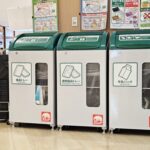
However, these efforts were mostly limited to familiar actions such as sorting waste and using refill products. While 42.4% said they value repairing items to use them longer, only 33.6% said they actually do so. Similarly, while 29.8% said they value purchasing products made with recycled materials, only 18.5% said they actually do so. Only 8.1% said they had used rental, subscription, or sharing services—ways of using products without owning them—within the past year.
Regarding the transition to a circular society, many respondents conditioned their support on maintaining current living standards. The most common response, at 55.1%, was that the transition “should proceed as long as living standards do not change,” while 19.8% said it “should proceed even if living standards decline.” As for what they most hoped to achieve through this transition, “revitalization of local communities” ranked highest at 32.6%, followed by “achieving carbon neutrality” at 28.8%.
40% Say They Would Not Buy Recycled-Material Products If More Expensive
Regarding products made with recycled materials, 63.0% of respondents associated such products with environmentally conscious companies, while 24.4% expressed concerns about quality. Price was also a significant barrier: 39.2% said they “would not buy” recycled-material products if they were more expensive than conventional alternatives. Among those willing to pay more, the most common acceptable price premium, cited by 37.3%, was “up to 10% higher.”
Few respondents said they consciously consider environmental factors when making purchases. Only 42.9% said they are conscious of green purchasing when buying products, lower than the 56.3% who said they are not. As for reasons for purchasing refurbished or reused products, 61.5% cited “lower price,” far outweighing the 17.3% who cited “environmentally friendly.”
74.8% Aware of Link Between Recycling and Economic Security
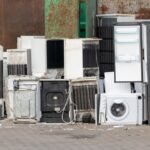
Regarding the recovery of rare earths and other rare metals from discarded home appliances and batteries—and its potential contribution to economic security—74.8% of respondents said they were aware of this connection. However, among those who were aware, 8.7% said they still kept unused appliances or batteries at home rather than recycling them. Among those who were not aware, 48.5% said they would now like to cooperate with such recycling efforts after learning about this connection.
Technology Development and Continuation of Plastic Bag Fees Seen as Key Policies
Asked what measures are necessary to advance waste reduction and recycling, the top responses were “development of recycling technologies” (53.9%), “continuation of the mandatory charge for plastic shopping bags” (51.4%), and “awareness-raising activities in schools” (47.2%).
The survey was conducted to gauge public attitudes toward the circular economy and to inform future policymaking. Detailed results broken down by demographic attributes are expected to be released in a final report.
【Reference】“Public Opinion Survey on the Circular Economy (Preliminary Results)”