A joint meeting of the Ministry of Economy, Trade and Industry (METI)’s Industrial Structure Council and the Ministry of the Environment’s Central Environment Council compiled an evaluation and review report on the implementation of Japan’s small appliance recycling system, which METI published on October 9, 2026. Collection volumes have not reached the target, and “reverse-payment” transactions—in which municipalities pay processing fees to hand over used appliances to nationally certified operators (ninka jigyosha)—have become increasingly common, now accounting for over half of all transactions. In light of this situation, as well as a sharp rise in fire accidents caused by lithium batteries, the report recommends improving collection methods, upgrading material recovery processes, strengthening fire-prevention measures, and adding four new categories—including mobile batteries—to the list of covered items. The annual collection target of 140,000 tonnes was left unchanged.
A “Promotion-Type” System for Resource Security and Economic Safety
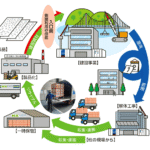
The Act on Promotion of Recycling of Small Waste Electrical and Electronic Equipment (commonly known as the Small Appliance Recycling Act) took effect in April 2013. Under this scheme, certified operators collect used small appliances from a wide area, then dismantle, shred and sort them before passing the materials on to smelters and other processors as raw material. Unlike Japan’s other item-specific recycling laws, which impose obligations on manufacturers and mandate a single method, this is a “promotion-type” system in which stakeholders voluntarily cooperate and devise their own approaches to collection and recycling.
The report opens by noting that Japan relies heavily on imports for rare metals and other mineral resources, and that mining and smelting capacity is concentrated in a small number of countries. For this reason, it argues, recovering and reusing valuable metals from end-of-life products matters not only for resource circulation but also for economic security. The report also points out that much of the recyclable material generated domestically is currently incinerated or exported, and argues that Japan should aim to secure both the quality and quantity of recycled materials and build an international resource-circulation network centred on Japan, leveraging the country’s smelting technology and recycling expertise.
Collection Volumes Down from Their Peak, with Wide Gaps Between Municipalities
Participation in the system continues to expand. As of June 2025, approximately 86% of municipalities (by number) and about 95% (by population) were either “currently collecting and processing” small appliances or “coordinating toward implementation.” As of September 2026, there were 60 certified operators, with multiple operators certified to collect in every one of Japan’s 47 prefectures.
On the other hand, annual collection volumes have declined from a peak of roughly 102,000 tonnes in fiscal year 2020 to about 87,000 tonnes in fiscal year 2024. The report attributes this to factors such as a decline in the volume of small appliances in circulation and the growing lightness of products. In fiscal year 2024, certified operators recovered approximately 44,000 tonnes of metal through material recovery.
The report identifies disparities in effort among municipalities as a key reason collection volumes have not grown. Of the 1,486 municipalities that conduct collection, only 391—about 26%—achieved the benchmark of at least 1 kg per resident per year, which is used as a gauge of target achievement. Meanwhile, municipalities collecting less than 0.1 kg per resident accounted for about 43% of the population covered by collection programmes.
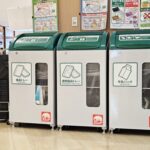
The report concludes that these gaps mainly stem from differences in collection methods. About 78% of municipalities achieving 1 kg or more used either “station collection” (gathering appliances together with recyclables at waste collection points) or “pick-up collection” (sorting appliances out from general waste at incineration or processing facilities). By contrast, “box collection”—placing collection boxes at public facilities or retail stores—was constrained by the effort required to bring items in and by limits on the size of items that could be deposited; the 615 municipalities using this method collected an average of just 0.1 kg per resident. The 395 municipalities using pick-up collection averaged 0.6 kg. The report calls for combining multiple collection methods to suit local circumstances and for expanding the range of items collected as much as possible.
Direct Collection by Electronics Retailers and Others Also Expanding
Direct collection by certified operators, bypassing municipalities, totalled about 33,000 tonnes in fiscal year 2024, with roughly 60% of that collected through electronics retail chains. Collection points at home centres, as well as collection via courier services and moving companies, are also spreading.
The report calls on certified operators to expand direct collection, including by increasing the number of collection points, and suggests that incentives such as reward points could help boost collection volumes. It urges retailers such as electronics chains to actively encourage customers to bring in old appliances at the point of sale, and expresses hope that individual companies will disclose their own collection results. To raise public awareness of the system—which has remained flat at around 60% recognition—the report stresses the importance of local governments and certified operators providing information on collection points and making the system more visible.
Reverse-Payment Transactions Exceed Half, as Profitability Worsens
The economics of the system have shifted substantially. In the early years, municipalities typically sold used small appliances to certified operators. According to the report, however, the share of reverse-payment transactions among items covered by the system rose from just 0.3% in fiscal year 2013 to 67.9% in fiscal year 2021, and stood at 54.9% in fiscal year 2024.
This shift is driven partly by rising costs for disposing of residual plastic waste, following tightened import restrictions on used plastics by China and other countries since 2019. The costs of fire-prevention measures—such as removing batteries, installing explosion-proof shredders, and adding fire-extinguishing equipment—are also thought to be contributing to the rise in reverse-payment transactions. In addition, gold, iron and copper together account for about 90% of the value of recovered metals, and the report notes that fluctuations in the prices of these metals significantly affect the profitability of certified operators.
Fires Caused by Lithium Batteries Have Surged Over Four Years
Fires have become an issue across the entire waste management system. According to a survey by the Association for Electric Home Appliances’ small appliance recycling programme, the number of fire incidents at certified operators’ facilities rose from 50 in fiscal year 2020 to 312 in fiscal year 2024. Relevant ministries established the Inter-Ministerial Liaison Conference on Comprehensive Measures for Lithium-Ion Batteries in October 2025, and compiled a Comprehensive Lithium-Ion Battery Measures Package at the end of December of the same year.
The report calls on municipalities to raise awareness of proper disposal methods, including through waste-collection calendars, and urges manufacturers to clearly label products that contain lithium batteries so consumers can identify them. It recommends that products with batteries that cannot easily be removed should be disposed of intact, without consumers attempting to dismantle them and extract the battery, while products with removable batteries should have the battery taken out before disposal. It also calls on the national government to support the introduction of battery detectors and smoke/fire detection and suppression systems.
About 60% of Plastic Goes to Thermal Recovery; Calls to Upgrade Material Recovery
Quality of material recovery is another area needing improvement. Of the plastic sorted by certified operators in fiscal year 2024, about 12,000 tonnes underwent material recovery while about 18,000 tonnes—roughly 60%—went to thermal recovery (incineration with energy recovery) instead. Citing the implementation of the Act on Promotion of Resource Circulation for Plastics (commonly known as the Plastic Resource Circulation Act) and rising demand for recycled plastic in the automotive sector, the report calls for promoting plastic recycling. It also calls for more advanced sorting to recover critical minerals such as palladium, nickel, cobalt and lithium contained in semiconductor substrates and lithium batteries, as well as for municipalities and certified operators to promote reuse.
Efforts also vary among certified operators themselves. About 10% of operators that obtained certification have not actually carried out small appliance recycling, and about 40% handle only “specified items” such as personal computers and smartphones. The report proposes publishing evaluations on a government website—covering factors such as operators’ track record of accepting items from municipalities and whether they handle all covered item categories—and, with operators’ consent, disclosing individual companies’ collection and recycling results along with their methods for erasing personal data.
Four New Items Added, Including Mobile Batteries
On covered items, the report recommends adding four categories to the current list of 28: heated tobacco devices, e-cigarette devices, mobile batteries, and portable power stations. The aim is to create more outlets for certified operators to take in these products once municipalities collect them. However, since many municipalities have already begun separate collection of lithium batteries and similar items, not all local governments will necessarily collect these newly added categories through the Small Appliance Recycling Act framework, so the report cautions that awareness-raising about the added items should be handled carefully.
Collection Target of 140,000 Tonnes Left Unchanged; To Be Reassessed in Fiscal Year 2030
The collection target of 140,000 tonnes was originally set at about 20% of the estimated 653,000 tonnes of small appliances discarded in 2011. Given the fiscal year 2024 results, the report concludes that raising the target at this stage would not be appropriate. Going forward, small appliances collected under other schemes—such as the certification system under the amended Act on the Promotion of Effective Utilisation of Resources and the Act on Advancement of Recycling Businesses—will be added to the total, after adjusting for double-counting, in pursuit of the overall target. The system will be reassessed around fiscal year 2030, with fiscal year 2029 set as the target year.
The report concludes that stakeholders should continue to cooperate and tailor collection and recycling methods to local circumstances, while the national government works to turn its proposed measures into concrete action, keeping an eye on international trends in resource circulation.
【Reference】Industrial Structure Council, Innovation and Environment Subcommittee, Resource Circulation Economy Working Group, Small Appliance Recycling Working Group Report
【Reference】Report on the Evaluation and Review of the Implementation of the Small Appliance Recycling System
【Related article】Ministry of the Environment Holds 60th Meeting of the Circular Society Subcommittee on June 10; Discusses Progress on Evaluating the Fifth Fundamental Plan for Establishing a Sound Material-Cycle Society