Mitsubishi Materials Corporation has decided to invest in equipment upgrades at its consolidated subsidiary Nippon New Metals Co., Ltd. aimed at strengthening domestic resource circulation and the stable supply base for tungsten. The investment will expand various facilities, including the wet smelting equipment at the Akita Plant, to increase capacity for producing ammonium paratungstate (APT) from tungsten scrap. The project has been certified by the Ministry of Economy, Trade and Industry (METI) as a supply chain resilience plan under the Economic Security Promotion Act (a law aimed at securing stable supplies of critical minerals and other strategically important materials), which supports the stable supply of critical minerals.
Through this investment, APT production capacity at the Akita Plant is expected to roughly double to an annual 2,400 tons (WO3 equivalent), with the investment amount projected at approximately ¥8 billion (about $54 million). Equipment installation will begin in stages from fiscal year 2026, with operations scheduled to start in April 2029.
Nippon New Metals is the only tungsten products manufacturer in Japan with integrated production capability spanning from tungsten concentrate to APT, tungsten oxide, tungsten powder, and tungsten carbide powder. Using recovered tungsten scrap and intermediate tungsten raw materials, the company supplies tungsten products to a wide range of industries, including cemented carbide tools, semiconductor and electronic materials, secondary battery-related materials, and medical products.
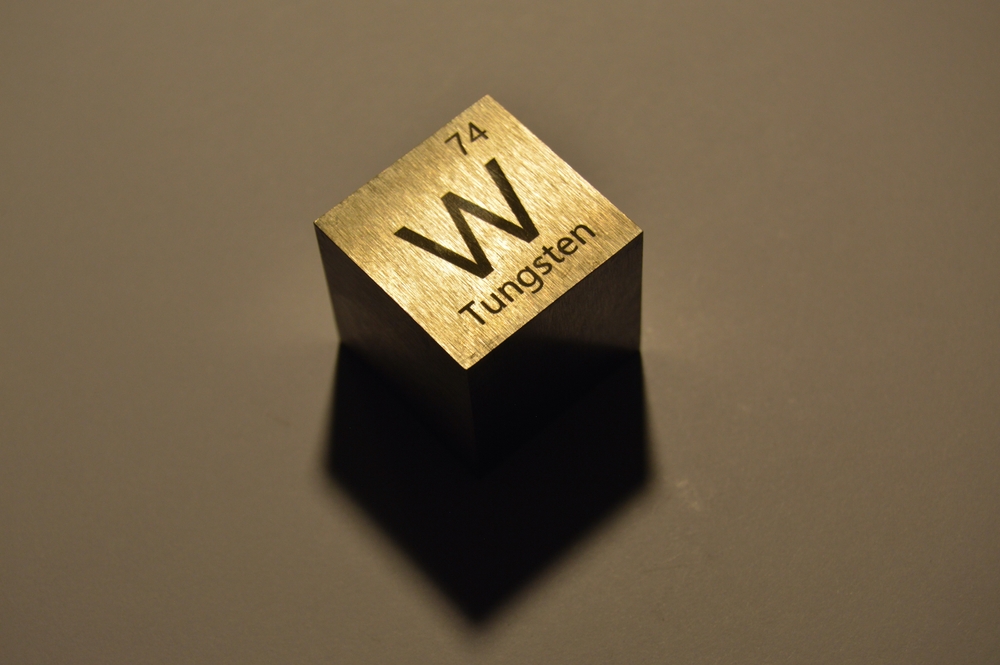
Tungsten is a critical mineral used not only in cemented carbide tools but also in a broad range of applications such as semiconductor and electronic materials, secondary battery-related materials, and medical products. However, Japan relies heavily on imports for its raw material supply, and growing dependence on specific countries combined with tightening export controls has increased uncertainty around stable procurement. While Nippon New Metals has worked to expand the utilization of tungsten scrap generated domestically, capacity constraints in recycling and wet smelting equipment relative to demand have made reducing dependence on imported intermediate raw materials and strengthening domestic supply capability an ongoing challenge.
Through this investment, the company aims to enhance in-house capacity from tungsten scrap through to APT, replacing approximately 1,200 tons per year (WO3 equivalent) of imported intermediate raw materials with domestically recycled materials. This is expected to contribute to reducing dependence on specific countries, strengthening the resilience of domestic supply chains, and promoting resource circulation for tungsten.
Under its Medium-Term Management Strategy (fiscal years 2026-2028), the Mitsubishi Materials Group aims to achieve a 100% recycling ratio at its tungsten product manufacturing sites by fiscal year 2030.
【Press Release】Investment to Expand Tungsten Recycling Capacity at Nippon New Metals — Approximately ¥8 Billion Investment to Strengthen Domestic Resource Circulation, Doubling APT Production Capacity
【Related Article】NTT and Mitsubishi Materials Establish Joint Venture to Expand Use of Recycled Materials, Building an Information Infrastructure for Resource Circulation
【Related Article】Mitsubishi Materials Invests in US E-Waste Recycling Company, Strengthening Upstream Secondary Material Supply Chain