On June 30, 2026, new estimates for fiscal year 2024 food loss volumes were released. The total stood at 4.61 million tonnes (down from 4.64 million tonnes the previous fiscal year), comprising 2.37 million tonnes from business sources (up from 2.31 million tonnes) and 2.24 million tonnes from households (down from 2.33 million tonnes). Japan has set a target of halving food loss by fiscal year 2030 compared with fiscal year 2000 levels; the business-source target was already met in fiscal year 2022, prompting a new, more ambitious goal of a 60% reduction. Government policy, a review of the so-called one-third rule (an industry convention under which food products must be delivered to retailers within one-third of their total shelf life), shifts in consumer awareness, and a range of other factors have all contributed to the sustained downward trend. Nevertheless, further reductions are called for on grounds of environmental impact, processing costs, food self-sufficiency, and the global imbalance in food distribution.
In recent years, a growing number of businesses have entered this space with solutions to these challenges. Food-loss reduction apps are one such avenue.
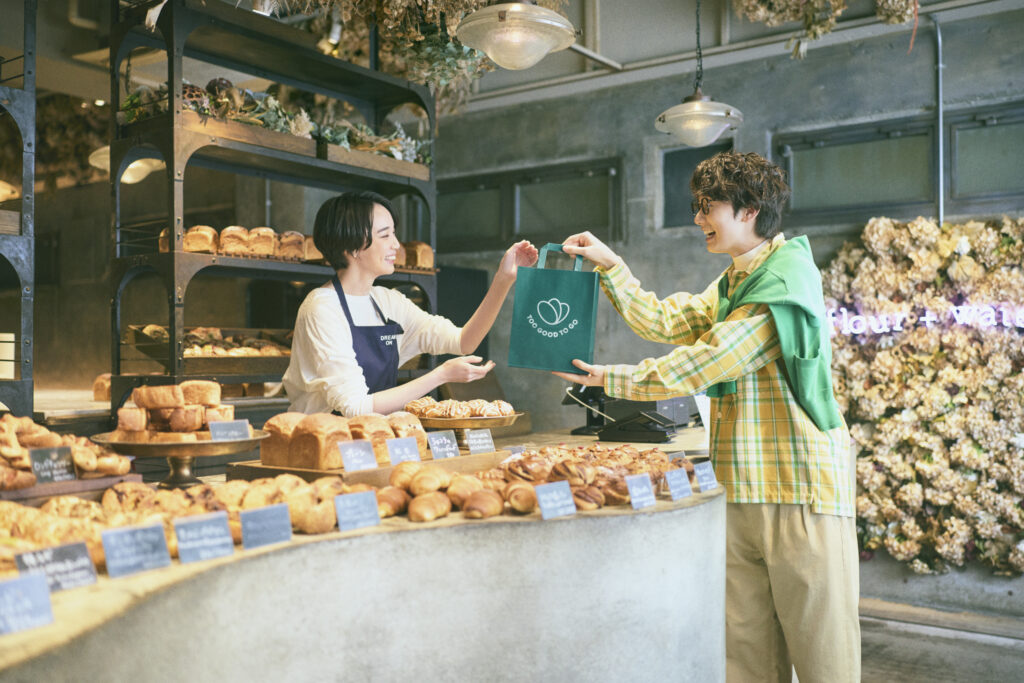
The pioneer in this field, Too Good To Go (hereafter TGTG), is a platform that enables retailers, restaurants, hotels and other food businesses to sell surplus or near-surplus items at less than half their original price. Operating in 21 countries worldwide, the platform has cumulatively prevented more than 600 million meals’ worth of food waste*. In 2025, TGTG made its first foray into Asia by establishing Too Good To Go Japan Co., Ltd. (hereafter TGTG Japan), with the service officially launching in January of the following year. Registered users in Japan have already exceeded 500,000, and the app briefly topped the overall download rankings—spreading through the domestic market at a pace that has exceeded all expectations.
Why did the company choose Japan now? And how does it intend to transform Japan’s food system through its service? We spoke with Kanako Shinohara, Head of Marketing at Too Good To Go Japan Co., Ltd.
Speaker profile: Kanako Shinohara, Head of Marketing, Too Good To Go Japan Co., Ltd.
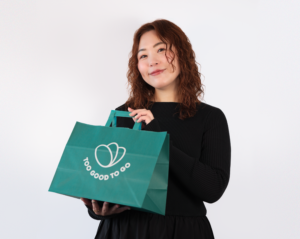 Shinohara joined Too Good To Go as its first employee in Japan, leading the country launch and overseeing all consumer-facing functions—from product experience design to brand, PR, CRM and growth. Previously, at Muji (Ryohin Keikaku Co., Ltd.), she led a cross-channel customer experience transformation underpinning the company’s “second founding,” with a focus on reforming food merchandising processes, advancing OMO (online-merge-offline) strategy, and driving fan marketing. At Toridoll Holdings Corporation, she supported the Japan launch of overseas brands and strengthened marketing governance both domestically and internationally, building the foundations for brand growth. A next-generation marketing leader in the lifestyle sector, she drives everything from marketing strategy formulation to organisational and process design and execution.
*In this article, we draw on definitions and data from the Food and Agriculture Organization of the United Nations (FAO) and Japanese public agencies. We use “food loss” (食品ロス) to refer to the discarding of edible portions across the food system as a whole, and “food waste” (フードロス) — in line with TGTG’s own terminology — to refer specifically to discards at the retail and food-service stages and beyond, which are the primary focus of the app.
Why enter Japan now?
TGTG was born in Denmark, sparked by a young entrepreneur’s determination to do something about the food waste he witnessed at a hotel buffet restaurant. Operating under the vision “WE DREAM OF A PLANET WITH NO FOOD WASTE,” the company pursues food-loss reduction through a range of business activities.
From Denmark, the service expanded across Europe, then into North America and Oceania. Now it has arrived in Japan. Why now? Shinohara cites three reasons.
The first is that Japan was both a natural next step in the company’s growth trajectory and an inevitable choice on the path to becoming a “truly global company.” “Over the past ten years, the know-how and track record we have built gave us the confidence that we could reduce food waste even in a culturally distinct market like Japan,” she says.
The second is the affinity with Japan’s spirit of mottainai (a Japanese concept expressing regret over waste, with connotations of cherishing the intrinsic value of things). “The word mottainai carries a slightly different nuance from the English ‘What a waste.’ The sensibility of treasuring things and feeling genuine pain at squandering them is exactly what our vision is about,” she explains.
The third is the accelerating momentum from government, industry and academia around food-loss reduction. It was precisely because public and private sectors are moving in concert, she says, that the company felt confident the timing was right for Japan. TGTG Japan has already announced a partnership with Shibuya Ward and is rapidly expanding its network of partner stores—including independent shops—by building credibility through local and government collaboration.
Creating a positive experience: “I am choosing to buy a delicious meal through TGTG”
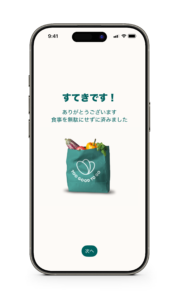 There is a particular communication style that the company holds dear in its Japanese marketing. Phrases used in its home markets—”You are a hero!”, “Fight for food waste,” and “Save food from going to waste”—are deliberately not used in Japan.
“That’s because food should fundamentally be something delicious and enjoyable. Words like ‘save’ inevitably carry a sense of ‘helping out’ or ‘doing someone a favour.’ Given Japan’s culture and context, we want people to feel that ‘I am choosing to buy a delicious meal through TGTG’—a quietly proud feeling that what they’re doing is positive for themselves, good for the planet, and good for the store. So instead of ‘save,’ we lead with the message that this is a positive, easy activity anyone can take part in.”
Sustainability and food are not, at their core, separate things—they are two sides of the same coin. People do not eat for the sake of sustainability. When the two are perceived as distinct, food loses its inherent richness, and the distance between food and sustainability grows. Shinohara’s words seem to speak to what food is, and should be, at its most fundamental.
She continues:
“The word ‘delicious’ here carries three meanings: Delicious (great taste), Delightful (enjoyable), and Beneficial (good value). Our goal is to get as many people as possible involved in reducing food waste, so we are very conscious of communicating in a way that removes any image of being preachy or high-minded, and lowers the psychological barrier to participation.”
In the same spirit of lowering barriers, TGTG Japan actively uses the tagline “The world’s No. 1 food-waste reduction app from Scandinavia.” This is a deliberate choice to reassure Japanese consumers—who tend to be cautious about overseas brands—by conveying a sense that “everyone is using this.”
What are TGTG’s three key strengths?
 Japan already has a wide range of food-loss initiatives and services. What sets TGTG apart? We asked Shinohara directly.
Framing the competition as “the rubbish bin,” she identifies three key strengths.
The first is scale and credibility: globally, TGTG has established partnerships with major international brands such as Starbucks and 7-Eleven, and has cumulatively prevented more than 600 million meals from going to waste. This track record translates directly into trust when approaching potential partner businesses in Japan.
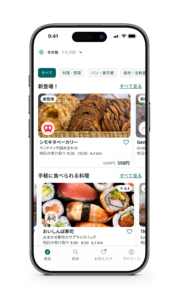
The second is an intuitive user interface, refined through ten years of iteration. “We prepare all sorts of materials to explain TGTG,” Shinohara says flatly, “but the fastest way is simply to have people try it.” The author can attest to this: downloading the app and making a first purchase took only a few steps. The app uses location data to surface nearby stores and allows users to search by station name—anyone comfortable with smartphone apps should find it straightforward.
The third is the “Surprise Bag” concept—essentially a lucky-dip bag whose contents are a pleasant mystery. This also reduces the burden on partner stores. Rather than listing individual items (e.g., “one salmon onigiri rice ball,” “one bonito-flake onigiri”), stores can list broad categories such as “4 onigiri” or “assorted bread” and offer the day’s surplus at less than half price.
A platform that encourages upstream optimisation and creates unexpected discoveries
 One question that caught the author’s attention was how much an app operating at the downstream end of the food chain can actually influence upstream decisions—the quantities produced or ordered in the first place. The risk that stronger downstream options (such as material recovery) reduce pressure to optimise upstream volumes is a challenge facing the circular economy well beyond the food sector.
According to Shinohara, there are two dimensions to this.
The first is data visibility. Because the app records daily how many Surprise Bags a store lists, it gives store operators a clear, ongoing picture of how much surplus they are actually generating. This insight can guide them toward more appropriate ordering and production volumes—potentially enabling upstream optimisation that reduces food loss at the source.
Eriko Sasaoka, producer at Aubrey House, a TGTG partner store, reflects: “Being able to visualise our daily surplus as we sell it has been useful not only for reducing waste but also for reviewing our production and procurement volumes, leading to more efficient store operations overall.”
The second dimension is risk mitigation. Some stores had previously held back on production or stocking up out of fear of losses caused by bad weather or other factors. Knowing that TGTG provides a reliable outlet gives them the confidence to produce and order without that fear. The data thus supports both optimisation—minimising food loss—and healthy business growth. That said, the precise contribution to upstream waste prevention will require further data accumulation and verification going forward.
Creating unexpected encounters
TGTG also functions as a platform that creates unexpected discoveries for both stores and consumers. For consumers, it opens doors to shops they would never otherwise have known about, enriching their food lives.
For stores, the company hears frequently that “students and younger customers who don’t usually come in are showing up” and that “customers who had drifted away have come back.” The platform appears to be functioning as a digital customer-acquisition channel that transcends the constraints of time and location.
Ayaka Sasaki of the Marketing Department at Krispy Kreme Doughnuts Japan Co., Ltd., another TGTG partner, notes: “Around 40% of customers who come in via TGTG are first-time visitors, so it has become a genuine touchpoint with new customer segments. Many of them return for a full-price visit after enjoying what they bought through TGTG.”
The author can speak to this personally: upon discovering that a shop normally walked past was offering a Surprise Bag, a visit revealed an exceptional product. Since then, the author has returned to that store regardless of whether a Surprise Bag is available. It may sound like an overstatement, but that unexpected encounter genuinely enriched the author’s food life.
Using the app as a gateway to genuine behaviour change
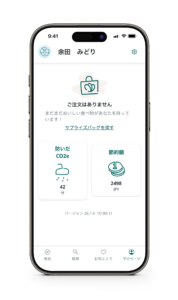 TGTG uses the app as an entry point to deepen consumers’ understanding of food loss and encourage a shift toward more responsible consumption habits.
“The app lets users visualise their environmental impact. But we hope people will first be drawn in by the ‘great value’ angle, and then, as they keep using it, develop a quietly proud, happy feeling that they’re doing something good—and that this becomes a prompt to reflect on their own lives and surroundings.”
Globally, the company runs an initiative encouraging users to apply the tags “Look, Smell, Taste” before discarding food. It is exploring how to adapt a similar approach for the Japanese market.
“Many people conflate best-before dates (indicating quality) with use-by dates (indicating safety), and assume they must throw food away once the best-before date has passed. Checking the condition of food around you with your own five senses before discarding it, and routinely choosing discounted items or Too Good To Go products when shopping—that is the genuine behaviour change we are aiming for.”
Beyond “sell or discard”: establishing redistribution as a third option
Awareness of food loss in Japan is gradually growing, but until now the dominant choice has been binary: sell or discard. Establishing “redistribution (sharing)” as a third option is, Shinohara says, the mission of TGTG Japan.
“Right now, in retail and food service, the main options are sell or discard. But there is a wonderful concept called food sharing—redistribution. Japan already has a culture of osusowake (sharing good things with others). So we would love for stores to think: ‘We have a few items left over today that we’d like people to try—let’s share them through TGTG.’ That’s the choice we hope they’ll make.”
The vision is one in which a digitally mediated platform emerges as the default option for translating awareness into action.
“Rather than selling only to the customers standing in front of you, or discarding what’s left, redistributing through digital channels could change the very nature of distribution in Japan. A physical store serves the catchment area around it, but digital transcends time and place. Being able to make an offer—’what if you could have this product?’—enriches customers and changes who stores are selling to. I hope that giving products a third option—redistribution—will ultimately transform the food system,” Shinohara concludes.
TGTG is, in the first instance, a service positioned at the downstream end of the food chain, making food sharing accessible to all. Yet it holds the potential to contribute to the circulation of the food system as a whole. Its possible impacts are wide-ranging: influencing upstream decisions around production and procurement volumes, shaping how packaging circulates when food is taken away, and nudging consumers toward lasting behaviour change. As Japan’s food-loss reduction efforts enter a new phase, the question is whether TGTG can establish itself as a piece of social infrastructure—a genuine third option connecting food distribution and consumer behaviour. Its true value is now being put to the test.
※All images in this article are provided by Too Good To Go Japan Co., Ltd.
【Related article】Too Good To Go, one of the world’s largest food-loss reduction apps, launches in Japan: 250,000 users in one week, No. 1 on the App Store overall rankings
【Reference】Publication of business-sector food loss volume (fiscal year 2024 estimate) Ministry of Agriculture, Forestry and Fisheries