The construction and building industry is indispensable to our lives and society, yet it is also one of the most environmentally burdensome industries on the planet. It accounts for approximately 37% of global CO₂ emissions and around 50% of all resource extraction, while construction and demolition waste makes up roughly 30–40% of total waste generated worldwide.
By 2050, approximately two-thirds of the world’s population is projected to live in urban areas, and annual global resource use (metals, fossil fuels, non-metallic minerals, and biomass) is estimated to nearly double from 90 gigatons (Gt) in 2018 to 167 Gt by 2060.
Against this backdrop, efforts to transition toward circular construction and architecture are accelerating around the world. Design practices aimed at decoupling the value of buildings and spaces from resource use and environmental impact are advancing globally—encompassing design for disassembly, adaptive design for long-term use, improved durability, and the use of reused, recycled, and renewable materials. The goal is to deliver values such as “comfort,” “safety,” and “security” not merely as properties of individual buildings, but as contributions to Earth’s broader systems.
In recent years, the concept of “Building as Material Bank”—treating buildings as temporary repositories of resources that can be disassembled and have their materials reused at end of life—has also been gaining traction, along with the “Material Passport,” a digital record that makes this possible.
Central to this transition toward circular construction is an infrastructure of “information.” Circular construction cannot be achieved by any single building in isolation. It requires a systemic, data-driven approach: visualising and forecasting the supply and demand of resources based on the quantity, type, and quality of material flows and stocks across an entire region, as well as the timing of new construction and demolition projects, and a banking function to balance these dynamics.
The startup taking on this ambitious and critically important challenge is NewNormDesign, which operates matinno, a material circulation platform that visualises the full lifecycle of building materials and provides a one-stop solution for material selection, matching, and circulation.
Operating under the mission “Shape the next generation’s landscape through the choice of building materials,” NewNormDesign (hereafter NND) is a sustainable architecture and spatial design firm founded in 2021, during the COVID-19 pandemic. The company has two faces: that of an architecture studio handling circular design for individual projects, and that of a startup developing a circulation platform designed to transform the entire system surrounding construction.
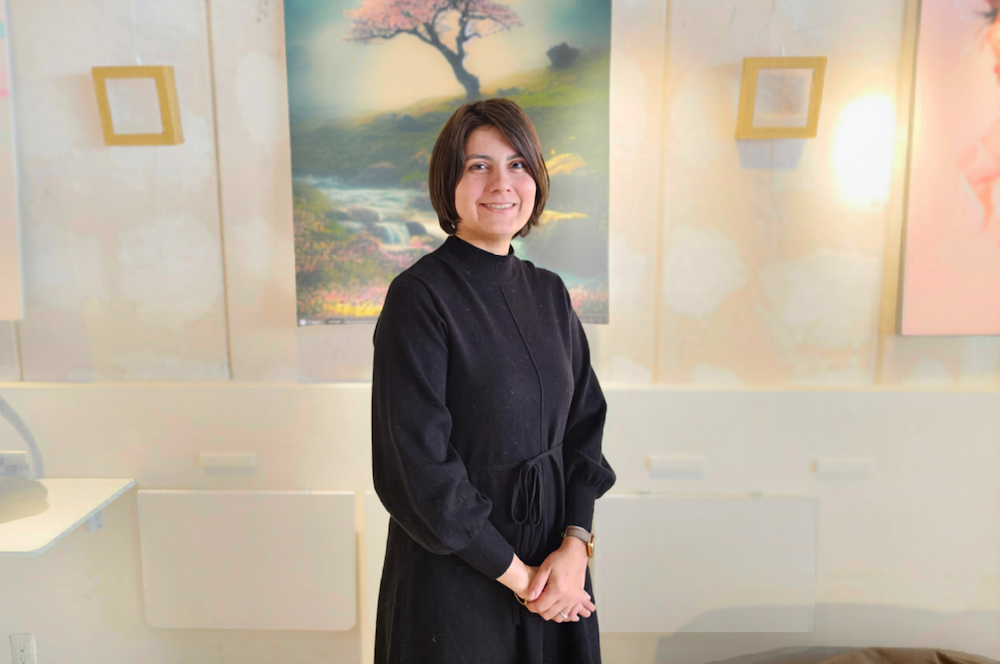
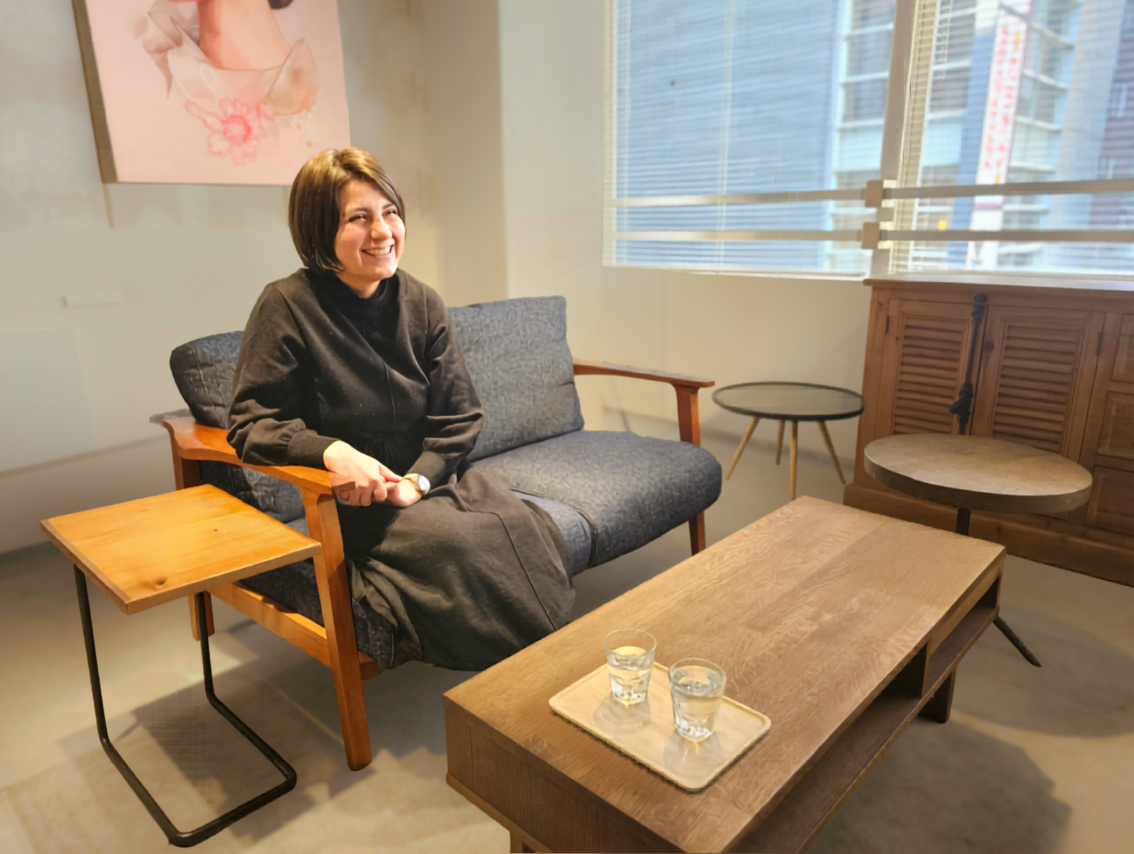
For this article, Circular Economy Hub spoke with Fara Talaie, founder and CEO of NND and the driving force behind matinno, about the company’s vision for the future of circular architecture and the matinno platform that serves as the essential infrastructure to realise it.
Looking Ahead to a Time When “Sustainable” No Longer Needs to Be Said
NND founder Fara Talaie was born in Tehran, Iran, and spent her childhood in countries with diverse cultures, including Italy and South Korea, before coming to Japan after graduating from high school. She studied architecture at the University of Tokyo, launched her career at Toyo Ito & Associates Architects, and went on to work on domestic and international projects at Nikken Sekkei Ltd. and Wonderwall®, pursuing sustainable design for over a decade.
She was also involved in establishing the “Social Change Makers” programme at the Nippon Foundation (Japan’s largest private philanthropic organisation), working to address challenges facing Japan and the world from both sustainability and social innovation perspectives. Frustrated by the slow pace of change despite her efforts, she founded her own company in 2021.
The name NewNormDesign—meaning “design of a new standard” in Japanese—encapsulates Talaie’s philosophy of sustainability.
Talaie: “Originally I had a co-founder, and she wanted to create a ‘New Normal Atelier,’ while I wanted to create a ‘New Design.’ What we both had in common was ‘sustainability.’ But honestly, I felt the word ‘sustainability’ was becoming dated, and ‘sustainable design’ didn’t sound particularly beautiful either. I thought it would be better if designing with sustainability as a given became the ‘New Norm’—the new standard—and so I named the company NewNormDesign. I wanted environmental design and circular design to all become ‘New Norm,’ and I decided we wouldn’t do anything else.”
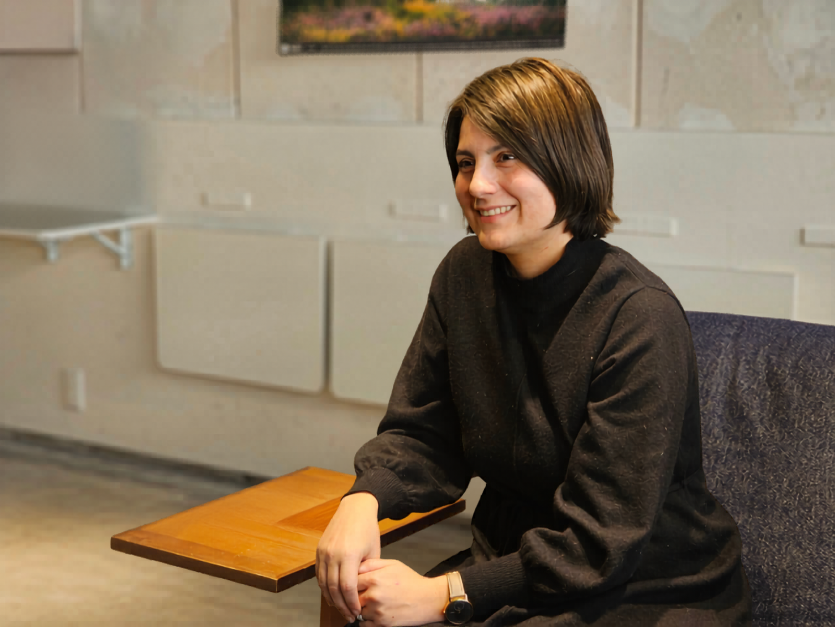
Labelling something “sustainable design” or “circular design” implies that non-sustainable design exists alongside it, reducing sustainability to just one genre among many. To make sustainability and circularity genuine principles of all design, the new standard itself must be redesigned. It was with this conviction that NND was born.
Circular Design Starts with Changing People First
Talaie developed an interest in sustainability while studying architecture at the University of Tokyo, constantly thinking about how to apply it to real projects. When she entered the workforce, however, she found that even when she communicated the importance of sustainability and circular design, it was difficult to gain understanding within large organisations, and she sometimes felt isolated. What she came to realise at that time was the importance of changing people before changing buildings.
Talaie: “I was pushing hard within a large company to use reclaimed building materials and pursue circularity, but it was hard to get people on board—sometimes it seemed like I was just chasing trends. That’s when I realised how important education is. So at NND, rather than simply making sustainability our theme, we include education in our proposals so that clients and those around us can truly understand its value. It doesn’t always work out, but I propose that we learn together little by little, and it’s gratifying to see the designers on the client side start thinking seriously about sustainability. Our team always values what we’ve been able to leave with the other party more than the project outcome itself.”
What Talaie holds dear is the belief that the knowledge and know-how conveyed through a project—more than the building or space that results from it—is the most important asset a client can gain.
While terms like “circular economy” and “circular design” are gradually becoming more familiar today, looking back ten years, even “sustainability” had yet to gain mainstream currency in the business world, let alone the circular economy. Yet Talaie, who recognised the importance of these concepts early on and steadily communicated and embodied their value, has built NND on that foresight and history.
Project Case Studies
What kinds of circular architectural design projects has NND undertaken? Talaie prefaced her answer by saying, “Honestly, there is no project I am completely satisfied with,” before introducing several representative examples.
Talaie: “The project I personally love most is the Kering building in Omotesando (a high-end shopping district in Tokyo). Toyo Ito designed the building, and I was responsible for the interiors. We installed shelving to display ceramic artworks by Japanese female artists, and the office carpet was woven from kibiso—the tough outer silk thread that silkworms spin first when forming their cocoons. We also sourced adhesives free of PVC (polyvinyl chloride), and devised a lighting approach that doubles brightness by reflecting off the ceiling. The windows have a unique shape that makes solar radiation calculations complex, but after working through every detail, we ultimately achieved LEED Gold certification. We also created a rooftop garden with a birdbath and selected flowers and plants to celebrate the changing seasons. It was incredibly challenging, but truly enjoyable.”
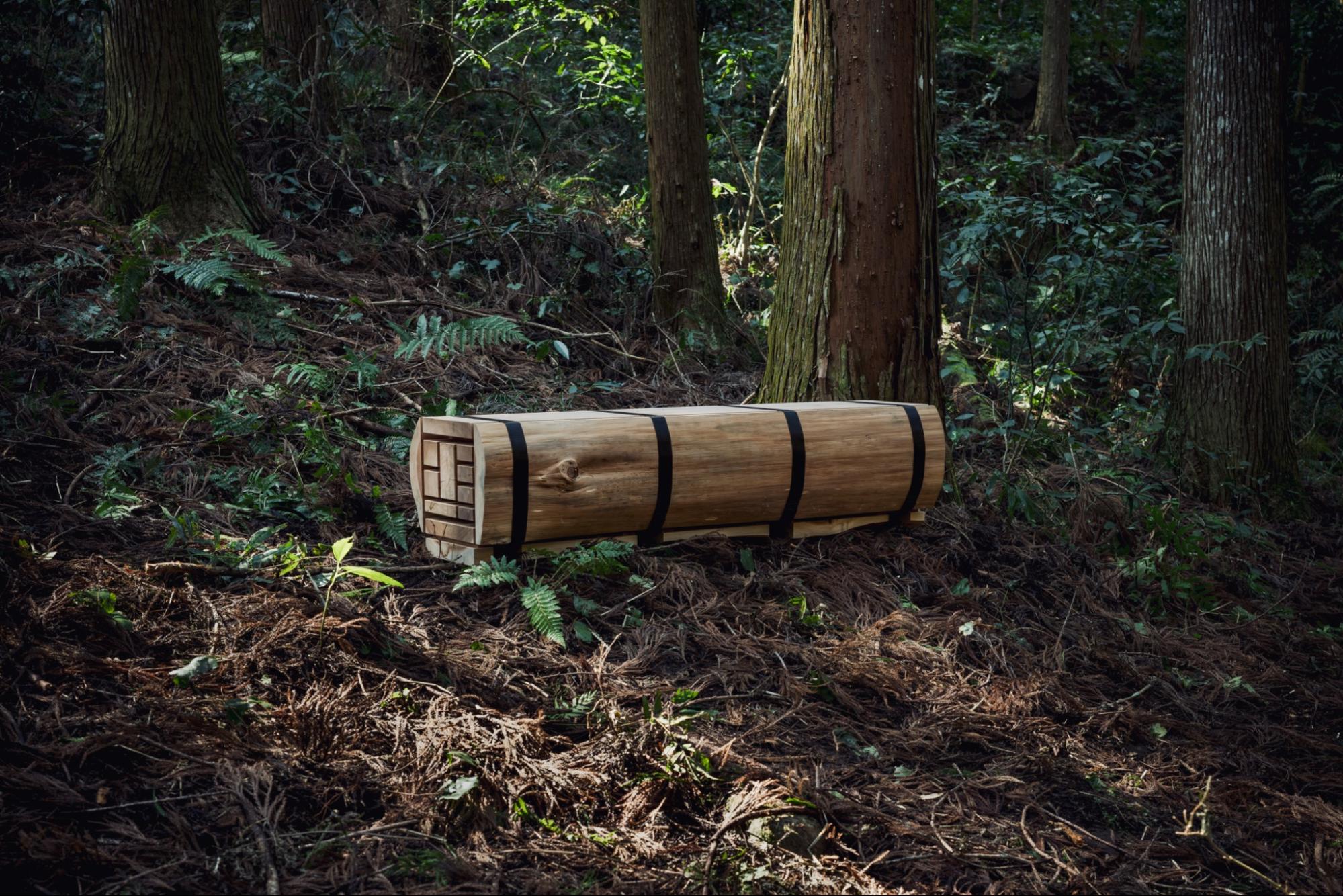
— A bench of the same model as those used at Expo 2025 Osaka. After the Expo, the benches were transferred to another company via matinno.
With interiors incorporating Japanese traditional culture, environmentally conscious design using natural and recycled materials, and the display of artworks as part of a commitment to supporting women, the space—meticulously considered from cultural, environmental, and social perspectives—embodies Talaie’s vision of the “New Norm” as a symbol of the Kering brand, which is also known for its rigorous sustainability procurement standards.
NND’s portfolio of sustainable and circular architecture extends further. For Brillia ist Shin-Okachimachi, a residential development by Tokyo Tatemono Co., Ltd., NND designed a work lounge themed around sustainability. The large work table that serves as the lounge’s centrepiece looks, at first glance, like an expensive tabletop—but it is in fact made from leftover timber offcuts that would otherwise have been discarded.
The tabletops of the private booths incorporate ocean plastic materials, while the wall paint is made from eggshells (egg paint). Compared with conventional paint, it has less odour, a natural scent, and a pleasantly cool feel to the touch. The artworks displayed on the walls were created by craftspeople carrying on Japanese traditional techniques, using materials such as Echizen washi (handmade paper from Echizen, Fukui Prefecture). The shared spaces of the condominium serve not only as places for residents to connect, but also as a showcase for sustainable materials and ideas.
What Is matinno?
The projects described above represent NND’s work as an architectural design studio, but the company has a second identity as a startup. To make circular architecture the New Norm, NND has developed matinno, a platform where information on any building material can be registered and which provides a one-stop solution for material selection, matching, and circulation. Talaie describes the matinno service as follows.
Talaie: “In a word, it is a platform and hub that makes architecture more sustainable and circular. I want it to become a platform where everyone can bring their own business and connect with a diverse range of people within the hub.”
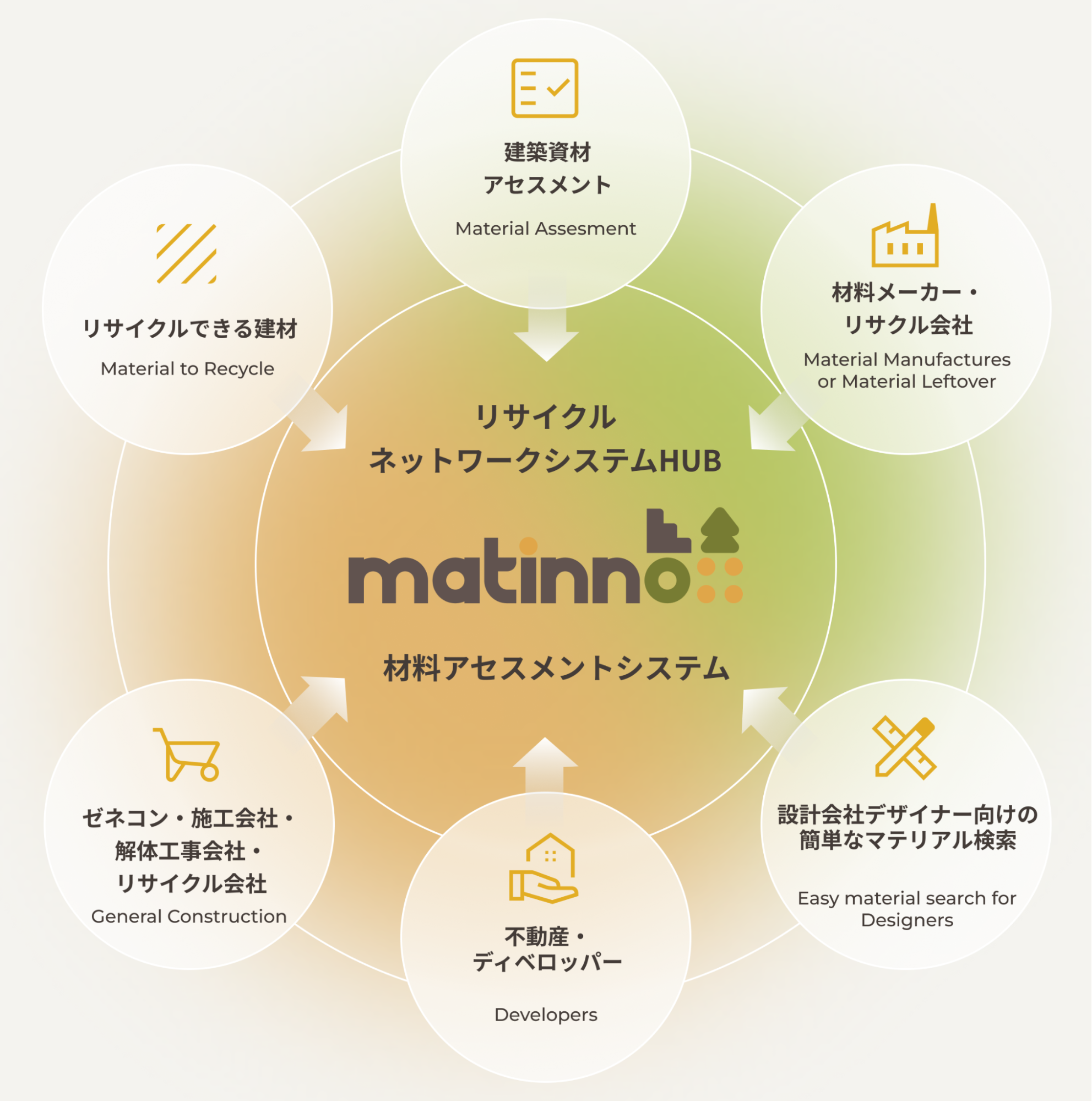
matinno’s features are wide-ranging. It is equipped with Japan’s only proprietary assessment index that visualises the environmental impact of individual building materials: simply entering a material name reveals its environmental score. Using these scores and other data, designers can search for materials according to functional and environmental performance and immediately present proposals to clients.
The platform also includes a marketplace function to promote the reuse of surplus materials, enabling both the listing and procurement of excess stock. It can be used, for example, to source reused materials with clear traceability from nearby suppliers.
Environmental assessment, material search, matching, and redistribution are all available in one place, making it a platform that every stakeholder in construction and architecture—designers, material manufacturers, recyclers, developers, and general contractors—can use as part of their business.
Furthermore, in late March 2026, NND announced a partnership with Hakuten Corporation. Going forward, Hakuten’s resource circulation rate visualisation system—based on the WBCSD’s CTI (Circular Transition Index)—will be integrated into matinno, enabling users to calculate resource circulation rates in architectural design more efficiently.
According to Talaie, actual users have expressed a variety of additional requests.
Talaie: “Recently, some benches left over from the Expo were purchased by a construction company, and when I contacted the original owner to transfer the payment, they said they wanted to donate it to forest conservation. This is exactly the kind of world matinno is aiming for. A bench crafted with care and beautiful design travels from an Expo warehouse to a park in Tokyo—and the money goes to the forest. The original owner avoids disposal and storage costs, the park is happy to have a bench, and the forest is restored. This kind of initiative is truly wonderful. Japan in particular has so many people with good hearts, and I believe that by connecting them, we can create much more of this kind of circulation.”
Since matinno’s trial version launched in January 2026, approximately five tonnes of materials have been matched through the platform. For example, tiles handcrafted one by one with great care by artisans in Gunma Prefecture and used in an Expo pavilion are now set to be used as flooring in an ongoing office project in Osaka.
To achieve circular architecture not just at the level of individual buildings but at the scale of cities and regions, an information infrastructure is essential—one that accurately tracks the stock and flow of materials across an entire area and matches supply with demand at the right time and distance. matinno is precisely that platform, dramatically reducing the transaction costs of circular matching through a detailed database and a multifunctional user interface.
Moreover, matinno values social impact alongside environmental impact. According to Talaie, the labour-intensive task of registering material information is carried out with the help of people with disabilities, creating employment by paying fair compensation.
Could Japan Be Where “Urban Mining” Succeeds?
Around the world, the adoption of “Material Passports”—digital records of material information that increase the potential for reuse and recycling when buildings are demolished—is advancing. matinno makes it possible to visualise a “Building Passport” that encompasses the Material Passport for an entire structure.
Talaie: “People often talk about Material Passports, but what is really needed is a passport for the whole building. With a Building Passport for an entire structure, when a client wants to demolish a building and construct a new one, they can immediately see what percentage can be reused and what percentage must be discarded. About ten or more years ago, the concept of ‘urban mining’ was popular in the United States, but I believe Japan is the country where urban mining can work best. Japan’s cities are compact, there are many buildings, and the quality of materials and construction is high. Japan also has few domestic raw materials—almost everything other than concrete and cement is imported. Given the current weak yen, it is wasteful to keep buying, importing, and then discarding. We need to change our mindset and make better use of what we already have.”
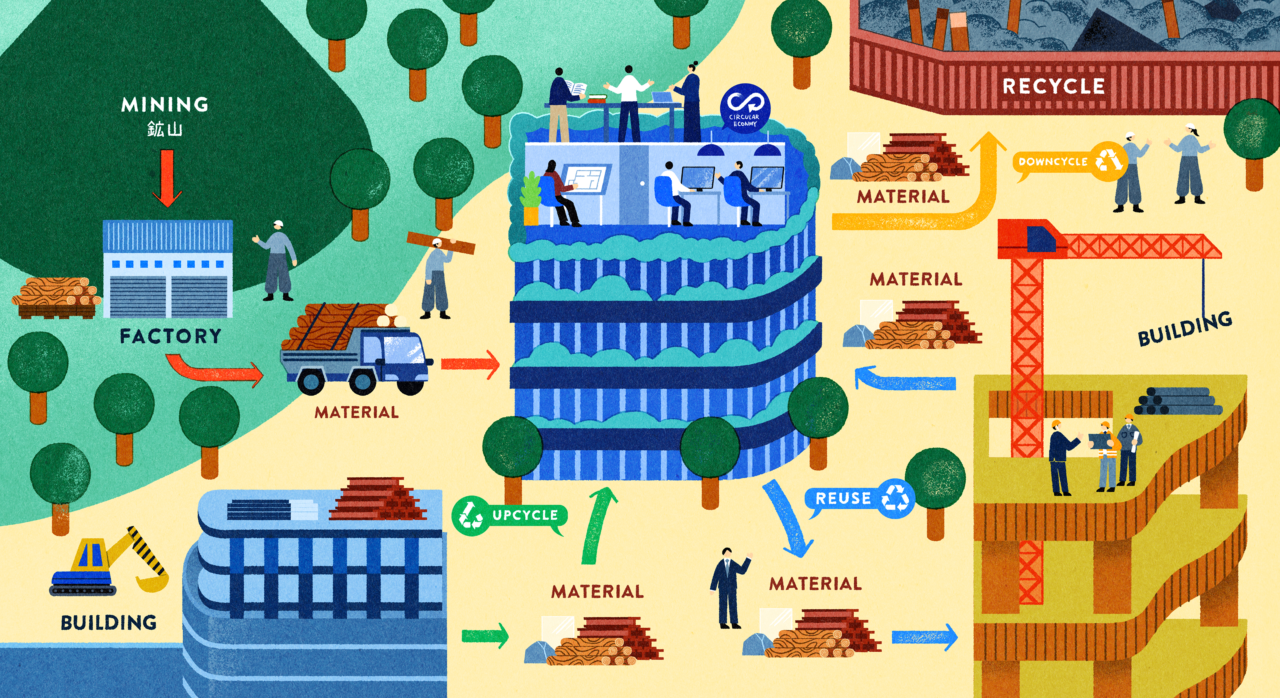
The soaring cost of construction materials has been a significant challenge in Japan in recent years, but combining design for disassembly with Building Passports—stockpiling materials in a reusable form—could substantially reduce resource procurement risks and costs in the future.
What Are the Barriers to Wider Adoption?
matinno holds considerable value as an infrastructure equipped with a wide range of functions to enable circular construction—but what challenges stand in the way of broader adoption?
Talaie: “The challenges are, in a word, everything. There are mindset issues, and many people say they would participate if it were free—but building and maintaining a database like this cannot be done for free, so someone has to bear the cost. It is also helpful that there are regulatory frameworks that support startups of this kind.”
“On the subject of cost: if materials are properly selected and registered in the database at the design stage, the hard part is only the initial data entry, and ongoing data management costs very little. But if you decide to demolish a building twenty years later without that record, just having someone take photographs and prepare an estimate takes enormous time and money. If you have a list ready from the start, you simply hand it over—so the cost is not that high.”
The return on investment of digital information platforms for promoting circular practices is frequently questioned, but in reality, building a material database once can save significant costs at demolition and other later stages, making the total picture potentially positive.
matinno’s paid subscription starts from ¥5,000 per month. To drive the transition to a circular economy, it is important for stakeholders to assess economic viability from a long-term perspective and to share costs and investments collectively.
Starting with Just One Chair Is Enough
Despite facing challenges ranging from mindset barriers to cost issues, Talaie continues to move forward. So where should we start, and what should we change, to realise the future of circular architecture?
Talaie: “I always say: it’s fine to improve by just 1% a day. Even changing just 1% means things become 37 times better over 365 days. For example, making only the entrance of an office sustainable is fine, or changing just one chair. If just 1% of the chairs currently in Japan were made sustainable, that would be an enormous number. The impact of 1% is very significant.”
Making matinno Belong to Everyone
matinno’s journey has only just begun, but if every designer were to source even just 1% of the building materials needed for a project from reused materials registered on matinno, the world would change dramatically. How does Talaie envision the future of matinno?
Talaie: “Five years from now, as matinno’s user base grows, I would like to make matinno free to use. Of course, that would require funding from the government or donations, but I want matinno to belong to everyone. My hope is that architecture firms, designers, and companies all become owners of it.”
What matinno aspires to be is the infrastructure for circular architecture—a public resource supporting circulation at the city and regional level. If matinno truly becomes “everyone’s,” the matching and circulation of building materials will undoubtedly accelerate further. The more users join, the greater the value each user receives—which means, in other words, that the future of matinno is something everyone can help create.
Become the Person “In Between”
From Talaie’s perspective, what kind of people are needed to bring about the systemic change toward circular architecture, circular design, and a sustainable future—as matinno is working to do? We asked her this as a final question.
Talaie: “Among the people I have met in Japan, I see two types. One type thinks, ‘I am special—follow me.’ The other type says, ‘Whatever you say is fine.’ What I think is needed is the person ‘in between.’ The reason is that circularity requires everyone to think together about how to make things work. It starts with everyone connecting and combining their strengths. I really hope people will become that ‘in between’ person.”
Editor’s Note
Through this interview, what struck me most about NND and matinno was not only their impressive project track record or the platform’s sophisticated features, but above all the gentle worldview and vision of a circular future that Talaie holds. What was most memorable was the smile on her face as she spoke with evident joy about the story of a building material crafted with care and intention—not reaching the end of its life after a single use, but finding its way to someone new. What she is working toward is a world in which everyone involved in the circulation of building materials benefits, and matinno is the mechanism to make that happen.
matinno is, at its core, infrastructure—and how it is used is left to each individual user. But that also means the foundation for collectively building a better future is taking shape.
If the matinno SaaS subscription fee is seen not as a service charge but as a shared investment and entry ticket to realising the grand vision of circular cities and circular architecture, and if more people join that journey, the platform’s value will be fully realised.
A good place to start is simply registering one building material you have on hand, or purchasing one material listed on the platform. The 1% effort of 100 people is more powerful than 100% effort from one person alone. If matinno’s vision resonates with you even a little, why not take that first step?
【Service website】matinno
【Company website】NewNormDesign