The Kamakura Circular Award, which supports circular economy-based urban development in Kamakura, Kanagawa Prefecture, has entered its second edition. Building on the results of the first round, this year’s program has evolved with new initiatives such as the launch of a Circular Academy and startup support that places greater emphasis on real-world implementation. Through interviews with the organizers of the Startup Division, this article reports on where the award stands today and its future outlook.
In the previous article (1), we spoke with Shingo Yoshizumi, CEO of Kamaan Inc., the organizer, and Naoko Minami, CEO of nalu Inc. and a mentor for the Kamakura Circular Award Startup Division, about the background and motivations behind the program. In this article (2), we take a closer look at the distinctive features of the Kamakura Circular Award Startup Division.
Circular Startups: Essential to Kamakura’s Transition into a Circular City
What exactly is a “circular startup”? Drawing together several internationally proposed definitions, the concept can be distilled as follows: a circular startup is a new, active, independent organization that possesses technologies, business models, products, or materials that drive the transition to a circular economy—addressing, in some combination, the design-out of waste and pollution, the continued use of products and materials, and the regeneration of nature.
Circular startups embed innovative, highly circular approaches at the core of their business—approaches that established companies often find difficult to adopt quickly. Conversely, by partnering with such startups, existing businesses can rapidly gain access to highly circular solutions. Likewise, when circular startups focus their business activities on a specific region, that region’s overall circularity can improve dramatically. For this reason, circular startups are incorporated into the circular city roadmaps of cities that prioritize the transition to a circular economy, such as Amsterdam. In Kamakura, Kamaan Inc. (led by Mr. Yoshizumi), which offers shared reusable containers, and nalu Inc. (led by Ms. Minami), which offers steel cups, are prime examples. This award positions such circular economy startups as indispensable to Kamakura’s transition into a circular city.
A Clear Statement of Intent: What Kind of Businesses Should Be Active Here
Although it was not the main focus of this interview, the transition of existing businesses toward the circular economy is equally key. To that end, in addition to the existing “Zero Waste Kamakura Certification,” the award has experimentally introduced a new category this year: “Type II: Symbiotic Circular Business Recognized Worldwide (Certification),” which evaluates companies working on both coexistence and environmental sustainability from multiple angles, benchmarked against international certification standards. This category’s evaluation criteria were designed with reference to B Corp™, the global certification awarded to companies that meet high standards of management with regard to environmental and social impact.
Professor Tanaka commented, “The B Corp-aligned approach in the Business Division may also appeal to startups as an attractive practice, and could help increase their motivation to get involved with Kamakura.”
For awards and contests aimed at fostering regional innovation, it is important for organizers to clearly communicate what kind of companies they want to see thrive in the region. Types I and II serve as exactly this kind of statement of intent, offering guidance not only to the existing businesses targeted by these categories but also to startups as they carry out their activities.
 Strong Ties: An Award With a Human Face, Led by Kamakura-Based Entrepreneurs
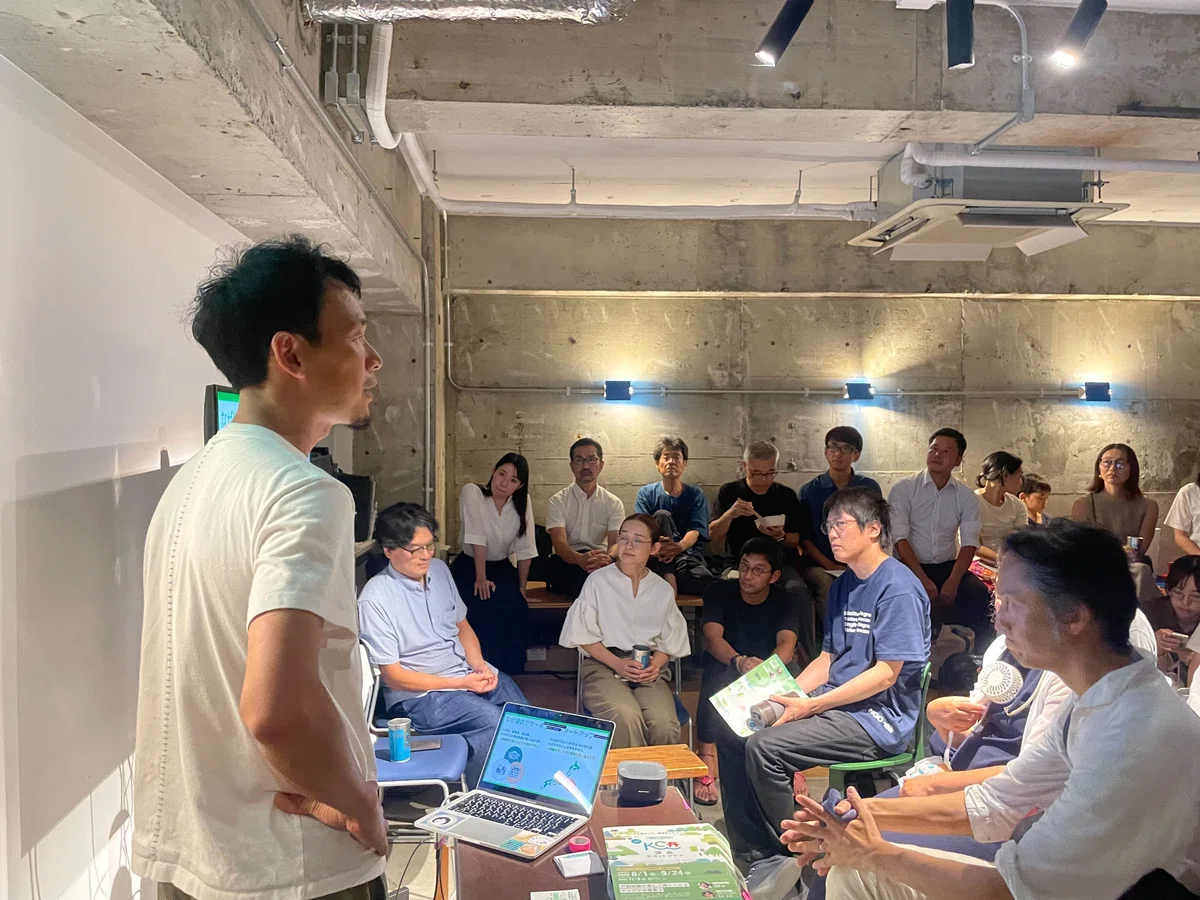
The Startup Division in particular has been shaped from the planning stage by business operators such as Mr. Yoshizumi and Ms. Minami, with local government and universities supporting their efforts. While many programs bring together industry, government, and academia to foster startups, such initiatives remain relatively new in the circular economy field. Moreover, it is rare to find a program led, in such a visible and personal way, by practitioners who are already running businesses and living in the local community.
We previously reported on circular economy-based urban development efforts in Maniwa City, Okayama Prefecture, and one key factor there was a “face-to-face relationship” that enabled immediate communication. Building strong, personal connections through collaboration among industry, government, and academia may well be an essential ingredient of circular urban development.
Weak Ties: A Flexible, Medium-Term Perspective
Although the organizers hope to see ideas “implemented in Kamakura,” the Startup Division is open to anyone, from Japan or abroad. There is no requirement regarding where an applicant company is based. While the potential for future collaboration with Kamakura is one of the evaluation criteria, there is no insistence that participants actually found their businesses in Kamakura. At the gatherings, a good balance of returning participants and newcomers mix together. Maintaining a loose connection with Kamakura while engaging deeply when needed—this flexible, non-restrictive approach lowers the barrier to participation.
Perhaps it is precisely because the program takes a medium-term view spanning ten years that this is possible. When results are demanded within a single year, the organizer’s own perspective tends to dominate; but by thinking in ten-year terms, planning can be grounded in a vision of what Kamakura should look like a decade from now.
Mark Granovetter’s theory of “the strength of weak ties” is well known, and such weak ties can serve as a wellspring of regional innovation across every time horizon, from short-term to long-term. Leading circular municipalities overseas that aim to become circular cities—going beyond mere waste management—place particular emphasis on this factor. This award, too, appears to be structured to draw on the respective strengths of both strong and weak ties. Kamakura’s Circular Award Startup Division offers many valuable insights for other regions aiming to become circular cities.
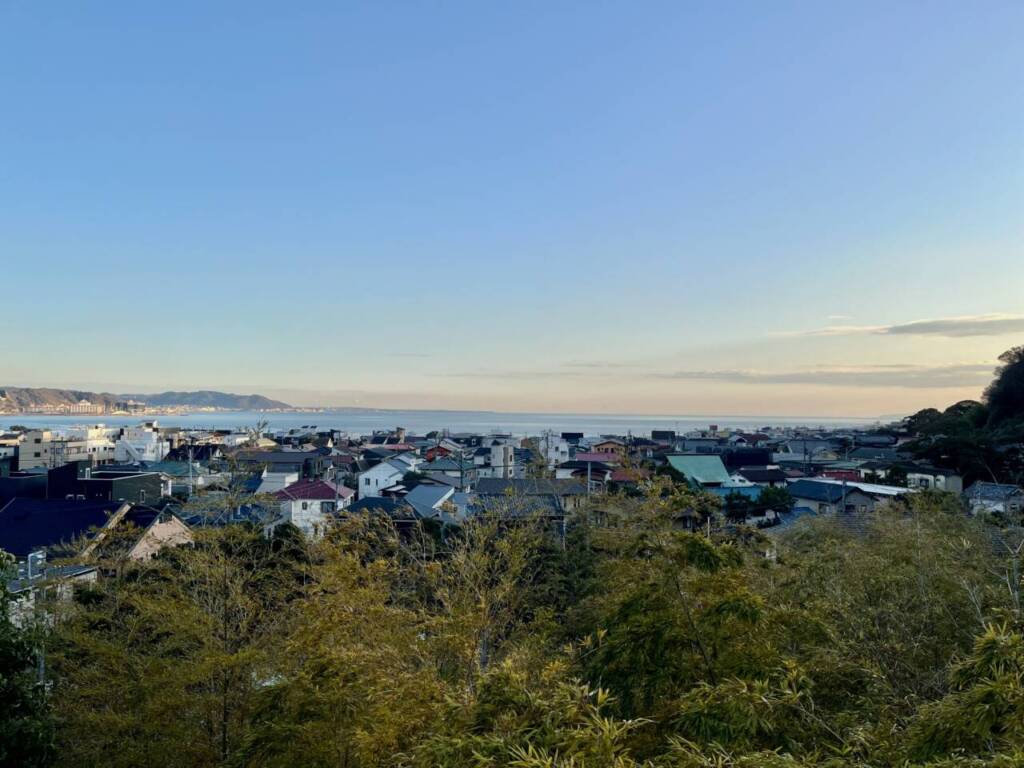
※The opening photo shows a view of Kamakura taken from Hase-dera Temple. (Photo taken by the author, February 2024)
[Official URL]2nd Kamakura Circular Award (Application deadline: September 24)
[Official note]Kamakura Circular Award Executive Committee
[Related article]Kamakura Circular Award: Fostering Circular Startups Through the “Circulation of Knowledge” (1) An Interview With the Organizers
[Reference article]Aiming to Become the “Sacred Ground” of Circular Startups: The Background Behind the Kamakura Circular Award—An Interview With the Executive Committee Chair and Others