*This article is reproduced from “Ideas for Good.”
[Kyoto Circular Economy Feature]
This feature is a special project developed jointly by IDEAS FOR GOOD and the City of Kyoto to explore the present and future of the circular economy in Kyoto. How can the spirit of “shimatsu no kokoro” (the ethic of using things carefully and without waste), circular lifestyles, and the craftsmanship culture that have been passed down through Kyoto’s thousand-year history evolve into innovations that shape the city’s future—and give rise to circular businesses that can carry on for the next thousand years? Together with the City of Kyoto, local businesses, and Akihiro Yasui, a policy advisor to the City of Kyoto, we explore Kyoto’s value and potential through the lens of the circular economy. (Kyoto Circular Economy Feature homepage)
Drawing on the history and culture woven by a thousand-year-old capital, and on the “shimatsu no kokoro” spirit deeply rooted in its citizens, the City of Kyoto is promoting a transition to the circular economy as it works to realize a new vision of an urban future that fuses environment and industry.
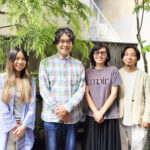
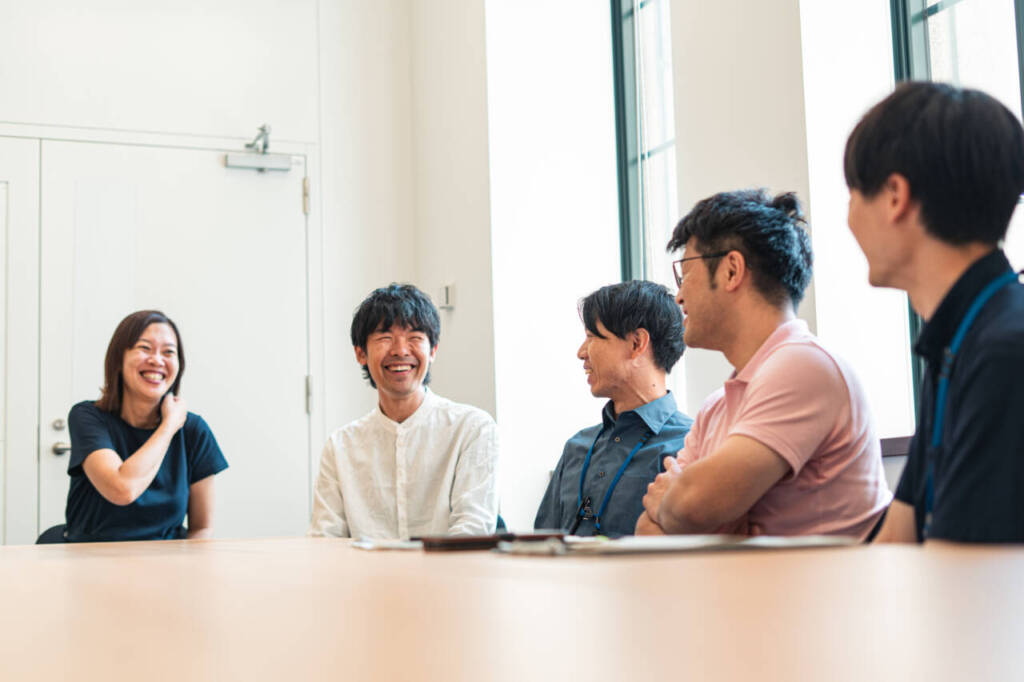
In the first article of this feature, we explored why the City of Kyoto is pursuing the circular economy and the background behind this effort. From the second through the sixth articles, we introduced a variety of circular economy practices being carried out within Kyoto. Now, in this final installment, we speak with Akihiro Yasui—a policy advisor to the City of Kyoto and author of “Circular Economy in Practice” (Gakugei Shuppansha)—together with three members of the City of Kyoto’s Environmental Policy Bureau in charge of circular economy initiatives, to explore what a distinctly Kyoto-style circular economy future might look like.
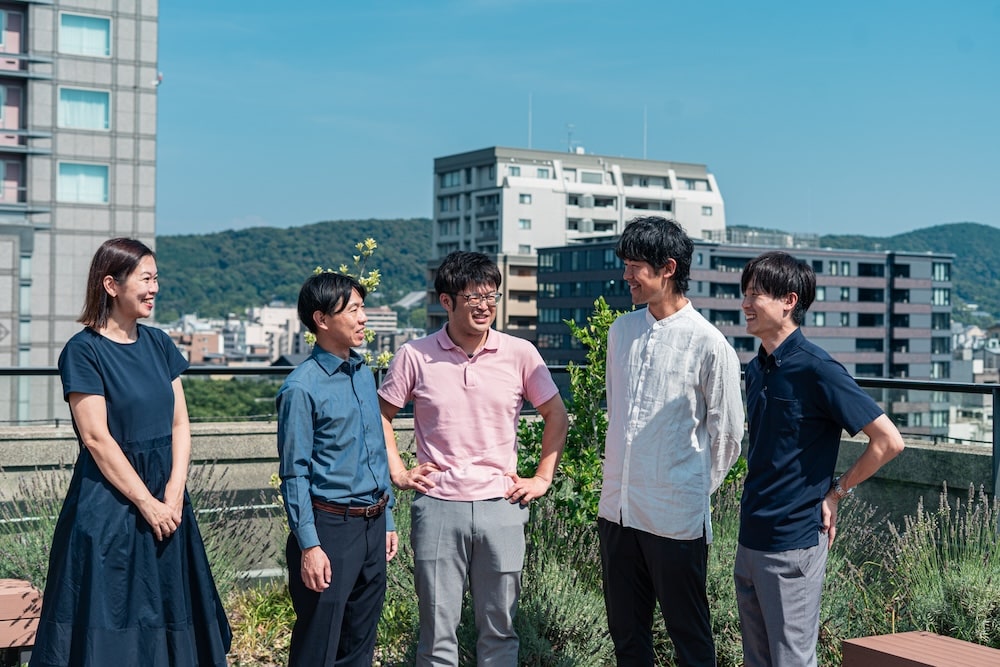
Speaker Profiles:
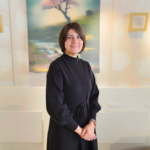
Akihiro Yasui
Policy Advisor to the City of Kyoto / Author of “Circular Economy in Practice” (Gakugei Shuppansha)
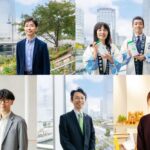
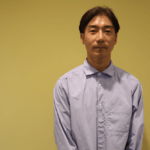
Masanori Kimura
Section Chief, Environmental General Affairs Division, Environmental Planning Department, Environmental Policy Bureau, City of Kyoto
Taro Sakurai
Deputy Section Chief, Environmental General Affairs Division, Environmental Planning Department, Environmental Policy Bureau, City of Kyoto
Tomohiro Ikeda
Senior Staff, Environmental General Affairs Division, Environmental Planning Department, Environmental Policy Bureau, City of Kyoto
Kyoto’s Cityscape, Well-Being, and Circularity
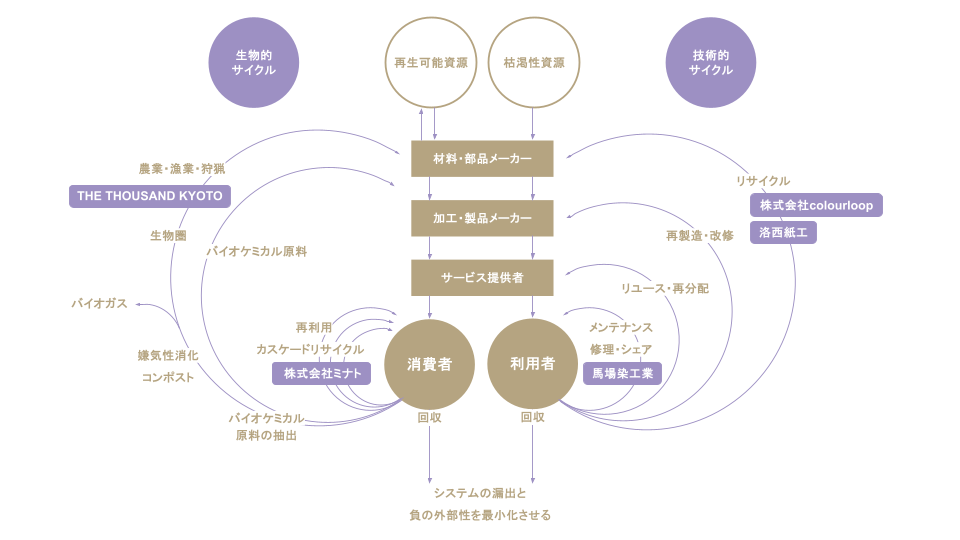
For this feature, we interviewed five businesses among the many circular economy practitioners in Kyoto: Minato Co., Ltd., Baba Dyeing Industry Co., Ltd., colourloop Co., Ltd., Rakusai Shiko Co., Ltd., and THE THOUSAND KYOTO (operated by Keihan Hotels & Resorts Co., Ltd.). Through these cases, we examined examples from industries symbolic of Kyoto—traditional crafts, manufacturing, textiles, food, and tourism. What common threads did Yasui and the City of Kyoto find among these practices?
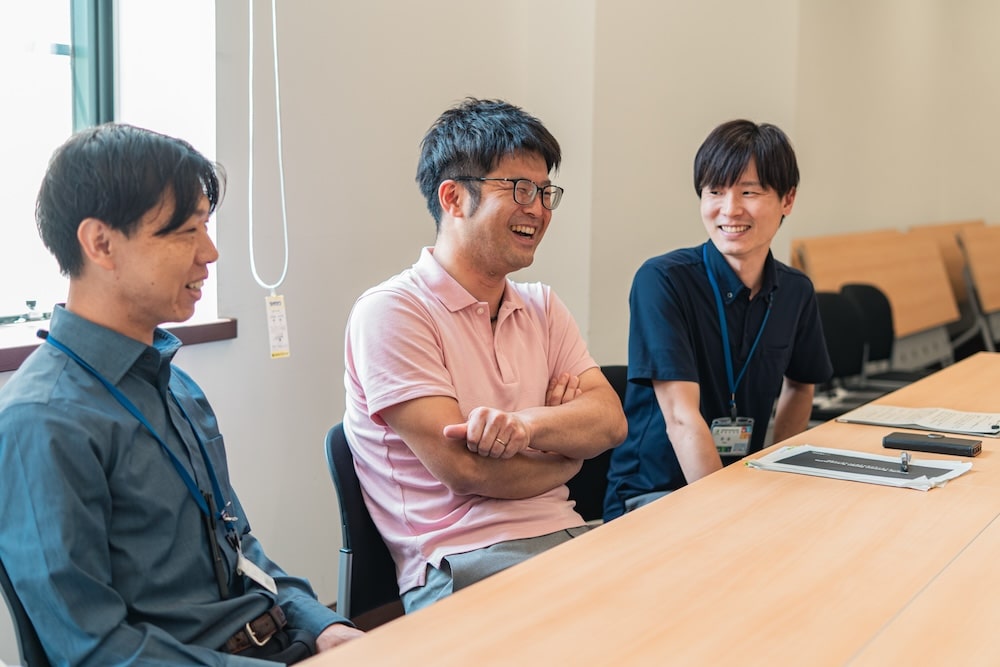
Yasui: “I’ve lived in Kyoto for four years and have worked on circular economy initiatives together with many local businesses and citizens, but there are still so many initiatives I didn’t know about, and I was struck once again by the potential Kyoto holds going forward. I found the sincerity behind everyone’s commitment, and the way their efforts go beyond mere recycling or upcycling to something truly fundamental, genuinely impressive.”
Kimura: “Even though the fields and industries differ, what people value seems to be shared across the board. I felt that a tradition of community self-governance and a spirit of mutual support—caring not just for oneself but for one’s surroundings and for the city of Kyoto as a whole—is naturally embedded here. It was also a new discovery for me that, amid the many hardships people have faced along the way, they commonly arrived at ways of thinking connected to the circular economy as a means of turning crisis into opportunity. It may be coincidental, but I came away feeling anew that this way of thinking offers both a catalyst for taking a step forward out of difficult circumstances and a hint for new growth.”
Sakurai: “I got the impression that many of these businesses are mindful not only of their own operations but also of their suppliers and customers. That reminded me of the concept of ‘well-being,’ which has drawn increasing attention in recent years. I once read a book that put forward the hypothesis that whereas happiness in the West tends to be an ‘acquisitive’ sensation, the type of happiness that resonates more naturally with Japanese people is a ‘cooperative’ one. I found that quite compelling. As I understand it, this is the sense that ‘because everyone around me is doing well, I somehow feel good too’—and it seems to me that people practicing the circular economy are naturally operating from this kind of mindset.
I believe the circular economy is fundamentally an action directed toward society. Well-being, as I understand it, is defined in part by a virtuous cycle in which such social action and social capital mutually reinforce each other. For that reason, the circular economy is highly compatible with well-being, and I think it can be considered one of the elements needed to realize well-being.”
Does Circularity Advance Precisely Because the City Cannot Expand?
As introduced in the first article, the City of Kyoto—where “shimatsu no kokoro” is deeply rooted in daily life—was a national pioneer in introducing a fee-based system for designated household waste bags, charging for plastic shopping bags, and setting food loss reduction targets, achieving a roughly 50% reduction in waste volume over the two decades since 2000. Today, Kyoto is known as one of Japan’s most advanced municipalities in the environmental field, ranking among the lowest in per-capita waste generation among Japan’s government-designated cities.
Within the city, circular economy practices span an enormous range of activities—from food to manufacturing, and from tourism to events—and examples originating in Kyoto are frequently seen and discussed. Given these facts, could Kyoto already be considered an advanced city for the circular economy? And if so, why? Yasui explains Kyoto’s distinctive characteristics from three perspectives: its citizens, its businesses, and the structure of the city itself.
Yasui: “Personally, I don’t think there’s really such a thing as one city being ‘ahead’ of another when it comes to the circular economy. I lived in the Netherlands, and people often ask me whether the Netherlands is ‘advanced’ in this regard, but I frequently feel that it isn’t necessarily so. Rather, I think what matters is that each country and region undoubtedly has its own excellent initiatives and distinctive characteristics, and that by sharing what we each lack with one another, we can move forward together as a whole.
That said, it’s certainly true that many people who move to Kyoto develop an interest in the circular economy. I’ve thought about why this might be, and one reason, I believe, is that many people in Kyoto live here because they love Kyoto. When you run a business or live your life in this place out of genuine affection for it, you naturally gravitate toward business practices and lifestyles that feel distinctly ‘Kyoto,’ beyond mere economic rationality. This may align well with the circular economy’s emphasis on utilizing unused resources and prioritizing well-being.”
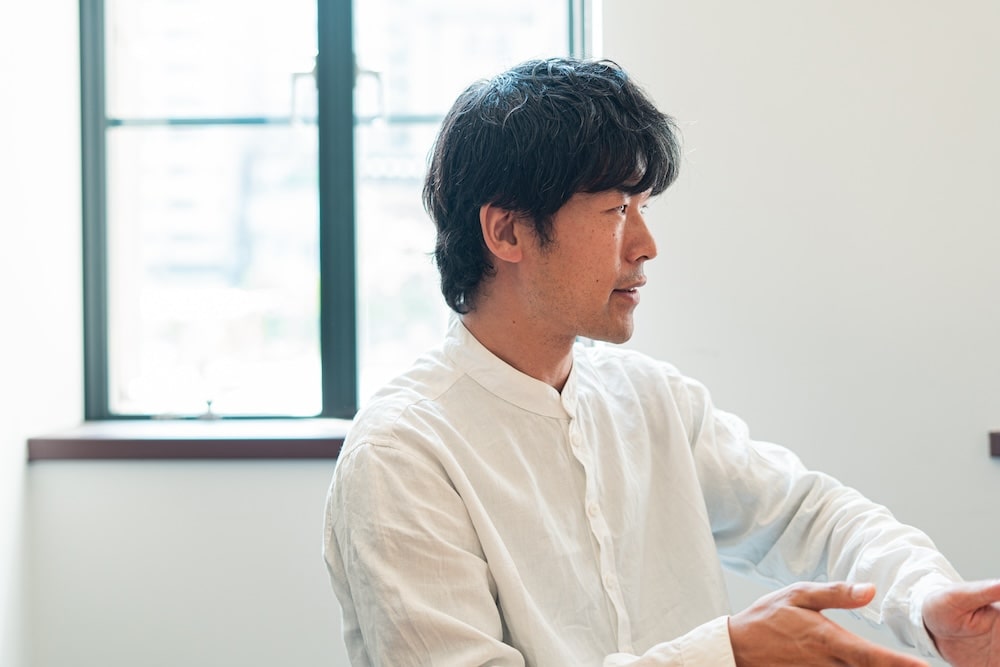
Yasui: “I’ve also learned a great deal from Kyoto’s long-established, traditional businesses (shinise). Before moving to Kyoto, I had an image of these venerable old firms as conservative, but in reality, that wasn’t the case at all. I learned from many of these companies that precisely because they have endured for so long, they must continue to be innovative. Rather than prioritizing short-term scale expansion or economic growth, they place great importance on how to pass the business on to the next generation over the medium to long term.”
In fact, Japan is home to more long-established companies than any other country in the world. Worldwide, there are roughly 75,000 companies that have been in business for over 100 years, and of these, about 43,000—more than half—are Japanese companies. Furthermore, within Japan, Kyoto Prefecture has the highest concentration of such long-established firms, with approximately 2,300 companies. Why have Kyoto’s businesses endured for so long? This may hold clues to sustainable, circular business models.
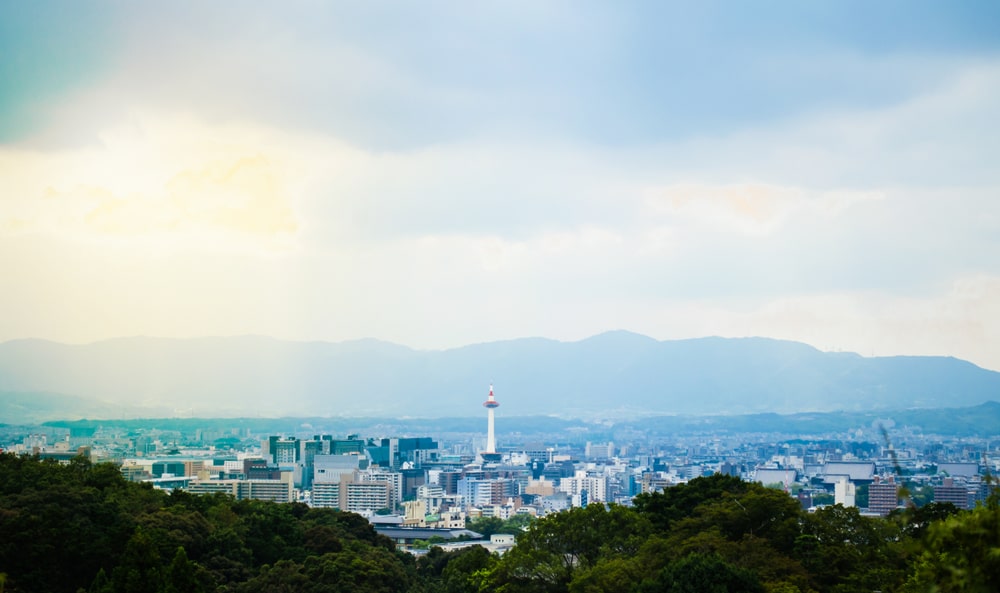
Yasui: “This is just a hypothesis, but I think physical constraints play a significant role. Because the City of Kyoto restricts building heights, there’s essentially no room to expand upward. And because the city is surrounded by mountains, there’s no room to expand outward either. I think these kinds of constraints naturally shift people’s focus away from scaling up and toward how to sustain well-being and business within the space available.”
Kyoto is a city that faces genuine physical limits to expansion, both vertically and horizontally—and its geography places the city and nature in close proximity to one another. Perhaps it is precisely because of these constraints—working within limited land and resources—that, alongside the pursuit of added value, the spirit of “shimatsu no kokoro,” a consideration for nature and for others, and a tradition of community self-governance have all taken root. As a result, people, nature, resources, and mutual consideration for one another have continuously circulated, carrying tradition and culture forward to the present day.
In truth, the same holds for the planet as a whole. We humans cannot live beyond the upper limits of Earth’s ecological systems, known as the planetary boundaries. To realize well-being for 8 billion people within the constraints of finite resources requires not a spirit of competing for scarce resources, but one of mutual support—and a “shimatsu no kokoro” that refrains from polluting today’s planet for the sake of future generations. Yasui’s insight, in this sense, translates directly into a message for the entire world.
Preserving Through Innovation: A Circular Economy for the Benefit of All Four Sides
The distinctive character of the land of Kyoto, together with the culture that has been cultivated upon it, has created fertile ground for the concept of the circular economy to take root here. Given this history and natural environment, then, what might a distinctly Kyoto-style circular economy future actually look like? Sakurai analyzes Kyoto’s unique character from the perspective of economic supply and demand.
Sakurai: “I’ve lived in Kyoto for a total of about 15 years now, and there’s something I’ve come to feel through that experience. On the supply side, Kyoto has a history of developing its industries through the pursuit of high-value-added manufacturing. On the demand side—that is, in terms of how goods are consumed—I once asked a friend whose family has lived in Kyoto for generations why they kept using the same item carefully for so long, and they answered, ‘Because my grandmother always told me to take good care of things.’ I felt in that moment that the culture of ‘shimatsu no kokoro’ is indeed being passed down through the generations. In this way, I feel that Kyoto has fertile ground—on both the supply and demand sides—for embracing circular thinking and consumption behavior.”
Kimura, meanwhile, notes that Kyoto excels not only at honoring tradition but also at creating new futures.
Kimura: “This might come as a surprise, but Kyoto is actually said to be a place that readily embraces new and diverse things. Within the city, there’s an extraordinary variety of businesses—from long-established shinise carrying on tradition, to startups, to some of the world’s largest and most renowned corporations. What many of them have in common is that, while they cherish tradition and culture, they don’t simply preserve it as-is. It’s precisely because of a pioneering, forward-looking spirit—one that flexibly incorporates new things—that innovation has emerged and been carried forward into the next era.
I think this reflects the character of Kyoto’s people and of the city itself: amid the many different kinds of people connected to Kyoto, there’s a spirit of mutual respect and consideration, and a warm welcome extended to anyone who shares a love for this same city.”
As Yasui describes learning from Kyoto’s long-established businesses, “preservation by innovation” may well be the distinctly Kyoto approach to building a sustainable, circular future. Viewing Kyoto’s metabolism of conservation and innovation through the lens of circularity, a naturally Kyoto-style vision of the circular economy begins to come into focus.
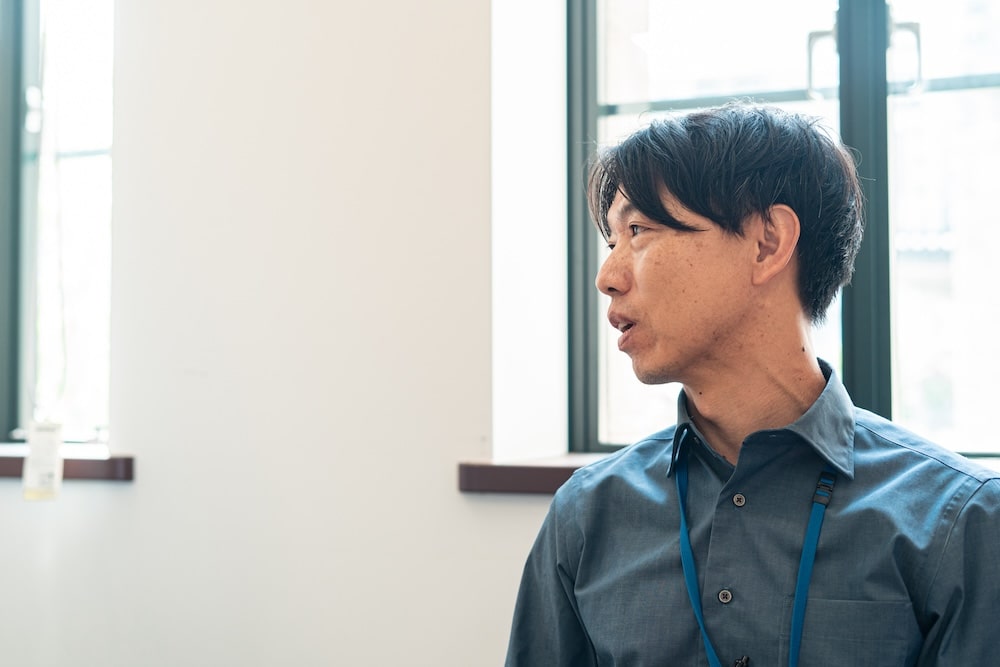
Kimura: “Another thing distinctly Kyoto, I think, is that something as ordinary as taking good care of things happens naturally and is deeply embedded in citizens’ everyday lives. What citizens and businesses have been practicing all along was, in essence, already a form of circular living. I believe that a distinctly Kyoto-style circular economy involves reinterpreting and updating these existing practices by incorporating new concepts, cultures, and technologies.”
Sakurai: “There’s a business philosophy from the Omi merchants called ‘sanpo yoshi’ (good for the seller, good for the buyer, good for society), and there’s a variant that adds ‘good for the future’ to create ‘shiho yoshi’ (good for all four sides). This concept of ‘shiho yoshi’ might offer a helpful hint as well. It reflects the idea that businesses, citizens, and society as a whole can all benefit together, while also ensuring a good future ahead.”
Ikeda: “The ‘medium- to long-term’ perspective that Yasui mentioned is also extremely important. The businesses we interviewed were all building their operations with careful thought given to what kind of society they wanted to see for the children and future generations who will inherit it. I believe that’s precisely what connects to the circular economy.”
Yasui: “What struck me was how carefully everyone looked back on their company’s history, speaking in detail about the founders’ original intentions and how the business had evolved alongside the changing times, and from there, carefully weaving a story for the future. When passing a business on to the next generation, it felt as though they were handing down not just the company and its capital, but also its distinct character and underlying concept. I think it’s precisely because they carefully unravel the past that they’re able to carefully weave the future.”
How Companies’ Struggles and Waste Become “Connective Tissue” for Collaboration
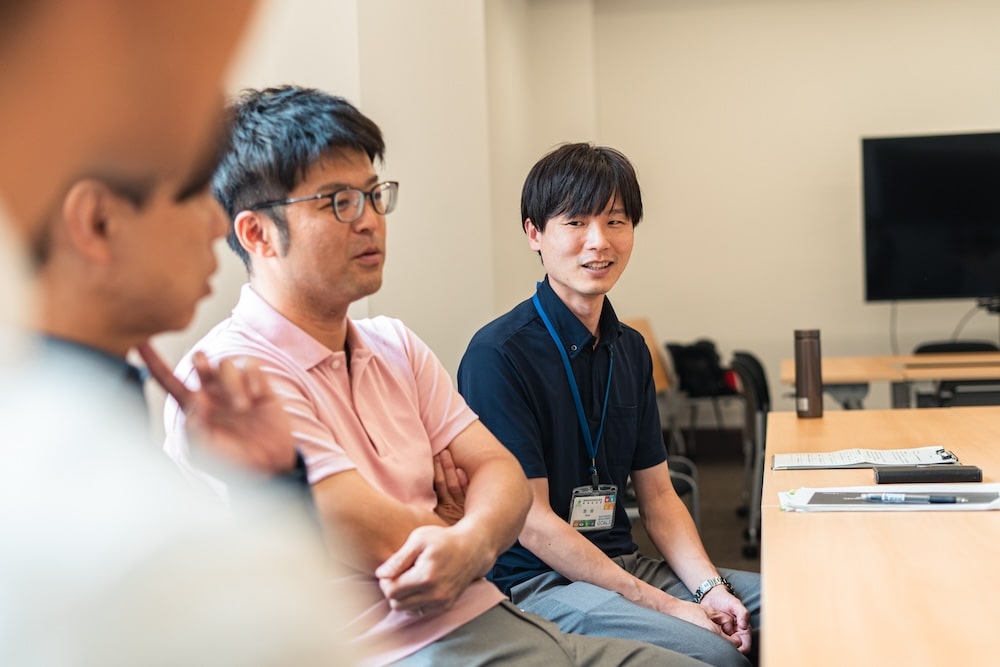
To realize a distinctly Kyoto-style circular economy, the City of Kyoto will launch a circular economy-themed learning program called “Circular Business Design School Kyoto” starting in fall 2025. Finally, we asked about expectations for this program.
Yasui: “Until now, businesses have tended to hide the struggles, waste, and difficulties they face internally. But in a circular economy, these very struggles can become ‘connective tissue’—a link that gives rise to innovation through new business ventures and collaborations with other companies. By coming to this program, participants may find that their own experience proves valuable in ways they never expected. I’d encourage people to first just take part, embracing the spirit of ‘learning by doing’—striking a balance together along the way, even without everything being perfect.”
Kimura: “‘Learning by doing,’ a phrase I learned from Yasui, really is a wonderful way to put it. It resonates with the mindset we heard from the businesses we interviewed for this feature, and personally, I hope it takes root not only in the circular economy field but also in workplaces and society more broadly. In an era of uncertainty, I think it would be wonderful if we could hold onto a mindset of continuing forward while making course corrections along the way.”
Sakurai: “With the circular economy as a unifying keyword, we hope people from a wide range of industries will get involved in this program. There are many possible entry points—becoming a partner, or simply attending a networking event, even without formally participating in the program itself. Since we never know where a great collaboration might emerge, we want to reach out as broadly as possible.”
Ikeda: “Participating may lead to unexpected insights and connections you never anticipated. We truly hope many people will take part.”
Editor’s Note
Walking through the streets of Kyoto after finishing this interview, the scenery looked a little different to me. We tend to be drawn in by the very sound of the phrase “circular economy” and instinctively search for clues to its realization in distant examples from abroad. But this conversation taught us that its essence has, in fact, been deeply rooted in the soil of Kyoto over the course of 1,200 years.
The “struggles” and “waste” that arise in the course of everyday business are, more often than not, treated simply as “costs” or “problems.” But what if they could instead become “connective tissue”—a way of linking with others to create new value together? A bridge connecting object to object, person to person, and past to future.
The learning program about to launch in Kyoto is not simply a study session for learning about the circular economy. It is an experimental ground where businesses that have never crossed paths before can bring their respective challenges to the table and turn them into “connective tissue” for generating new innovation—a space for dialogue where the future can be co-created.
It is none other than those of us living in the present who will shape the next thousand years of Kyoto—and of Japan. Bringing challenges rather than strengths, supporting one another rather than competing, and safeguarding the future through innovation: for anyone who wants to help bring about a distinctly Kyoto-style circular economy, why not knock on the door and step inside?
Over its 1,200-year history, Kyoto has cultivated assets that continue to shine across the ages—the spirit of “shimatsu no kokoro,” circular ways of living, and a culture of craftsmanship. As global challenges such as climate change and biodiversity loss grow ever more pressing, realizing the circular future the world now needs requires the creativity to put this accumulated wisdom to work in the present and carry it forward into the future. Hatch Inc., which operates IDEAS FOR GOOD, will therefore launch a learning program in October 2025 that combines the circular wisdom rooted in the city of Kyoto with a future-oriented outlook grounded in cutting-edge circular economy knowledge, so that participants can envision and realize the future they want, together. “Decode Culture, Design Future”—from Kyoto, a circular future that carries tradition forward.
Website: https://cbdskyoto.jp/
Photo by Asuka Sasaki
Interviewer: Ran Nomura