Even if environmentally conscious behaviour does not necessarily improve well-being, would you continue to pursue climate action? And if so, how would you communicate it?
Both goals are widely regarded as things society ought to achieve. Yet the data poses a difficult challenge: evidence suggests that as the burden on the global environment is reduced, individual happiness tends to decline. Faced with this dilemma and the risks of climate change, how should we respond?
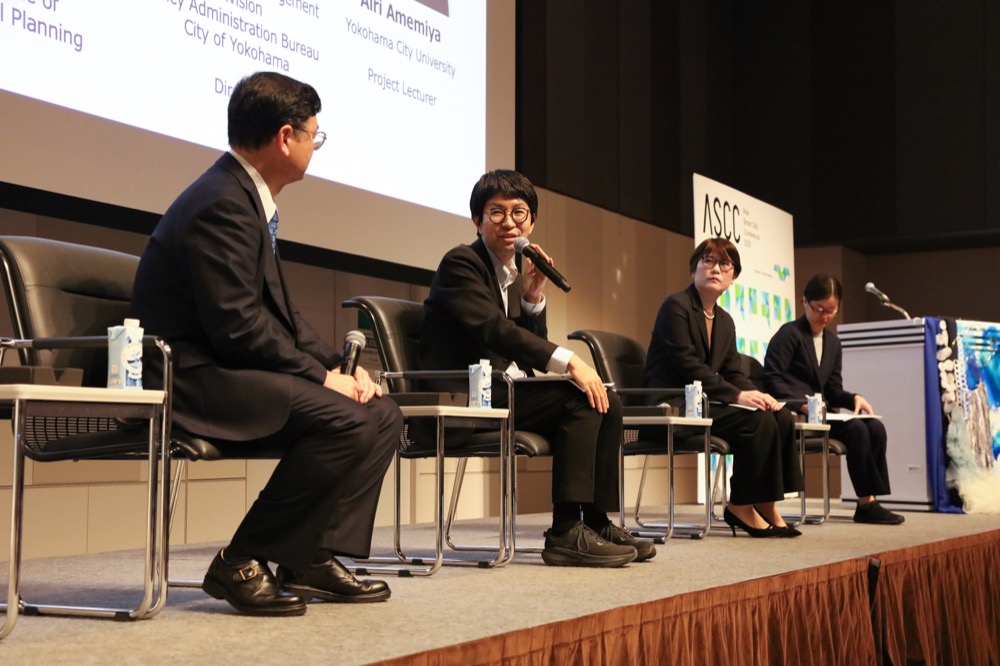
At the Asia Smart City Conference 2025 (ASCC), held in Yokohama on November 25–26, 2025, a talk session was convened on the theme of “Reconciling Environmental Action and Well-Being.” The panellists were Takehiko Nagumo, Representative Director of the Smart City Institute Japan; Kazutaka Kurobe, Director of the Environmental Planning Office, General Policy Division, Minister’s Secretariat, the Ministry of the Environment; Seiko Deguchi, Section Chief, Data Management Division, Policy and Management Bureau, City of Yokohama; and Airi Amemiya, Project Assistant Professor, Research and Industry-Academia Collaboration Promotion Center, Yokohama City University.
This article reports on the uncomfortable realities of the relationship between the environment and well-being—as discussed from the perspectives of national government, local government, and academia—along with hints for moving beyond them.
A Gap Between Goals and Reality: The Negative Correlation Between Environmental Impact and Happiness
At the opening of the session, moderator Takehiko Nagumo, Representative Director of the Smart City Institute Japan (a general incorporated association), presented reports from UNEP (the United Nations Environment Programme) and progress data on the SDGs (Sustainable Development Goals). Analysis of data across countries reveals a negative correlation: nations with higher levels of subjective well-being tend to score lower on SDG indicators related to the environment, such as climate change and ocean pollution.
In other words, people in countries where personal life satisfaction is high tend to consume more resources and emit more CO₂. This points to a reality in which “even if people intellectually know they should act in environmentally friendly ways, their actual behaviour and emotional satisfaction do not necessarily align.”
Nagumo described the situation as follows:
“The trend is that the happier people become, the worse the indicators related to coexistence with the global environment get. In other words, the gap between what people understand intellectually and what is actually happening—between ideals and reality—is enormous in this domain. It shows that human well-being and planetary well-being are in a state of false dichotomy.”
What we should be aiming for is to dissolve this “false dichotomy” and achieve a state in which subjective happiness and objective environmental assessment are in harmony. However, according to the model Nagumo presented, getting there requires individuals to clear a series of hurdles in what amounts to an “obstacle race”—including recognising the severity of the problem, trusting in the feasibility of action, and experiencing a sense of social good that goes beyond personal satisfaction.
Dissolving the false dichotomy is no easy path. Is it possible to protect the environment without sacrificing our current sense of happiness? Or must our very definition of happiness be updated? This may be a challenge to the metrics society takes for granted, and to how we relate to our own desires.
Approaching Infrastructure Limits: Thinking of the Environment as a “Body” Shared with Future Generations
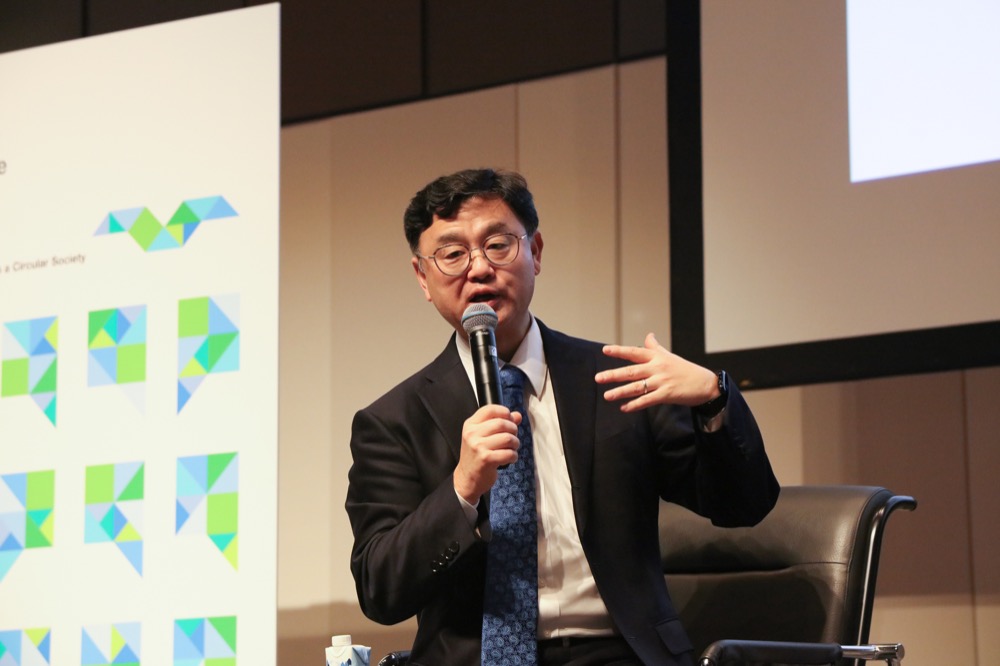
Next, Kazutaka Kurobe, Director of the Environmental Planning Office, General Policy Division, Minister’s Secretariat, the Ministry of the Environment, broadened the perspective by touching on how we perceive time. He raised the concern that if we use only current subjective well-being as our metric, we risk neglecting our responsibility to secure the well-being of future generations.
Kurobe emphasised that economic activity, social capital, and day-to-day well-being all rest on the foundation of a “stable environment.” For example, he noted that under Japan’s JIS (Japanese Industrial Standards) specifications, air conditioners are guaranteed to operate at outdoor temperatures of up to 43°C. This means that as temperatures continue to rise during recent heat waves, just a few more degrees could render our everyday infrastructure physically non-functional. The comfort we enjoy today rests on an extremely fragile balance.
In framing how we should understand the increasingly immediate impacts of climate change, Kurobe highlighted the importance of incorporating the “perspective of future generations” featured in Japan’s Basic Environment Plan, and offered this analogy to the human body:
“Climate change is roughly equivalent to pouring more alcohol into the human liver every day than it can process. As CO₂ increases, the Earth’s bodily functions are steadily weakening. But what is crucial about climate change is that this ‘liver’—the Earth—is shared in perpetuity.”
If your own liver deteriorates, you alone bear the burden. But the Earth’s environment—this shared “liver”—is a body we will continue to share with our children, grandchildren, and generations yet to come.
When we make high-environmental-impact choices today because they are “cheap and convenient,” we may be consuming in advance the Earth’s capacity that future generations were meant to use. Kurobe’s remarks serve as a warning against allowing the word “well-being” to collapse into the self-centred meaning of “my own fulfilment right now.” True well-being, he implied, requires the capacity to imagine the health of the Earth and its people 30, 50, or 100 years from now.
Can Tangible “Action Indicators” Bridge the Gap Between the Environment and Well-Being?
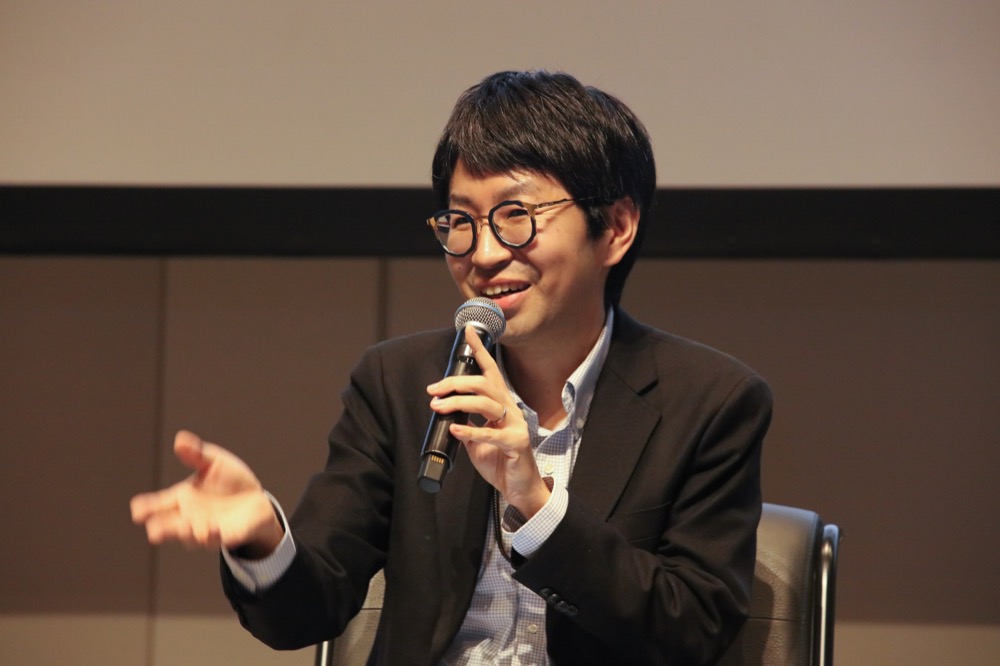
So how, in concrete terms, can we generate behaviour that reconciles well-being with climate action? Seiko Deguchi, Section Chief of the Data Management Division, Policy and Management Bureau, City of Yokohama, raised questions from the frontlines of local government about the nature of indicators (KPIs).
Yokohama had previously set targets based on scientifically rigorous but hard-to-grasp figures, such as the volume of greenhouse gas emissions reduced. However, through a circular economy promotion project developed in collaboration with UN-Habitat (the United Nations Human Settlements Programme), the city’s perspective shifted. It recognised the importance of incorporating into its indicators not only the “outcomes” of emissions reductions, but also the “processes” and “activities” in which residents can participate.
Deguchi spoke about the distance between large-scale goals and individual action:
“Everyone agrees on the importance of peace, for example, but in practice people often don’t know what they should actually do. I think environmental issues feel similarly distant. Without goals and indicators that residents can genuinely feel and respond to, I don’t think we can achieve the kind of behavioural change we need.”
Being told to “reduce CO₂ by X tonnes” may not resonate, but goals like “join a local clean-up” or “choose reused goods” are far easier to act on. It was suggested that participation in such concrete activities can itself foster human connection and, as a result, enhance individual happiness.
Reframing environmental action not as “sacrifice” but as a “positive experience”—one of community connection and a sense of achievement—requires careful thought about how indicators are designed. Yokohama’s approach offers a useful hint for resolving the false dichotomy between the environment and well-being.
Reclaiming Bodily Awareness: Translating Data into Personal Experience
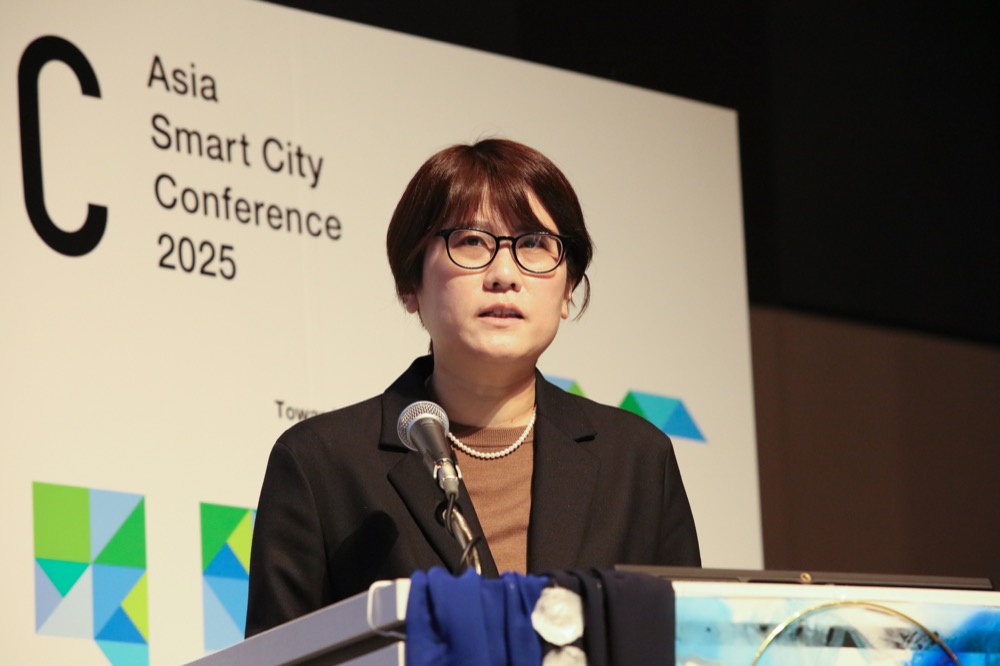
Finally, a cross-talk session was held with the addition of Airi Amemiya, Project Assistant Professor at the Research and Industry-Academia Collaboration Promotion Center, Yokohama City University. Participants discussed, from their respective standpoints, how to bridge the false dichotomy between the environment and well-being.
One perspective that emerged concerned environmental indicators for measuring well-being objectively, rather than through the subjective lens that can easily become self-centred. While no established indicators yet exist, ideas raised for more objective measurement included assessing the health of the ocean not in isolation but “by linking the health of the sea and the mountains,” and measuring “circulation at the watershed level—from upstream to downstream along a river”—rather than within a single municipality.
At the same time, mechanisms are needed to make large-scale concepts such as climate change and the circular economy felt at the level of everyday life. Amemiya pointed out that environmental changes affecting health are particularly likely to prompt people to see these issues as personally relevant.
“Health indicators are relatively easy for people to feel for themselves. When it gets hotter, for instance, you feel physical discomfort—precisely because it is your own body. That may be subjective, but I think indicators that you can feel right now, in yourself, also matter.”
It became clear that both the environment and well-being require a diverse range of indicators suited to different purposes. Just as we instinctively protect ourselves when we sense the danger of heatstroke, what may be needed is a “translation” that allows the crisis of the global environment to be felt viscerally. For well-being, meanwhile, there is a need to prioritise a time horizon that takes into account future generations and ecosystems.
Nagumo concluded by remarking that “the enemy may be the human brain itself.” It is inherently difficult to feel instinctive fear about distant futures or invisible threats. That is precisely why we need to find ways to translate data into “pain that can be felt” and “joy that can be practised.”
Editor’s Note: Imagination as Prescription
The contradiction of modern society—that the happier we become, the greater the burden we place on the planet—does not simply reflect a shortage of technology capable of reducing environmental impact. It also comes down to a question of values: what, at its core, is happiness tied to?
Well-being is not fixed. As times change and individuals redefine what happiness means to them, the correlation between environmental impact and well-being will shift accordingly. What the data presented in this session reveals, then, is that “‘happiness’ as defined by contemporary society is built on environmental burden.”
That is precisely why what emerged from this session was a hope placed in a capacity that human beings have always possessed: imagination.
Imagining the Earth as a body shared with future generations.
Confronting and reassessing our current definition of happiness.
And striving to feel, as a kind of pain, what lies behind the numbers in the data.
Reconciling climate action with well-being will never happen naturally on its own. It may be a new form of prosperity for a new era—one that can only appear after we consciously take on the “obstacle race” and keep exercising our imagination.
【Reference】Asia Smart City Conference 2025 | ASCC