※ This article is reprinted from “Ideas for Good.”
【Kyoto Circular Economy Special Feature】
This special feature is a collaborative project between IDEAS FOR GOOD and the City of Kyoto to explore the present and future of the circular economy in Kyoto. How can the spirit of “shimatsu no kokoro” (the traditional Kyoto ethic of frugality and making the most of things), the culture of circular living, and the craft traditions that have been passed down through a thousand years of history in this ancient capital be developed into innovations that will shape the Kyoto of the future — and give rise to circular businesses that will endure for the next thousand years? Together with the City of Kyoto, businesses across the city, and Akihiro Yasui, a policy advisory consultant to the City of Kyoto, this series explores the value and potential of Kyoto as seen through the lens of the circular economy. (Kyoto Circular Economy Special Feature Top Page)
Where do the resources that sustain urban life come from — and where do they return? After completing their first urban fieldwork session, participants in the Circular Business Design School Kyoto (CBDS Kyoto) — a hands-on circular economy business development program organized by the City of Kyoto and operated by Harch Inc. — set out for the Keihoku region.
▶︎ Read about the urban fieldwork session here
The urban session had touched on the resource cycles embedded in Kyoto’s history and culture. The journey to trace those cycles back to their source led deeper into the city’s hinterland.
The setting for this session was the Keihoku region, which once served as a timber-supply zone for the imperial capital during the Heian period (794–1185). Participants drew lessons from fukujo-daisugi (ancient multi-stemmed cedar trees that have grown for hundreds of years), a French architect who works in harmony with nature and approaches homebuilding as a form of play, and the people creating new currents of change in Keihoku. What is the true essence of “circularity” that becomes visible when we step away from a human-centered perspective and immerse ourselves in the rhythms of nature itself?
Below is a report from the fieldwork, which expanded participants’ horizons from city to satoyama (rural landscape), guided by Feilan Tseng of the social company ROOTS.
Guide Profile: Feilan Tseng (Zeng Feilan)
Co-representative and social designer at ROOTS Co., Ltd. Feilan studied industrial design based on Human-Centered Design in San Francisco, and after returning to Japan worked at Omron Healthcare, where she led product planning, design, and UI/UX design direction for healthcare products. From 2017 she worked as a freelance designer and taught social design at Kyoto City University of Arts. An encounter with a 250-year-old traditional farmhouse led her to relocate to Keihoku, Kyoto, and in 2018 she founded ROOTS. Under the concept of “regional design through travel,” she offers training programs for students from Japan and abroad in Nature-Centered Design, a design philosophy rooted in natural cycles.
What Fukujo-Daisugi Reveal: An Industry Sustained by Nature’s Cycles
This day’s fieldwork, too, began with a renewed encounter with cedar trees. The group visited a conservation area in Keihoku where fukujo-daisugi (clusters of ancient multi-stemmed cedar trees) can be found (※), and explored the distinctive trees with guides Akifumi Takeuchi and Shinji Nishi.
Fukujo-daisugi are a variety of cedar known as Ashiu-sugi, distributed along the Sea of Japan coast. Their name comes from their characteristic growth habit (fukujo-kōshin, or layering regeneration): long branches are pressed down by snow until they touch the ground, where they take root and grow into new trunks. In the forestry once practiced in this region, trees were felled not at the base but two to three meters above ground, so that new branches could grow from the stump. Centuries later, many of these trees now stand as towering giants.
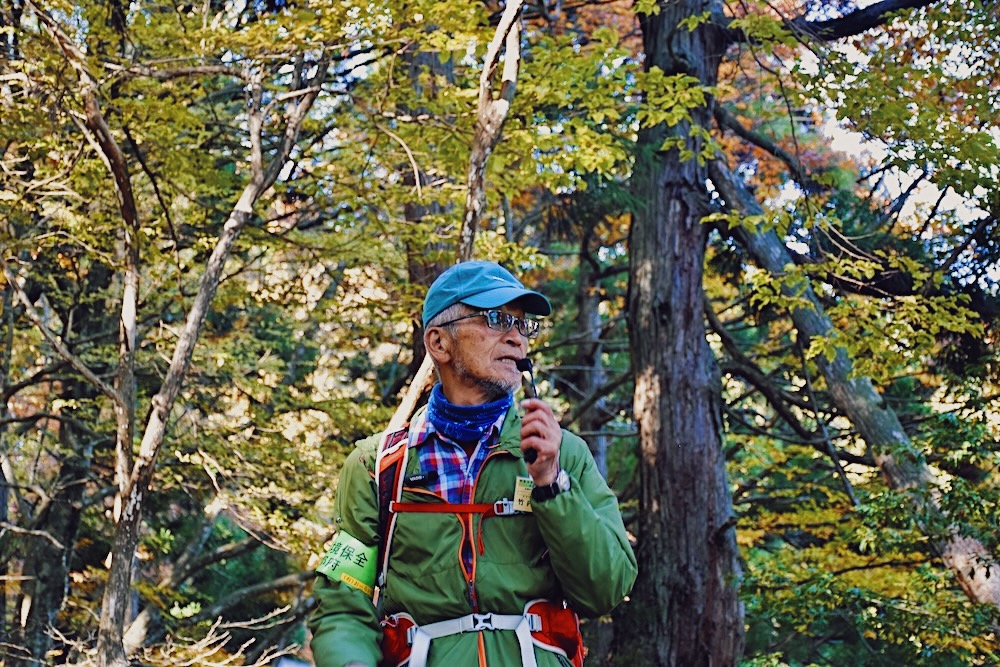
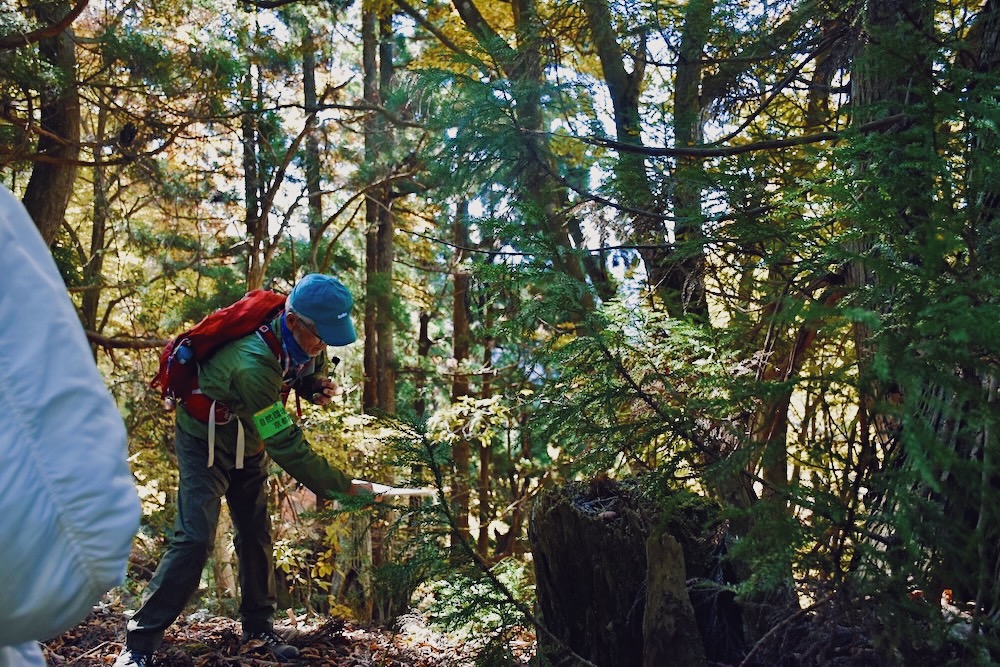
Takeuchi: “This right here is fukujo-kōshin — layering regeneration. You can see it coming out toward the ground. It’s fairly common in broadleaf trees, but quite rare in conifers.”
Feilan: “In other words, rather than the modern approach of planting everything and then harvesting everything, people here made skillful use of what was naturally regenerating on its own.”
A little further along, another strategy by which trees harness the forces of nature came into view.
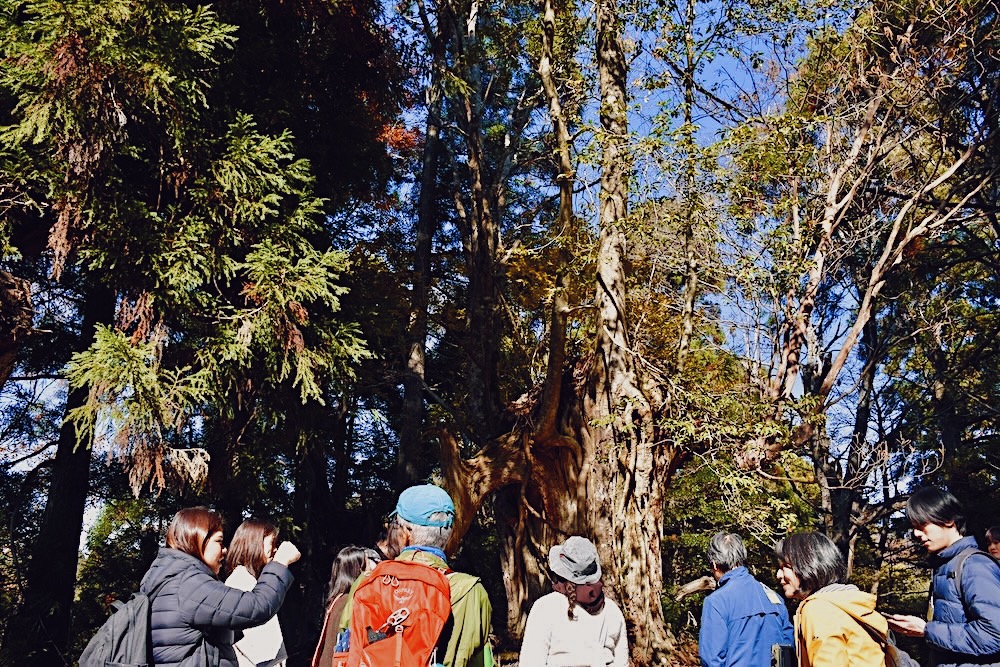
Takeuchi: “This one is commonly called a yadori-sugi — a ‘host cedar.’ About seven or eight different cedar trees have spontaneously taken root and grown up through the branches. It gets good sunlight and plenty of nutrients — a natural flowerpot, if you will.”
Feilan: “Because the host cedar’s roots are firmly established, the trees growing on top of it can reach upward much more quickly. This is the plant’s strategy.”
Forestry in this region was once practiced with a deep understanding of, and attunement to, these natural characteristics of the trees. By felling any single tree only once every seventy to eighty years, foresters could, over the long term, continue harvesting timber from a single tree for a hundred years or more. In other words, when they cut a tree standing before them, they were thinking a hundred or three hundred years ahead.
Pressing on past the autumn foliage, the group came upon a particularly magnificent tree.
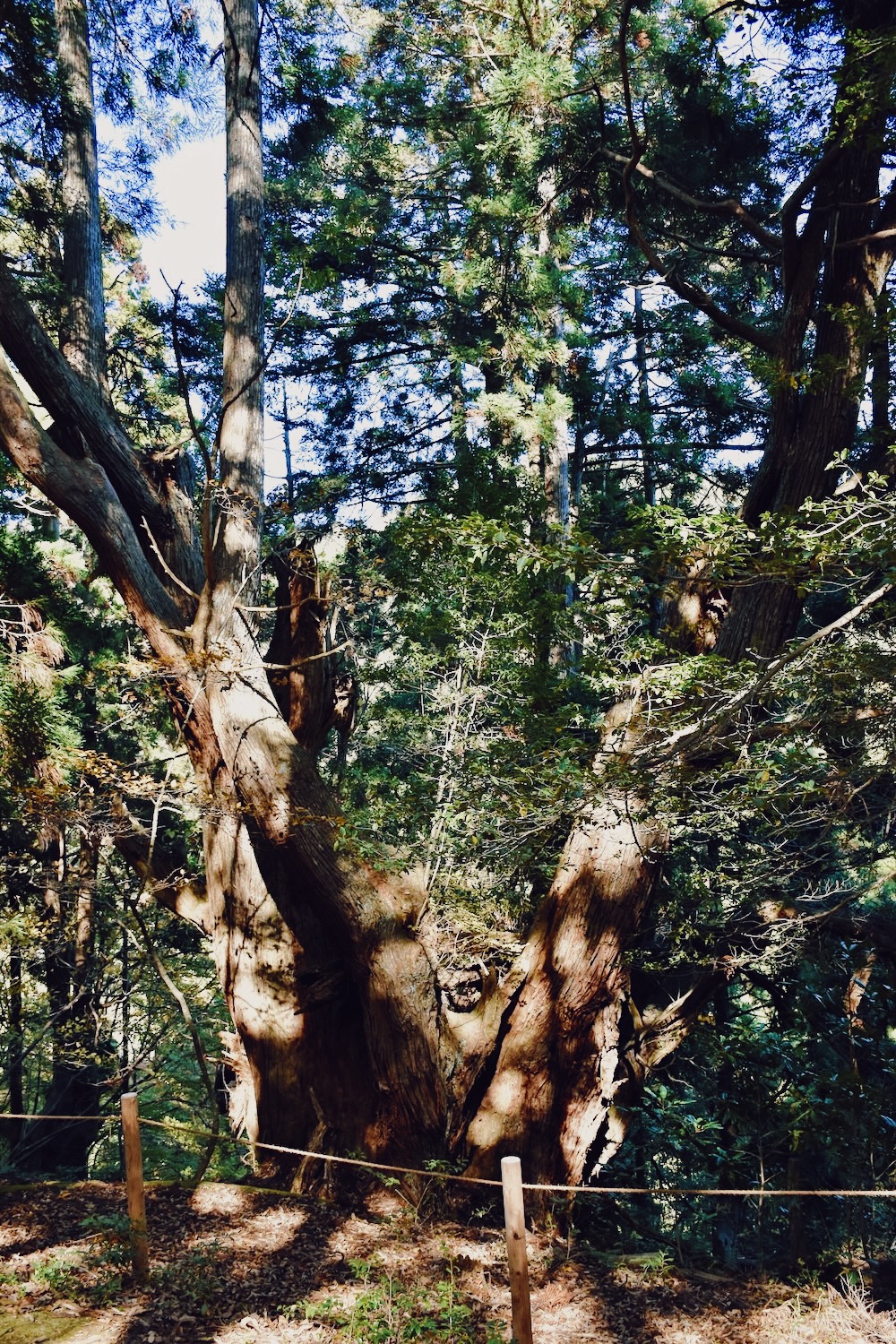
Takeuchi: “We’ve arrived at the Heian-sugi. Its trunk circumference is about 15.4 meters — the famous Yakusugi cedars of Yakushima Island measure around 16 meters — so this tree is estimated to be about 800 years old. This whole area has supplied timber to the imperial household since the Heian period. The wood from these trees was used to build the Imperial Palace, shrines, and temples. The people who managed these forests would come here, plan which trees to fell next, bring the timber down the mountain, and in those days float it on rafts all the way to Arashiyama.”
Now that this industry has ceased, the area has become a conservation zone managed by local government. But that also means our daily lives have been severed from the bounty of the mountains and forests, and the relationship has grown thin. The cycle in which people used timber and were sustained by the mountains — once a matter of course — has long since stopped turning.
Feilan: “That makes you think, ‘We should just use more timber, right?’ But when it comes to large-volume orders, imported timber is actually better equipped to meet global standards. Timber that is curved doesn’t conform to those standards, so productivity suffers.
To begin with, it’s inherently difficult to grow perfectly straight timber in Japan’s mountains. The terrain is so steep that trees have to grow with a curve in order to anchor their roots properly. The techniques of the miyadaiku (master shrine and temple carpenters) were developed precisely in response to those conditions — and now, amid the globalization of industry, all of that is changing rapidly. How to pass this knowledge on to the next generation is, I think, the most pressing challenge facing Keihoku and Kyoto’s architectural traditions right now.”
Takeuchi: “In the old days, going into the mountains to tend them, and protecting the mountains so that the timber they produced became a livelihood — that cycle was people’s work and their means of living. That’s gone now. Today there are other sources of income, and that’s how things have changed.”
Taking a long view, or deliberately choosing to use curved timber even when it takes more time, is considered inefficient in the modern world. Yet Feilan suggested that this is really a question of what axis we use to define “rational.” Halting the ecosystem’s cycle and replanting from scratch may itself be exhausting for the mountain. The “rationality measured across hundreds of years” that our predecessors held in view may contain perspectives that can help solve the challenges of our own era.
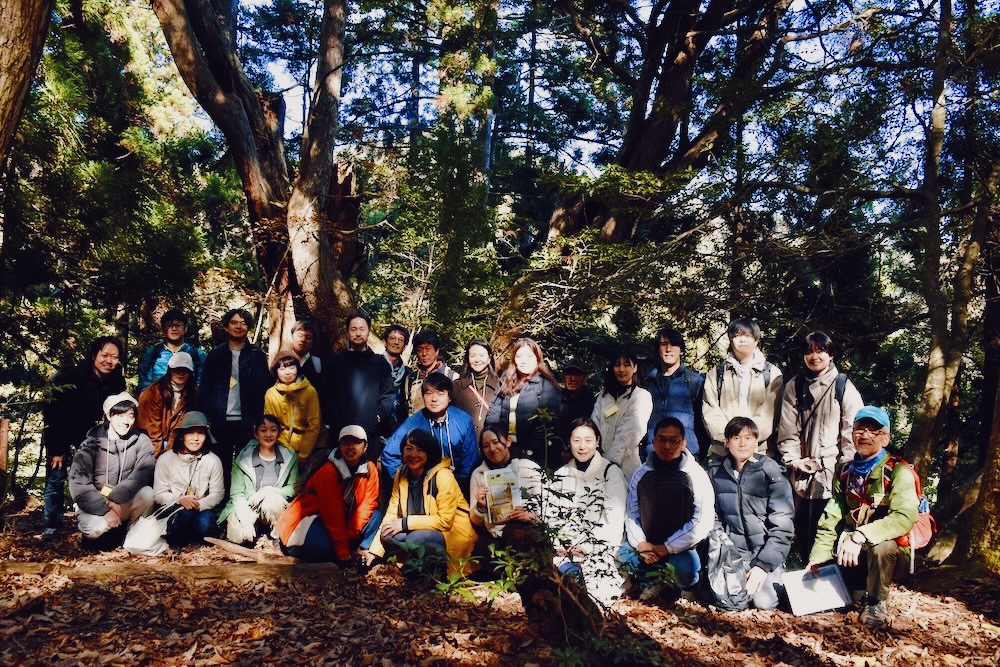
※ Entry requires a nature guide and advance booking for a tour.
Circularity Is Born in the Design of Joy
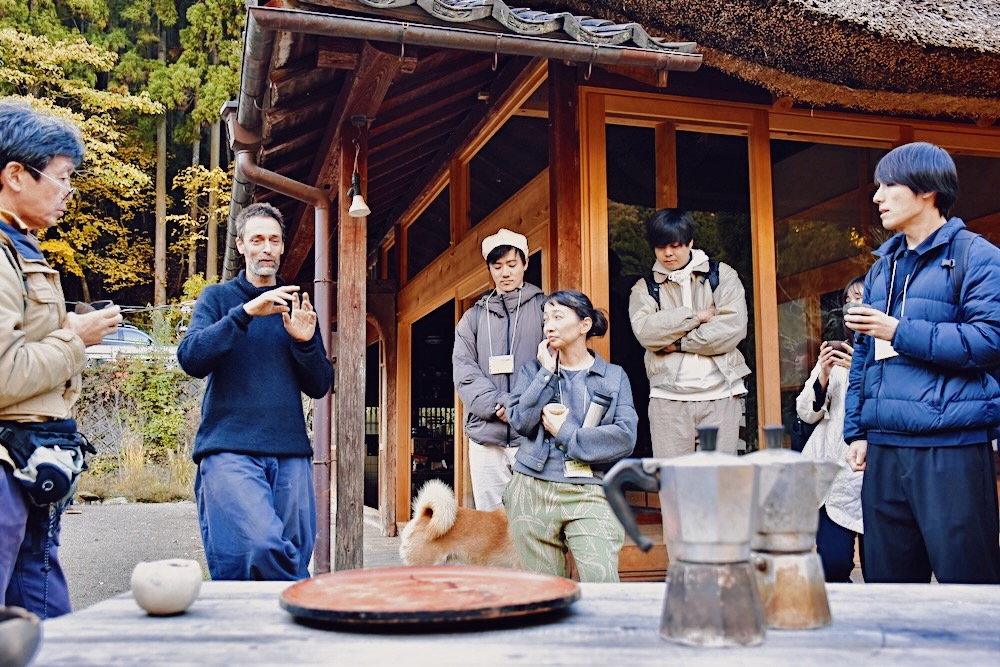
“We respect what this house needs” — so began Sébastien Renault, a French-born architect who works under the artist name 2M26. He moved to Keihoku in 2021, re-thatched a farmhouse that had been covered in corrugated metal sheeting, and with his own hands has been building architecture that harmonizes with the local natural environment. The group visited his home and atelier, which he shares with his partner Mélanie, and heard his story.
What his architecture and way of life embody is not the idea that a region is built up from the lives of individual people, but rather that the landscape comes first, and life is created within its cycles.
Sébastien: “When you carry on the traditional ways of this land, the act of people living here actually increases the biodiversity of the site and its surroundings. Through tending the land, you receive materials as gifts from it. This house stands as part of that process. We are part of nature, and we have a role to play in keeping its cycles turning. I believe people have been doing this since ancient times — long before modern architecture ever existed.”
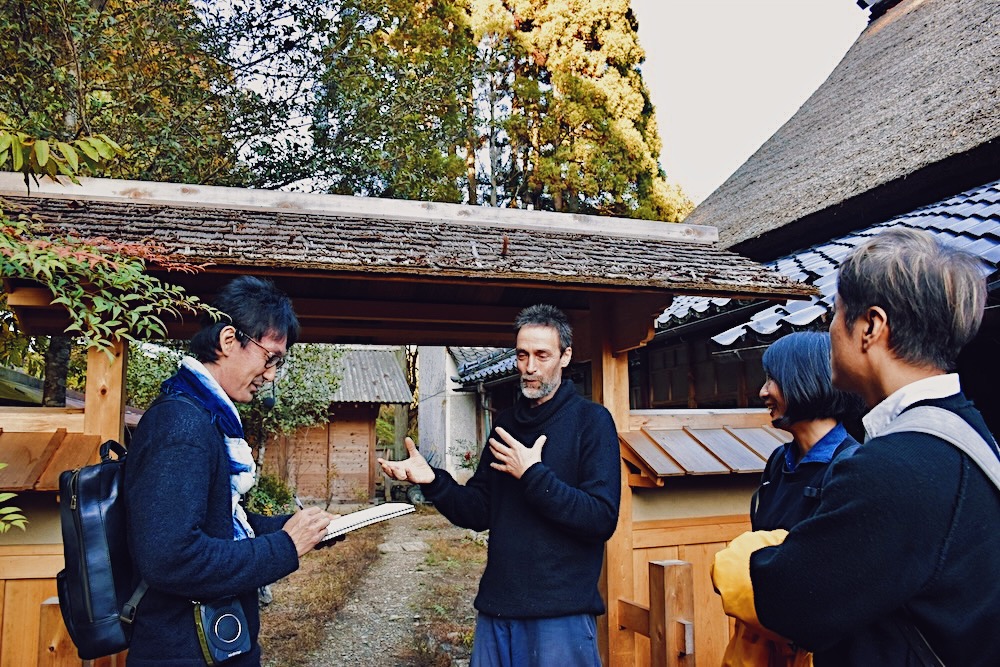
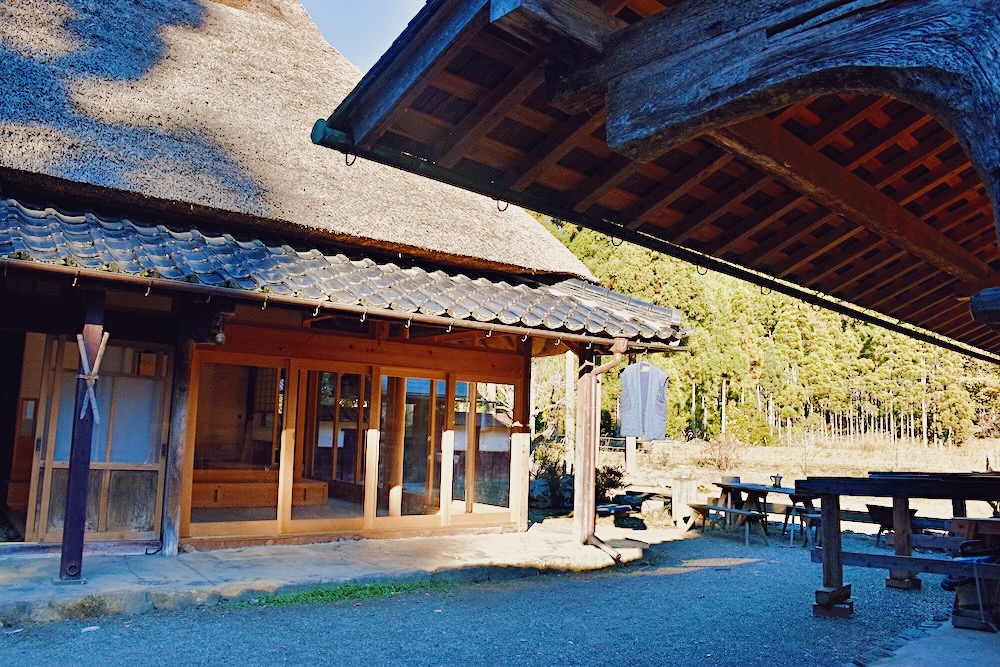
Almost all of the structures Sébastien works on in Keihoku are based on traditional Japanese techniques. He typically starts by building a small prototype for the animals, then uses the same technique to build a larger version for human use.
Sébastien: “I live in a traditional Japanese farmhouse, but precisely because this is the modern era, I’ve also made various modifications throughout the space so that a lifestyle of sitting at a computer for eight hours indoors is possible too. I’m not rigid about it — I find a balance. There are times when I order things from Amazon with a single click.”
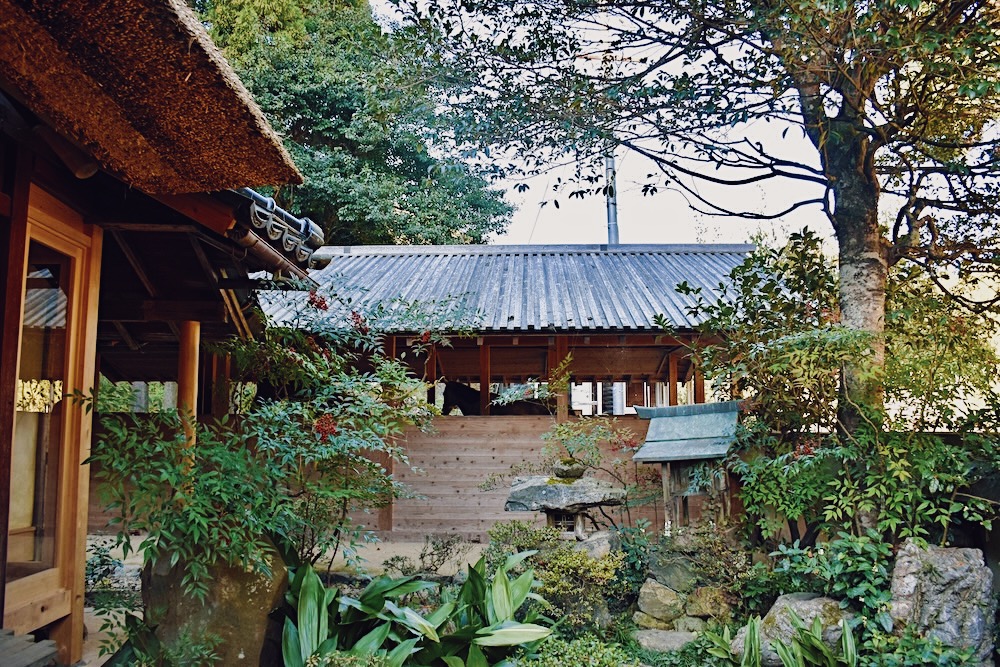
The materials used for building and living come from relationships within the Keihoku community. The sawdust spread beneath the stable floor is collected from the workshops of local kumiko (traditional lattice woodwork) craftspeople and furniture makers. Thanks to this connection, the craftspeople are relieved of the burden of burning their sawdust, and the horses gain a comfortable bed.
Feilan: “In the four and a half years since he arrived, the landscape here has completely transformed. This place was full of trees, and you couldn’t have imagined a horse walking through it. Recently, water started seeping up from the ground, so Sébastien made a pond. Most people would seal it with concrete because seeping water is a nuisance. Instead of that localized fix, the design process of creating biodiversity here is fascinating.”
Sébastien: “I actually grew up in the city. Throughout my career working in urban environments, I often created things for public spaces. When you realize a design in a public space, the key is how to make use of what is already there. It’s an open space that everyone uses, so it’s not a place you can fully control yourself. That kind of making and practice may be similar to the question of how to make use of the natural environment right in front of you.
For example, when I compared making a floor in concrete versus making it in tataki (a traditional Japanese technique using compacted earth, lime, and clay), the former was ‘a race against time.’ I had to work before the concrete dried, and time was the boss. With tataki, it’s lime and clay. Nature doesn’t rush you; you work in its rhythm, and the making feels genuinely good. I think that was what drew me to natural materials and made me want to build an entire house with them.”
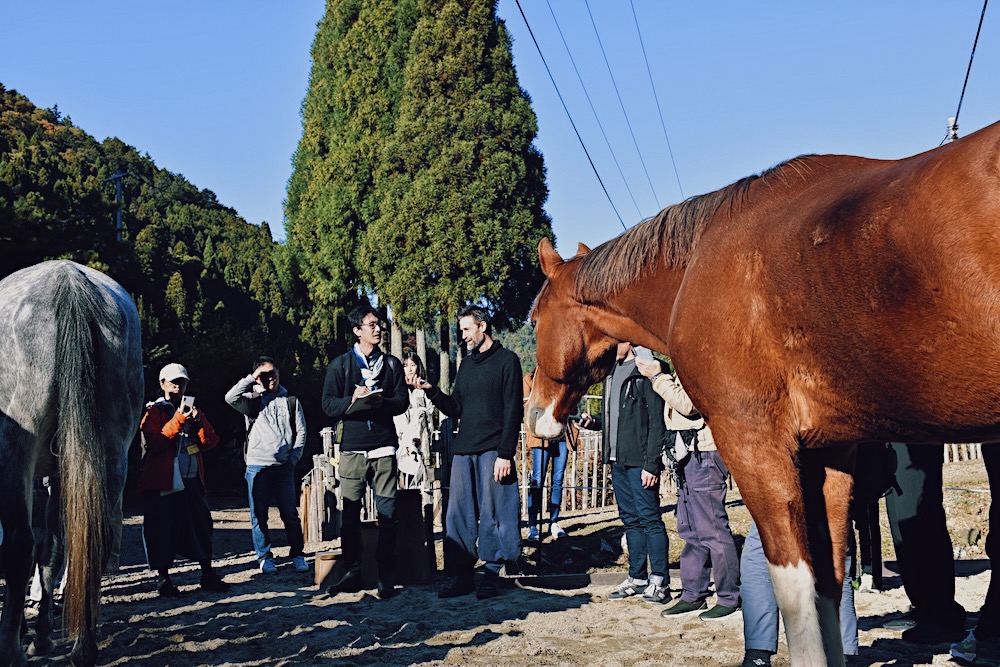
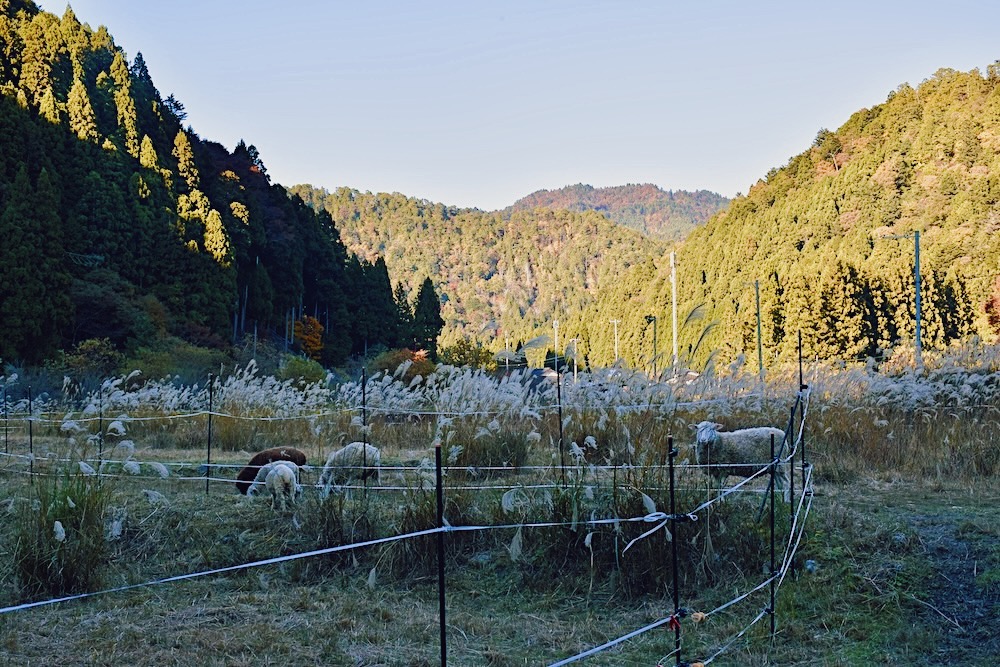
Sébastien: “I think everyone here has the circular economy as a major theme, and I find it a little strange that we even have to say it that way. Because I believe human beings have always practiced the circular economy.
If I were to put what is called ‘circular’ into my own words, I would call it ‘joyful design.’ The fact that materials close at hand become a roof, become fertilizer — that the nature right beside you comes alive and becomes something useful — that is joy. So while I think it’s important to theorize what humanity has always done as the circular economy, I believe what matters most is that practicing it, at its core, is joy.”
When a new concept spreads, we tend to treat it as an entirely new technology or way of thinking. Yet its essence is often something that has been passed down for a very long time. The fact that Sébastien expresses it with the word “joyful” speaks to how far we have drifted from our bodily and sensory experience — and to the importance of honoring it. Even so, he says, there is still a chance to inherit the practical wisdom and skills needed to reclaim that physical joy in daily life.
Sébastien: “I recently visited Switzerland, and the houses from five or six thousand years ago that I saw in an archaeology museum were the same thatched-roof houses as this one. In other words, the techniques and practices we still use here in Japan today have already become archaeology in Switzerland. Yet in Japan, knowledge of how to construct a timber frame, how to keep layering this material as a roof — it is still being passed down in an unbroken line. This is something I feel truly fortunate about, having come to Japan.”
In their home and atelier, you will find almost nothing made by established commercial brands. Sébastien said that making things suited to his own life and sensory experience himself brings him far more joy.
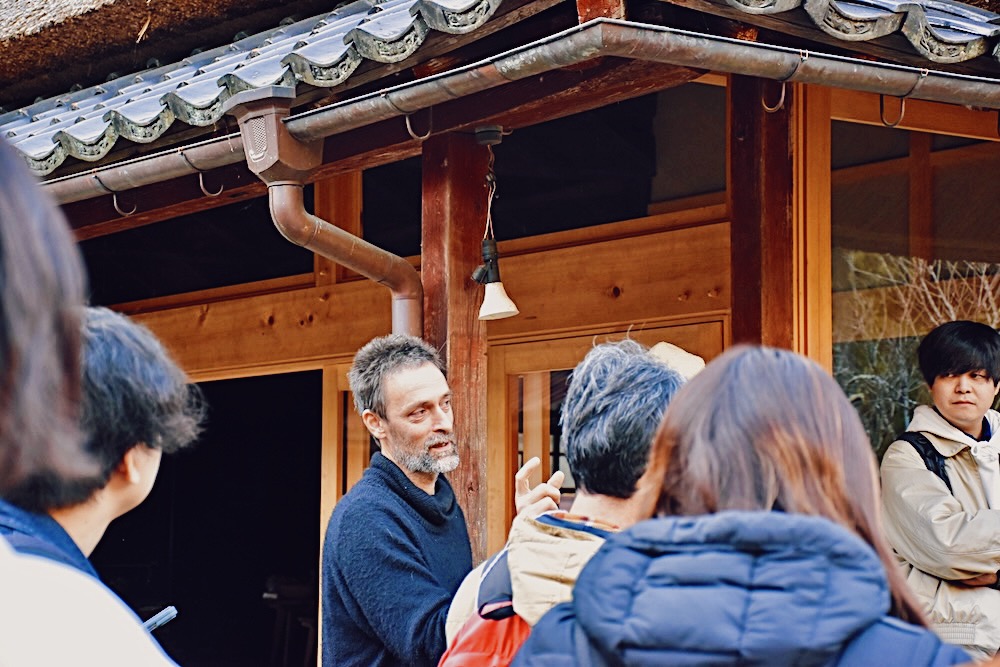
Sébastien: “For the thatched roof of this house, we prepared one-third of the thatch ourselves, reused one-third, and bought the remaining third. I learned thatching by spending two and a half months working alongside a craftsman.
The two-week thatch-harvesting season is just about to begin. Cutting thatch is truly a wonderful task. Most people might see it as labor, but for us it’s a ‘thatch-cutting holiday’ — something we’d happily pay to do. Because it’s a time that feels like a reward woven into daily life, I think it’s also very important to think about how to protect that time.”
This, one realizes, is what it means to live playfully within nature. In the gaze that finds joy in the time and effort that moves in step with nature’s pace, there lives a measure of well-being — grounded and unhurried — that is quite different from the economic rationality that modern society pursues.
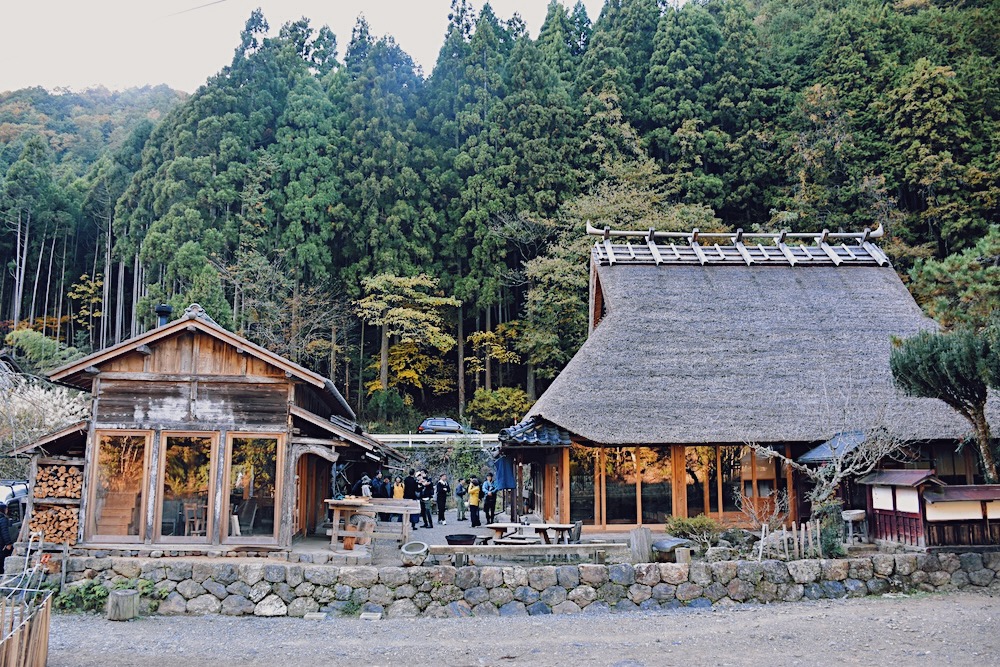
A Place to Learn in the Community, with the Community: The Map of Regeneration That ROOTS Is Drawing
At the close of the fieldwork, Feilan of ROOTS — who had guided the day’s journey — reflected on the lessons of the day and shared what it means to her to be active in this place.
The ancient industry rooted in the fukujo-daisugi, and the architecture and way of life of the two people behind 2M26 — the places we visited that day were all part of a great cycle stretching back to the Heian period, a time when the connection between nature and human activity was simply a given. Yet in the mass-production social structures that define the modern mainstream, it is far from easy to inherit wisdom that has continued for hundreds of years and to live, as it were, against the current.
Feilan: “When the mainstream is already fully formed, moving in the opposite direction is extremely difficult. So rather than fighting against it, we are in the middle of feeling our way toward a new ‘current’ — our own way of living and building a business.”
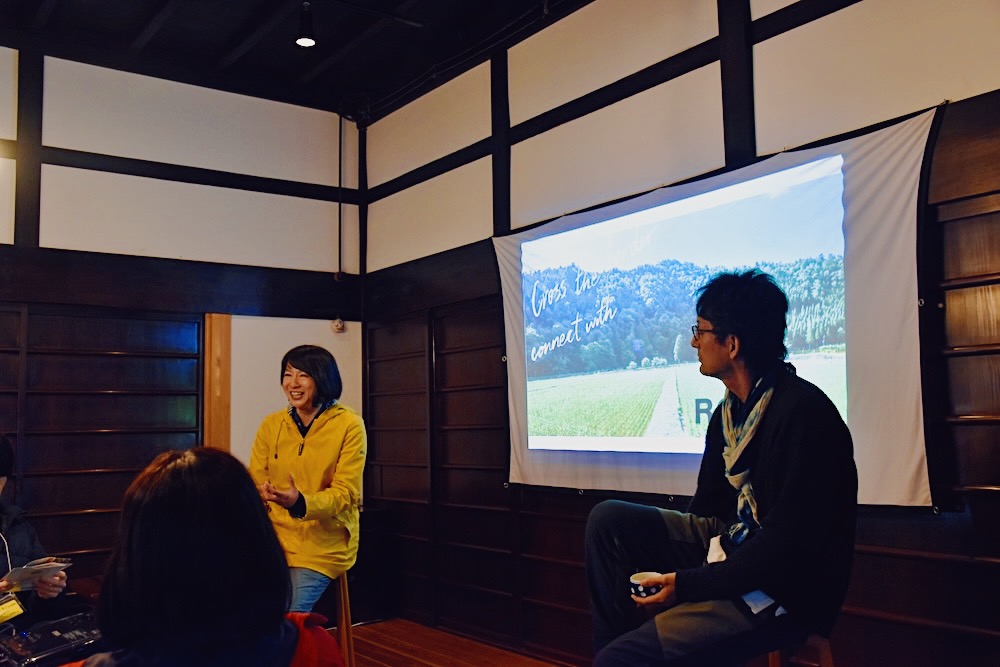
Feilan herself once worked in product design at a major manufacturer. But fifteen years ago she moved to Keihoku and began living in a thatched traditional farmhouse, and that experience fundamentally changed her understanding of design.
Feilan: “Keihoku has no tourist attractions and no train line. And yet it’s a fascinating place where the way of life from the Edo period (1603–1868) and earlier has been preserved, as if vacuum-packed. When I moved here fifteen years ago, the grandfathers who had carried that old wisdom were still active, and it was just barely still possible to learn their skills.
Here I realized that Nature-Centered Design — design centered on nature rather than on human problem-solving — is far more prevalent. As Sébastien says, it’s not that you design something; rather, design emerges from maintaining the field. I wanted to learn that way of being, and I wanted the students — the next generation of designers — to learn it too.”
That is why ROOTS treats tourism as a gateway to the region, and runs educational training programs through which participants learn wisdom and embodied knowledge from local people whom the company calls “Local Wisdom Meisters.” ROOTS functions as a platform that bridges cities and overseas communities with the satoyama, and works to regenerate the region by returning to values rooted in natural cycles.
Standing between different worldviews, the company is searching for ways to carry forward what it calls “Local Wisdom.” But outsiders cannot simply insert themselves into a community and expect to achieve the transmission of wisdom. To weave comfortable relationships within a region, “trust as currency” is essential — and ROOTS appears to serve as the broker of that trust.
The concept the company holds up is “Cross the Border, Connect with Roots.” They position tourism not as mere consumption, but as an educational entry point that shines a light on the wisdom of a place.
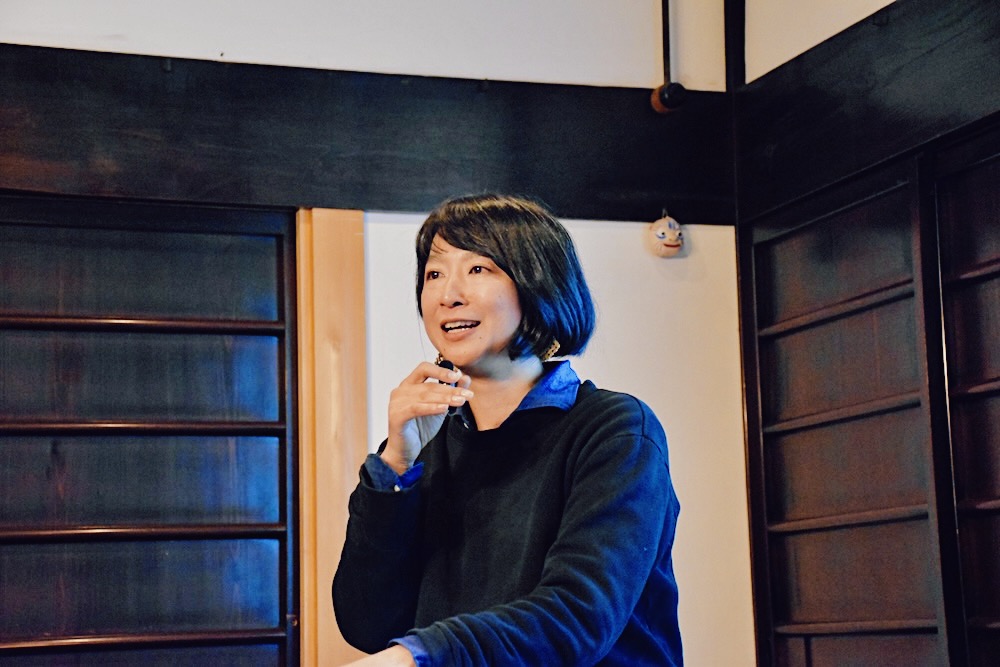
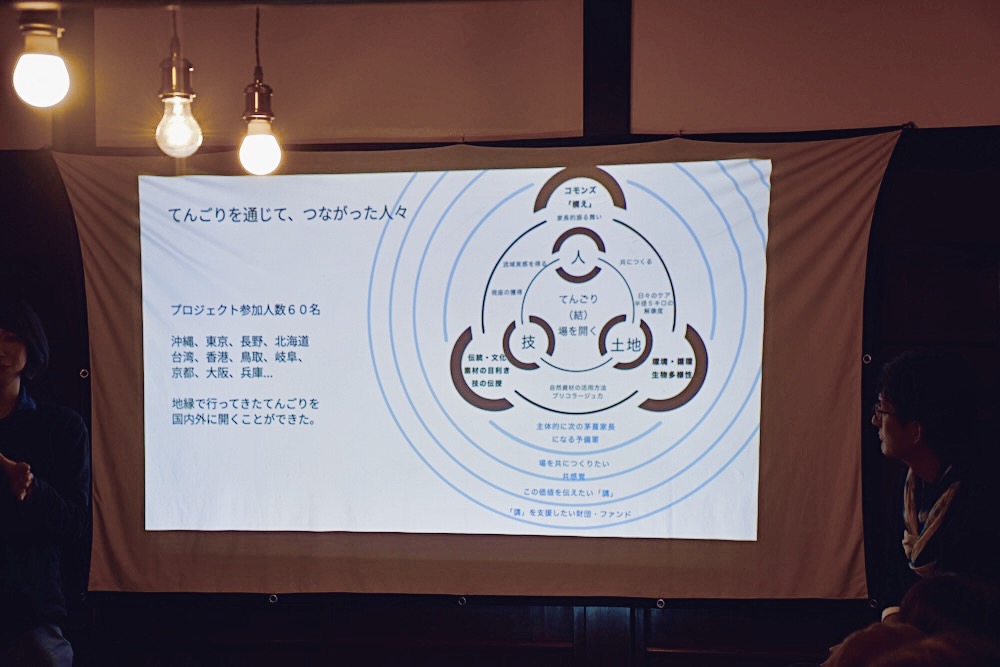
A symbolic example of this is the project to re-thatch the roof of Feilan’s own home. Encouraged by Sébastien — “There are people right within reach who will teach you; why aren’t you doing it?” — she launched the project, which drew more than sixty participants in total from Japan and abroad. Students from Hong Kong and Taiwan, and young people from Japan, thatched the roof together with a craftsman.
Feilan: “After spending two months actually thatching the roof, I started looking at pampas grass and thinking, ‘That’s roofing material.’ It’s like — when a typhoon hits and a tree falls over, you feel less urgency than when a daikon radish crop gets flattened and you think, ‘I have to go cook that right away.’ There’s that kind of feeling. So just like cooking, when you make your own life with your own hands, your consciousness and spirit flow into it.
And when you’re thatching, all sorts of people come to help, so as the roof takes shape, there’s something deeply satisfying about it as a human being. You get the feeling that your family is being protected by everyone’s efforts.”
In this region, helping with roof-thatching is called tengori (temaokuri, or “passing on labor”). It is not mere work — it is a passing-on of kindness, a sacred act of sharing joy. Experiences like this affect not only the students who participate, but the community itself. Seeing students from Hong Kong create a map app for Keihoku or propose a treehouse, local residents are beginning to rediscover the value of their own region.
Rather than simply preserving old wisdom, the aim is to combine it with the challenges of the present and open it to the world as new value. The “current” taking shape in the small satoyama of Keihoku seems to be offering a map of the future — at once familiar and new — to a modern society that has run up against its limits.
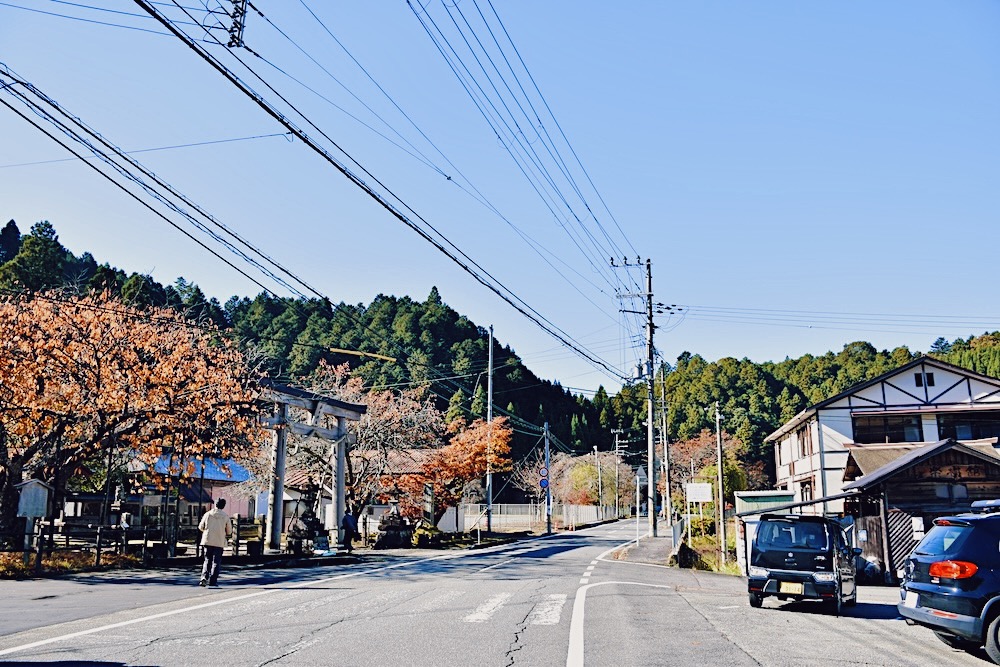
Before the fieldwork began that day, all participants visited a local Shinto shrine together to pray. It was a way of expressing the feeling: “We are entering the mountain. Thank you for having us.” Pressing their palms together was also a moment to consciously adopt that posture anew. Was not the quiet reverence — almost like a prayer — that flowed beneath the people and landscapes encountered that day precisely this?
The ancestors who protected and nurtured the fukujo-daisugi, and the people weaving new lives in the present day, all held within them a sense of awe toward nature and respect for others. Circularity may not be something that lives in the building of systems, but rather in the sustained act of holding reverence for the natural environment around us, for other people, for things, and for community.
The way of engaging with the world that we encountered in Keihoku — that orientation — is something that can be adopted in places beyond Keihoku, and in activities that are not rooted in any particular land. The next step toward embodying it leads into the next CBDS Kyoto workshop. How will participants who have gathered learning from both the urban session and Keihoku find their points of connection with business? We will continue to report on the program in the articles ahead.
▶︎ The final showcase for this program is scheduled for Friday, January 23, 2026, to be held both in person at QUESTION in Kyoto and online. Don’t miss the chance to encounter the participants’ ideas.
About Circular Business Design School Kyoto
Kyoto possesses assets that shine across the ages — the spirit of “shimatsu no kokoro” (frugality and resourcefulness), a culture of circular living, and traditions of craftsmanship, all nurtured over 1,200 years of history. Realizing the circular future demanded as climate change and biodiversity loss grow ever more serious requires the creativity to bring this accumulated wisdom into the present and pass it on to the future. With this in mind, Harch Inc. — the company that operates IDEAS FOR GOOD — launched a learning program in October 2025 that combines the circular wisdom embedded in the city of Kyoto with a forward-looking perspective grounded in cutting-edge circular economy knowledge, to co-create and realize the future we want together. “Decode Culture, Design Future” — a circular future beyond tradition, from Kyoto to the world.
Website: https://cbdskyoto.jp/