※This article is reprinted from “Ideas for Good.”
【Kyoto Circular Economy Special Feature】
This special feature is a collaborative project between IDEAS FOR GOOD and the City of Kyoto, exploring the present and future of the circular economy in Kyoto. How can the spirit of “shimatsu no kokoro” (the traditional Kyoto ethos of resourcefulness and avoiding waste), the culture of circular living, and the craft of making things—all woven into the fabric of this thousand-year-old capital—be developed into the innovations that will shape Kyoto’s future and give rise to circular businesses that endure for the next thousand years? Together with the City of Kyoto, local businesses, and Akihiro Yasui, Policy Promotion Advisor to the City of Kyoto, this feature explores the value and potential of Kyoto as seen through the lens of the circular economy. (Kyoto Circular Economy Special Feature Top Page)
As the call for a transition to the circular economy grows louder, how do we give concrete form to “a future not yet seen” and share that vision with others?
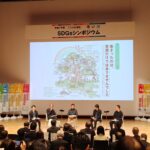
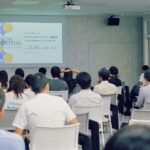
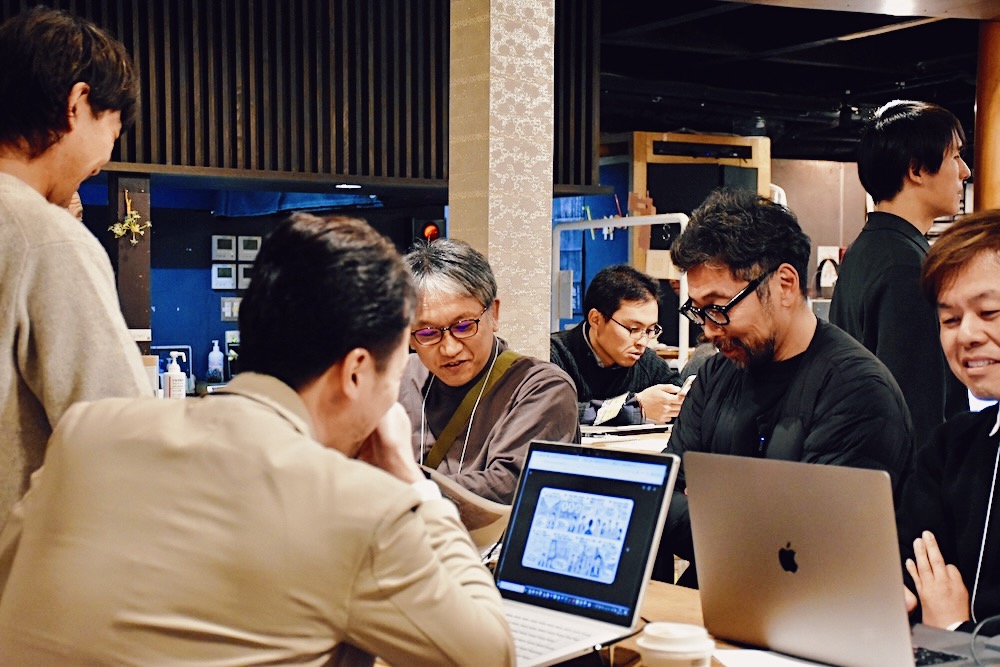
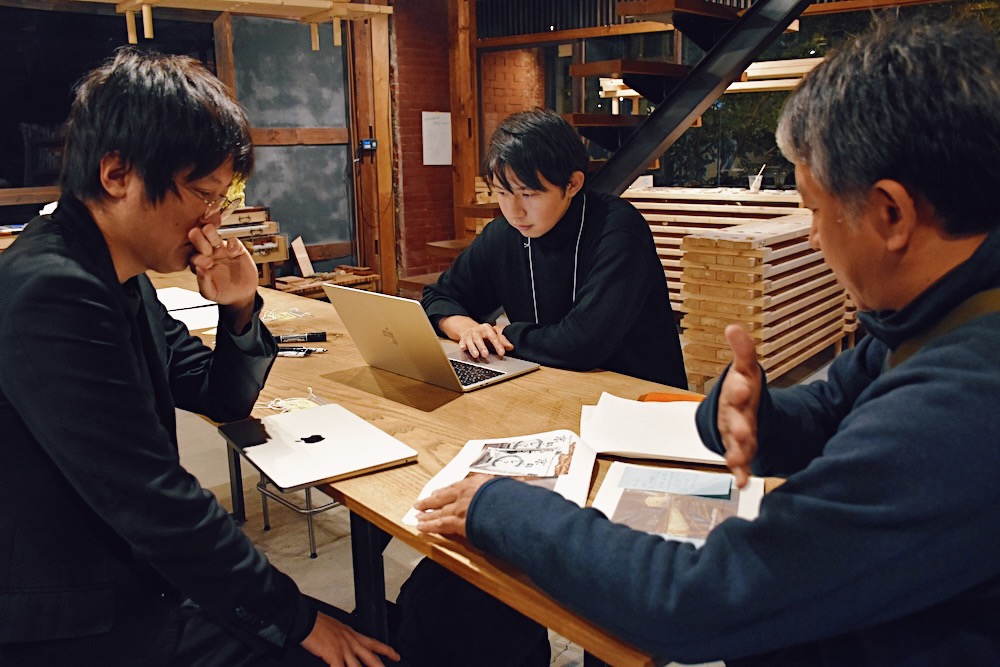
On December 16, 2025, FabCafe Kyoto hosted the fifth workshop of Circular Business Design School Kyoto (CBDS Kyoto)—a hands-on circular economy business development program organized by the City of Kyoto and operated by Harch Inc. This article reports on what took place.
The theme of the session was “prototyping”—giving tangible form to the circular future participants want to create. With Professor Daijiro Mizuno of Kyoto Institute of Technology as guest speaker, participants explored the significance of prototyping in circular design and learned methods for translating ideas into concrete experiences.
The Journey from Prototype to “Familiar Design”
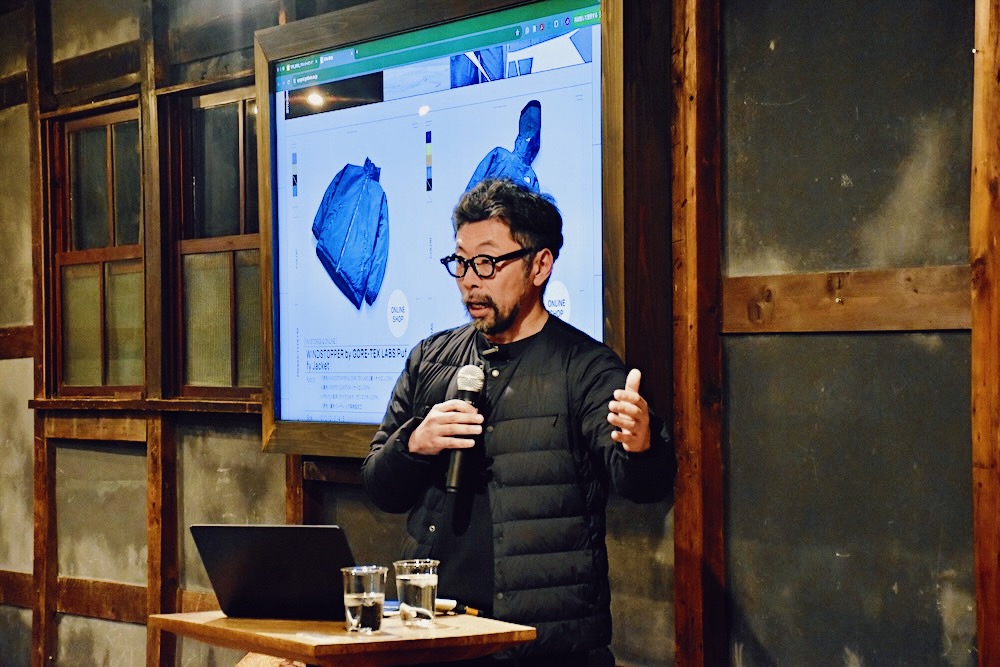
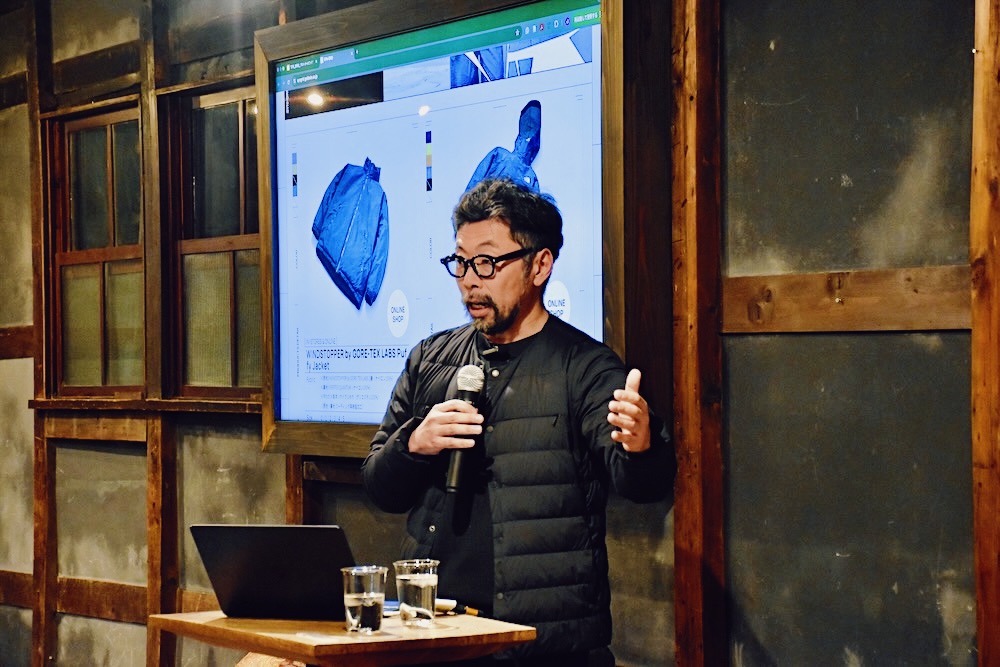
At the opening of his lecture, Professor Mizuno drew on his own past projects to share the process of trial and error in prototyping and the lessons he drew from it.
Around 2016, Mizuno and students from his laboratory at Keio University were engaged in collaborative research on the modularization of clothing. The concept was a garment held together by buttons that could be disassembled part by part and reused once worn out. The team used algorithms to create these parts and researched ways to make them customizable.
They then devised a manufacturing method that pre-stretched fabric to maximize the efficiency of pattern cutting. The technique involved fixing stretch fabric at full extension and printing resin directly onto it with a 3D printer. When the fabric was released, the force of it contracting back to its original shape caused the flat material to transform into a three-dimensional form.
Even so, the quality was not yet satisfactory.
“Right next door, the Shohei Matsukawa Laboratory was applying algorithms to architectural design. We got talking with people from that lab about developing an algorithm that could convert the organic, curve-heavy shapes of human clothing into the simplest possible geometric forms.”
This collaboration led to the development of an algorithm that, like fitting together jigsaw puzzle pieces or building blocks, could construct garments while minimizing cutting waste. Yet the barriers to product implementation remained high.
“There were still challenges with the finish of details like necklines and armholes, and we needed to keep improving. Even at that stage, a group of students from the lab entered the Global Change Award organized by KERING, won a special prize, and received business support—which ultimately led to the founding of Synflux, a startup spun out of the laboratory.”
For apparel companies, the value proposition is clear: reducing manufacturing waste and costs while maintaining familiar design aesthetics. Today, Synflux’s algorithm has been adopted in the pattern-making process for the “Dot Shot Jacket” developed in collaboration with Goldwin Co., Ltd. By analyzing 3D garment data and constructing zero-waste patterns, the fabric waste rate from cutting has been reduced from approximately 17% to approximately 9%.
“What is particularly noteworthy is that rather than specializing the algorithm for specific types of clothing, we evolved it so that it could be properly applied to everyday, ordinary garments. In the course of that platformization, Synflux also established a distinctive business model.”

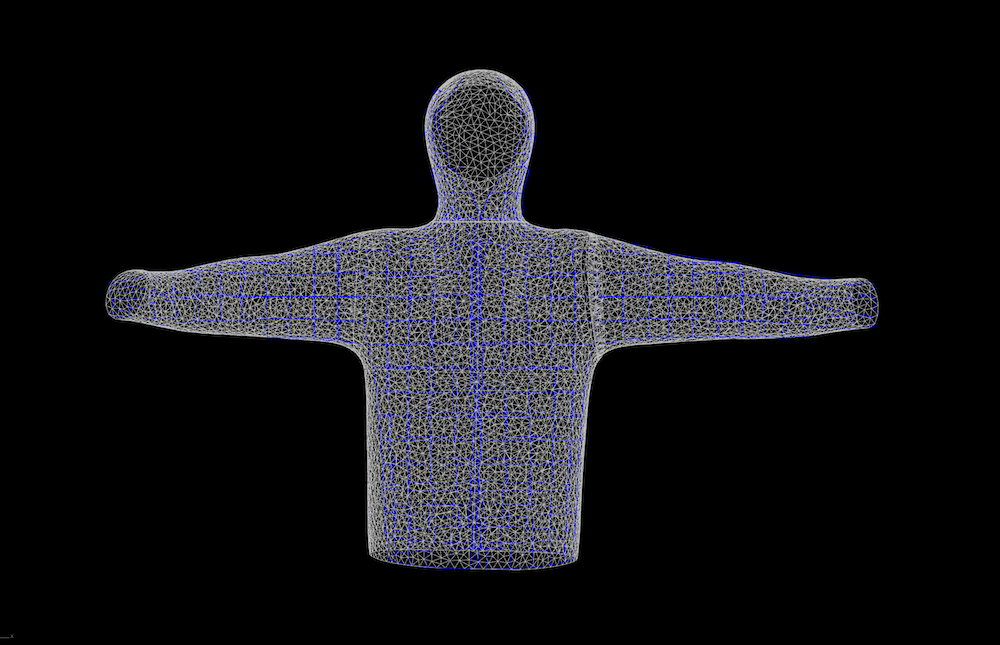
Based on all of the above, Mizuno emphasized that it took considerable time to move beyond treating a prototype as a mere physical mock-up and to land it as a combination of system, service, and business model.
“Getting a prototype to land as a system, a service, or a concrete product involved many twists and turns. I think this illustrates just how important it is to keep repeating the prototyping process and continuously raising the level of refinement.”
Does the Success of a Service Hinge on “Where You Put the 3D Printer”?
To achieve that, tools such as a “service blueprint” that provides a bird’s-eye view of the entire service flow and a “customer journey map” that describes the user’s experience are indispensable. However, Mizuno noted that “the more carefully you write these, the more you run into problems of detail.”
“It is difficult to design a service without the user at the center. That is why we describe a user-centered journey—but when you try to write it out in fine detail, you inevitably have to think about how a user spends their day and how a new service fits into that life.”

For example, if you imagine a service where users print or grow clothing at home, there needs to be a place in the home to put a 3D printer.
“People have a spot for the telephone at home. But no one has ever had a piece of furniture specifically for a 3D printer. Where exactly would it go? What device would it connect to? How would it change daily life? In the world of everyday living, even where you put a pencil is already decided. Unless you design at that same level of detail, a service will never take root in people’s lives.”
Rather than assuming use in a conveniently ideal environment, the goal is to land the service in the “lived world” that users already know and are comfortable with. That is precisely the purpose of continuing to prototype.
Mapping the “Role of Prototypes” Across Four Quadrants
While prototyping demands a certain “quantity,” it is equally important to recognize that different prototypes serve different purposes—a difference in “quality.” Professor Mizuno used two four-quadrant matrices to clearly define the position this workshop aimed to occupy.
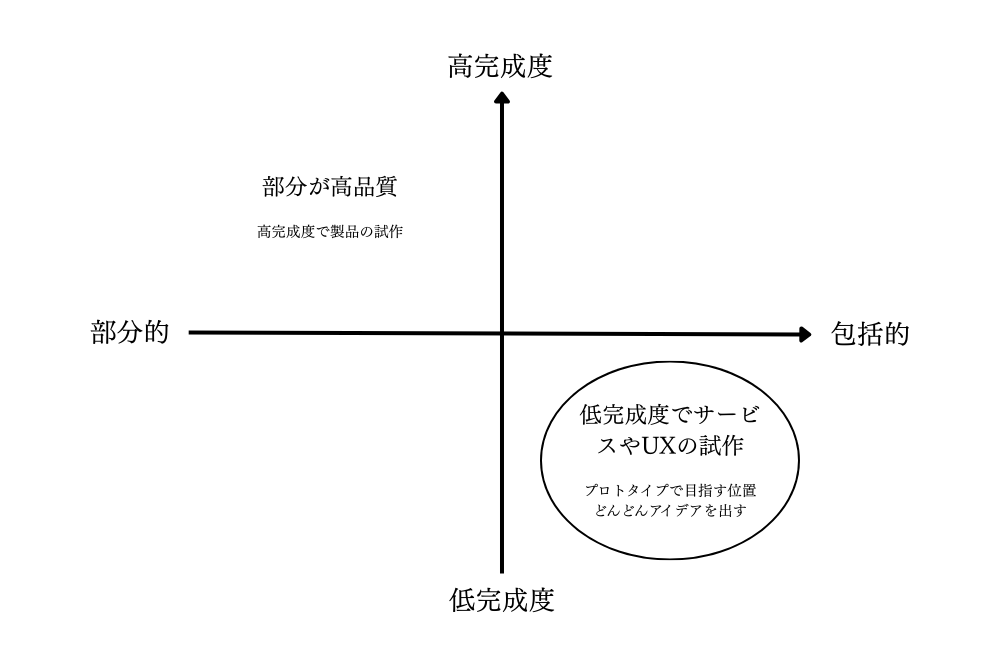
The first matrix has a vertical axis of “fidelity (high–low)” and a horizontal axis of “scope (partial–comprehensive).” Japan, with its strong manufacturing culture, tends to excel at “high-fidelity, partial” prototyping—meticulously crafting specific functions—while struggling with the “comprehensive, low-fidelity” quadrant, where ideas are given rough form while keeping the whole picture in view. For this reason, Professor Mizuno stressed that “the work of looking at things comprehensively and generating ideas freely, even in rough form, must be done consciously.”
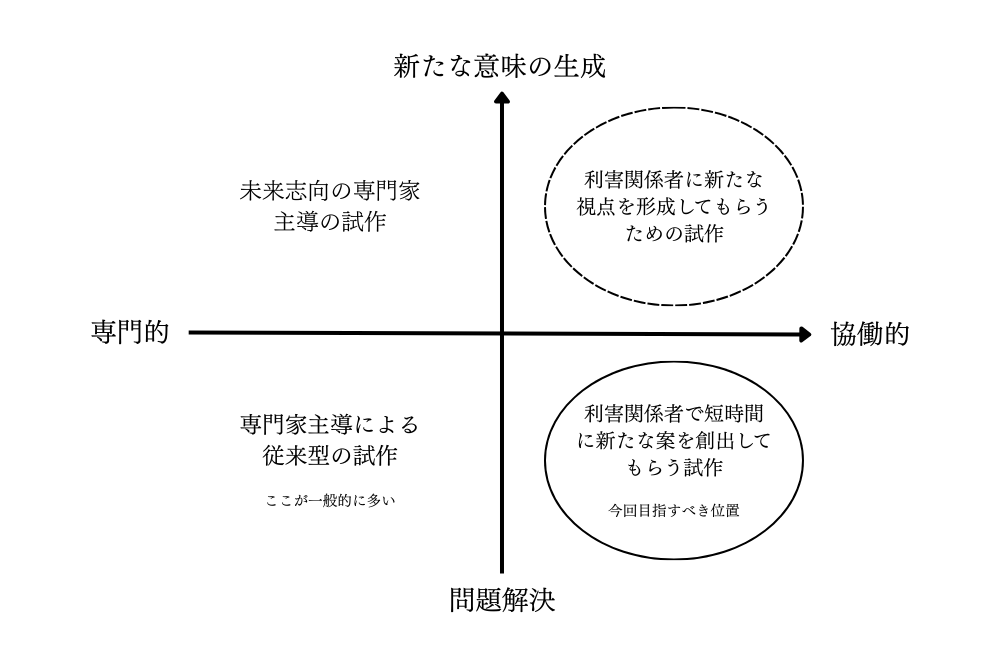
The second matrix has a vertical axis of “purpose (problem-solving–meaning creation)” and a horizontal axis of “approach (specialist-led–collaborative).” In contrast to conventional expert-driven problem-solving or speculative fiction-style future-imagining (SF prototyping), what is emphasized here is “collaborative meaning creation”: a process of involving diverse stakeholders at an early stage and rapidly giving ideas tangible form.
“Unless you give your ideas concrete form at quite an early stage, gaps will emerge later—’this isn’t what I had in mind’ or ‘this isn’t how I live’—and you end up with something that doesn’t fit into society.”
For instance, in a collection service, if you underestimate seemingly unglamorous touchpoints such as staff training and tool design, you will later find yourself paying a heavy price as the number of items deemed “impossible to sort” grows. It is a comprehensive perspective—one that encompasses not only business model coherence but also the movements of frontline staff and the realities of users’ daily lives—that is truly important in prototyping.
No Drawing Skills Required: Mapping the User’s Continuous Experience in an Eight-Panel Comic Strip
Professor Mizuno introduced the “eight-panel comic strip customer journey” as a concrete method for simulating how a service intervenes in the lived world. This is not merely a sketch of an idea; it is a tool for examining how a service enters people’s everyday lives and what kind of continuous experience it generates. The structure is as follows:
- Setting the context (panels 1–2): Who is the protagonist, and where do they live? Drawing on user research and market research, depict the user’s daily life and background.
- The problem emerges (panel 3): The challenge to be solved surfaces, and the story begins to move.
- Action and touchpoint (panel 4): In response to the challenge, the protagonist discovers the service and begins to use it.
- Concrete explanation (panel 5): Specific actions such as operating a device or interacting with a staff member.
- Receiving the outcome (panel 6): What happens to the protagonist as a result of their action (e.g., a booking is confirmed, a message is received).
- Life transformed (panels 7–8): How the service resolves the problem and improves the protagonist’s life.
In creating these comic strips, Mizuno emphasized that “high artistic quality is not required.”
“What matters here is whether the overall story forms a comprehensive, coherent flow. That is enough. Stick-figure hands are perfectly fine.”
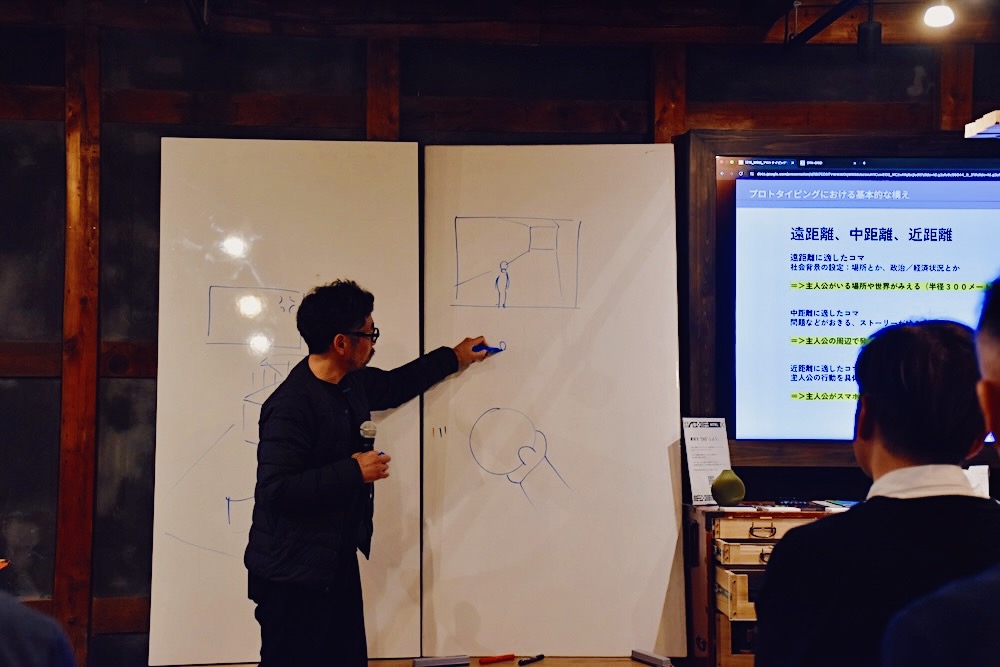
As a way of conveying visual information, it is also important to make use of comic-specific conventions—arrows, variations in line weight—and to be mindful of “distance.”
“You need a ‘wide shot’ to convey the situation, no matter how rough it is. If you jump straight to a close-up of an object, no one will know what’s going on. On the other hand, when you need to explain the details of a specific service interaction, a close-up is of course necessary too.”
Depicting the situation from a distance, human movement at a medium range, and the specific details of a touchpoint up close—this multi-perspective approach will be the key to determining whether a service can realistically be accepted in the real world.
Gently Hacking the User’s “Taken-for-Granted” World
In prototyping, what Mizuno emphasized most strongly was attention to “mental models”—the images and habits people unconsciously carry about how things “should” work.
“For example, computer screens have concepts like the ‘trash can’ and the ‘folder.’ Strictly speaking, since it’s a computer, you could call them anything. But making people feel at home in a work environment was extremely important. So those terms—’trash can,’ ‘folder’—were deliberately mapped onto the interface, and people came to understand it as ‘oh, it’s just like the things I use at work.’ That’s the background to how it happened.”
If you ignore this sense of familiarity and present a self-indulgent design, it will not reach the user. Even if you bring in an original design and explain “this means such-and-such,” the lack of familiarity means there is a high chance it will not be understood.
Professor Mizuno also spoke about the importance of feedback in interactions with devices and services:
“You press a button and the green light turns orange. That is a clear interaction taking place. It is evidence that a mutual exchange is occurring between the computer and me. Without that evidence, I feel deeply uneasy. If you press the power button and nothing sounds and the screen stays black for a few seconds, you start to worry. We need to be very clear about what form that feedback takes.”
This perspective connects directly to product design in circular economy contexts. For example, even if a PET bottle has an integrated cap for environmental reasons, if users hold the mental model that “caps come off,” they may end up forcibly tearing it away.
“Understanding mental models and designing in alignment with the behaviors they produce is critically important. When you try to put that into practice, it becomes a question of detail, so you have to think carefully. The goal is not to create something wildly strange—rather, I think the right approach is to take what we are already familiar with and hack it.”
How can we draw on the ways of living and the designs of objects that people already know, prompt behavioral change naturally without causing anxiety, and do so by hacking the lived world? That is what makes prototyping so important.
The Prototype as a Tool for Careful Imagination
Following Professor Mizuno’s lecture, Yu Kato of Harch Inc. shared a personal failure story to speak about the difficulty—and the importance—of imagining a service as vividly as if watching a film.
“Some time ago, I ran an experiment in Yokohama called ‘Circular Takeout’—selling bento box lunches using reusable containers. I thought it was a good, environmentally conscious idea, but on the very first day I discovered a major pitfall. The lids of the reusable containers were semi-opaque, so customers couldn’t see the appetizing ingredients inside. People won’t buy a bento box if they can’t see what’s in it. It was such an obvious thing, yet I hadn’t noticed it at the planning stage.”
This episode reinforces the importance of detail that Professor Mizuno had described. If the storyboard had been imagined at the level of a film—frame by frame—the moment of discomfort when a customer picks up the box would have been apparent, Kato noted.
Accumulating exactly these kinds of failures and iterations is the very point of prototyping. On this day, standing at the beginning of that process, how will participants go about depicting their circular businesses within the fabric of everyday life?
About Circular Business Design School Kyoto
Kyoto holds assets that shine across the ages—nurtured over 1,200 years of history—including the spirit of “shimatsu no kokoro” (resourcefulness and avoiding waste), a culture of circular living, and a tradition of craftsmanship. Realizing the circular future demanded by pressing global challenges such as climate change and biodiversity loss requires the creativity to draw on this accumulated wisdom and carry it forward. With that in mind, Harch Inc., the operator of IDEAS FOR GOOD, launched a learning program in October 2025 that combines the circular wisdom rooted in the city of Kyoto with a forward-looking perspective grounded in cutting-edge circular economy knowledge—so that participants can together envision and realize the future they want. “Decode Culture, Design Future”—a circular future beyond tradition, from Kyoto.
Website: https://cbdskyoto.jp/