On September 11, 2026, the Ministry of the Environment announced that the Cabinet had approved ordinances (an enforcement date order and a revised enforcement order) accompanying the implementation of the “Amended Waste Management and Public Cleansing Act” (廃棄物処理法, hereafter the Waste Management Act), aimed at ensuring appropriate and swift processing of waste in the event of major disasters (effective September 16, 2026).
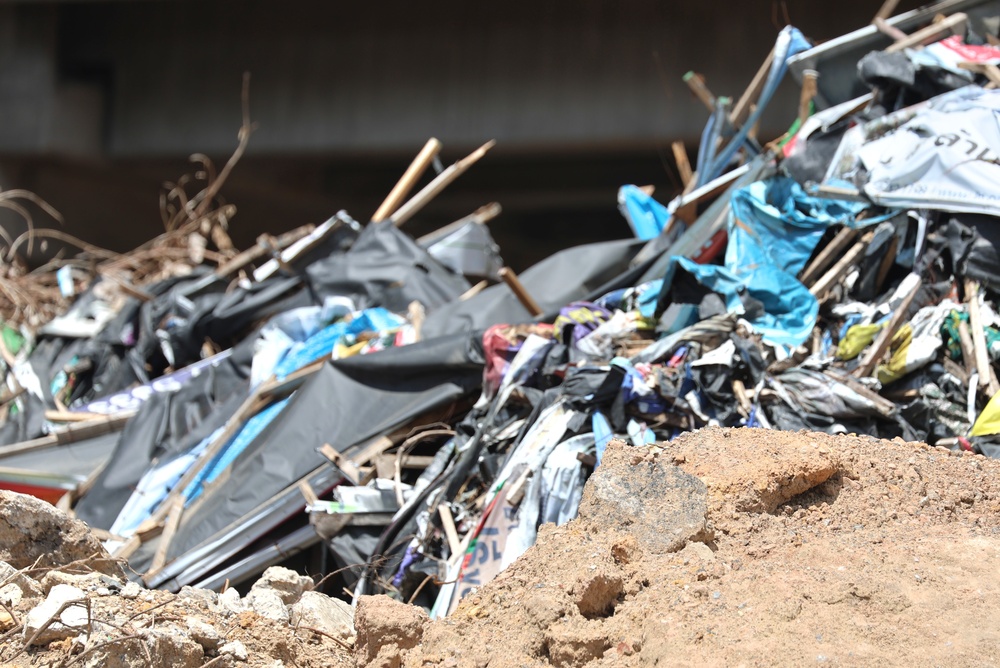
In recent years, as natural disasters have grown more severe—including the Noto Peninsula earthquake—regulations under the Waste Management Act designed for normal peacetime conditions have become a bottleneck, delaying the removal of disaster debris and slowing recovery at affected sites. In response, the “Amended Waste Management Act (Act No. 43 of Reiwa 8 [2026])” (hereafter, “the new Act”), which incorporates measures to strengthen the disaster response system, was passed by the Diet. The ordinances approved this time set out the specific outsourcing standards and procedural exceptions needed to implement the new Act. Based on the government’s announcement, the amendments center on the following three points.
- Establishing standards for “re-outsourcing and re-re-outsourcing” of emergency disaster waste: Under the new Act, a legal framework was newly established to allow “re-outsourcing and re-re-outsourcing” for disaster waste that cannot be fully handled by a single municipality or primary contractor alone. In response, the ordinance approved this time sets out specific standards. By relaxing, as a special exception, the outsourcing rules that normally apply restrictions, this enables swift processing that makes full use of a wide-area private-sector waste and recycling industry network.
- Making it possible to omit the “Environmental Impact Survey on Living Conditions” attachment for temporary processing facilities: The ordinance sets out detailed operational rules for a special exception intended to speed up the launch of temporary facilities at disaster-affected sites, regarding the Environmental Impact Survey on Living Conditions that is normally mandatory when establishing waste processing facilities. Under the ordinance approved this time, for facilities that process emergency disaster waste originating from damaged buildings using designated methods (such as cutting waste plastics; crushing or cutting paper, textile, glass, concrete, and ceramic waste; and sorting materials such as concrete fragments partway through processing), it is now possible to omit attaching survey result documents at the time of notification. This is expected to significantly speed up the launch of temporary crushing and sorting plants.
- Renewal period for final disposal site designations: For the system designating operators of final disposal sites used to dispose of emergency disaster waste, the renewal period for such designations has been set at “five years,” clarifying medium- to long-term disposal planning and management systems.
The Ministry of the Environment also published the results of a public comment period on the draft revised enforcement order, held from July 24 to August 23, 2026.
[Press Release] On the Cabinet Decision Regarding the Partial Amendment of the Enforcement Order of the Waste Management and Public Cleansing Act