On September 1, 2026, the Sustainable Management Promotion Organization (SuMPO), a general incorporated association, announced the winners of its “9th SX Awards (Sustainability Transformation Awards).” Starting with this 9th edition, the awards were renamed from their former title, the “Eco Pro Awards,” and now serve as a recognition scheme for sustainable design highly valued by businesses, consumers, investors and market participants in the Japanese market, aiming to promote the development and dissemination of outstanding initiatives and to advance SX (sustainability transformation).
The 9th edition received 57 applications, and following deliberation by the examination committee and the selection committee, a total of 20 winners were chosen: five Minister’s Awards — from the Minister of Finance, the Minister of Agriculture, Forestry and Fisheries, the Minister of Economy, Trade and Industry, the Minister of Land, Infrastructure, Transport and Tourism, and the Minister of the Environment — five Excellence Awards, and ten Encouragement Awards.
Among the Minister’s Awards, the Minister of Finance Award went to Hakutsuru Sake Brewing Co., Ltd. for its “‘Sake Charcoal’ Upcycling Model through Sake Brewery–Livestock Collaboration among Local Businesses.” The initiative upcycles spent activated carbon generated during sake brewing into livestock feed called “Sake Charcoal,” achieving both waste reduction and resource circulation. The company has also begun brokering the conversion of spent activated carbon from neighboring breweries into feed, with the aim of establishing circular use across the entire Nada Gogo sake-producing district, which stretches from Kobe to Nishinomiya in Hyogo Prefecture.
The Minister of Agriculture, Forestry and Fisheries Award was given to The Higo Bank, Ltd. for “Realizing a Circular Economy through the Regional Loss-Reduction Platform ‘Kaseruru.'” The platform redistributes underutilized regional resources such as unsold food, excess inventory and empty seats, and had reached roughly 25,000 users and around 480 participating stores as of the end of March 2026.
The METI (Ministry of Economy, Trade and Industry) Award went to Fukuru Inc. for “FiTO, an Eco-Design Service for Apparel.” This apparel DX (digital transformation) and GX (green transformation) brand curbs overproduction and waste through an automated sewing cost-estimation service, and extends product lifespans via a repair service. It has also introduced net-zero CO2 garment production using forest-derived carbon credits, along with a digital product passport accessed via QR code.
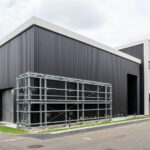
The Minister of Land, Infrastructure, Transport and Tourism Award went to Daiwa Lease Co., Ltd. for “A Circular Economy Transformation Model for the Construction Industry Realized through Leased Buildings.” Based on its leased-building system, in which buildings are refurbished after dismantling and reused repeatedly, the company built a circular model combining upcycled exterior wall panels, closed-loop (bottle-to-bottle style) recycling of aluminum building materials, and material recovery of resin components.
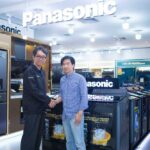
The Minister of the Environment Award was given jointly to Prime Planet Energy & Solutions, Inc., Nippon Light Metal Co., Ltd., Fuji Hatsujo Co., Ltd., and Panasonic Operational Excellence Co., Ltd. for “Closed-Loop Resource Circulation — Realizing SX through Closed-Loop Aluminum Recycling in the Battery Industry.” The four companies put into practice a closed-loop recycling system that returns aluminum scrap generated during the manufacture of sealing plates for battery cells back into the same component application, dividing roles among raw material supply, material processing, parts manufacturing and end-use demand.
The Excellence Award (Examination Committee Award) was given to UACJ Corporation and Toyo Seikan Co., Ltd. for “EcoEnd™, a Next-Generation Beverage Can Lid with Reduced Environmental Impact.” Using alloy microstructure control and forming technologies, the lid increases the proportion of recycled material used while cutting GHG emissions by roughly 40% compared with existing products, and beverage manufacturers can adopt it without new capital investment.
Four additional Excellence Awards went to AGC Inc. for “Implementing Domestic Fluorine Circulation from Recycled Fluorite to Fluon® PTFE”; Taisei Corporation for “Green Renewal ZEB (net zero energy building)”; the Kawasaki CN Brand and Related Schemes Promotion Council for “The Kawasaki CN Brand and Kawasaki Mechanism Certification Scheme”; and Canon Inc. and Teijin Limited for “Building Competitiveness for the Decarbonization Era through Partner Co-Creation.”
Ten Encouragement Awards were also selected. Details of the winning companies, organizations and initiatives can be found in SuMPO’s official announcement.
SuMPO’s analysis identified three expanding trends in SX practice among this year’s winning initiatives. The first is resource circulation and upcycling efforts that turn underutilized resources — such as sake-brewing byproducts and food loss — into value. The second is cross-industry and cross-regional collaboration that transcends company and sector boundaries, including partnerships between different industries and platforms initiated by regional financial institutions. The third is SX practice that combines multiple forms of value beyond reducing environmental impact, such as solving regional challenges, securing resources, and achieving economic viability. As the organization observed, the winners of this 9th SX Awards reflect an emphasis on ecosystem building, new business models, and loops closed at the regional level, resulting in a diversification of circular business models.
[Press Release] Announcing the Winners of the “9th SX Awards”! | SuMPO
[Reference Article] 9th SX Awards: Winning Case Studies | SuMPO