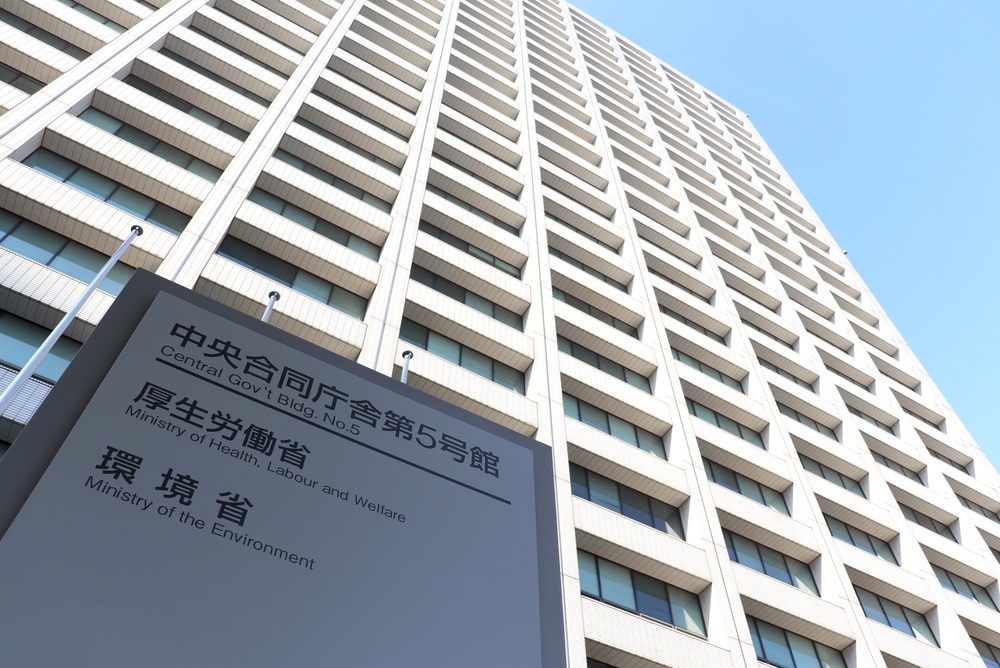
On September 29, 2026, the Ministry of the Environment released the results of a survey on how municipalities handle lithium-ion batteries and similar products (fiscal year 2025 results). Alongside the survey, it also published a case study collection on how municipalities communicate disposal methods for lithium-ion batteries and similar products, as well as a case study collection on responses to swollen or deformed lithium-ion batteries and similar products.
The survey was conducted as a follow-up to a notice issued by the Ministry of the Environment on April 15, 2025, titled “Policies and Measures for the Proper Disposal of Lithium Storage Batteries and Similar Products by Municipalities,” which aimed to prevent fires and other accidents caused by lithium-ion batteries. The follow-up survey was designed to assess the status of municipalities’ disposal systems. It was conducted from April 28 to May 28, 2026, covering all 1,741 municipalities nationwide, including joint administrative associations and special wards (tokubetsu-ku, Tokyo’s 23 special city wards), and responses were received from all municipalities (a 100% response rate).
According to the survey results, 39,282 fire incidents and similar events (including smoke and ignition) suspected to be caused by lithium-ion batteries and similar products occurred during waste processing in fiscal year 2025, up from 23,068 in fiscal year 2024. The figure was 9,732 in fiscal year 2019. Of these incidents, 17,792 involved ignition that was automatically extinguished by sprinkler systems or similar equipment, 11,550 involved sparks or smoke without ignition, 9,287 involved ignition manually extinguished by staff, 169 involved ignition extinguished by fire departments, and 484 fell into other categories. The number of municipalities that experienced fire incidents requiring extinguishing by staff or fire departments rose to 392, up from 272 in the previous fiscal year.
The location with the most incidents was material recovery facilities (including storage areas) that carry out shredding, sorting, and compaction, accounting for 35,694 incidents. The Ministry of the Environment attributes this largely to cases in which lithium-ion batteries and similar products are not disposed of in the waste category designated by municipalities, and instead end up subjected to impact from shredders and other equipment at waste processing facilities, leading to ignition and fire. By waste category, the largest number of incidents occurred in non-combustible waste (393 cases), followed by combustible waste (171 cases) and bulky waste (164 cases). By item, mobile batteries accounted for the most incidents (203 cases), followed by heated tobacco devices (102 cases) and cordless vacuum cleaners (80 cases). The Ministry of the Environment suggests this trend likely reflects the prevalence of small, inexpensive products and those with plastic exteriors.
Regarding municipal fire prevention measures, among all responding municipalities, 28.0% store batteries collected at designated collection points in flame-resistant or metal containers, and 39.1% equip collection and transport vehicles with fire extinguishers or similar equipment. On the other hand, 46.0% of municipalities reported taking no specific fire prevention measures during collection and transport. At waste processing facilities, 51.1% of municipalities manually sort out lithium-ion batteries and similar products before processing, and 44.8% have installed fire prevention or extinguishing equipment.
The proportion of municipalities collecting lithium-ion batteries or products containing them reached 86.2%, up 8.9 percentage points from the previous fiscal year. Among the 240 municipalities (13.8%) not conducting collection, 106 are considering implementing separate collection, and of these, 87 reported plans to begin collection. By prefecture, 40 prefectures had collection rates of 80% or higher among their municipalities, while 7 prefectures had rates below 80%. The most commonly cited reason for not conducting collection was difficulty in establishing organizational structures and securing personnel, followed by the absence of nearby operators able to accept the batteries, and difficulty coordinating with contracted collection and processing operators.
Regarding collection methods, bringing items to waste incineration plants was the most common method for both standalone batteries and battery-containing products, at 57.9% and 60.5% respectively. In terms of processing methods, the largest number of municipalities (729) outsource processing of standalone batteries to private operators together with other battery types, while the largest number (650) outsource processing of battery-containing products to certified operators together with other small household electronics. Among municipalities that do not process the collected items, the most common response was that they simply store the items due to low collection volumes, followed by difficulty finding a processing destination.
Regarding swollen or deformed lithium-ion batteries or products containing them, 41.3% of municipalities collect them using explicitly specified collection methods. Among the 1,366 municipalities that collect swollen or deformed standalone batteries, 39.0% use a method different from that for normal batteries, and of these, 80.1% collect them via direct hand-over at municipal counters (including drop-off at waste incineration plants). For temporary storage facilities, storage in pail cans or similar containers was the most common method. Outsourcing processing to private operators was the most common processing method, but some municipalities reported storing items without knowing how to process them—66 for standalone batteries and 55 for battery-containing products.
Case study collections on public communication and response measures also released
The case study collection on public communication covered seven types of media—waste sorting calendars, flyers and booklets, public relations magazines, websites, videos, social media, and waste sorting apps—introducing initiatives by Kashiwa City and Ichikawa City in Chiba Prefecture, Setagaya Ward in Tokyo, Nagareyama City in Chiba Prefecture, Yokohama City in Kanagawa Prefecture, Narashino City in Chiba Prefecture, Machida City in Tokyo, and Kurume City in Fukuoka Prefecture. Each case was organized around three perspectives: how information is conveyed to residents (e.g., through illustrations) and how it reaches them, how fire risks and dangers from improper disposal are communicated, and how sorting and disposal methods are explained. Examples highlighted include Narashino City, which uses experimental videos to convey fire risks and AI-generated imagery to depict fire damage such as the complete destruction of a clean center, and Kurume City, which delivers collection information via push notifications on its waste sorting app and displays fire risk warnings on the app’s top page.
The case study collection on responses to swollen or deformed batteries compiled initiatives from seven municipalities covering collection, transport, storage, and processing, along with the background, reasons for selecting each method, coordination issues during implementation, and operational challenges. Kitakyushu City in Fukuoka Prefecture uses metal pail cans with lids as collection boxes, and in April 2026 expanded its collection points from approximately 90 to approximately 140 locations, adopting aramid fiber inner liners for the new containers accordingly. Kikuchi City in Kumamoto Prefecture informs residents to dispose of swollen or deformed items in separate bags at collection stations, and transports and stores counter-collected items using metal pail cans and fire-resistant sheets. Nerima Ward and Shinagawa Ward in Tokyo transport and store items in metal pail cans equipped with fire extinguishing agents, with Shinagawa Ward changing the frequency of transferring collected items into pail cans from once a week to daily. Other examples include Goshogawara Town (note: likely should be Gonohe Town) in Aomori Prefecture, which insulates terminals, individually wraps items, and stores them in pail cans filled with sand; Shibuya Ward in Tokyo, which stores items submerged in fresh water; and Kodaira City in Tokyo, which has secured a destination for batteries that fall outside its existing collection routes. The Ministry of the Environment notes that this case study collection is a reference document organizing municipal initiatives and does not recommend any particular method.
【Reference】Publication of survey results on municipal handling of lithium-ion batteries and similar products (fiscal 2025 results) and related case study collections
【Reference】Summary of survey results on municipal handling of lithium-ion batteries and similar products (fiscal 2025 results)
【Reference】Case study collection on municipal communication of disposal methods for lithium-ion batteries and similar products
【Reference】Case study collection on responses to swollen or deformed lithium-ion batteries and similar products
【Related article】KDDI and five other companies advance closed-loop (bottle-to-bottle style) recycling of lithium-ion batteries; recycled materials confirmed to match performance of new resources
【Related article】DOWA Eco-System establishes integrated recovery process for lithium, nickel, and cobalt from spent lithium-ion batteries