Harch Inc., operator of Circular Economy Hub, partnered with Sumitomo Mitsui Trust Bank, Ltd. to measure and communicate the outcomes of “Ishinomaki Recycreation,” a ten-year resource circulation initiative led by Kao Corporation in Ishinomaki City, Miyagi Prefecture, publishing the results as an “Impact Vision.”
Engaging local communities is an indispensable element of achieving resource circulation for product packaging and similar materials. What changes has the Ishinomaki initiative — widely regarded as a leading model — brought to the region?
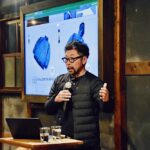
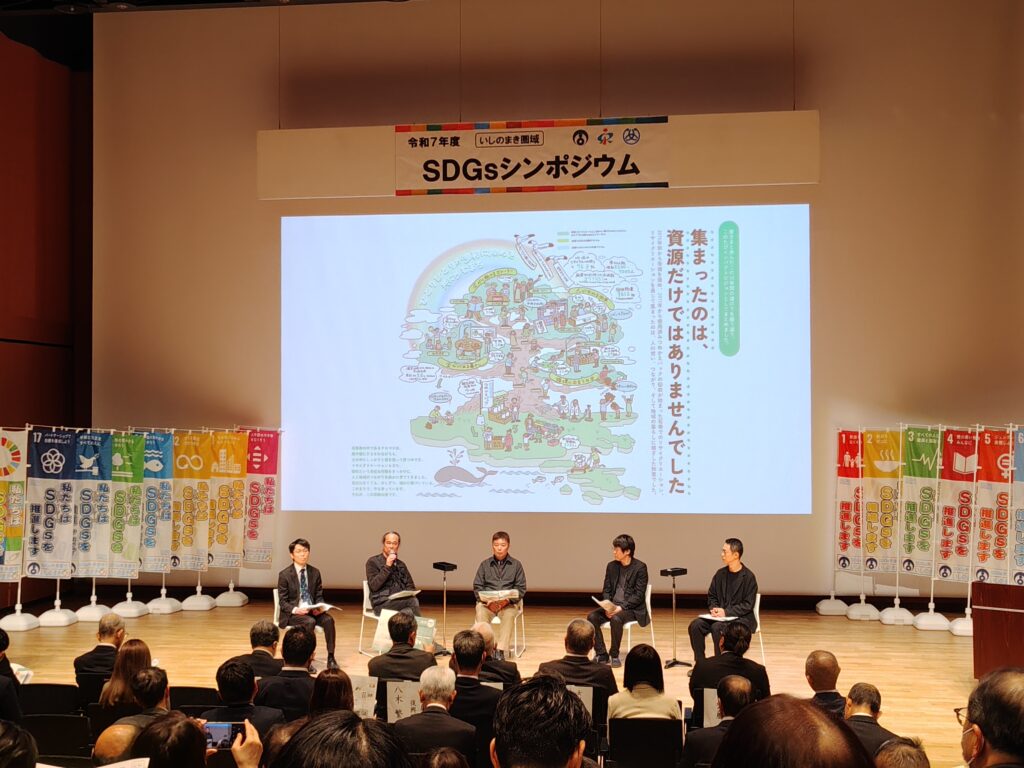
This article reports on the full scope of the social impact that resource circulation activities have had on the community — going well beyond a simple “volume of waste collected” — based on presentations made at the Ishinomaki SDGs Symposium held in Ishinomaki City on January 29.
This impact-measurement project was carried out as part of the Ministry of the Environment’s “Fiscal Year 2025 Regional Resource Circulation Promotion Support Programme,” with Kao Corporation and Ishinomaki City selected as project recipients, in collaboration with Sustainable Design Kobo (a general incorporated association), Sumitomo Mitsui Trust Bank, and Harch Inc.
Ten Years of “Recycreation”: The Journey and the Rationale for Measuring Impact
“Recycreation” is a portmanteau coined by Kao Corporation, combining “recycling” and “creation.” It refers to the company’s initiative — carried out in partnership with local governments and NPOs across Japan — to collect used refill pouches and give them new value through material recovery.
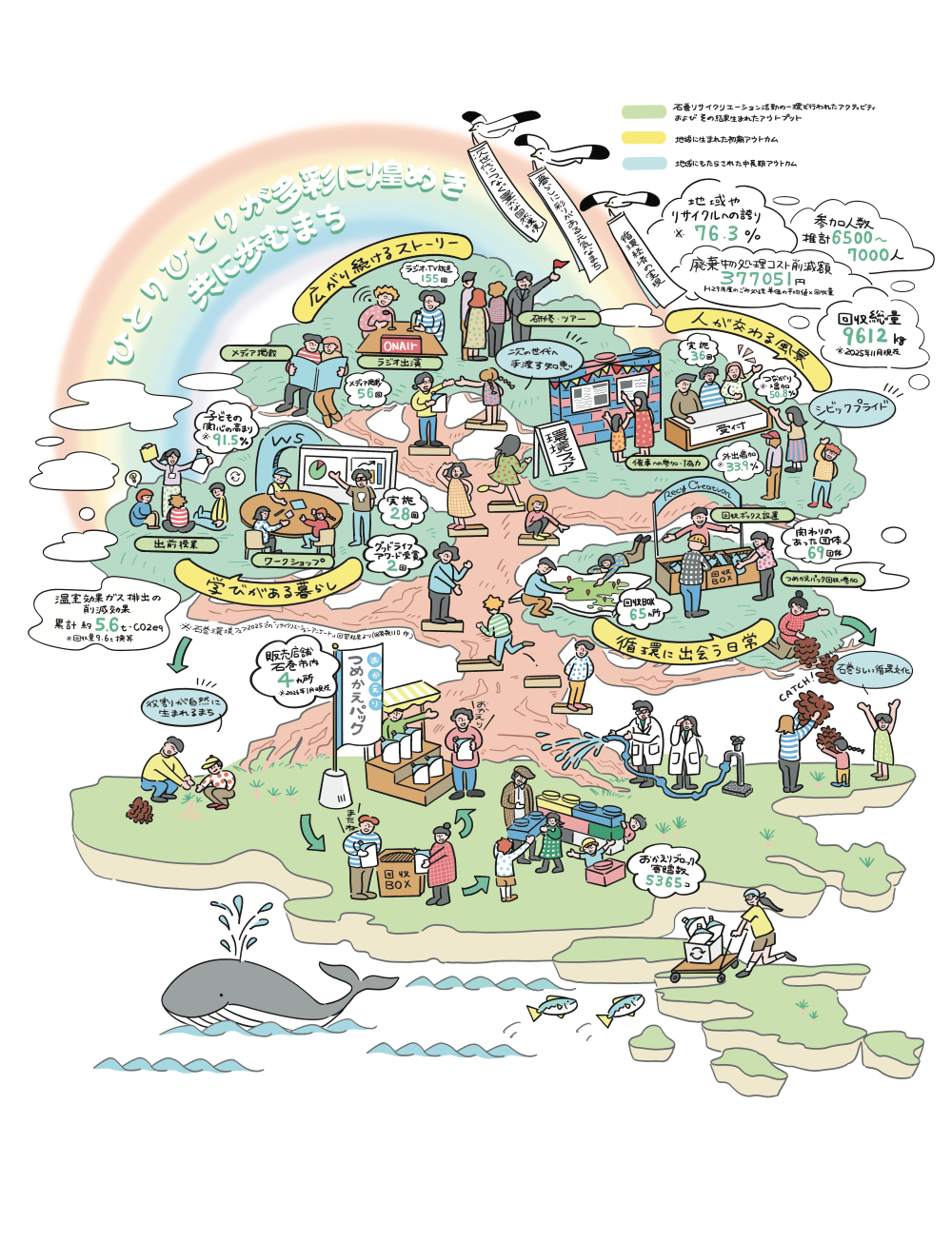
In Ishinomaki City, the initiative launched in earnest in 2017 in collaboration with Sustainable Design Kobo (a general incorporated association). By the end of 2025, the total volume collected had reached approximately 9,600 kg, and the project has grown into a deeply rooted community programme with an estimated 6,500 to 7,000 participants per year.
Rena Takamura of Kao Corporation, who spoke at the symposium, explained the motivation behind the impact-measurement project: “We wanted to properly put into words what we have built up over ten years and share it with everyone.”
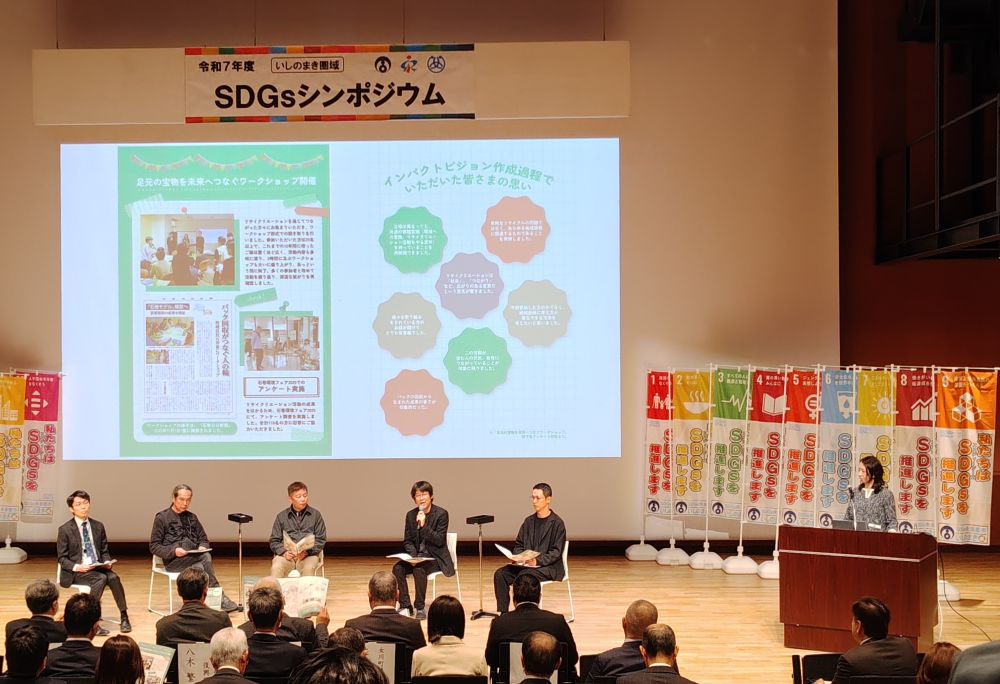
To measure the impact, a workshop was held in October of last year, bringing together more than 20 local stakeholders, followed by a survey of 110 respondents in November. Information was gathered through both qualitative and quantitative methods and, with input from specialists, was organised into an “impact logic model.” Local designer Yuka Omi then helped translate the ten-year journey into the finished “Impact Vision.”
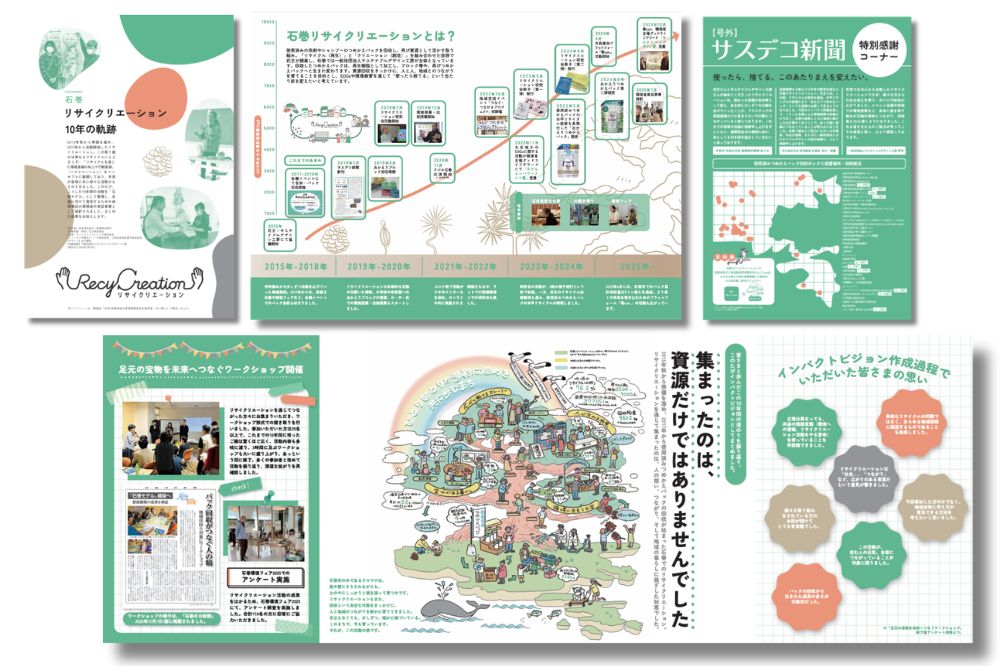
A Citizen-Led Circle of Circulation — and Its Ripple Effects on Society
At the symposium, stakeholders reported on the concrete changes that have taken root in the community.
Tamaki Oshikiri of Sustainable Design Kobo, who has driven the initiative locally for many years, reflected on how it spread: “When children engage actively with environmental issues, their parents and families naturally come on board, and that connection gradually grows into a movement across the whole community.” What began with collection boxes installed in schools has expanded into approximately 30 environmental education classes per year. The ripple effects have been wide-ranging: partnerships with universities and neighbourhood associations, the establishment of a local group called “Maki con.,” and recognition through the Ministry of the Environment’s Good Life Award.
Takuya Sasaki of the Waste Management Division, Civic Life Department, Ishinomaki City noted: “The city has supported the initiative by helping to set up collection points, but it has been the residents themselves who have been the driving force.” The approximately 9,600 kg collected is estimated to represent a saving of around ¥370,000 in municipal waste-processing costs. The fact that the initiative expanded through citizen initiative rather than top-down administration is one of the defining features of what has come to be called the “Ishinomaki Model.”
Measuring the “Social” Value That Sits Between Environment and Economy
Another key perspective in the project is an approach grounded in “impact assessment” — using data and logic to demonstrate social value.
Yosuke Konaka of the Sustainability Promotion Department at Sumitomo Mitsui Trust Bank said: “We were determined to put numbers to this, so it wouldn’t just end with ‘that was a great initiative.'” The current participation rate is around 5% of the local population, which objectively suggests there is still room to grow. At the same time, direct voices from participants were also shared — comments such as “I feel this is connected to real issues in our community” and “it gives the people who live here energy and confidence” — creating a three-dimensional assessment that combines data with lived experience.
Yu Kato, representative director of Harch Inc., analysed the core of the initiative as follows:
“In the circular economy, it is often said that balancing environmental and economic goals is difficult. The key is to make visible the ‘social’ value that sits between them. The ‘environmental’ activity of collecting refill pouches generates ‘social’ value in the form of education, intergenerational exchange, and the building of community networks — and that, in turn, leads to ‘economic’ outcomes such as stable collection volumes and greater material value. Ishinomaki demonstrates a model in which economic viability is generated through the medium of society.”
Taking the “Ishinomaki Model” into the Next Ten Years — and Across Japan
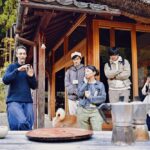
The day after the symposium, the completed Impact Vision posters and brochures were delivered in person to four collection points around the city, including local primary schools and public facilities. The aim is to give back the results of the initiative to the community and encourage even greater participation.
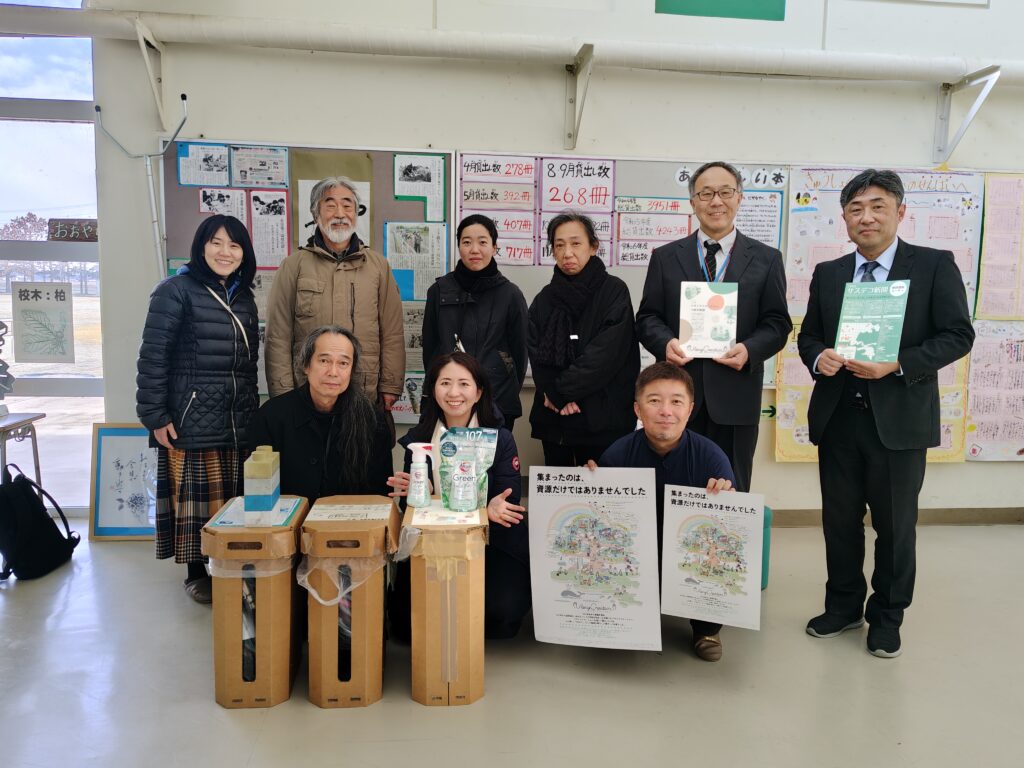
Akiyoshi Saito of Kao Corporation said: “We could never have achieved this alone as a single company — we got this far because we genuinely wanted to build the future together with the local community. Advances in closed-loop (bottle-to-bottle style) recycling technology and the commercialisation of recovered materials would not have been possible without the cooperation of local residents.” He went on to share his vision for the future: “We want to make this value a shared language and roll it out to other regions.”
What began as the construction of a simple resource circulation system has evolved into a “community circulation” that nurtures civic pride and local networks among residents — that is the Ishinomaki Recycreation story. This impact-measurement exercise is both the culmination of ten years of effort and an important signpost for other local governments and companies seeking to embed the circular economy in their own communities as they look ahead to the next decade.
【Reference】Visualising the Impact of Recycreation in Ishinomaki City and Sharing It as the “Black Pine Vision” (Kao Corporation)
【Reference】Kao Corporation: “Our Recycreation Initiative”
【Reference】Ministry of the Environment: Fiscal Year 2025 Regional Resource Circulation Promotion Support Programme — “Circular Business Model Demonstration Project”