※This article is reprinted from “Ideas for Good.”
【Kyoto Circular Economy Special Feature】
This special feature is a collaborative project between IDEAS FOR GOOD and the City of Kyoto, exploring the present and future of the circular economy in Kyoto. The city has long been guided by the spirit of “shimatsu no kokoro” (the traditional Kyoto ethic of using resources carefully and without waste) and a culture of circular living and craftsmanship cultivated over a thousand years. This series asks how those values can be developed into innovations that shape the Kyoto of tomorrow—and how circular businesses capable of enduring for the next thousand years can be created. Together with the City of Kyoto, businesses operating in the city, and Akihiro Yasui, a policy advisory consultant to the City of Kyoto, we explore the value and potential of Kyoto through the lens of the circular economy. (Kyoto Circular Economy Special Feature Top Page)
The first step toward building a circular system is born from human connection—that was the powerful impression left by a networking event held as part of the Circular Business Design School Kyoto (hereafter CBDS Kyoto), a hands-on circular economy business development program organized by the City of Kyoto and operated by Harch Inc.
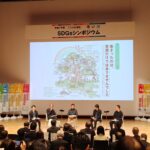
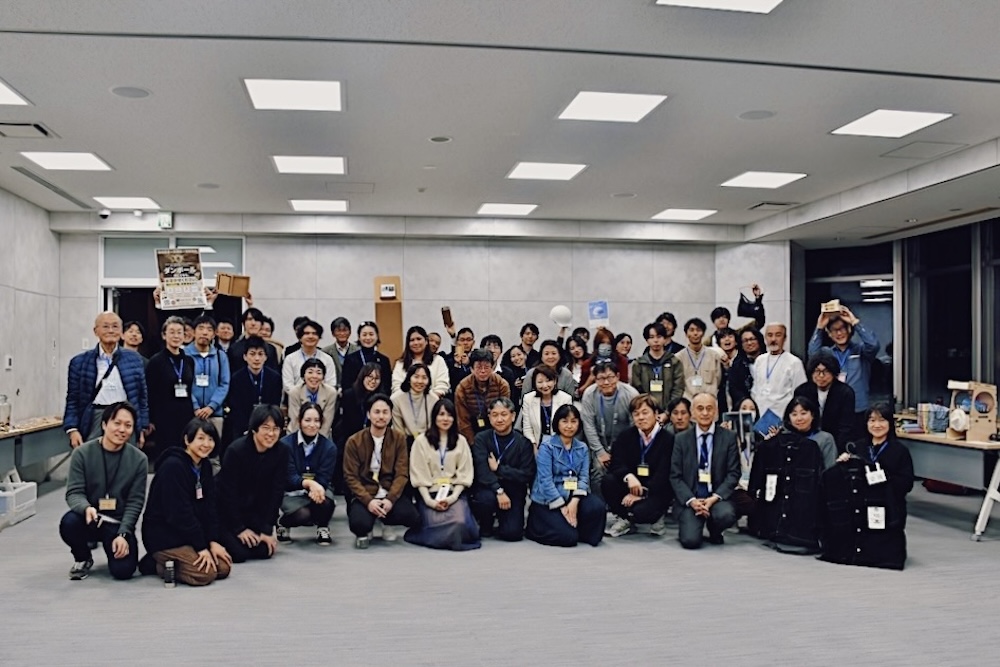
Held on November 20, 2025, at QUESTION, a co-creation facility in Kyoto, the event featured presentations by circular business practitioners and an exhibition of products embodying new possibilities for resource circulation. We explore the current state of Kyoto-based circular business through the scenes that unfolded on the day.
▶︎ For details on previous program sessions, visit this page.
Encounters with Others Cultivate the Circular Ecosystem
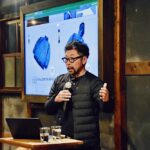
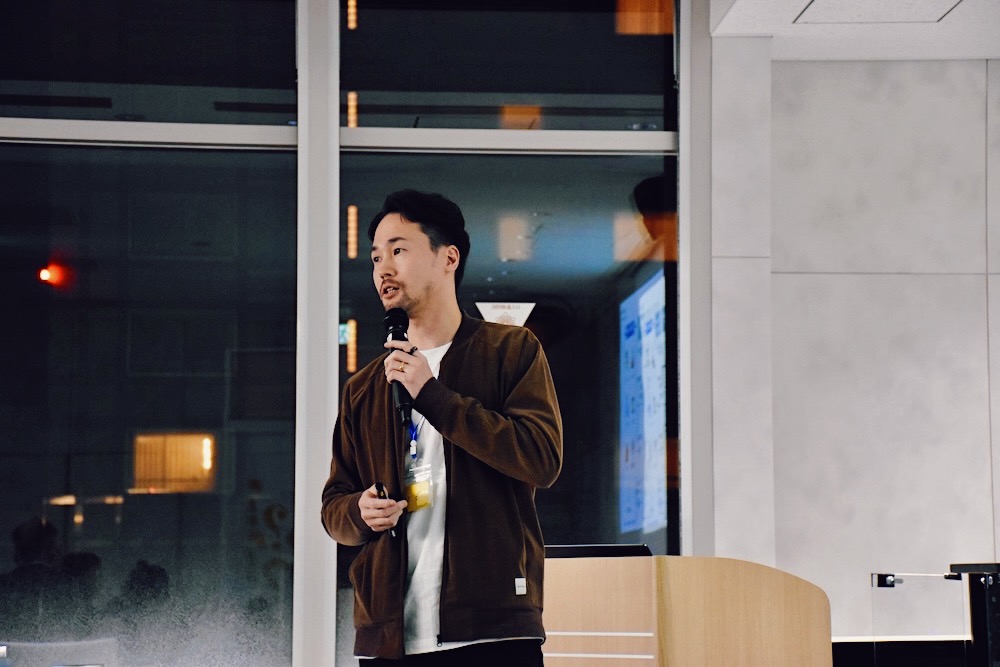
Following the opening remarks, Yu Kato, Representative Director of Harch Inc., took the stage for a keynote talk. Kato spoke about how the circular economy goes beyond mere recycling or environmental activism to become a source of genuine business competitiveness—and how “engaging with diverse others” is indispensable to making it happen.
“Among people who share the same values, waste looks like nothing but waste. But when people with different values come together, there is a much greater chance that waste starts to look like a resource. That is precisely why spaces that bring together diverse people are so important.”
To illustrate the importance of partnerships unconstrained by existing business conventions or industry norms, Kato referenced an anecdote about Dutch architect Thomas Rau. When Rau set out to build a roof for a certain building, he wanted to minimize the amount of steel used. If he approached a structural steel company, however, their business model depended on selling steel—so they would naturally propose using as much of it as possible.
So Rau turned, somewhat surprisingly, to a roller-coaster craftsman. The reason: roller coasters are structures that must achieve high safety with the minimum possible amount of steel, meaning such a craftsman would have deep expertise in reducing steel usage.
“The roller-coaster craftsman naturally said, ‘I’ve never built a roof.’ But Rau persuaded him by saying, ‘Then just build me a flat roller coaster—and I’ll call it a roof.’ The result was a roof that used 30% less steel.”
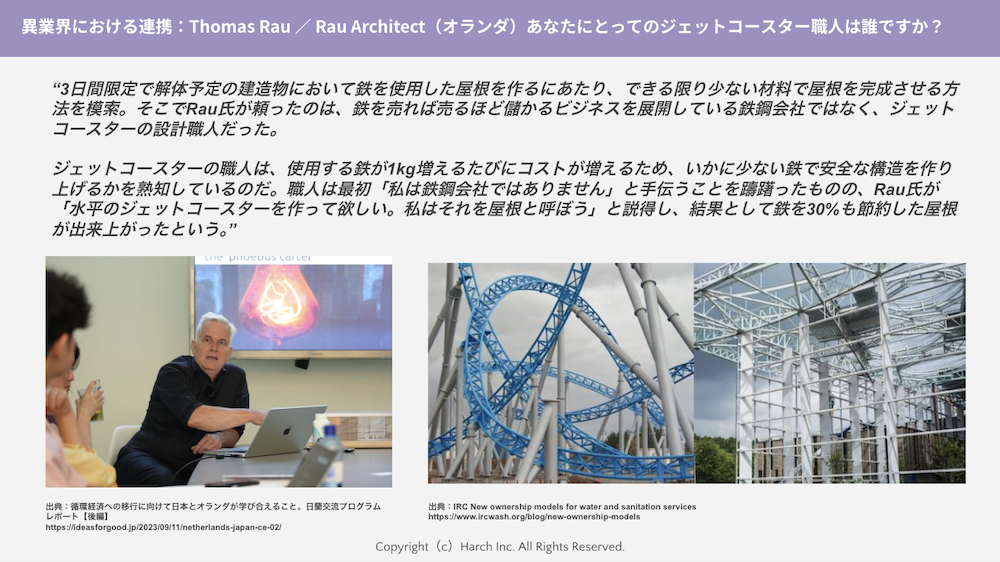
The key, in other words, is to find the “roller-coaster craftsman” for your own business—a partner who holds unexpected solutions. Kato argued that the next step is for players across different industries to connect and build a “minimum viable ecosystem”: a small-scale attempt at circulation involving the fewest necessary participants.
“The idea is to create a minimum viable value-circulation system and for everyone to keep experimenting together to see whether the circular economy actually functions. … The more nodes that connect lines across different industries, the greater the potential for circulation. Through events like today’s, increasing the number of those connecting lines from ten to fifty should raise the potential for circulation even further.”
Kyoto Practitioners Envision Harmony Between Nature and Industry
Three companies that are already advancing circular business in Kyoto—or plan to expand there—then took the stage. From long-established firms to startups, the presentations showcased a wide range of practical approaches.
A Legacy Bedding Maker’s Challenge: Iwata Co., Ltd.
First to present was Arishi Iwata, Representative Director of Iwata Co., Ltd. Headquartered in Kyoto and manufacturing at a factory in Shiga Prefecture, the company’s stated purpose is “realizing harmony with nature, starting from sleep.” Its hallmark is a manufacturing philosophy that blends the Eastern concept of “tian ren he yi” (the unity of humanity and nature) with scientific sleep-environment research, using natural materials such as camel hair, yak fiber, and linen as its primary inputs.
A thoroughgoing circular philosophy is embedded in its production processes. The factory runs on 100% renewable energy. Products are designed to be machine-washable at home, extending their usable life, and QR codes on product tags give customers easy access to maintenance information. Worn-out bedding is remade into new products, and even the fabric scraps generated during manufacturing are cycled back as towels or compost.
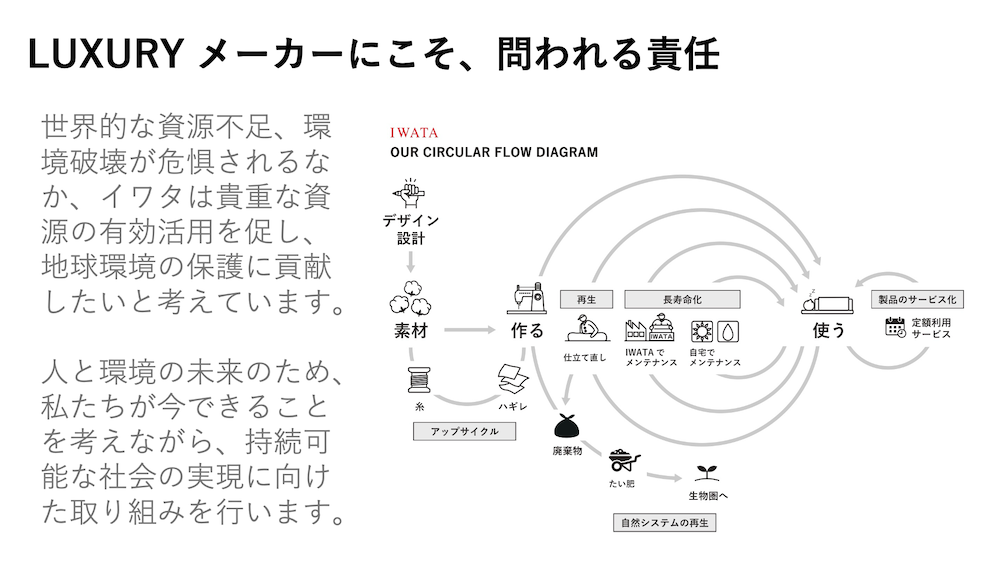
“From the design stage, we try as much as possible to ensure that materials circulate. And when something can no longer be used, we remake it. We offer remaking services for futons, mattress pads, and bed mattresses alike, so there are very few occasions when we have to throw materials away.”
Looking ahead, Iwata envisions exporting not just sleep products but an entirely new culture of designing one’s day around “the stillness before sleep.” To create spaces that incorporate Zen-inspired mindfulness, he is exploring the circular redesign of items such as incense and Japanese candles (wax candles made in the traditional Japanese style), with an eye toward overseas markets.
“Take the settaku (a wooden clapper used in Zen practice), for example—most are made from imported timber. I have been wondering whether we could make them from offcuts of wood from temples, shrines, and furniture makers, using Japanese timber. I hope to continue developing products that have a natural affinity with circularity.”

Turning Underutilized Resources into Materials Through Co-Creation with Local Industry: Curelabo Co., Ltd.
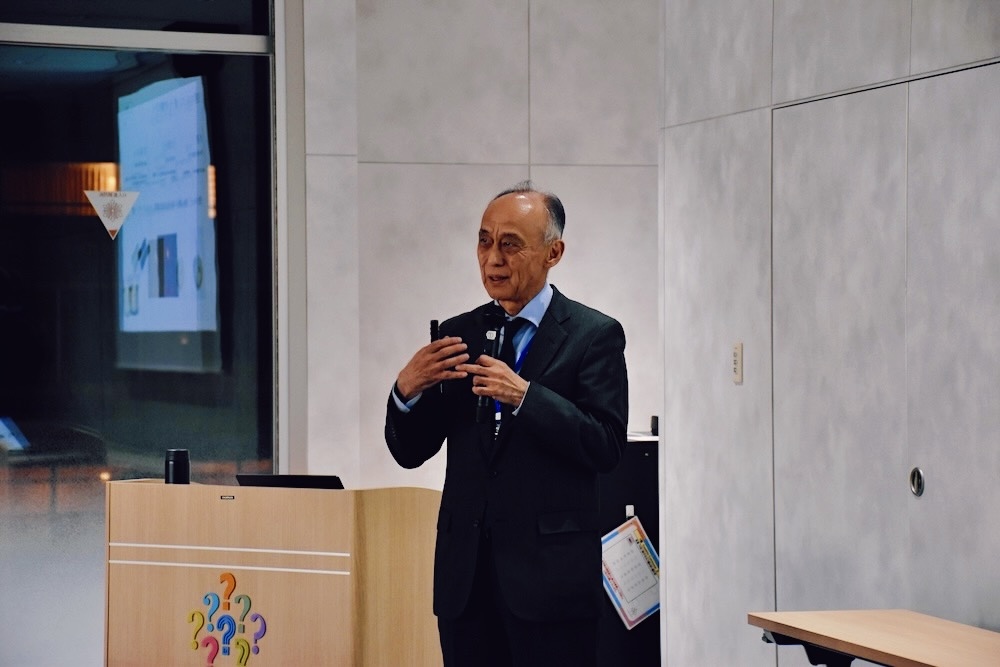
Next to present was Tsukasa Akamatsu of Curelabo Co., Ltd. Founded in Okinawa, the company develops materials by upcycling previously discarded underutilized resources, including bagasse—the fibrous residue left after sugarcane is pressed for juice.
“Bagasse, the residue produced during sugarcane sugar refining, is said to be generated in quantities of around 500 million tonnes per year worldwide. At present it is used as boiler fuel at raw-sugar factories, but the reality is that not all of it can be consumed that way.”
At the core of the company’s development work is the traditional Japanese technique of “washi yarn” (yarn spun from Japanese paper). Dried and pulverized plant residues are mixed with hemp pulp to make paper, which is then slit into narrow strips and twisted together to produce lightweight yet functional fiber. In Kyoto, the company is applying this technology to the regeneration of Kitayama cedar, a local resource. As changes in architectural styles reduce demand for timber, the initiative is creating new value for the forestry industry.
“We are working to upcycle the pruning branches and sawdust generated during the pruning of Kitayama cedar into fiber. We want to develop apparel products and build branding in collaboration with universities, ultimately using this as a springboard for expanding the use of timber more broadly.”
While the company’s strength lies in materials development, Akamatsu noted that he is actively seeking partnerships further downstream—at the “exit” stage. How to get the materials the company creates into circulation in society and into consumers’ hands is a challenge that still holds ample room for co-creation.

Auto-Generating Interiors from Plants: Spacewasp Co., Ltd.
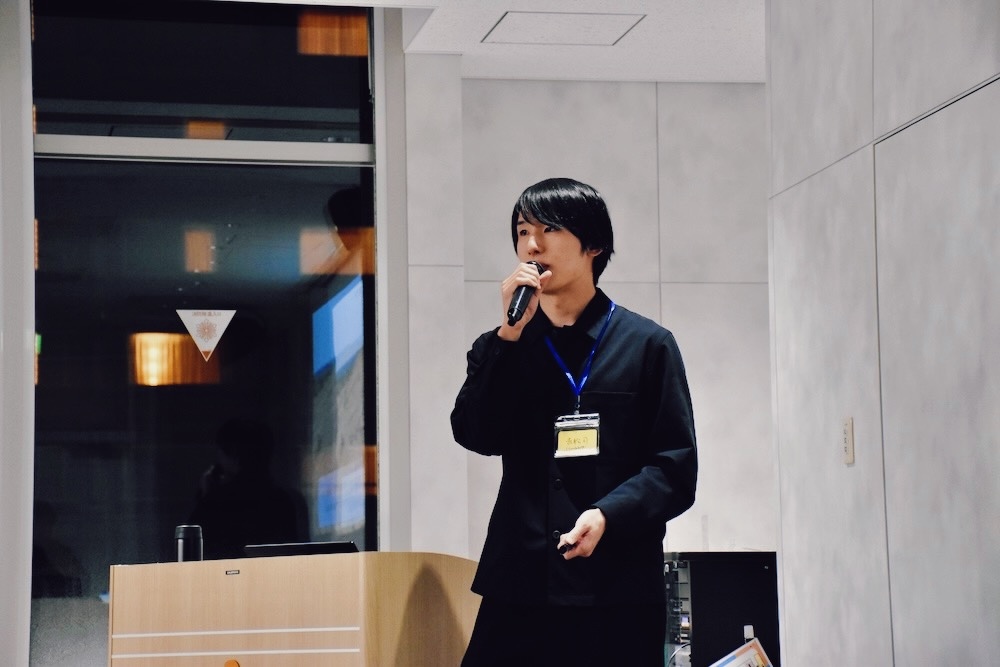
The final presenter was Hayato Isezaki, Representative Director of Spacewasp Co., Ltd. Isezaki is tackling the challenges of the construction industry—said to be the most resource-intensive of all industries—with a vision of “fixing carbon by turning plant waste that absorbed CO2 as it grew into building interiors.” The company’s business, which uses any form of plant waste as feedstock and 3D-prints interiors and furniture automatically, sits squarely at the frontier of green technology.
“In Japan, labor shortages are making it increasingly difficult to obtain interior finishes. The industry’s structure also makes it very hard to turn a profit, and interiors exist in a world where demolish-and-rebuild is the norm, creating a heavy environmental burden. That is precisely why we are building a factory in this interior sector that automatically converts plant waste into interior finishes.
We grind up any plant matter on earth, convert it into bio-based plastic, and use 3D printers—guided by designs created by generative AI or by human designers—to produce parts for interiors, furniture, and building materials. The finished parts are shipped to the site, where the interior is assembled like a plastic model kit.”
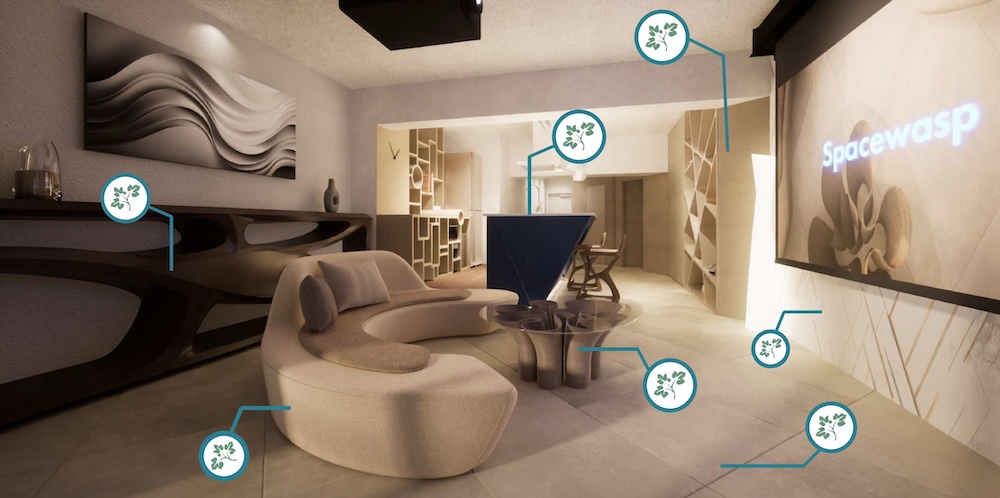
“Because we can vertically integrate the entire supply chain, we can reduce construction time by up to 90% and costs by around 30% compared with conventional methods. And after a table is made, for example, it can be reprocessed into the raw material for a chair or a light fitting—so the design can keep evolving.”
Isezaki also harbors an ambitious long-term vision of launching this factory into space to manufacture interiors for space hotels. Working toward that goal, he stressed the importance of steadily expanding the business domestically first. For Kyoto specifically—the setting of this program—he expressed enthusiasm for collaborating with the city’s long-established companies and forging new connections with local plant resources.
An Exhibition to Discover the Seeds of Circular Business
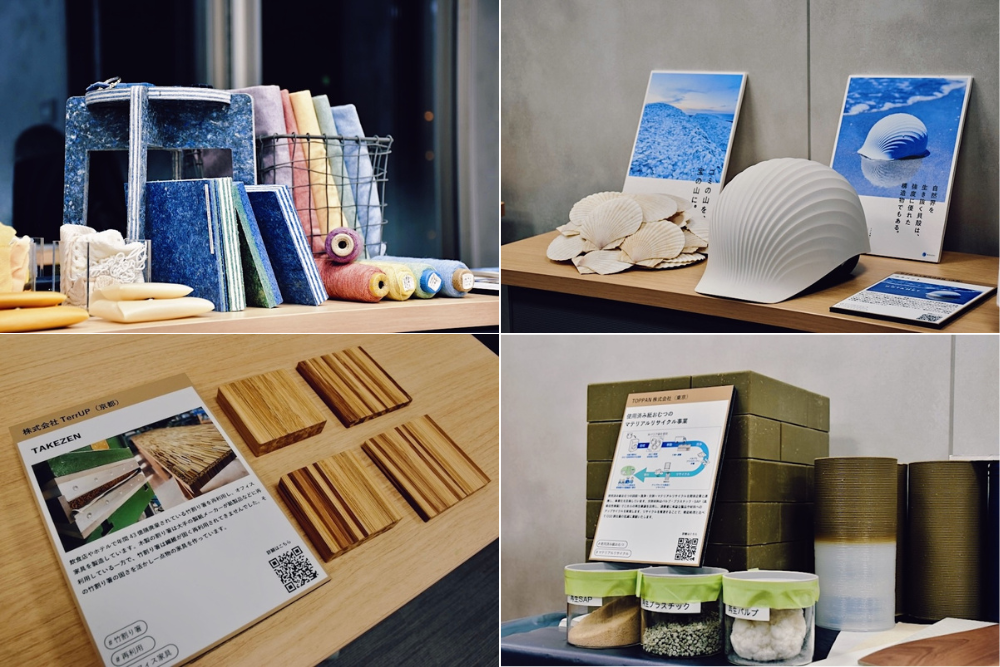
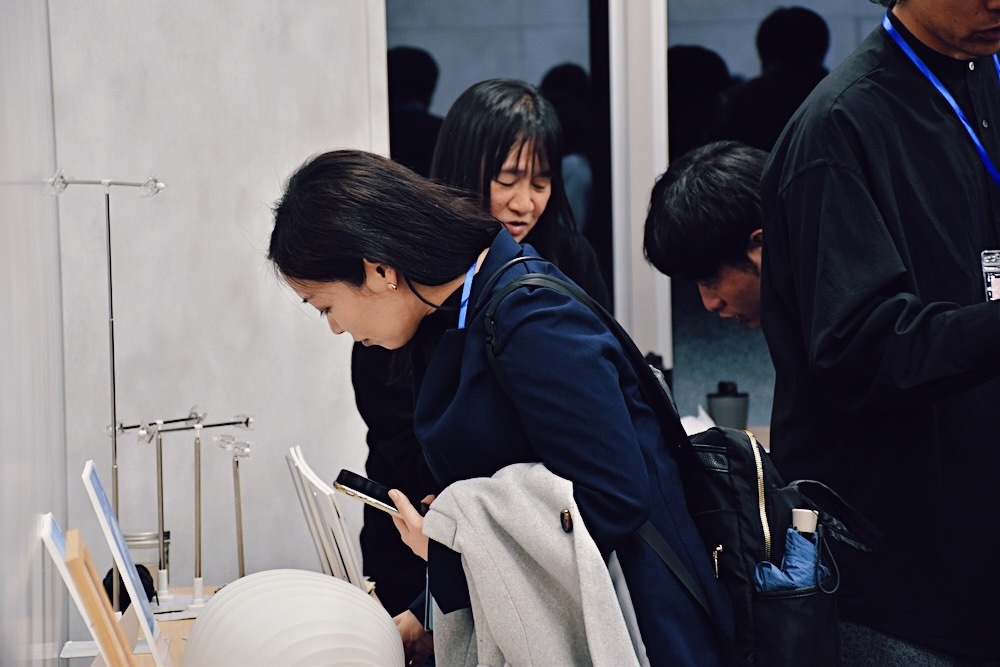
At the back of the venue, exhibition booths were set up featuring concrete solutions and products aimed at realizing the circular economy, primarily from Kyoto-based companies.
colourloop Co., Ltd. (Kyoto)
A venture company spun out of Kyoto Institute of Technology, colourloop was established to bring its proprietary “Colour Recycle System®” to society—a technology that sorts discarded textile waste by color and upcycles it. Against a backdrop of textile waste estimated at hundreds of millions of tonnes per year, the company introduces “color” as a new lens rather than relying on conventional recycling methods, exploring fresh material value. Its aim is not merely to reuse materials but to imbue them with aesthetic value that consumers find genuinely appealing, while reducing environmental impact and adding color to everyday life through sustainable product development and corporate collaborations.
Koshi Chemical Industry Co., Ltd. (Osaka)
The “HOTAMET” helmet on display is made from “Karastic®,” a material that repurposes scallop shells that were previously discarded in Hokkaido. Tens of thousands of tonnes of shells are thrown away every year; rather than treating them as waste, the company reconceives them as a resource with strength and durability. Particularly noteworthy is the way the structural pattern of the scallop shell has been incorporated into the helmet’s design through biomimicry, enhancing its durability. The product fuses the philosophy of elevating waste into something of value with a functional beauty that draws on the material’s own properties.
TerrUP Co., Ltd. (Kyoto)
TerrUP focuses on bamboo chopsticks—an estimated 4.3 billion pairs of which are discarded annually at restaurants, hotels, and similar establishments—and manufactures office furniture from them. While wooden chopsticks have established recycling routes (such as use as papermaking feedstock), bamboo chopsticks have long been considered difficult to reuse because of the hardness of their fibers. The company turns that very “hardness” into an advantage—the structural strength needed for furniture—and transforms the chopsticks into one-of-a-kind pieces. By understanding the properties of a material that had been treated as a nuisance and finding the right application for it, TerrUP is working to create a new circular loop.
TOPPAN Inc. (Tokyo)
TOPPAN is working with partner companies to commercialize a system covering the collection, washing, sorting, and material recovery of used disposable diapers. The company exhibited technology for separating and recovering materials from used diapers—including pulp, plastics, and SAP (superabsorbent polymer)—and upcycling them into useful products and materials. Beyond reducing CO2 emissions compared with incineration, the initiative addresses the diaper waste problem that is unavoidable in an aging society, presenting solutions through both technology and partnership—an effort that also has the character of social infrastructure.
Baba染工業 Co., Ltd. (Kyoto)
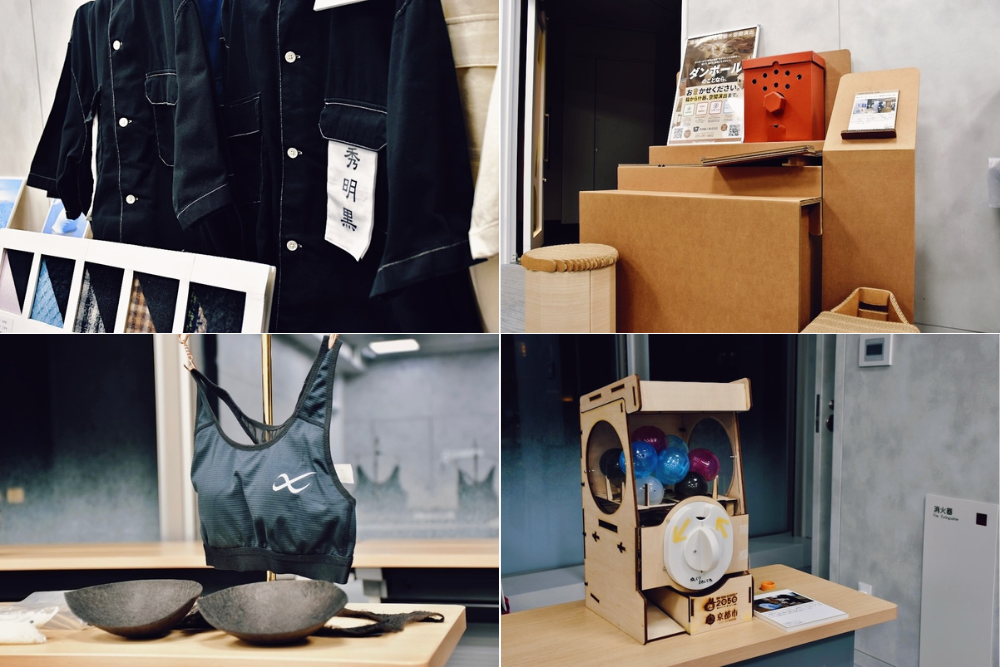
This “Kyoto black-dyeing house” with more than 150 years of history proposes re-dyeing and reviving not only kimono but also Western-style clothing in black. Garments that can no longer be worn due to fading or staining are dyed—using traditional techniques and “willow water” (water infused with willow bark, a traditional dyeing agent)—in shades ranging from a natural black to the deep, lustrous “Shumei black.” Alongside re-dyeing, the company also replaces buttons and carries out repairs, bringing back to contemporary life a culture of cherishing and wearing a single garment for as long as possible.
Rakusai Shiko Co., Ltd. (Kyoto)
The company exhibited “circular display fixtures” made from reinforced corrugated cardboard. Compared with wooden fixtures, they weigh approximately one-third as much while offering high strength, and CO2 emissions are said to be halved. By replacing fixtures that are used briefly at events and exhibitions and then discarded with corrugated cardboard that is 100% recyclable after use, the company simultaneously reduces environmental impact and costs. Furthermore, offcuts generated during manufacturing are used as educational materials in local schools, meaning the circulation of materials also feeds back into the local community.
Wacoal Corp. (Kyoto)
Using a proprietary “three-dimensional melt-blown process,” Wacoal has achieved the production of three-dimensional nonwoven fabrics that reduce waste. The ability to mold three-dimensional objects from a single material is a crucial factor in lowering sorting costs at the recycling stage and facilitating closed-loop (bottle-to-bottle style) recycling. The company is currently expanding into bra cups and lifestyle goods, but the technology holds potential for application across a much wider range of fields, including apparel and industrial materials.
City of Kyoto (Kyoto)
The “Circular Gacha“—a capsule-toy vending machine (the “gacha” format ubiquitous in Japan, where a coin-operated machine dispenses a random small toy in a capsule) that accepts plastic bottle caps instead of coins. Turning the handle releases circular economy-themed items, making it an awareness-raising tool that lets people experience resource circulation in a playful way. Rather than imposing rules from above, the initiative creates a point of engagement through which citizens—especially the children who will carry the next generation—can connect with resource circulation in a spirit of fun.
Expanding the Circle of Circulation
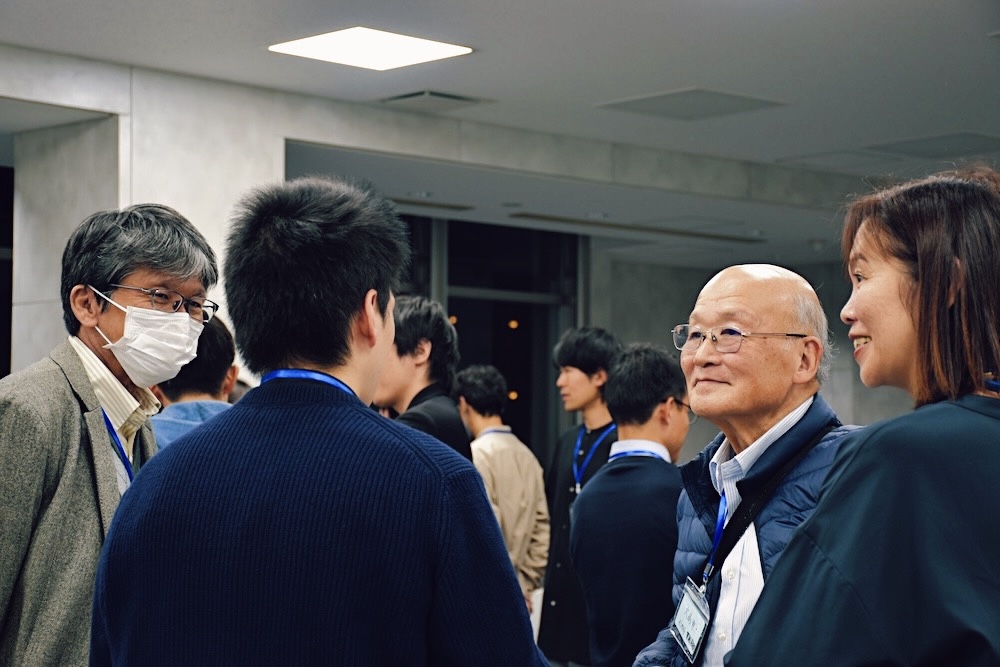
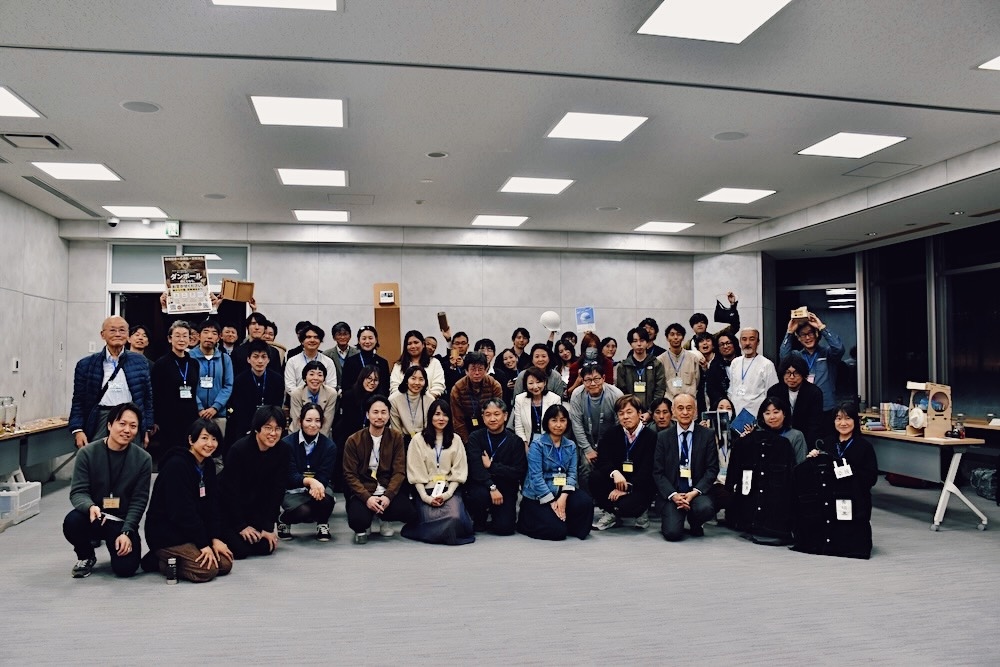
The latter half of the program was given over to open networking, during which speakers and attendees—and attendees among themselves—mingled freely. True to Kato’s words about “sharing your vision and laying bare your challenges,” conversations matching technologies with problems appeared to be taking place all around the venue.
What this event brought into sharp relief is that the circular economy need not be merely an environmental consideration: through cross-industry collaboration and the deployment of new technologies, it can become a source of economic rationality and fresh cultural value. Which players will come together in the historic city of Kyoto, and how will a “Minimum Viable Ecosystem” take root and grow there? That is a story well worth watching.
About Circular Business Design School Kyoto
Kyoto possesses assets that have shone across the ages—the spirit of “shimatsu no kokoro,” a culture of circular living, and a tradition of craftsmanship, all nurtured over 1,200 years of history. Realizing the circular future demanded by pressing global challenges such as climate change and biodiversity loss requires the creativity to bring this accumulated wisdom into the present and pass it on to the future. With that in mind, Harch Inc.—the operator of IDEAS FOR GOOD—launched a learning program in October 2025 that combines Kyoto’s deeply rooted circular wisdom with a forward-looking perspective grounded in cutting-edge circular economy knowledge, enabling participants to together envision and realize the future they want. “Decode Culture, Design Future”—a circular future that extends beyond tradition, from Kyoto to the world.
Website: https://cbdskyoto.jp/