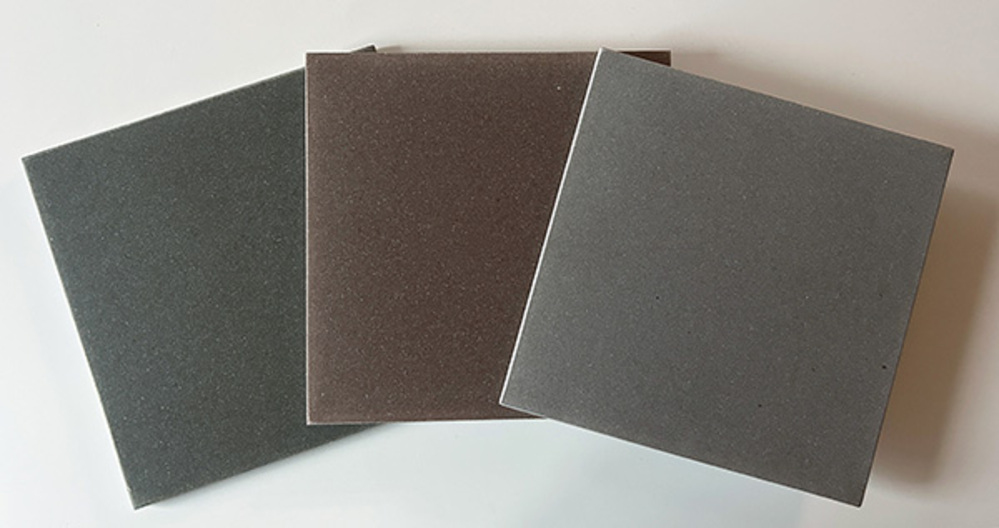
Asahi Soft Drinks Co., Ltd. announced on September 7 that it will introduce, for the first time, “carbon dioxide tiles” (nisanka tile) made with CO2-absorbing material into a rental apartment building.
Starting September 15, the company will progressively install its “CO2-eating vending machines” at the construction site of a property being developed by Face Network Co., Ltd., a firm specializing in income-generating real estate development. The carbon dioxide tiles, which incorporate the CO2-absorbing material collected by these vending machines, are scheduled to be installed in the rental apartment building that Face Network is developing from April 2027 onward. According to research by Nippon M-Tecs Co., Ltd., this is the first initiative in Japan to introduce tiles made with CO2-absorbing material—recovered via CO2-eating vending machines—into a rental apartment building.
The carbon dioxide tiles were jointly developed by Asahi Soft Drinks and Nippon M-Tecs Co., Ltd. Because they are manufactured by compressing and hardening raw materials that include the CO2-absorbing material, they do not require high-temperature firing. Compared with fired tiles of similar thickness, they emit less CO2 from production through factory shipment, making them a promising contribution to decarbonization. By integrating CO2 capture through vending machines with its use in building materials, the companies aim to build a resource circulation model that treats CO2 itself as a resource.
The CO2-eating vending machine is Japan’s only vending machine that not only sells beverages but also captures CO2 from the atmosphere using a specially developed absorbing material built into the unit. The absorbing material captures more CO2 than is emitted during its own processing and transport. The annual amount of CO2 absorbed per unit is said to be equivalent to as much as 20% of the CO2 emissions generated by the electricity used to operate the machine, or roughly the carbon absorption of about 20 Japanese cedar trees (56–60 years old). The vending machines were first rolled out in June 2023, and as of the end of July 2026, more than 9,000 units have been installed nationwide.
The captured CO2 is used, in collaboration with local governments and companies, as a raw material for concrete, asphalt, and tiles. The absorbing material is also being used in coral reef conservation and the restoration of blue carbon ecosystems, and the companies say they aim to contribute to a sustainable society that takes biodiversity into consideration.
[Press release] Carbon dioxide tiles using CO2-absorbing material introduced to a rental apartment building for the first time, advancing resource circulation through “CO2-eating vending machines”
[Related article] Asahi Soft Drinks launches demonstration in June of a resource circulation model using vending machines that absorb atmospheric CO2