Takenaka Corporation announced on October 23, 2026, that it has developed concrete combining recycled aggregate (gravel, sand, etc.) extracted from concrete waste generated by building demolition with low-CO2 cement. The concrete was first applied to “Takenaka Group Kurukuruku,” an exhibition facility of the Takenaka Group to be showcased at the 2027 International Horticultural Exposition (GREEN×EXPO 2027). According to the company, the new concrete reduces CO2 emissions from concrete production by about 60%, with recycled materials accounting for roughly 80% of its mass. The development was carried out under the Priority Issue Promotion Scheme of the Program for Research, Development and Social Implementation of Energy-Saving Technologies for a Decarbonized Society, run by the New Energy and Industrial Technology Development Organization (NEDO), Japan’s national research and development agency.
Concrete is composed of water, cement and aggregate, with aggregate accounting for about 80% of its mass. Aggregates such as gravel and sand are currently extracted from mountainous areas, raising concerns about the protection of natural resources and the reduction of environmental impact. Meanwhile, demolition work generates approximately 40 million tons of concrete waste annually in Japan, most of which is used as roadbed material for road construction. By recycling aggregate recovered from such waste, the company aims to achieve sustainability in concrete. The new concrete reportedly maintains the same strength standards and durability as conventional concrete while achieving both CO2 reduction and resource circulation.
For this facility, concrete waste generated from the demolition of the cafeteria and student dormitory of Yokohama College of Commerce Senior High School (Asahi Ward, Yokohama City, Kanagawa Prefecture) was used. The site where the waste was generated, the aggregate recycling facility, the concrete manufacturing plant, and the building using the concrete are all located in close proximity, helping to reduce CO2 emissions from transportation by limiting the distribution route.
Recycled aggregate concrete is typically used for low-strength concrete with a design standard strength of 18N/mm² or less, such as non-structural slab-on-grade concrete. For this facility, however, the concrete strength was increased to 24N/mm² and used in the structural elements of independent footings.
Under the theme of “circulating the life and form of materials,” Takenaka Group Kurukuruku aims to achieve a 99% reuse rate for materials throughout the process from design and construction to demolition. The concrete used this time is also intended for reuse after the exposition closes. The facility has a site area of approximately 1,000 square meters, a total floor area of approximately 300 square meters, and a height of approximately 4.3 meters, with construction scheduled from June 15, 2026 to the end of January 2027.
Takenaka Corporation advocates “Circular Design Build®,” an architecture and construction solution that promotes resource circulation across every process of building — from design, construction and demolition to post-completion operation and the utilization of building materials. The company says it will continue to promote the use of this concrete and contribute to the realization of a circular society.
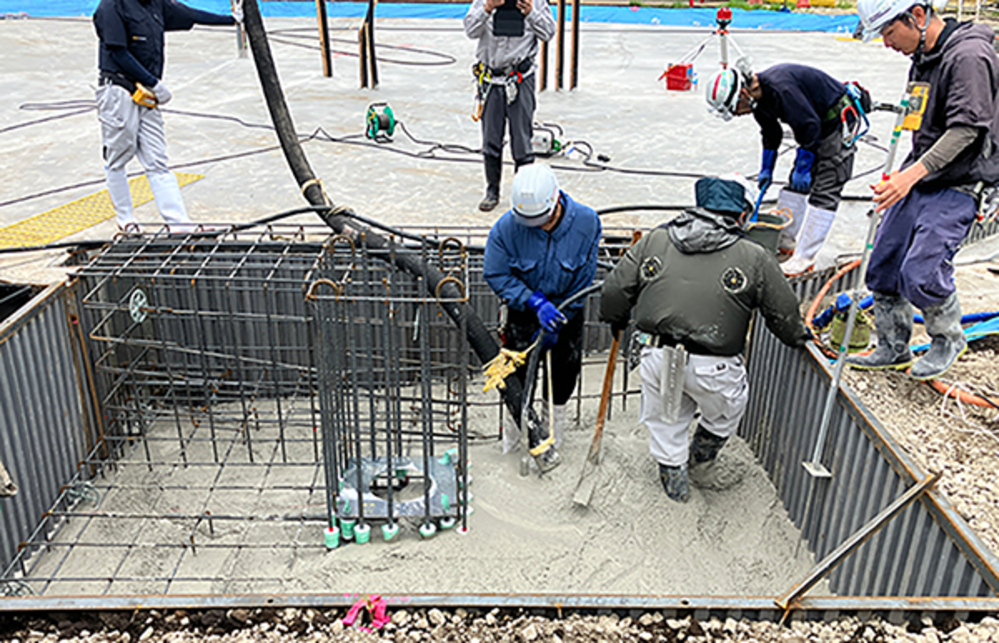
※The featured image is taken from the press release. It shows the concrete being poured.
【Press release】Developing Circular Concrete Using Concrete Waste — First Applied to the Exhibition Facility “Takenaka Group Kurukuruku” at the 2027 International Horticultural Exposition
【Related article】Takenaka Corporation, Kokuyo and ChopValue Japan Collaborate on Upcycling Disposable Chopsticks, Expanding into the Architecture Sector
【Related article】Takenaka Corporation Publishes “Circular Design Build” Guidebook, Aiming to Shift Away from Scrap-and-Build