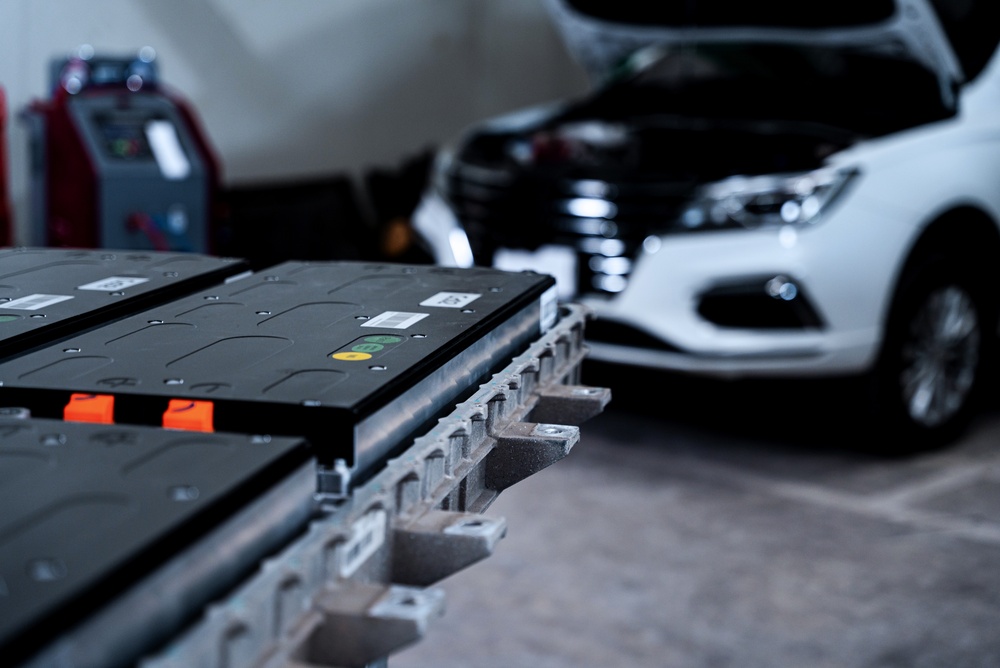
The Japan Research Institute, Limited (JRI) announced on November 11, 2026 that it has reorganized the “EV Battery Smart Use Council”—a body dedicated to the circular use of EV batteries—into an incorporated association (一般社団法人, a type of nonprofit corporate entity under Japanese law), relaunching it as the “General Incorporated Association EV Battery Smart Use Promotion Council” (abbreviated EvBSU, pronounced “Eebis”). The organization, which JRI had previously run independently, has now been reformed into a neutral body aimed at building mechanisms for circulating EV batteries and expanding the related market. Going forward, JRI will support the council’s activities as a steering member responsible for core operations.
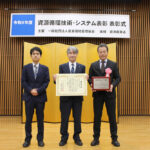
Takashi Nakamura, professor emeritus at Tohoku University, has been appointed as the council’s representative director. Participants include users of EVs and EV batteries, as well as businesses engaged in battery diagnostics, finance and insurance, transport and logistics, and reuse/recycling, along with local governments.
Continuing work begun by its predecessor organization, the council will work on standardizing methods for diagnosing and evaluating battery condition, and on developing indicators that clearly show how much these efforts contribute to the circular use of batteries. Building on this, it will collaborate with local governments and a range of businesses to advance model projects—tailored to regional characteristics—that connect battery collection and condition diagnosis through to reuse and recycling. The council will also work with relevant government ministries to advance rule-making, including the calculation and crediting of CO2 reduction effects, and policy proposals, moving forward in earnest with activities aimed at nationwide rollout.
The background to this establishment lies in the rapidly growing expectations, as EVs become more widespread, for reuse and recycling of used EV batteries and for building a circular economy around critical minerals—both viewed through the lens of resource security. According to JRI’s estimates, the market size in this field is projected to reach approximately ¥600 billion by 2030 and approximately ¥8 trillion by 2050. The number of companies entering the field and commercialization cases, both in Japan and abroad, continues to grow.
At the same time, as commercialization progresses, challenges rooted in the structure of the industry have come into view. For example, because it is difficult to determine how much a battery has degraded, it is hard to forecast its future resale value (residual value). In addition, roughly 80% of used EVs—which contain significant amounts of useful resources—flow out of Japan to overseas markets, while the logistics costs of collecting batteries from a wide area remain high.
The predecessor organization had worked to organize approaches to these challenges and to examine standards, indicators, and pilot models. However, the effort is now shifting from a stage of examining issues one by one to a stage of actually putting mechanisms into operation across industry and regional boundaries. This made it necessary to reconsider the very structure of the organization’s activities.
JRI cited three aims behind the incorporation. First, to clarify the council’s neutral standing—unaffiliated with any specific company—making it easier to promote collaboration and co-creation in shared areas, including among competing businesses. Second, to enhance social credibility by acquiring corporate status, strengthening engagement with industry, government, and academia and efforts toward institutional design. Third, to establish an open and highly transparent membership organization that encourages participation from a broad range of industries, thereby building a foundation for mid- to long-term activities.
Through its predecessor organization, JRI conducted research and organized challenges related to the circular use of EV batteries, examined policies and institutional frameworks for building a resource circulation market, and made proposals to relevant government ministries. It also took the lead in developing regional model projects. The council will draw on the knowledge gained through this experience, as well as JRI’s capacity to coordinate across local governments and businesses. Through dialogue and collaboration among members, it will organize the challenges involved in social implementation and support commercialization.
Going forward, in addition to its activities through the council, JRI plans to focus on providing consulting services to local governments and private companies working on the circular use of EV batteries, contributing to the creation of a circular economy market for EV batteries.
【Press release】JRI-organized “EV Battery Smart Use Council” transitions to incorporated association “EV Battery Smart Use Promotion Council” — JRI to participate as a steering member, advancing rule-making and regional implementation —
【Related article】Japan Research Institute establishes “EV Battery Smart Use Council”
【Related article】Japan Research Institute estimates over 80% of used EVs flow overseas, proposes resource circulation leveraging “EV mines”
【Related article】JRI forecasts Japan’s domestic circular economy for EV batteries could reach ¥8 trillion market scale