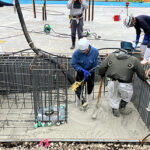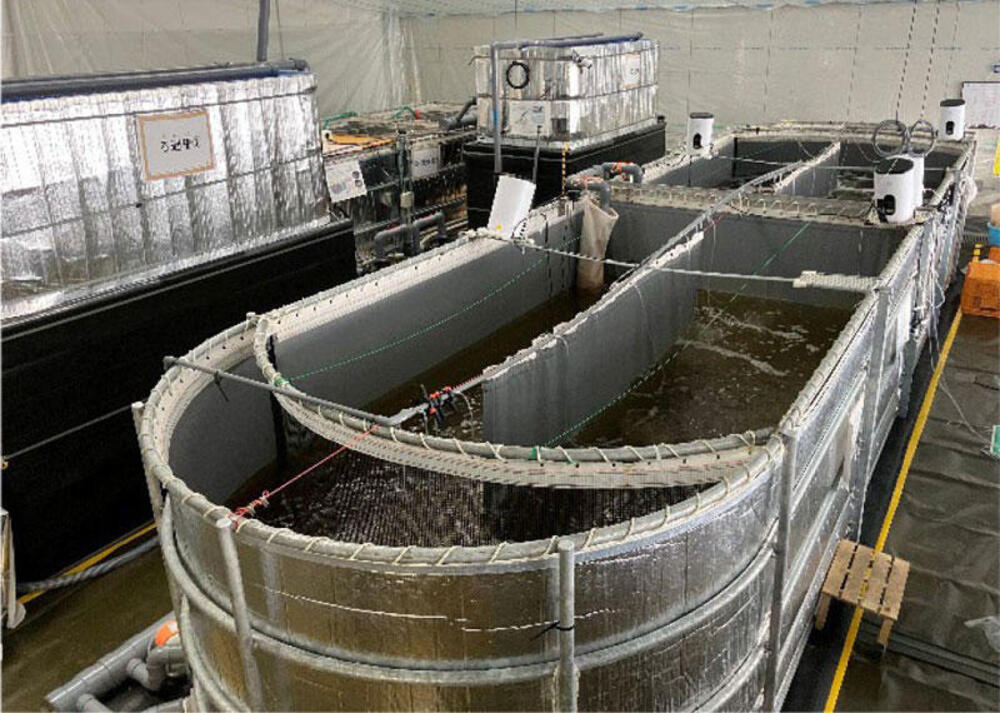
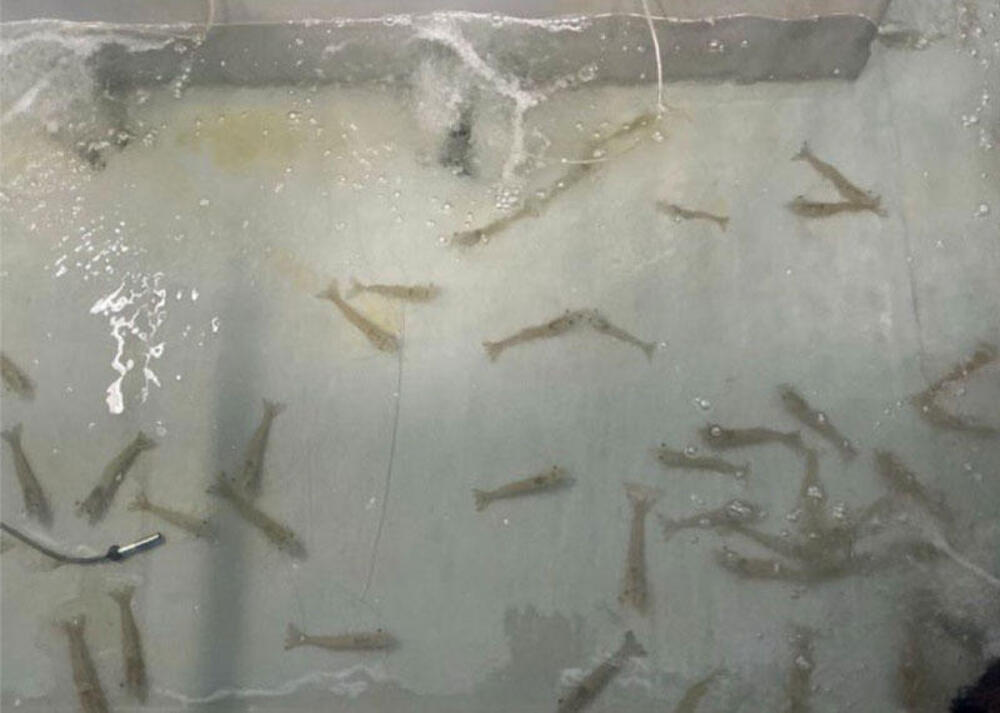
Taisei Corporation announced on October 27, 2026 that, in collaboration with Plantform Corporation, it has begun a demonstration trial at Takamatsu Airport—where Taisei is an investor and operator—combining closed recirculating land-based farming of whiteleg shrimp using low-salinity water with aquaponics.
Aquaponics combines aquaculture and hydroponics to describe a circular farming system that raises fish and vegetables simultaneously. According to the company, saltwater aquaponics targeting marine seafood has so far remained largely at the research stage in Japan, with only limited demonstration cases.
This trial marks the first phase of a “demonstration project for a regional resource circulation model” that starts from feed-conversion technology using insects raised on food waste. The project will examine compound insect feed made from food waste and other refuse that has conventionally been composted or incinerated locally, then have shrimp raised on that feed consumed within the region. By turning the food waste generated in that process back into a resource, the project aims to build a land-based aquaculture model that is self-contained within the local area.
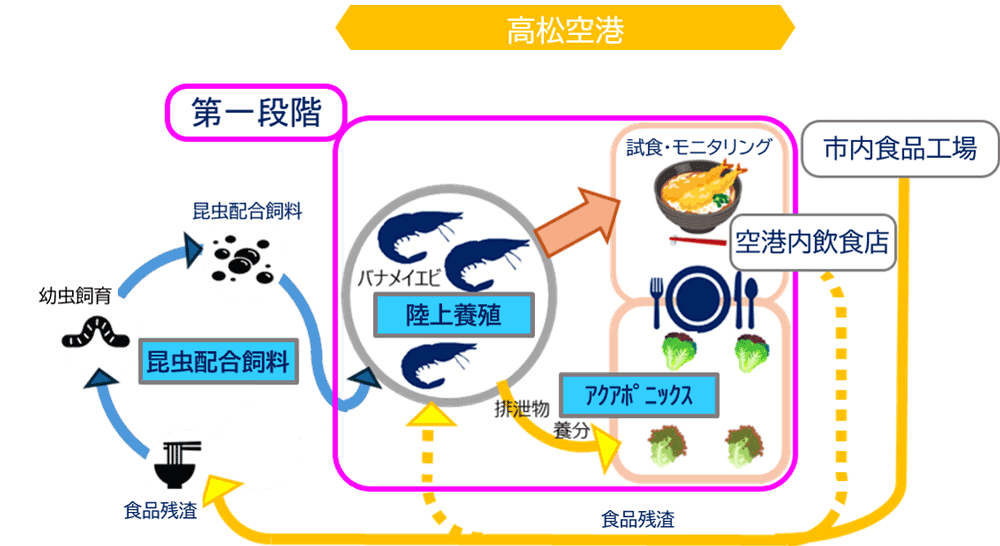
In aquaculture, securing a stable feed supply, reducing production costs, and limiting environmental impact are recognized challenges. According to the company, closed recirculating land-based aquaculture is easy to manage and can be expected to deliver stable productivity and higher value-added products. Combining it with aquaponics is also expected to lower water treatment costs and minimize environmental impact.
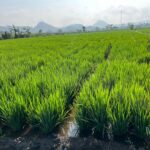
The demonstration consists of two trials. First, shrimp farming and vegetable hydroponics will be conducted simultaneously under different salinity levels, comparing the growth conditions of both to identify the optimal salinity level at which the two can coexist. Second, farming and cultivation will be carried out at that salinity level while monitoring changes in ammonia nitrogen levels contained in shrimp excrement and the consumption of elements needed for plant growth, among other factors. This will clarify the nitrogen-removal effects that aquaponics brings to shrimp farming, among other benefits. The project also plans to verify which vegetables can be grown under low-salinity water, and to assess the extent to which aquaponics improves the productivity and profitability of land-based aquaculture.
With cooperation from restaurants inside Takamatsu Airport, the shrimp and vegetables produced have also been served for tasting and evaluation. The demonstration is being carried out with support from a subsidy under the Fisheries Agency’s “Public Call for Proposals for Demonstration Projects to Promote the Growth of the Aquaculture Industry.”
*The images at the top and within the text are taken from the press release.
【Press release】Demonstration Trial of Closed Recirculating Land-Based Aquaculture and Saltwater Aquaponics Begins at Takamatsu Airport
【Related article】Taisei Corporation Publishes Nature-Positive Assessment Method, Quantifying Contributions to Biodiversity
【Related article】Aquaponi Launches Corporate Cafeteria Delivery of Aquaponics Vegetables and Opens Salad Shop in Toranomon, Aiming for Food Circulation Within a 4km Radius