On November 13, 2026, the Ministry of the Environment announced it will establish the “Physical AI Consortium for the Waste Management and Resource Circulation Sector” to accelerate the practical deployment of physical AI (AI systems that perceive and act autonomously in the physical world) in waste management and resource circulation. The consortium will serve as a forum for diverse stakeholders—including technology suppliers and on-site processing operators who represent the demand side—to share information and build momentum across the industry. Membership applications opened the same day, with a deadline of December 3. There is no membership fee.
The consortium does not represent the interests of any specific company or industry. Instead, it aims to connect field operators with technology providers, demand-side and supply-side stakeholders, and government with the private sector, fostering cross-organizational co-creation toward the shared social goals of proper waste management and advanced resource circulation. Its key roles include: sharing challenges and needs between supply-side and demand-side stakeholders and facilitating matching; promoting collaboration for technology development and demonstration projects based on field data; organizing discussion points for industry-wide common rules, such as safety standards and implementation specifications for human-robot collaboration; collecting on-site challenges and expectations for technology to feed into future policies and demonstrations; and sharing domestic and international technology trends and advanced case studies.
For the time being, the consortium will focus on holding meetings for information sharing, promoting collaboration and exchange of views among members toward social implementation, and gathering on-site challenges and expectations for technology. Meetings will generally be held about twice a year, with two sessions planned for fiscal year 2026—one in mid-December and another around February. Example themes to be addressed include the automated sorting of hazardous items such as products containing lithium-ion batteries, waste plastics, and small household electronics, with specific topics to be determined by the secretariat based on member input.
Membership is open to relevant government ministries and agencies, private companies, local governments (including partial administrative associations and wide-area unions), and industry associations related to waste management, resource circulation, or physical AI, provided they endorse the consortium’s objectives and intend to participate proactively. Expected participants include waste management operators, material recovery operators, plant manufacturers, and AI/robotics companies. METI’s AI Robotics Office and Resource Circulation Economy Division will join as observers. Member names may be disclosed publicly, and members may indicate their participation externally, but displays that could create the misleading impression that the Ministry of the Environment endorses or certifies a company or its products/services are prohibited. The initial activity period runs through March 31, 2027, after which it will be automatically extended year by year unless the secretariat issues a notice of dissolution.
On December 17, a kickoff meeting (tentative name) for members will be held in hybrid format, in person at the Japan Research Institute’s Social Value Co-Creation Studio in Marunouchi, Tokyo, and online. In-person attendance is capped at approximately 50 people, and participation is free. The agenda includes an explanation of the consortium’s founding purpose, a talk by the head of METI’s AI Robotics Office, and presentations of physical AI case studies in the waste management and resource circulation field from around three organizations.
The consortium’s establishment is driven by challenges facing waste management operations on the ground. While waste management serves as social infrastructure supporting environmental conservation and public health, it is also becoming increasingly important as a source of recycled resources. Although technologies such as mechanical sorting are being introduced at various stages of the process, technical constraints mean that some processes remain difficult to automate and continue to rely on manual labor. The growing diversity and complexity of products has increased the labor required for processing, while fires and smoke incidents caused by lithium-ion batteries have become frequent. At sites where hazardous items must be removed by hand, ensuring worker safety has become an urgent issue. Furthermore, small household electronics and similar items contain critical minerals such as lithium, cobalt, and nickel, and the ministry noted that from an economic security perspective, improving resource recovery rates through more advanced recycling processes is essential. Structural labor shortages stemming from Japan’s declining population are also becoming more serious.
Against this backdrop, expectations are rising globally for physical AI—systems that integrate information from cameras, sensors, and other sources to perceive the real world and autonomously carry out physical tasks. Japan’s “AI Robotics Strategy,” formulated by the government in March 2026, positions the waste management industry as one of 18 sectors where demand creation and deployment environments should be developed. In the sector-specific AI robotics implementation roadmap, “detection” and “grasping/sorting” in the sorting process are identified as short-term priorities. The “Circular Economy Action Plan,” formulated in April of the same year, also calls for promoting the use of digital transformation (DX) and AI in waste management and resource circulation. The ministry considers the sorting process particularly well-suited as a field for technology development, since the acceptable range of required success rates is broader than in other fields, and iterative learning is possible even if early-stage demonstrations fail.
At the same time, introducing physical AI to actual work sites presents challenges that individual operators struggle to solve alone. Waste management operators and local governments often lack full visibility into available technologies, while AI and robotics companies and plant manufacturers often lack detailed knowledge of on-site needs. In addition, identifying waste that is dirty, deformed, or damaged, or items containing batteries, requires training and validation based on real-world data from processing sites—making collaboration between technology companies and operators or local governments with access to such sites essential. The ministry also noted that safety standards, safety assessments, and implementation specifications for human-robot collaboration are difficult to advance through efforts by individual companies alone, and require cross-industry discussion to organize the relevant issues.
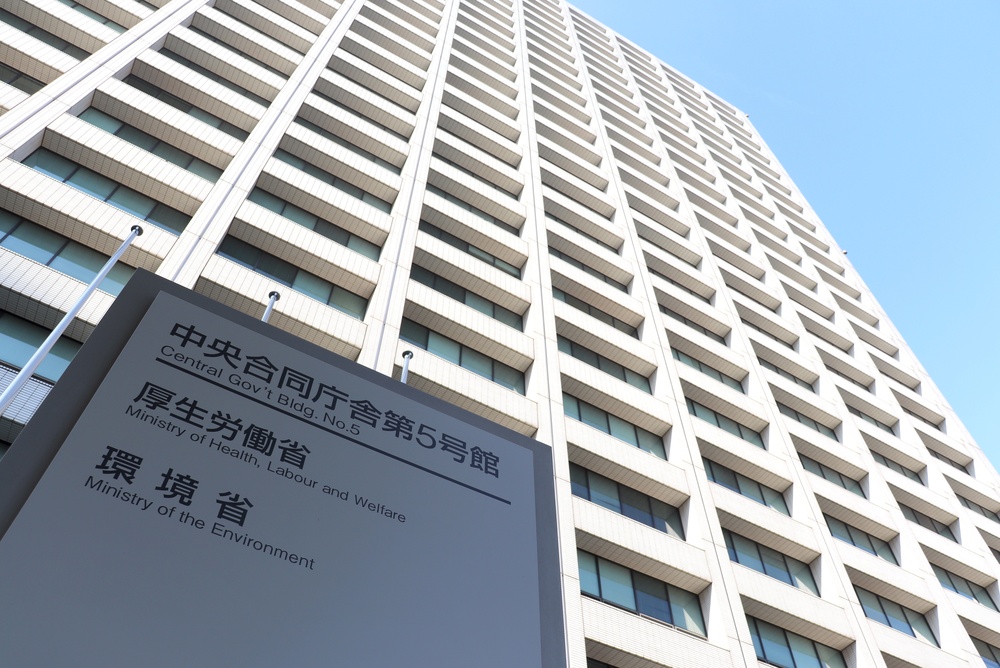
The consortium will be hosted and operated by the Ministry of the Environment, with its secretariat located in the Waste Management Division of the ministry’s Environmental Regeneration and Resource Circulation Bureau. The ministry stated that implementing physical AI in the real world goes beyond simply introducing equipment—it involves rethinking on-site processes to maintain safe and sustainable waste management systems over the long term. Through this consortium, the ministry intends to bring together the knowledge and experience of operators and local governments with access to real sites and companies with relevant technology, in order to advance concrete, practical implementation.
【Reference】Establishment of the “Physical AI Consortium for the Waste Management and Resource Circulation Sector” and Call for Members
【Related article】Japanese Government Commits ¥1 Trillion in Public-Private Funding to Strengthen Recycled Resource Supply Chains, Sets Recycling Targets for Critical Minerals: Circular Economy Action Plan
【Related article】Ministry of the Environment Strengthens Measures Against Lithium Battery Fires in Waste
【Related article】PepsiCo and Intuitive AI Install AI Waste Sorting Machines at U.S. Airports and Other Locations