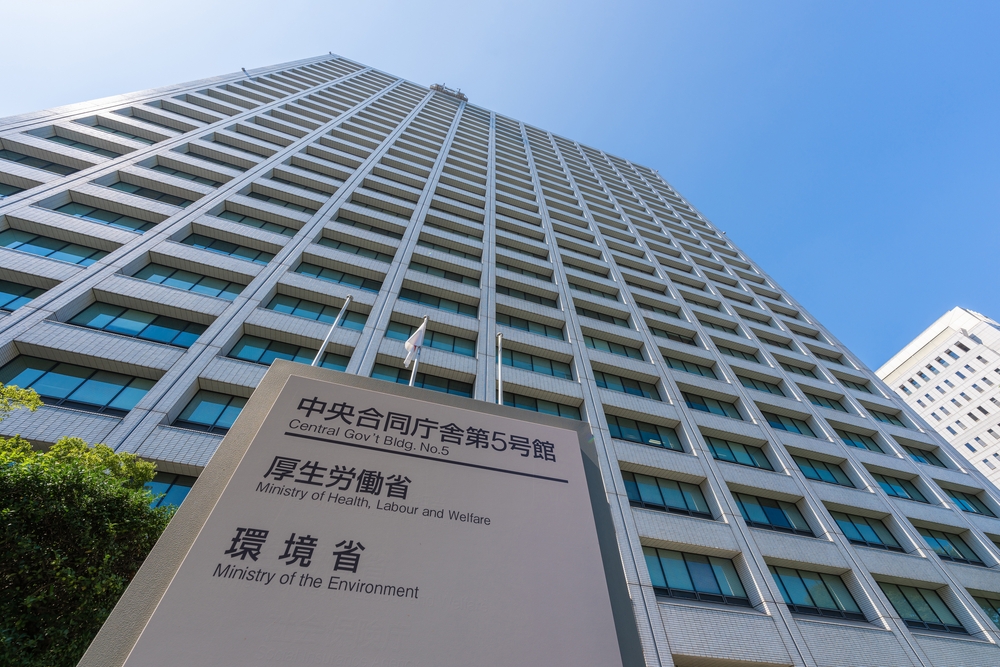
On July 10, 2026, the Ministry of the Environment announced the results of its open-call selection process for the fiscal year 2026 Regional Resource Circulation Promotion Support Programme, covering two tracks: “Municipal CE Assessment and Vision Development” and “Circular Business Model Pilot Projects.” Both tracks were launched by the Ministry of the Environment through a public call for proposals, with the aim of accelerating the transition to a circular economy. The first track supports municipalities in assessing the state of local resource circulation and formulating a vision, while the second supports businesses in piloting circular business models.
The call for proposals ran from April 13 to May 29, 2026, with evaluation conducted by a review panel of five experts using a defined scoring framework. The number of selected projects was as follows: 15 first-year and 11 second-year projects under the Municipal CE Assessment and Vision Development track, and 14 first-year and 5 second-year projects under the Circular Business Model Pilot Projects track.
Under the Municipal CE Assessment and Vision Development track (first year), selected projects included applications from individual municipalities such as Shinjo City (Yamagata Prefecture), Date City (Fukushima Prefecture), Iga City (Mie Prefecture), and Oita City (Oita Prefecture). Also selected were multi-municipality collaborative projects, including a wide-area initiative led by Shizuoka City (Shizuoka Prefecture) in partnership with Minamiawaji City (Hyogo Prefecture), Kuroshio Town (Kochi Prefecture), and Karatsu City (Saga Prefecture), as well as a project led by Seto City (Aichi Prefecture) together with Owariasahi City and Nagakute City.
Under the Municipal CE Assessment and Vision Development track (second year), selected projects included a collaborative application from Yonezawa City and Iide Town (both in Yamagata Prefecture), along with individual municipal projects from Kashima City (Ibaraki Prefecture), Kanuma City (Tochigi Prefecture), Numata City (Gunma Prefecture), Joetsu City (Niigata Prefecture), Ena City (Gifu Prefecture), Iwakura City (Aichi Prefecture), Toyonaka City (Osaka Prefecture), Ama Town (Shimane Prefecture), Mihara City (Hiroshima Prefecture), and Kikai Town (Kagoshima Prefecture).
Under the Circular Business Model Pilot Projects track (first year), a diverse range of local resource-focused pilot projects were selected. In Odate City (Akita Prefecture), a project was selected that aims to build a biomass power generation system through the cultivation of fast-growing paulownia trees on abandoned farmland. In Taito Ward (Tokyo), a project by Enoki Co., Ltd. (株式会社縁の木) was selected to standardise and scale the “KURAMAE Model,” an urban circular economy model that utilises organic by-products such as coffee grounds and cooking waste.
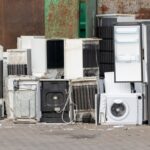
Further selected projects include: a pilot by Tokio Marine & Nichido Fire Insurance Co., Ltd. (東京海上日動火災保険株式会社) in Katsushika Ward (Tokyo) to promote waste-sorting behaviour through its litter-collection event “Seisouchuu”; a resource circulation model in Kameoka City (Kyoto Prefecture) by Gomi no Gakkou Co., Ltd. (株式会社ごみの学校) involving the disassembly and sorting of small household appliances; and a seagrass bed restoration and blue carbon promotion project in Susami Town (Wakayama Prefecture) using fishery processing residues. The selected projects span a wide range of local resource categories, including food waste, forest resources, ceramics, and fishery waste.
Five projects were selected under the Circular Business Model Pilot Projects track (second year): appcycle Co., Ltd. (appcycle株式会社; in collaboration with Hirosaki City, Aomori Prefecture); a project in Nasushiobara City (Tochigi Prefecture) with River Co., Ltd. (リバー株式会社) as a partner; CYKLUS Co., Ltd. (株式会社CYKLUS; in collaboration with Fukui Prefecture); the Jizoku Kano na Suwa Shigen Junkan Kenkyukai (自続可能な諏訪資源循環研究会; a self-sustaining resource circulation research group in collaboration with Suwa City, Nagano Prefecture); and Ecolog Recycling Japan Co., Ltd. (株式会社エコログ・リサイクリング・ジャパン; in collaboration with Fukuyama City, Hiroshima Prefecture).
【Reference】Announcement of Selection Results for the Fiscal Year 2026 Regional Resource Circulation Promotion Support Programme: “Municipal CE Assessment and Vision Development” and “Circular Business Model Pilot Projects” (Ministry of the Environment, Japanese)
【Reference】Fiscal Year 2026 Regional Resource Circulation Promotion Support Programme – List of Selected Projects: “Municipal CE Assessment and Vision Development (Year 1)” (PDF, Japanese)
【Reference】Fiscal Year 2026 Regional Resource Circulation Promotion Support Programme – List of Selected Projects: “Municipal CE Assessment and Vision Development (Year 2)” (PDF, Japanese)
【Reference】Fiscal Year 2026 Regional Resource Circulation Promotion Support Programme – List of Selected Projects: “Circular Business Model Pilot Projects (Year 1)” (PDF, Japanese)
【Reference】Fiscal Year 2026 Regional Resource Circulation Promotion Support Programme – List of Selected Projects: “Circular Business Model Pilot Projects (Year 2)” (PDF, Japanese)
【Related Article】Ministry of the Environment Selects 8 Advanced Plastic Resource Circulation Projects, Including Cainz and Shimizu Corporation, Expanding Pilots in Retail and Construction
【Related Article】Towards an EV Battery Reuse Framework: METI and the Ministry of the Environment Draft Report on Revising Japan’s Automobile Recycling System