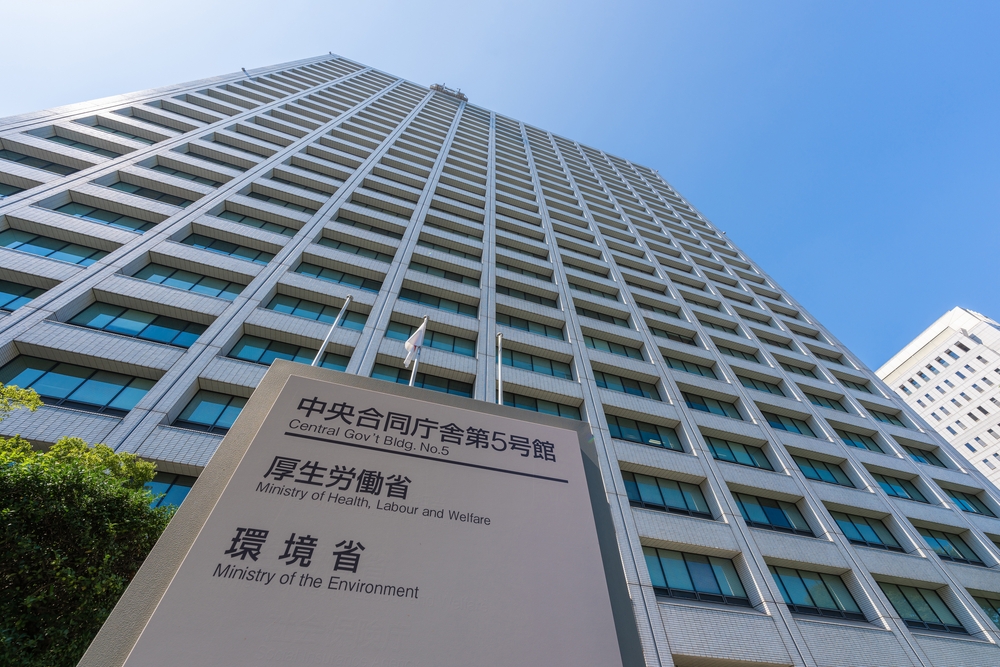
The Ministry of the Environment announced on June 25 that it has selected eight projects under its fiscal year 2026 public募 (open call) for the Programme Supporting the Formation of Advanced Social-Implementation Models for Plastic Resource Circulation.
The programme is grounded in Japan’s Plastic Resource Circulation Strategy and aims to reduce single-use plastic waste, promote environmentally conscious product design, advance the recycling of used plastics, and expand the adoption of biomass plastics. The open call was conducted from April 14 to May 18, 2026, targeting businesses and local governments undertaking advanced initiatives in these areas.
The programme is driven by international developments including the marine plastic waste problem, climate change, and tightening waste-import regulations in various countries. In its Plastic Resource Circulation Strategy, formulated in 2019, the Japanese government set a target of cumulatively reducing single-use (one-way) plastic by 25% by 2030; this support programme is positioned as part of the effort to achieve those strategic goals. Similar support programmes have been implemented continuously in recent years, with eight projects also selected in fiscal year 2025.
Representative examples of the selected projects are as follows.
Cainz Co., Ltd., in collaboration with Kakegawa City (Shizuoka Prefecture), will introduce an AI-based sorting assessment system and an unmanned reception system for large plastic products collected at its home improvement stores. The project aims to establish a collection model for recycled plastics that achieves the right balance of volume, quality, and price.
Shigen Junkan Systems Co., Ltd. (Resource Circulation Systems) will conduct an end-to-end pilot covering AI-assisted sorting of plastic waste generated at construction sites (construction waste plastics), quality control during the material recovery process, and securing end markets for the recovered materials. The project seeks to establish a standard model that simultaneously raises the material recycling rate (a method of recovering waste as new raw material) for construction-sector waste plastics and reduces environmental impact.
Shimizu Corporation will pilot a material recovery facility capable of producing high-quality pellets (granular resin feedstock) tailored to the varying sorting conditions of plastic waste at individual construction sites. The pellets produced will also undergo material evaluation by multiple recycled-material users and product manufacturers, with the aim of advancing material recycling across the construction industry.
The remaining five projects also cover a broad range of areas, including the use of recycled materials in household rubbish bags, improving sorting accuracy through resident-facing smartphone apps, and voluntary collection schemes for compacted plastic bottles.
The selected pilots include categories that have traditionally been difficult to sort and collect—such as plastic waste from construction sites and large plastic products—making it worth watching how the results of each project translate into broader social implementation going forward.
【Source】Announcement of Selected Projects for the Fiscal Year 2026 Programme Supporting the Formation of Advanced Social-Implementation Models for Plastic Resource Circulation
【Related Article】Ministry of the Environment Outlines Approach to Regional Decarbonisation Transition, Including Pilots in Sakata, Arita and Satsumasendai
【Related Article】Ministry of the Environment Releases Results of Eight Plastic Resource Circulation Pilots, Including Local-Production-for-Local-Consumption Recycling and Reusable Cup Schemes
【Related Article】Ministry of the Environment Formulates Reuse Promotion Roadmap, Targeting a ¥4.6 Trillion Market by 2030