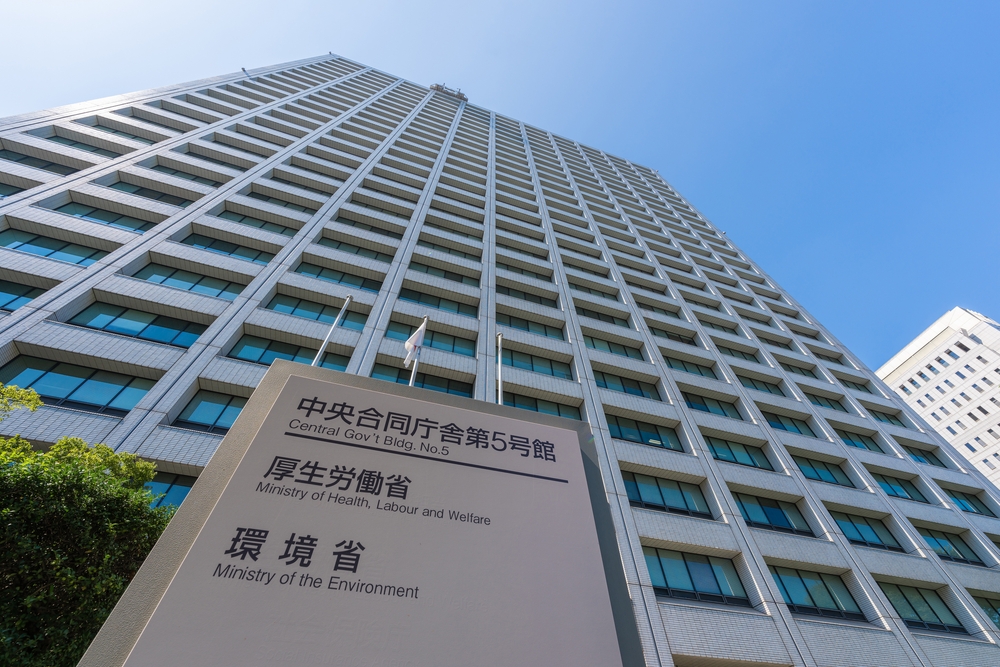
On July 21, 2026, the Ministry of the Environment announced the results of its open call for the “Fiscal Year 2025 Supplementary Budget Resource Circulation Acceleration Project for the Full Utilisation of Local Resources (Model Projects).”
From April 24 to May 27, 2026, the Ministry of the Environment invited applications from operators willing to conduct technical feasibility and business viability studies on the collection, sorting and material recovery of resource-bearing waste streams that have traditionally been considered difficult to recover — including composite materials (metals, wood, plastics, etc.), incineration ash, construction wood waste and sustainable aviation fuel (SAF) feedstocks. Following a review by a selection committee based on the submitted application documents, nine projects were selected. This model programme targets feasibility studies and demonstration projects that contribute to the establishment and expansion of a “resource circulation scheme” (a local closed-loop system in which resource-bearing waste generated in a given area is collected, transported, sorted, separated and recovered as materials, then supplied back to the same area as recycled materials).
Among the selected projects, Obayashi Corporation will conduct a feasibility study on establishing a locally sourced and locally consumed recycling scheme for used windows (waste glass and waste aluminium sashes) generated at construction demolition sites. Because window glass is integrated with aluminium sashes and sealants in a composite structure, it is difficult to recover at high purity during demolition, and most of it has ended up in landfill or low-grade applications. Japan is estimated to generate more than 500,000 tonnes of waste window glass per year from building demolition and renovation. In March 2026, Sekisui House, Daiei Kankyo and AGC launched Japan’s first closed-loop (bottle-to-bottle style) recycling demonstration — turning waste window glass back into window glass — in the Kansai region.
Kubota Corporation will implement a project to build a total material recovery system for municipal solid waste, aimed at strengthening the resilience of the recycled-resource supply chain. Kubota has been engaged in research on sewage, night soil and municipal waste treatment since the establishment of its Water Research Institute in 1961, and holds proprietary “Deep Recycling” technology that recovers metals from incineration ash using a rotary surface-melting furnace.
Pirika Inc. will carry out a demonstration project for on-island resource circulation of beach-washed plastic on Iriomote Island (a remote island in Okinawa Prefecture). Pirika has a track record of pursuing locally sourced and locally consumed waste processing — producing products from microplastic waste derived from artificial turf and oyster-farming pipes within the same community — and this project is expected to follow the same approach.
MOAI Co., Ltd. will work on building and demonstrating a cascade circulation system targeting tea-processing waste in Shizuoka Prefecture, combining the production of tea-dyed goods using iron mordant dyeing technology with the return of post-dyeing wastewater to agricultural land. MOAI has previously rolled out approaches in various locations that circulate waste through multiple stages within a community before ultimately returning it to the soil or farmland — including a project to collect and reuse natural fibres that eventually biodegrade, and a project to convert disposable chopsticks into charcoal for soil improvement by farmers. Shizuoka is home to workshops engaged in tea dyeing, which uses waste from the tea manufacturing process as a dye, and the reuse of spent tea leaves is also a field that major beverage company Ito En has been developing as an upcycling business.
Five additional projects were also selected: Asahi Kasei Medical Co., Ltd. (resource circulation of used dialysers), Aruhaitec Co., Ltd. (plastic-aluminium composite waste from the pharmaceutical-related industry), the Suwa Wide-Area Decarbonisation Innovation Association (the Tenryugawa River Basin Matsukawa Regenerative Project), IDEA Consultants, Inc. (material recovery of the designated invasive alien species Alternanthera philoxeroides), and Japan NUS Co., Ltd. (resource circulation of pearl-farming cages).
This programme is part of an effort to create mechanisms for recovering resource-bearing waste — streams that have traditionally been considered difficult to recycle — within local communities. The Ministry of the Environment is also running a parallel indirect-subsidy programme of a similar nature.
【Reference】Results of the Open Call for the Fiscal Year 2025 Supplementary Budget Resource Circulation Acceleration Project for the Full Utilisation of Local Resources (Model Projects)
【Reference】Open Call for the Fiscal Year 2025 Supplementary Budget Resource Circulation Acceleration Project for the Full Utilisation of Local Resources (Model Projects)
【Reference】Open Call for the Fiscal Year 2025 Supplementary Budget Resource Circulation Acceleration Project for the Full Utilisation of Local Resources (Indirect Subsidy Projects)
【Reference】Second Open Call for the Fiscal Year 2025 Supplementary Budget Resource Circulation Acceleration Project for the Full Utilisation of Local Resources (Indirect Subsidy Projects)
【Related Article】Closed-Loop Recycling of Window Glass from Home Renovations: Sekisui House, Daiei Kankyo and AGC Launch Japan’s First Demonstration