Ryohin Keikaku Co., Ltd. has announced that it has been appointed to design the staff uniforms for Yokohama City’s information hub at GREEN×EXPO 2027 (the 2027 International Horticultural Exposition), to be held in Yokohama in 2027, with the finalised design revealed on August 24, 2026.
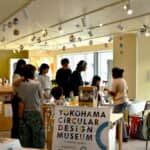
The initiative was carried out as part of the “Project to Promote Low-Carbon Lifestyles in Clothing toward the Formation of a Yokohama-Style Circular Society” — a programme run jointly by Yokohama City and Article Co., Ltd. (the company that operates Circular Economy Hub). Recycled polyester derived from clothing collected within Yokohama City was used as part of the raw material for the uniforms. Ryohin Keikaku states that it aims to help realise a circular society by pursuing fibre-to-fibre resource circulation, in which collected garments are repurposed as new raw materials.
The programme was developed in collaboration with partner organisations selected through a public call for proposals under Yokohama City’s Civic Collaboration Ordinance (横浜市市民協働条例). Its goal is to drive behavioural change among residents by raising awareness of low-carbon actions and providing tangible experiences of circularity, with clothing — an essential part of everyday life — as its central theme.
Ryohin Keikaku concluded a comprehensive partnership agreement with Yokohama City in May 2021 and has since engaged in co-creation activities covering themes such as disaster preparedness and resource circulation. The company has also maintained an ongoing exchange of information with Article through community activities focused on the circular economy.
In the area of MUJI apparel, Ryohin Keikaku began collecting used clothing in its stores in 2010 as part of a product development approach that considers end-of-life recycling, subsequently expanding its collection programme to include skincare PET bottles and plastic storage products. Since 2024, the company has been developing its “Back to Material” series, which pursues the use of single-material construction. As part of that series, on September 17, 2025, it launched ten items under the “Back to Material Fleece” line, covering menswear, womenswear, and childrenswear. Every component of these products — including the main fabric, buttons and other accessories, and sewing thread — uses 100% PET raw material, making them easy to recover as a material. The project came about because Yokohama City’s resource circulation initiatives in the clothing sector aligned closely with this philosophy of designing products that are easy to recycle.
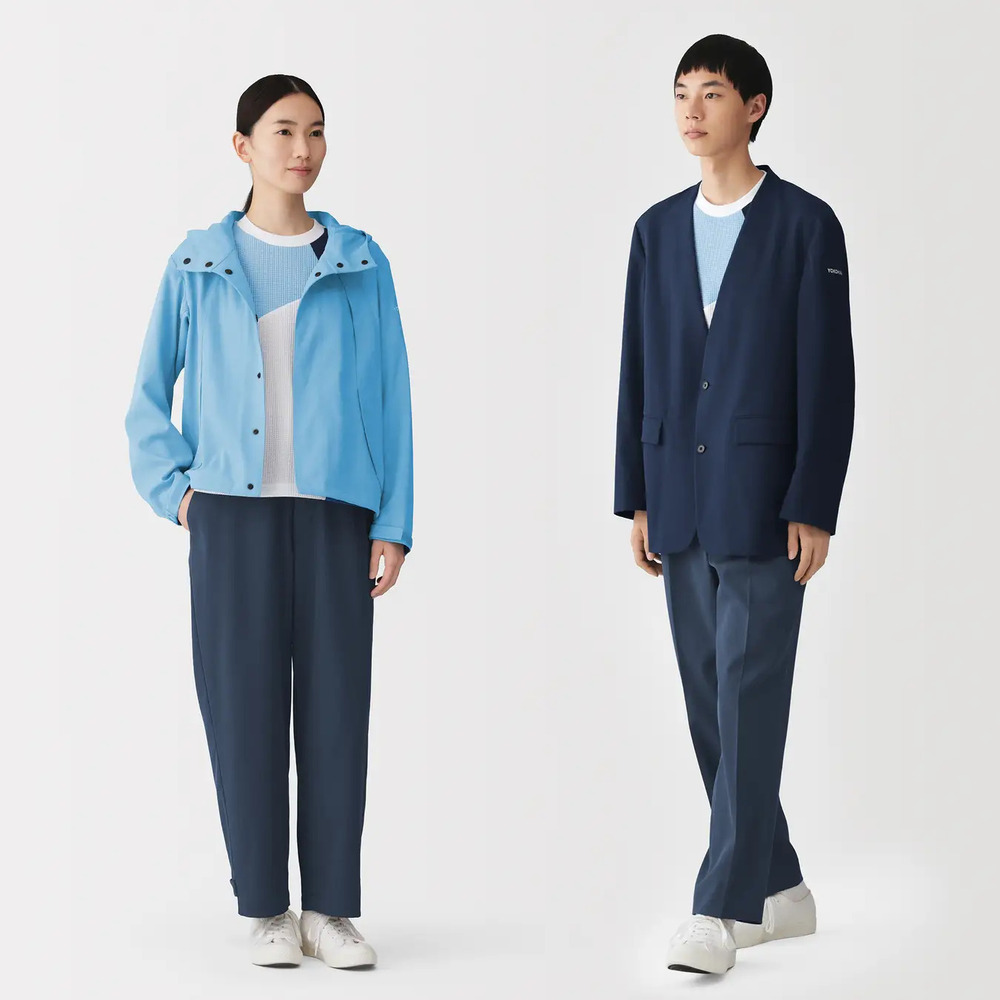
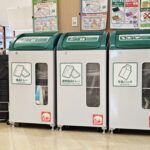
Yokohama City and Article are working with a wide range of stakeholders — including residents, businesses, and universities — toward “the formation of a Yokohama-style circular society in the clothing sector.” Their activities involve collecting unwanted garments at municipal facilities and commercial establishments across the city and transforming them into new products. The uniforms incorporate recycled polyester derived from clothing collected through these activities in Yokohama.
Recycling textile products typically involves considerable time and cost to separate different materials and remove accessories such as buttons. Ryohin Keikaku has been advancing product designs that use single materials wherever possible — not only for the main fabric but also for sewing thread, buttons, and other components — to facilitate material recovery. The company reports that the know-how accumulated through its “Back to Material” series was applied in developing these uniforms as well.
Ryohin Keikaku is working with Teijin Frontier Co., Ltd. to advance fibre-to-fibre resource circulation for polyester products. Collected garments undergo sorting and pre-treatment before being processed using chemical recycling technology and recovered as polyester fibre once again. The design philosophy of fibre-to-fibre resource circulation has been incorporated into these uniforms as well.
The company states that it aims to leverage technological innovation to promote fibre-to-fibre recycling and to spread throughout society a circular system that transforms collected garments into new resources. It also aims to contribute to the realisation of a circular society by reducing the use of fossil-derived raw materials, while working toward a society in which anyone can participate in sustainability without inconvenience or sacrifice.
【Reference】Staff Uniforms Produced for the Yokohama City Hub at GREEN×EXPO 2027
【Reference】MUJI Launches 10 Items in the “Back to Material Fleece” Series
【Reference】Initiatives toward the Formation of a Yokohama-Style Circular Society in the Clothing Sector
【Related article】Who Are the “Circular Value Promoters” Key to Spreading the CE? Kinki METI Bureau Introduces 10 Cases Including MUJI and Clas
【Related article】Yokohama City Expands Clothing Collection Points to 53 Locations; Garments to Be Recycled into GREEN×EXPO 2027 Staff Uniforms
※ Images in this article are sourced from the press release.