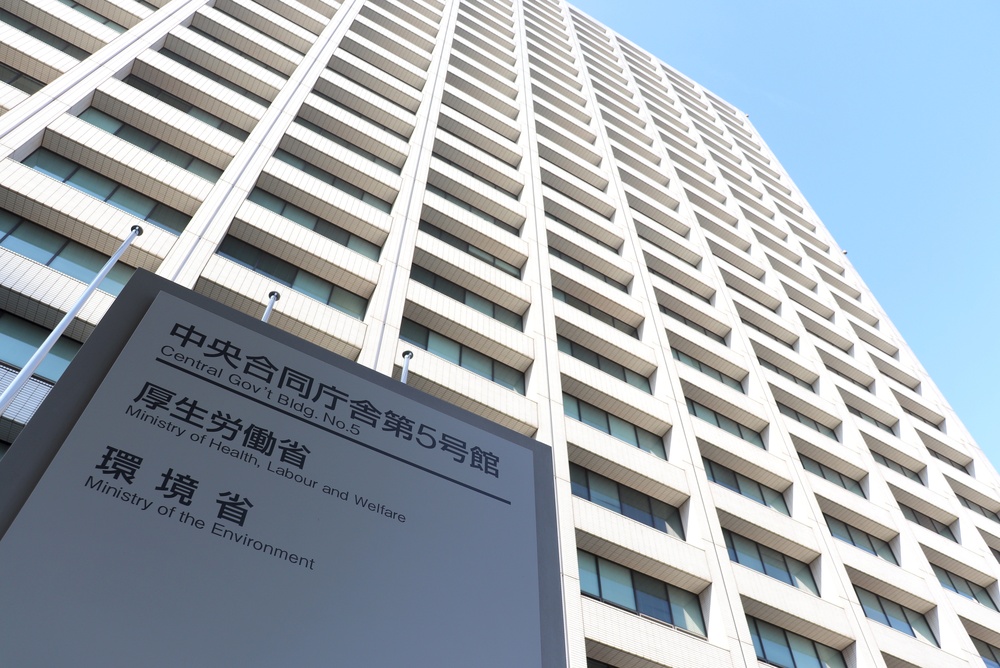
On September 16, 2026, Japan’s Ministry of the Environment published an analysis reviewing 45 pilot projects on “nudges”—techniques that encourage people to take certain actions—conducted over nine years, from fiscal year 2017 through fiscal year 2025. The review examined what kinds of design elements proved effective. The compilation was carried out as part of “Decarbonization Action” (Deco-katsu), a national campaign to create new, enriched lifestyles that contribute to decarbonization.
A nudge is a technique that makes it easier for people to choose desirable actions on their own, by taking into account cognitive tendencies such as assumptions and procrastination. The Ministry of the Environment states that, in addition to spreading technologies and equipment, encouraging behavioral change in daily life is essential to achieving a decarbonized society. In 2017, the ministry launched BEST (Behavioral Sciences Team), Japan’s version of a “nudge unit.” BEST is an all-Japan initiative bringing together government ministries and agencies, local governments, industry, and experts in a collaborative effort spanning academia, industry, government, and civil society. Since then, the ministry has progressively developed an ethics checklist, published a report titled “Nudges and EBPM (evidence-based policymaking),” and formulated a nudge strategy. This latest compilation systematizes the knowledge accumulated across the outcome reports of the 45 projects.
Statistically Significant Differences Found in 90 of 135 Trials
The compilation organized 410 initiatives contained within the 45 projects by target area, behavioral characteristics, intervention type, and evaluation method. Among these, 135 trials that used randomized controlled trials or natural experiments were analyzed, and statistically significant differences (differences unlikely to be due to chance) were confirmed in 90 of them. Of these, 76 showed differences in actual behavior or outcomes, such as electricity usage. Seven showed a trend toward improvement, while 29 showed no confirmed effect. The remaining 9 were excluded from this assessment because verifying effectiveness through statistical significance was not their primary objective.
Key examples where effectiveness was confirmed include the following:
- Comparison reports with neighboring households: reduced household energy consumption by 1.7–2.2%
- Combination of AI forecasting and energy-saving points: reduced daily electricity usage by 1.35 kWh
- Eco-driving advice: reduced CO₂ emissions during driving by up to 7.8%
Looking at results by nudge type, among the approaches tested, setting the desirable option as the default was effective in 5 of 6 cases, and having people declare goals in advance was effective in 16 of 19 cases. By contrast, approaches involving how information is presented—such as making information easier to understand or showing comparisons with others—produced mixed results, with some cases showing an effect and others not.
Matching Nudges to Behavioral Characteristics
The compilation points out that it is important to select different nudges depending on the characteristics of the behavior involved, and it organizes target behaviors into two categories.
- Investment-type behavior: actions such as switching to an energy-efficient refrigerator or changing to a renewable energy electricity plan—behaviors that occur infrequently but where a single decision has a large impact. The compilation found that providing information that is easy to compare and judge, along with setting defaults, is effective for this type of behavior.
- Habit-type behavior: actions such as household energy conservation, eco-driving, and reducing food waste—behaviors that are repeated on a daily basis. For these, mechanisms that help people remember and sustain the behavior were found to be effective, including visualizing usage or progress (visualization/feedback), reminding people to act through notifications (reminders), and having people declare goals in advance (commitment).
Among the trials analyzed, 8 involved investment-type behavior and 127 involved habit-type behavior.
Insights by Nudge Type
The compilation also summarized insights for enhancing effectiveness by nudge type.
- Visualization/feedback: it is important to design not just to show usage data, but also to indicate the next action to take
- Social comparison/social norms: combine comparisons with a familiar peer group with achievable small goals
- Reminders: send notifications at moments when action is possible, and connect them to a pathway that allows immediate action
A Three-Step Process for Application
To enable local governments, private businesses, and research institutions to apply nudges, the compilation presents the following three-step process as a guide.
- Identify the behavioral bottleneck: clarify the target behavior to be encouraged and pinpoint the factors preventing it
- Select a nudge that addresses the bottleneck: choose an appropriate nudge based on the identified factor and the behavioral characteristics involved
- Refine the nudge: based on insights gained from pilot trials, adjust the timing and content of the intervention so that it functions effectively in real-world settings
“Connecting to True Motivations” and “Legitimizing True Motivations”
As an implication for behavior-change policy, the compilation states that it is important not merely to inform people of desirable behavior, but to transform that behavior into something people genuinely want to choose. As approaches for achieving this, in addition to directly appealing to the social value of an action, the compilation identifies two further methods.
- Connecting to true motivations: linking the behavior to be encouraged with values that people genuinely prioritize, such as comfort, security, or cost savings
- Legitimizing true motivations: giving social approval to choose behaviors that align with what people truly want but that are otherwise difficult to choose
As an example of the latter, the compilation cites “Cool Biz,” the campaign that affirmed it was acceptable to go without a necktie. Cool Biz is cited as one of the most successful examples of behavior change taking hold among the Ministry of the Environment’s past initiatives.
Circular Economy-Related Behaviors Also Included
The scope of the trials included not only decarbonization but also behaviors related to the circular economy. In a clothing collection trial, the social contribution of participating in collection and its CO₂ reduction effect were expressed concretely as “equivalent to planting approximately 37,500 trees,” incorporating a design element intended to enhance the significance of taking action. On the other hand, for behaviors such as using a personal water bottle or cup, or eliminating food waste, no effect was confirmed even when visualization was combined with other nudges. Similarly, no effect from incentives was confirmed for the use of reusable shopping bags. The compilation analyzes behaviors that require the effort of carrying or washing items, or that require advance preparation. For such behaviors, visualization and rewards alone tend to be insufficient to remove the underlying barriers, resulting in limited effectiveness.
Future Direction
Going forward, the Ministry of the Environment plans to apply the insights gained from this review to the planning and implementation of decarbonization measures, including Deco-katsu. At the same time, the ministry intends to support the use of behavioral science by local governments, private businesses, and research institutions as they pursue measures and projects that contribute to decarbonization.
【Press release】Publication of the Compiled Results of the Ministry of the Environment’s Nudge Pilot Projects
【Reference】Compilation of the Ministry of the Environment’s Nudge Pilot Projects (Summary Version)
【Reference】Compilation of the Ministry of the Environment’s Nudge Pilot Projects (Detailed Version)
【Related article】Ministry of the Environment and METI Establish Three Task Forces on Plastic Resource Circulation, to Examine Advanced Circular Design and Mass-Balance-Based Value Labeling
【Related article】Ministry of the Environment Selects Six Projects in First Call for Proposals for Decarbonization-Oriented Circular Economy System Development Program, Including Closed-Loop Recycling and Biomethanol Production