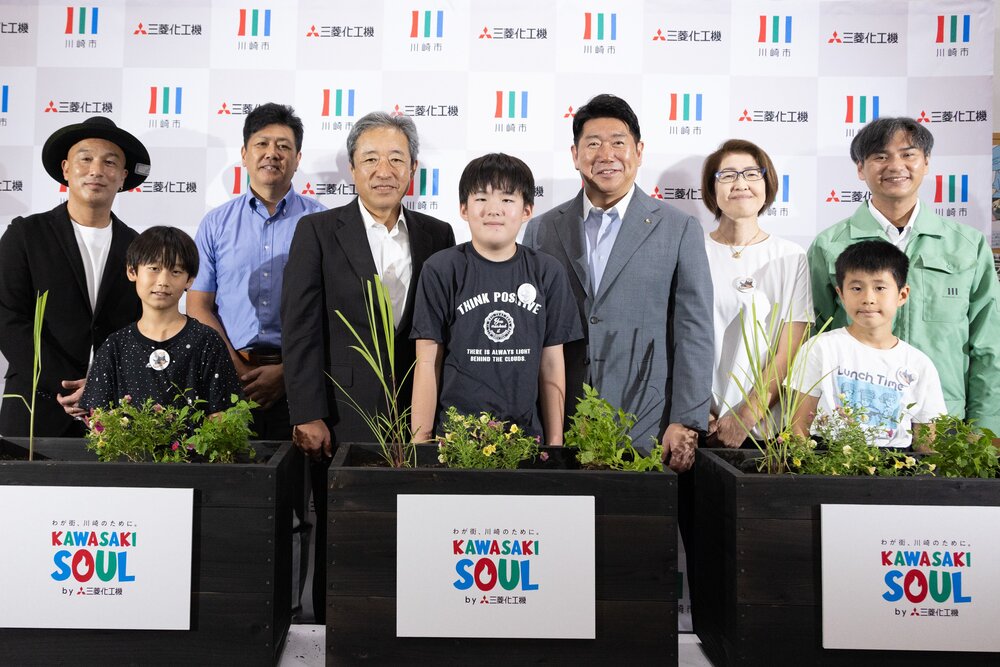
Mitsubishi Kakoki Co., Ltd. and Kawasaki City held a launch press conference on July 27, 2026, for the “Yumemigasaki Project,” a local circular economy demonstration based at Yumemigasaki Zoo in Kawasaki’s Saiwai Ward.
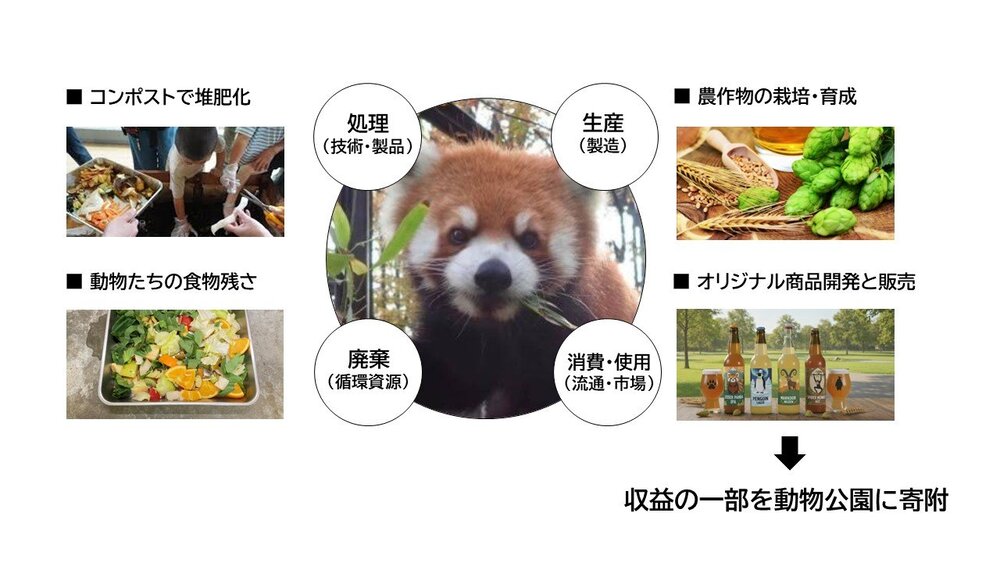
Under the project, food waste generated at the zoo will be composted and used to grow hops, lemongrass, and other crops. The harvested produce will be used to develop and sell original products in collaboration with local partners, with a portion of the revenue returned to support zoo operations. A defining feature of the initiative is the way it unites government, business, and citizens to convert waste from a public facility into a revenue stream.
The project stems from a partnership agreement on realising a circular society in Kawasaki City signed by Mitsubishi Kakoki and Kawasaki City on June 15, 2026. The agreement aims to promote resource and energy circulation and circular-economy industries, while enhancing the city’s image and fostering civic pride.
Project participants were brought together through the “Yumemiraikai Exchange Group,” a community network active around Yumemigasaki Zoo. Facilities and NPOs in Saiwai Ward, where the zoo is located, are providing land for crop cultivation. Other participants include the craft brewery Tokaido BEER Kawasaki-juku Factory, the restaurant chain Ganso New Tantan Men Honpo, Karyo Tosho — a Japanese confectionery shop with over 110 years of history — and KADOKAWA DREAMS, a team competing in the professional dance league D.LEAGUE, as well as local influencers, regional idol groups, and children from the community. Mitsubishi Kakoki has stated that its goal is to build a model based on comprehensive collaboration across the entire supply chain, rather than piecemeal partnerships premised on the adoption of any single company’s products or technologies.
The original products are scheduled to go on sale at “Colors, Future! Summit,” an event planned for November 1, 2026, in Kawasaki City. Updates on the composting process, crop cultivation, and product development will be shared progressively via YouTube, Instagram, and other social media platforms.
The project’s background lies in the ageing of public facilities and infrastructure built during Japan’s period of rapid economic growth in the 1960s and 1970s. Zoos are no exception: faced with deteriorating facilities, stagnant admission revenues, and growing public interest in animal welfare, many have been exploring alternative income sources such as hometown tax donations (furusato nozei) and crowdfunding. The project tests a mechanism through which businesses, local government, and citizens circulate resources together — an approach that does not increase the burden on residents or visitors.
Resource utilisation at zoos is not entirely new. Sapporo City’s Maruyama Zoo composts the entire annual output of elephant dung — approximately 140 tonnes — and distributes it to green spaces within the zoo, nearby schools, city-managed parks, and farmers who donate vegetables to the zoo. Osaka City’s Tennoji Zoo composts dung and leftover feed from herbivore enclosures on-site, and also uses lettuce offcuts donated by a neighbouring hotel as animal feed, as part of its food-loss reduction efforts. Tobu Zoo and Yokohama City’s Kanazawa Zoo similarly compost animal waste.
These existing initiatives, however, largely stop at using compost within the zoo or its immediate surroundings. The Yumemigasaki Project goes a step further by embedding the entire chain — from compost to crops to locally co-developed products to sales revenue returned to zoo operations — into a single integrated system. What sets it apart from existing efforts is that composting is treated not as an end point, but as the starting point for revenue generation.
Whether initiatives like this — using public infrastructure such as zoos to generate revenue that feeds back into operations — can contribute to the long-term sustainability of locally distinctive public facilities remains to be seen, and will be closely watched.
※ Photos sourced from the press release.
【Press Release】Launch Press Conference for the “Yumemigasaki Project” — Creating Original Products from Zoo Food Waste: Mitsubishi Kakoki and Kawasaki City Begin Demonstration of a Local Circular Model to Convert Public Facility Waste into Revenue
【Press Release】[Media Release] Press Conference Held to Mark the Launch of the Yumemigasaki Project
【Reference】Elephant Dung Composting Initiative (Sapporo City Maruyama Zoo)
【Reference】SDGs Initiatives at Our Zoo (Tennoji Zoo)
【Reference】Tobu Zoo’s SDGs Initiatives
【Reference】Learning About the Cycle of Life Through Animals (Kanazawa Zoo)
【Reference】Circular City Transition Project (Kinki Bureau of Economy, Trade and Industry, METI)
【Related Article】Mitsubishi Kakoki and Kawasaki City Sign Partnership Agreement to Build a Local Circular Economy Model, Covering Unused Resource Utilisation to Personnel Exchange
【Related Article】Mitsubishi Kakoki Launches “MKK PROJECT” Aimed at a Circular Society, in Collaboration with DeNA and Sophia University