Kubota Corporation announced on October 13, 2026 that it has launched an initiative to build a new resource circulation system aimed at realizing a “Circular Economy Promotion Hub” that fully recycles and utilizes municipal solid waste generated in a region on a prefectural scale. The initiative will sort food waste and plastic waste out of combustible waste, using them as fuel for biomass power generation and as recycled raw materials, respectively. The project, with X Urban Research Institute Inc. and Kankyo Kanri Center Co., Ltd. as joint implementers, has been selected for the Ministry of the Environment’s “Project to Accelerate Resource Circulation for the Thorough Utilization of Regional Resources” (a program supporting advanced regional resource-recycling initiatives).
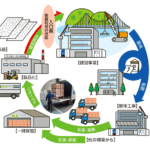
At the hub, a “full material recovery system” will be built that combines sorting of combustible waste with Kubota’s proprietary melting and separation technology. Slag and valuable metals will be recovered from incineration ash, plastic waste will be used as recycled material (with residues used as fuel for the melting furnace), and food waste will be used as feedstock for bioenergy and compost. Through this approach, Kubota aims to simultaneously achieve decarbonization and zero final disposal.
The project will verify the following three points:
- With the cooperation of Yokohama City, a demonstration test will be conducted to confirm whether dedicated bags containing food waste can be collected together with other combustible waste without the bags rupturing
- With the cooperation of Toyama Prefectural University, the commissioned research partner, a survey will be conducted on the composition, properties and size of combustible waste
- Jointly with X Urban Research Institute and Kankyo Kanri Center, regional models for resource-recycling systems suited to each area will be examined in Yokohama City and Tokushima Prefecture, and a roadmap will be created. In addition, hearings with companies that would use the recycled resources and with manufacturers of sorting equipment will be conducted to clarify the potential for utilization
The National Institute for Environmental Studies and the Waste Management and Research Foundation (a public interest incorporated foundation) will participate as external advisors.
Kubota has previously participated, together with the National Institute for Environmental Studies, other companies in the waste and recycling industry, and universities, in a study group established by the Waste Management and Research Foundation to examine the concept of this promotion hub. The hub aims to advance circular economy initiatives led by private-sector operators, through public-private partnership and collaboration across the value chain and the recycling industry.
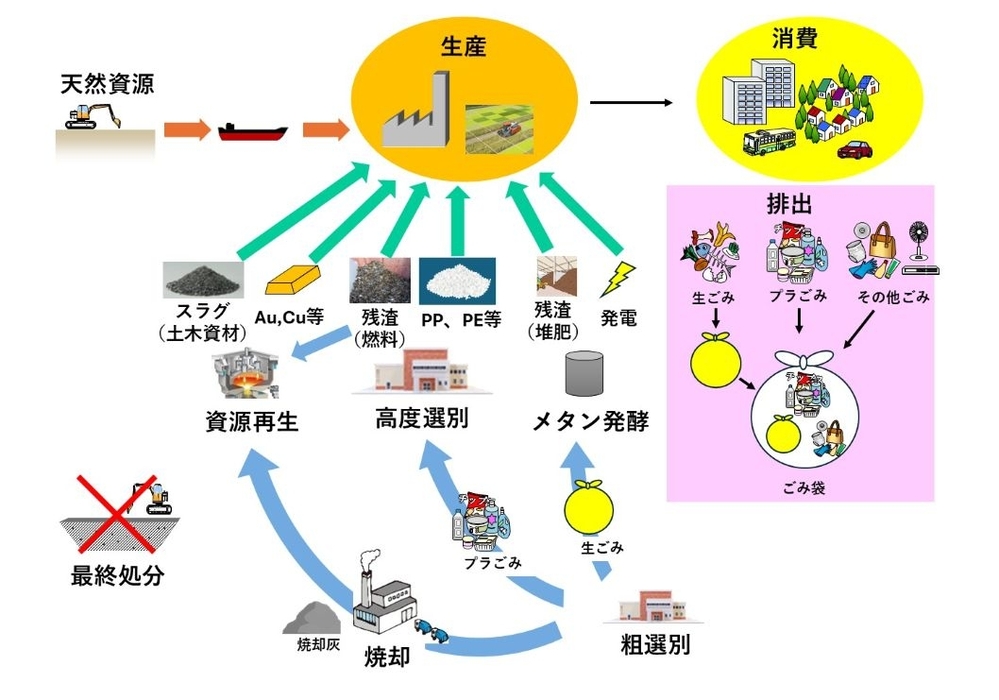
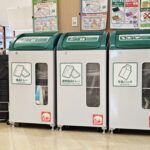
Combustible waste contains many useful resources, including recyclable plastics, valuable metals such as gold, silver, copper, platinum and palladium, and food waste that can be used as feedstock for bioenergy and phosphate fertilizer. However, in Japan, sorting is left up to the residents who generate the waste, and because collecting waste separated into many detailed categories increases costs for municipalities, much of it reportedly ends up being processed without being properly sorted.
Kubota therefore devised a method in which residents place food waste into a dedicated small bag before putting it into the larger bag used for combustible waste. This, the company says, would allow sorting facilities to efficiently mechanically separate food waste and plastic waste while municipalities maintain their existing collection methods.
Kubota states that it will continue to examine the recycling and utilization of industrial waste plastics and sewage sludge going forward as well.
【Press release】Kubota launches initiative toward realizing a “Circular Economy Promotion Hub” for full-scale recycling and utilization of municipal solid waste
【Reference】Results of the public call for the FY2025 Supplementary Budget “Project to Accelerate Resource Circulation for the Thorough Utilization of Regional Resources” (Model Projects)
【Related article】Ministry of the Environment selects 9 projects, including Obayashi Corporation, Kubota and Pirika, for resource circulation acceleration model projects