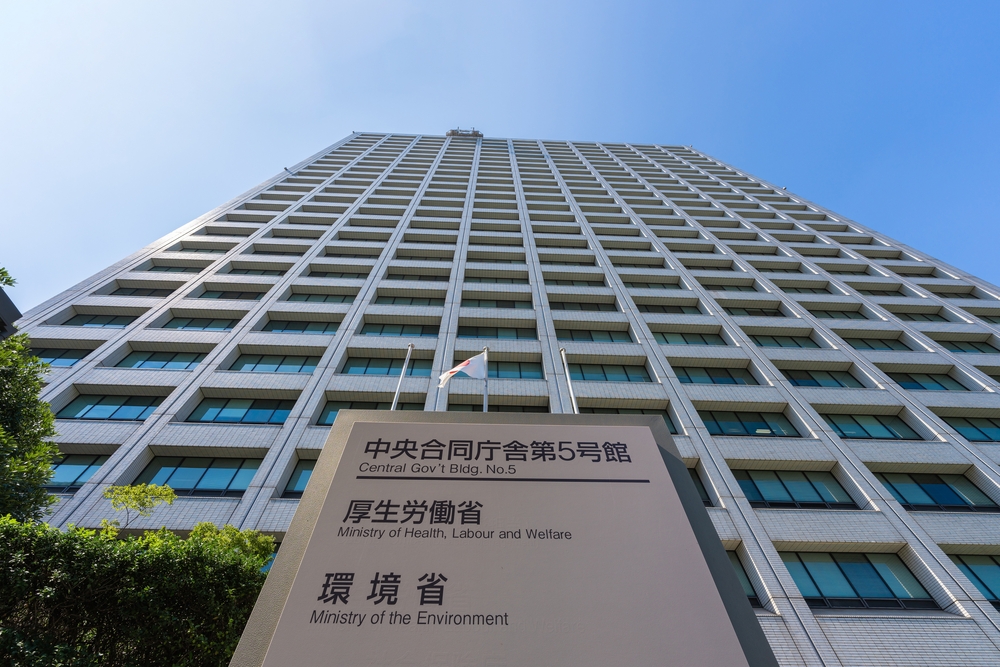
The Ministry of the Environment announced on October 5, 2026, the results of its public call for proposals for the fiscal year 2026 Program to Promote the Development of Decarbonized Circular Economy Systems (Demonstration Project for Building Resource Circulation Systems for Plastics and Other Materials) (commissioned project). The Ministry selected one project in each of two themes — conversion to bioplastics and other alternatives, and the development of recycling processes — for a total of two selected projects.
This program is designed to resolve technical challenges and carry out the demonstrations needed for commercialization, such as developing alternative materials to fossil-derived resources and advancing recycling technologies and systems for used fossil-derived resources. Based on the “3R+Renewable” principle (reduce, reuse, recycle, plus renewable) set out in its Plastic Resource Circulation Strategy (May 31, 2019), the Ministry of the Environment has adopted a policy of gradually moving away from conventional fossil-derived plastics, and is promoting both the conversion to renewable resources such as bioplastics and the development of recycling processes for plastics and waste oil. The call for proposals ran from April 17 to May 29, 2026, and selections were made following a preliminary screening of application documents and review by an evaluation committee made up of outside experts.
The Ministry also noted that results for three other programs that were open for proposals at the same time — the “Demonstration Project for the Production and Social Implementation of Low-CO2 Jet Fuel and Related Feedstocks from Waste Biomass,” the “Demonstration Project for Building Recycling Processes for Waste Oil and Reducing CO2 Emissions,” and the “Demonstration Project for Substituting Fossil-Derived Materials to Prevent Microplastic Pollution” — will be announced separately.
Under the “Demonstration Project for Converting to Low-CO2 Bioplastics and Other Renewable Resources as Substitutes for Fossil-Derived Plastics and Their Social Implementation,” the Ministry selected iPEACE223 Inc.’s project, “Demonstration of Decarbonization Technology for Plastic Feedstock through High-Yield Monomer Production Derived from Bioethanol.” The project will advance the decarbonization of plastic feedstock by demonstrating a proprietary catalyst and process technology that uses bioethanol as a raw material. It will promote the social implementation of a two-step process that is highly compatible with existing petrochemical facilities, while aiming for the future practical application of a one-step process, with the goal of cutting CO2 emissions by more than 65%.
Under the “Demonstration Project for Building Recycling Processes for Plastics and Reducing CO2 Emissions,” the Ministry selected GSI Creos Corporation’s project, “Material Development to Enable the Use of Recycled Plastic in Electrical Equipment Materials.” The project will collect used electrical materials, restore the function of resin that has degraded through long-term exposure by adding carbon nanotubes, and then recycle the material back into the same electrical products in a closed-loop (bottle-to-bottle style) process. In addition to promoting resource circulation, the project aims to reduce risks in raw material procurement and stabilize costs, while expanding the use of recycled plastic in the power transmission and distribution sector — a key piece of national infrastructure — and reducing CO2 emissions.
【Reference】Results of the Public Call for Proposals for the Fiscal Year 2026 Program to Promote the Development of Decarbonized Circular Economy Systems (Demonstration Project for Building Resource Circulation Systems for Plastics and Other Materials) (Commissioned Project)
【Related article】The Ministry of the Environment Publishes Survey on Municipal Handling of Lithium-Ion Batteries: Fiscal 2025 Fire Incidents Hit Record High
【Related article】What Makes “Nudges” That Encourage Behavioral Change Effective? The Ministry of the Environment Publishes Results from Nine Years and 45 Demonstration Projects