※This article is republished from “Ideas for good.”
[Kyoto Circular Economy Special Feature]
This special feature is a joint project between IDEAS FOR GOOD and the City of Kyoto, exploring the present and future of the circular economy in Kyoto. How can the spirit of “shimatsu no kokoro” (the ethic of using things carefully and to the fullest), the circular way of life, and the craftsmanship culture passed down through 1,000 years in the ancient capital of Kyoto be developed into innovations that shape the Kyoto of the future—and into circular businesses that carry on for the next thousand years? Together with the City of Kyoto, local businesses, and Akihiro Yasui, policy advisor to the City of Kyoto, this feature explores the value and potential of Kyoto from the perspective of the circular economy. (Kyoto Circular Economy Special Feature top page)
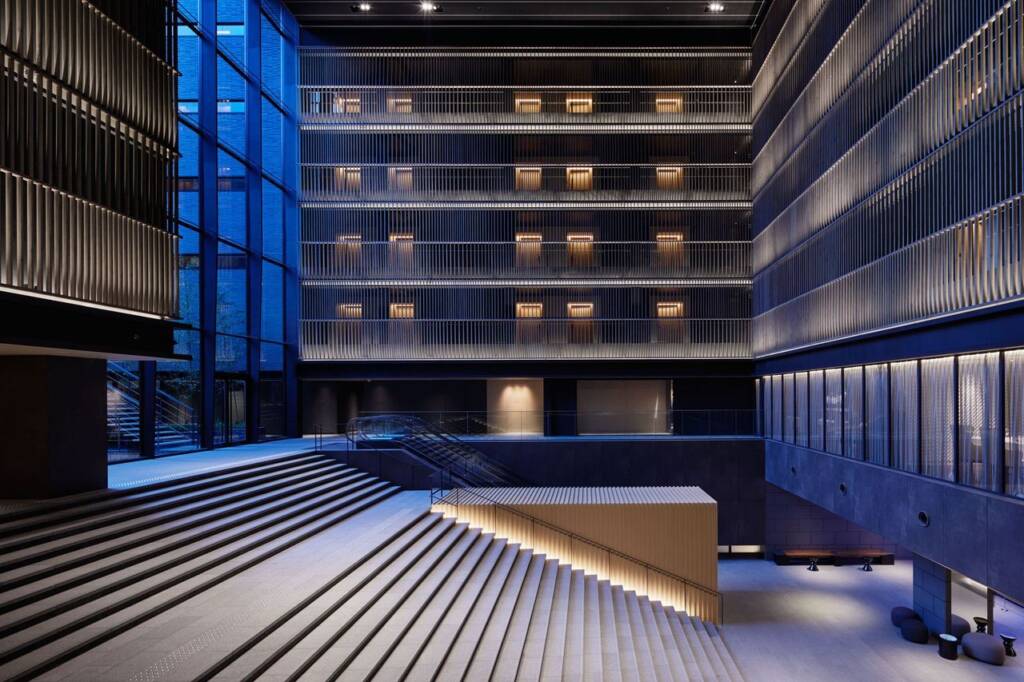
Just a two-minute walk from Kyoto Station, THE THOUSAND KYOTO—operated by Keihan Hotels & Resorts Co., Ltd.—welcomes guests from around the world with a sustainable and distinctive stay, guided by the concept of “pursuing comfort that will last a thousand years into the future.”
In 2022, the hotel became the first in Japan to receive the “3 Gyoiko Zakura” rating under Sakura Quality’s “An ESG Practice” certification—a quality certification system for accommodation facilities that evaluates sustainability across environmental, social, and management dimensions. The hotel’s practices, ranging from hardware to software, reflect numerous sustainable, circular initiatives.
The building features greenery inspired by the beautiful mountains surrounding Kyoto, natural energy generated through solar power, and a well-water system that makes use of the city’s abundant groundwater. At night, guests are greeted at the front desk by digital art displays powered by effectively renewable electricity.
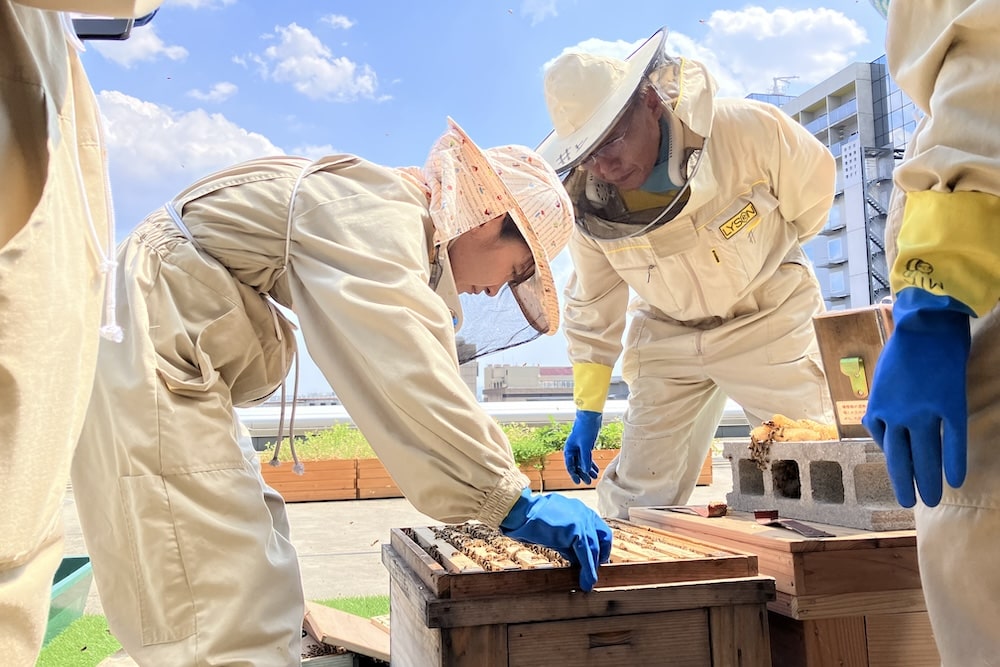
Beekeeping takes place on the rooftop, contributing to the conservation of local biodiversity, and a limited quantity of honey-based menu items are offered to guests. In the kitchen, food sustainability is pursued rigorously—through meals made with off-spec vegetables and soy-based meat, efforts to reduce food loss, and the recoloring and reuse of tableware slated for disposal.
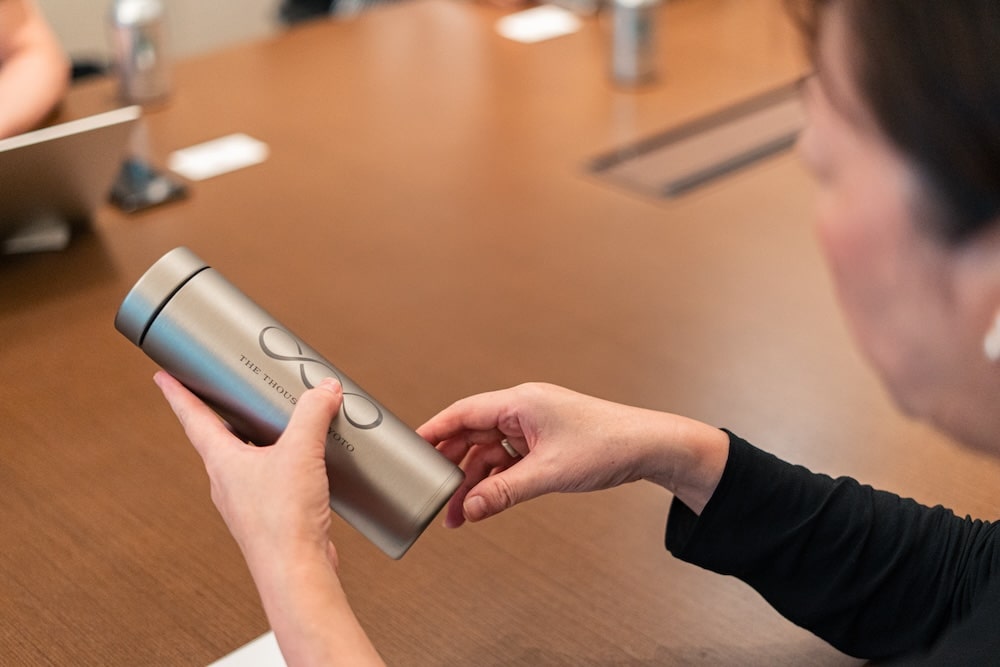
The hotel has also partnered with Tiger Corporation to become a collection point for the city’s first program to collect and recycle used stainless steel bottles, and it lends guests stainless steel bottles in an original hotel design. Other initiatives—such as rental bicycles for carbon-free sightseeing and a review of plastic amenities in guest rooms—show the hotel’s commitment to pursuing guest satisfaction while thoroughly promoting resource efficiency and circulation.
The person who has driven THE THOUSAND KYOTO’s sustainability efforts is General Manager Miwa Sakurai. How has THE THOUSAND KYOTO updated the concept of “comfort”—the core value the hotel offers—and evolved into today’s sustainable, circular hotel? We spoke with Sakurai about the hotel’s journey so far and its vision for the future.
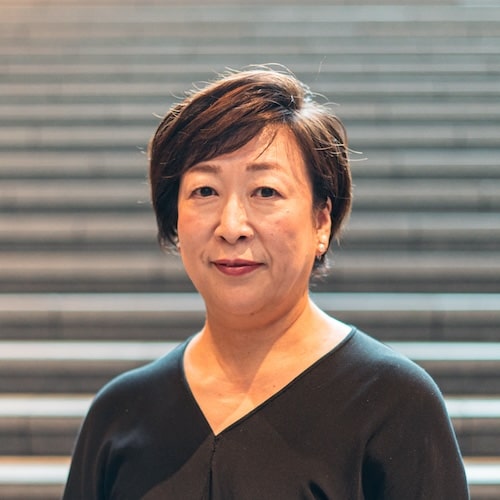
After joining Keihan Hotels & Resorts in 2014, Sakurai served as Director of Weddings and Accommodations at THE THOUSAND KYOTO. She became General Manager upon the opening of GOOD NATURE HOTEL KYOTO in 2019. She has served as General Manager of THE THOUSAND KYOTO and Kyoto Century Hotel since 2021, and was appointed Managing Director in July 2024.
From personal comfort to comfort for society
Having spent many years building her career in the hotel industry, Sakurai joined the opening team of THE THOUSAND KYOTO about ten years ago. During that time, she also led the launch of GOOD NATURE HOTEL KYOTO, which today serves as the flagship of the Keihan Group’s Bio-Style business and is widely regarded as synonymous with sustainable hotels in Japan. Even before concepts like the SDGs (Sustainable Development Goals) and sustainability became as widespread as they are in 2025, she was already pursuing a form of hospitality grounded in genuine, forward-looking values.
In July 2022, THE THOUSAND KYOTO established the concept of “Sustainable Comfort” and took a major step forward. What was behind this shift?
“Originally, our hotel promoted the concept of ‘Personal Comfort,’ targeting sophisticated digital natives in their thirties. However, after the COVID-19 pandemic, we felt that our guests’ values had shifted from a ‘Me’ mindset—where one’s own comfort is what matters—to a ‘We’ mindset that seeks well-being for everyone. So we changed our target audience to conscious leaders with a stronger awareness of society and the environment.”
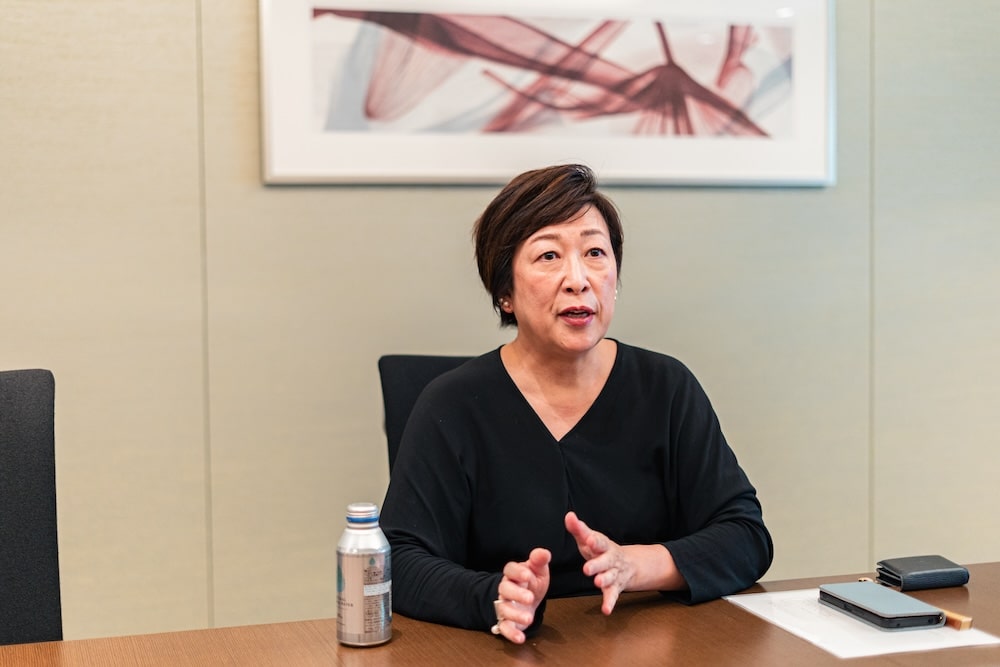
“The hotel’s name, THE THOUSAND KYOTO, means ‘a thousand-year hotel in Kyoto, the thousand-year capital.’ Since Kyoto itself is a sustainable city, we felt that carrying its name meant we, too, needed to fully commit to sustainability. That is why we evolved our concept from ‘Personal Comfort’ to ‘Sustainable Comfort.'”
The “102 Actions” that sparked each employee’s personal commitment
However, simply changing a concept and a target audience doesn’t guarantee immediate change. To back up this ambitious goal with concrete action, Sakurai implemented a bold initiative.
“Many employees weren’t sure where to start, so we first set a goal of ‘taking 100 actions in one year.’ We established the action phrase ‘Think 1000 year comfort’ and called on all employees to submit ideas aligned with guidelines such as benefiting the local community. We ended up receiving around 858 ideas.”
“From those, we implemented the feasible ones one after another, and by the end of the year we had achieved 102 actions. I believe the change in environmental awareness among each and every employee was, above all, the real outcome of this initiative.”
During the implementation period, progress was visualized in graphs by department, and each team worked together as a unit. These efforts gave individual employees the opportunity to see sustainability as their own personal responsibility and to think about what they could do within their daily work. Sustainability thus evolved from being the concern of a select few staff members into a shared language among all employees.
A hotel where people and honeybees work together
Among the various actions introduced above, “urban beekeeping” has been especially well received by guests. Beehives are placed on the hotel’s rooftop, and employees take the lead in managing them—some staff members have even earned qualifications as “honey masters.”
“Every year, we get a number of groups of guests who want to observe the urban beekeeping. Recently we’ve also created tours, and we’ve received visit requests from schools.”
The honey harvested here is named “THE THOUSAND HONEY.” In 2024, about 130 kilograms were harvested and offered to guests through restaurant menu items and limited-edition products.
“At Shosei-en, a garden on a detached parcel of the nearby Higashi Honganji Temple, it seems the plum trees have borne more fruit since we began this beekeeping. We make syrup from the harvested plums and honey and serve it as a drink, which has deepened our ties with the local community.”
By welcoming honeybees as partners alongside humans, the hotel enriches not only the guest experience but also the local ecosystem at the same time. It might even be described as a hotel that brings abundance to multiple species, going beyond a purely human-centered approach.
The hotel as a hub for generating circularity
Various stories of circularity are emerging from the hotel’s kitchen as well, beyond just the food itself. The hotel’s tableware includes bone china (plates made with cattle bone as a raw material) from Western tableware manufacturer Nikko Company. Noting that phosphorus—an element essential for plant growth—is contained in the raw materials of this bone china, Nikko developed a fertilizer called “Bonearth,” made from tableware slated for disposal.
This fertilizer is used in the fields of the “Wild Plants Project,” a long-running initiative of the affiliated Biwako Hotel, and a cycle has begun in which vegetables grown there are served at the hotel.
Sakurai shared her sense of the initiative’s impact: “It hasn’t yet become an established business, but I’ve heard that the growth results are clearly different. I think it’s extremely important that we can generate this kind of circularity through the hotel’s core business.”
The future of hospitality, reflected in the voices of the next generation
However, such advanced sustainability practices are not always welcomed by guests. One particularly significant hurdle has been the issue of amenities. The decision not to routinely stock items such as toothbrushes in guest rooms drew harsh feedback from some guests—perhaps a reflection of the deeply rooted Japanese cultural notion that “amenities equal hospitality.”
The hotel patiently and carefully explained its concept to every guest who raised a complaint. Amid this process, one particularly symbolic episode occurred.
“Children today learn about the SDGs in school, so their awareness is very high. There was a mother and grandmother who once raised a complaint about the lack of amenities, but the small child standing beside them said, ‘Mom, didn’t you bring a toothbrush? I brought mine.’ That one comment settled the matter. I felt it was truly a symbol of how the times are changing.”
As the climate crisis and biodiversity loss shift from being distant future concerns to tangible, ongoing problems, guests’ awareness is steadily changing as well. Sustainability, once often regarded merely as a “cost,” is increasingly becoming a condition for continuing to be chosen by guests.
“Sustainability initiatives certainly involve costs. There are aspects that help reduce costs—for instance, as guests’ awareness shifts, more of them are choosing not to have their linens changed—but plastic products are cheap and their quality is stable, and using domestic or local ingredients raises overall costs. Even so, we’ve entered an era in which, ultimately, a hotel cannot be ‘chosen’ by guests without sustainability. I believe that continuing genuine, substantive efforts is essential to raising the hotel’s value and ensuring we continue to be chosen by guests in the future.”
Editor’s Note
Sustainability is not about continually enduring sacrifice. At its core, it is a creative endeavor—extending our imagination toward others, the environment, and future generations, discovering new forms of “comfort,” and setting them in circulation. Through its many advanced practices, THE THOUSAND KYOTO shows us what kind of “comfort” we should truly be aiming for.
From a business perspective as well, there is much to learn from this hotel—from its business concept looking a thousand years into the future, to how it involves employees in driving change, to the creation of circular products, services, and experiences through collaboration with a range of partners, to its approach to weighing sustainability against cost.
In the end, we humans are merely “guests” temporarily visiting the “hotel” that is Earth. How can we pass this beautiful planet on to the next generation and take our leave gracefully? Anyone wanting to grasp some clues might consider paying a visit to THE THOUSAND KYOTO.