*This article is reprinted from “Ideas for Good.”
[Kyoto Circular Economy Feature]
This feature is a special project by IDEAS FOR GOOD in partnership with the City of Kyoto, exploring the present and future of the circular economy in Kyoto. How can the spirit of “shimatsu no kokoro” (the ethic of using things thoroughly and without waste) and the circular lifestyle and craftsmanship culture passed down through Kyoto’s thousand-year history be developed into innovations that shape the Kyoto of the future—and into circular businesses that can carry on for the next thousand years? Together with the City of Kyoto, local businesses, and Akihiro Yasui, a policy advisor to the City of Kyoto, we explore the value and potential of Kyoto from a circular economy perspective. (Kyoto Circular Economy Feature Top Page)
The produce section of a supermarket: neatly arranged rows of vegetables, vivid in color and uniform in shape and size. We pick up these products taking their uniform appearance for granted. But behind the scenes lies a different reality—large amounts of vegetables never even make it to market before being discarded.
A slight curve, an oversized shape, a slightly paler color—these are the only reasons some vegetables are deemed worthless. Produce just a few centimeters longer than the standard is discarded as “off-spec,” and entire shipments can be returned over a single blemished item. This is not merely a food loss issue; it is a social problem that wastes producers’ labor and cuts into their income.
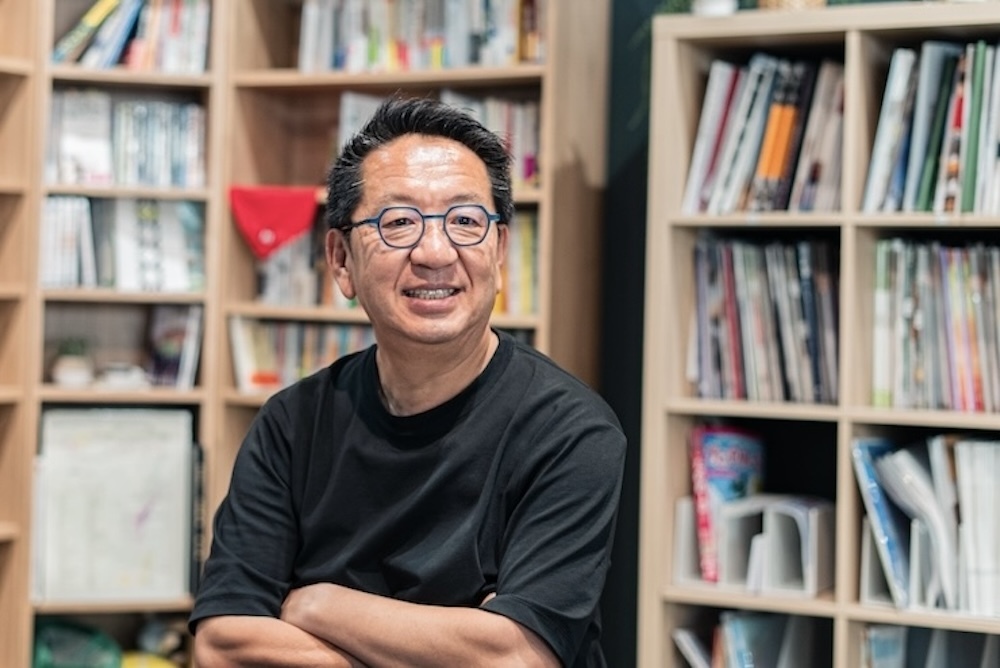
One Kyoto company has risen to address this reality: Minato Co., Ltd., a business-to-business food wholesaler founded in 1950 that has since transformed itself into a food platform company. Rather than confining itself to the traditional wholesaler’s role of simply distributing goods, the company is working to become a driving force behind a new “food platform.” We spoke with Hiroshi Minato, President of Minato Co., Ltd., about what lies behind this transformation.
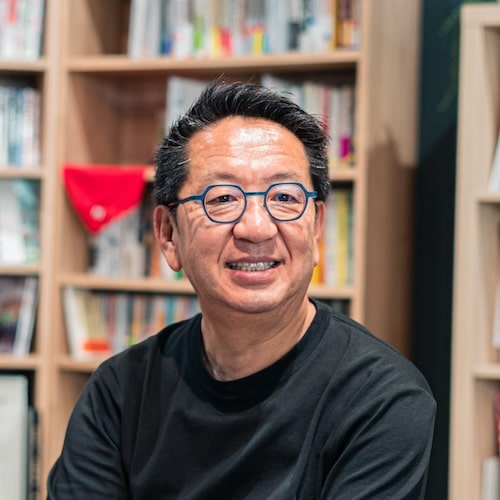
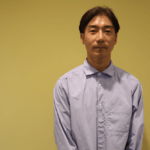
Born in Kyoto City in 1963.
After graduating from Ritsumeikan University, he joined Sanwa Bank (now MUFG Bank), where he spent 30 years primarily in corporate sales, serving as branch manager and head of sales divisions. In 2016, he began full-fledged management of the family business, Minato Co., Ltd., leading its business transformation. In April 2022, he merged the produce division into the company. He still visits producers in the field to hear their voices firsthand.
The Hidden Reality of Agricultural Producers in the Market
Conventional wholesalers typically purchase from manufacturers or wholesale markets and sell to restaurants and hotels, avoiding the risk of sudden shortages caused by bad weather. Minato, by contrast, collects produce directly from local growers and delivers it to hotels and restaurants throughout Kyoto. This approach emerged from a pursuit of a different kind of wholesale business—one that finds value not merely in moving goods from one hand to another for profit, but in “the flavor of the ingredients themselves and the producers’ own stories.”
Minato’s trading partners are not large-scale farming operations but small producers dedicated to specialty ingredients, including Kyoto heirloom vegetables and game meat. Working closely with these producers, Mr. Minato has witnessed firsthand the unreasonable realities they face.
“Take corn, for example: 20–30% of the harvest—sometimes even more in bad years—used to be discarded as off-spec. If you grow 10,000 ears, that means throwing away 3,000. With Kamo eggplant, growers were paying 20 yen per kilogram just to have it incinerated. But the off-spec Kamo eggplants I eat every day—rejected only for poor color, poor shape, or minor blemishes—often taste even better than the standard ones.”
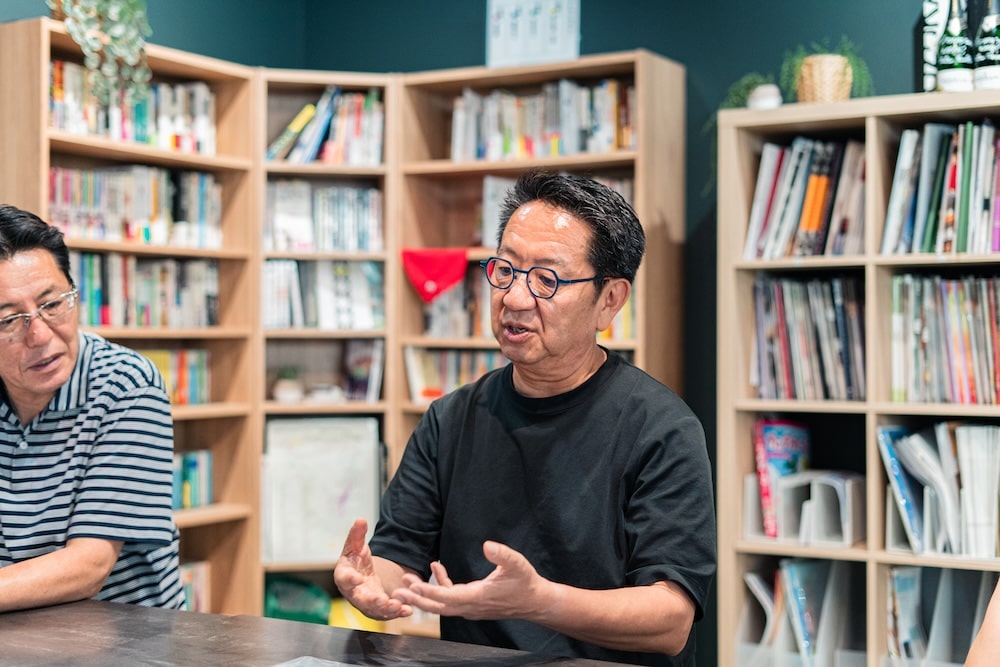
Bound by the market’s “rules,” ingredients with excellent flavor end up being thrown away. Some might assume that if the flavor is good, producers could simply sell the produce themselves—but Mr. Minato says the reality makes this difficult.
“Young corn, which is thinned out during the growing process, is sold at supermarkets neatly trimmed to a uniform length and arranged on trays for about 200 yen a pack. But individual farmers simply don’t have the capacity to do that kind of labor-intensive sorting and processing.”
That’s precisely why Minato purchases produce by the kilogram regardless of shape or size, and sells it to restaurants that value the taste over the appearance. For small-scale producers in particular, this arrangement can be a lifeline.
The Key to the Solution: Embracing Unpredictability
Supporting Minato’s efforts to tackle the off-spec vegetable problem are its fleet of 30 refrigerated and frozen delivery trucks and its massive warehouse. The facility handles three broad temperature zones—refrigerated, frozen, and ambient—further divided into seven distinct temperature ranges tailored to specific products, where produce entrusted by growers is stored. This capability allows Minato to accept off-spec vegetables whose volume and timing are inherently unpredictable.
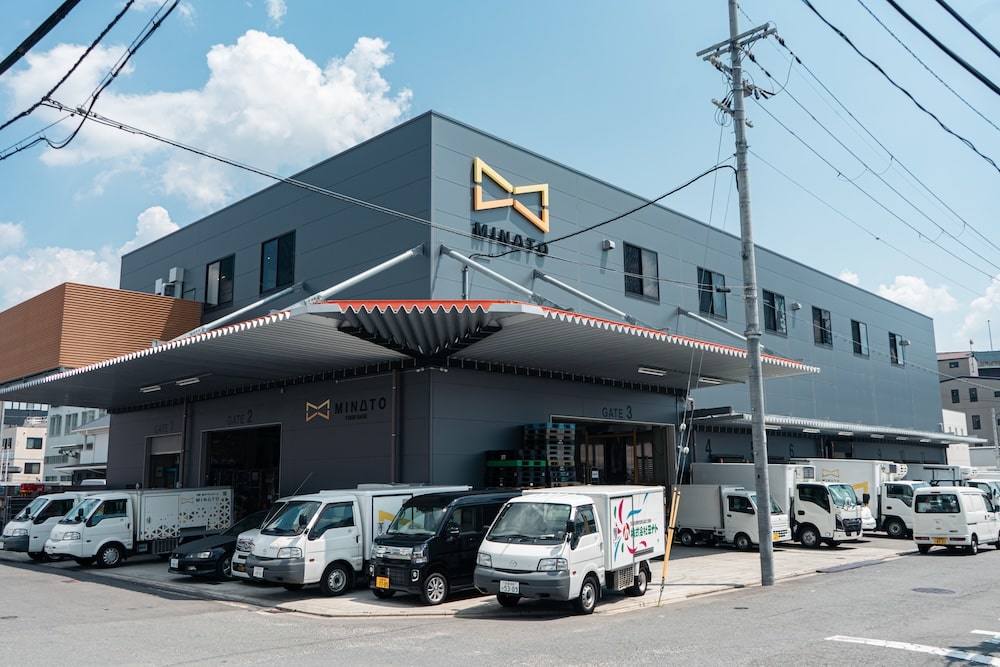
This refrigerated and frozen logistics and storage capability gave rise to a collaborative project with Kyoto Prefecture: the “MIRYO FOOD PROJECT,” which transforms discarded “unused” (mi-riyō) vegetables into ingredients that “captivate” (miryō) people—a wordplay built around the shared Japanese pronunciation. The project makes use of the fact that freezing and storing produce collected from growers across the region until a sufficient volume accumulates allows for efficient processing into value-added products.
“To process ingredients at a factory, you need to bring in a certain volume all at once. By delivering 500 to 1,000 kilograms in a single batch, we can make processing efficient. Take pearl corn, for instance—now in its third year as of 2025. We take in about six tons of off-spec corn annually, have the kernels removed at a partner factory in Kyoto City, and store them in our freezers. Once we have enough, we have a Kyoto processing company turn it into a purée, which we then store frozen again until it’s sold.”
This system makes it easier to accept even small quantities from individual producers, and allows Minato to sell the results as a value-added product of its own.
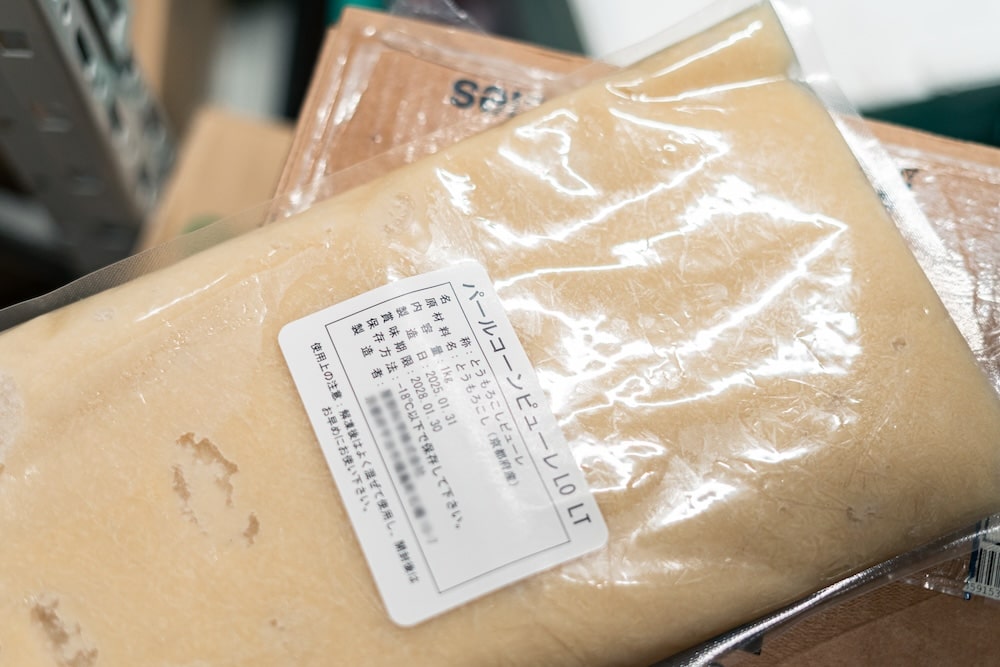
Other examples include Kintoki carrots rejected simply for having a slightly curved tip, and off-cuts of Shogoin turnip generated when making senmaizuke (a traditional Kyoto pickle)—both transformed into rich, flavorful pastes that showcase their natural taste and delivered to chefs. Through this project, Minato takes in 15 tons of off-spec vegetables annually, helping reduce food loss.
Minato Reconnects the Perspectives of Producers and Chefs
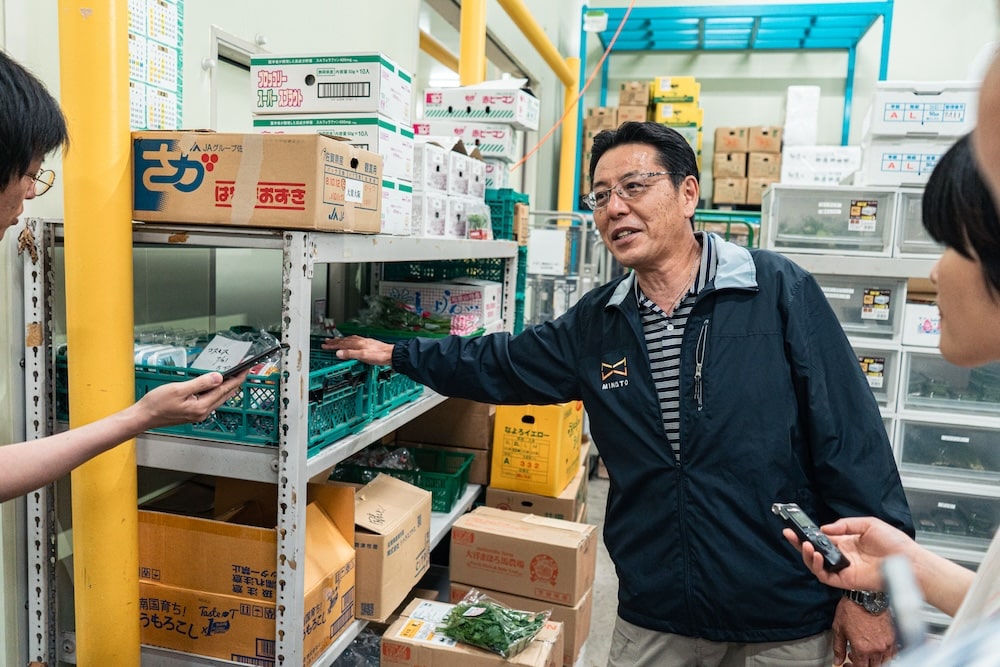
Minato’s work goes beyond simply connecting local production and consumption of delicious food, or repurposing off-spec vegetables. The company organizes farm tours that take chefs directly to producers, allowing them to experience firsthand the flavor, the producers’ dedication, and the “story” behind each ingredient. While the MIRYO FOOD PROJECT plays an important role, what matters most is ensuring that carefully grown ingredients reach chefs and consumers without waste in the first place.
“The reason our main clients are hotels and restaurants is that direct dialogue lets chefs understand the value of off-spec vegetables and put them to creative use in their cooking. Producers rarely have the chance to interact directly with chefs, but because we’re directly connected to producers, we can bring chefs straight to the source. Through these opportunities, we’re able to engage in direct dialogue with chefs ourselves. That’s a decisive difference from other wholesalers, and it’s also how we’ve been able to develop our own unique sales channels.”
Minato is also a partner member of the Sustainable Restaurant Association of Japan (SRA-J), which promotes social sustainability through food. SRA-J’s standards—supporting farmers and fishers, and celebrating the places food comes from—align closely with the very substance of Minato’s business.
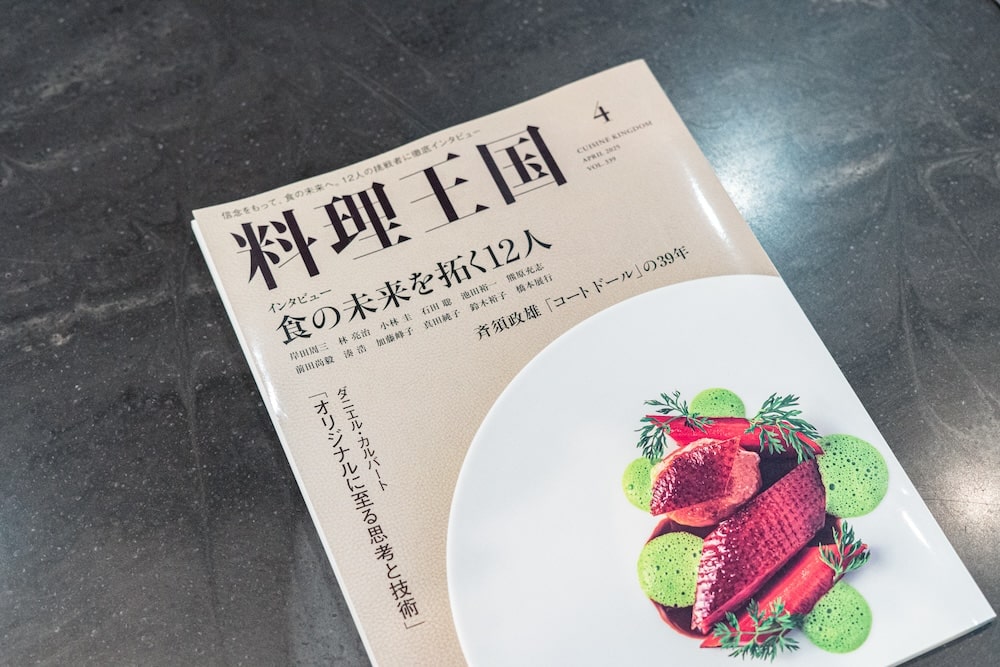
“The producer side of our business isn’t particularly profitable in itself,” Mr. Minato admits. And yet this seemingly inefficient approach is precisely the source of Minato’s competitiveness—an effect that shows up especially clearly in recruitment.
“When we started championing the message of ‘realizing delicious food alongside a sustainable food system and society,’ recruitment took off dramatically, and outstanding students from across the country began applying. We had six openings for new graduates, and applications poured in—we had to close recruitment by spring.”
This approach—sharing producers’ stories rather than simply sourcing ingredients from the market—may look inefficient, but it ultimately enhances the company’s brand value and has become the foundation for attracting promising young talent. Minato’s work embodies an ideal corporate cycle in which solving social challenges ultimately generates economic value.
Changing the First 1%: A Question Posed to Consumers
Minato’s challenge extends beyond the food supply chain. “Ultimately, consumer awareness also needs to change,” Mr. Minato says. The strict standards imposed by the market are, in part, a reflection of consumers’ tendency to choose the most visually appealing produce.
In France, for example, supermarkets and outdoor markets commonly sell vegetables of wildly varying sizes and shapes, piled high as a matter of course. Uniform beauty, he suggests, shouldn’t be the only measure of abundance.
“It’s often said that to bring about major social change, the first step is for ‘1% of people to change.’ In terms of Japan’s population, if one million people start taking action, that becomes a major social movement. Below that scale, change tends not to take hold. Here in Kyoto, 1% of the population is about 14,000 people. If that group’s awareness shifts first, it should spread outward to those around them, eventually transforming the whole city.”
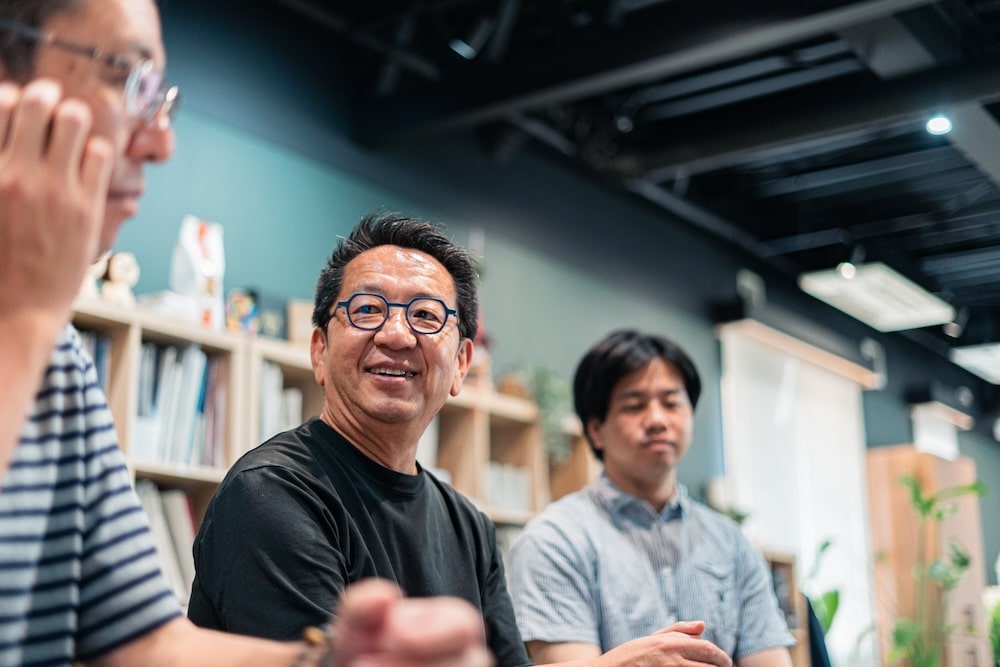
If just 1% of Kyoto’s residents began choosing off-spec vegetables, the market would have no choice but to change. Businesses and government alike would no longer be able to ignore that shift.
Minato’s goal is to achieve a “4×WIN” outcome in which producers, chefs, consumers, and the company itself all benefit. Beyond that lies its ultimate vision: making Kyoto a sustainable town. The catalyst for that future lies not only in the fields and kitchens, but in the choices we make ourselves.
Editor’s Note
What struck me most in reporting this story is that Minato’s work goes far beyond simple local sourcing or food loss reduction. A strong conviction—”we want to increase producers’ incomes”—has given rise to a “food platform” that rebuilds connections among producers, chefs, and consumers, three groups that have often been disconnected from one another.
Solving food loss and achieving a better circular system requires not just the effort of a single company, but connections among a diverse range of players. Minato’s challenge offers a powerful example of how such efforts can, in turn, translate into economic value—improved profitability and stronger recruitment among them.
[Reference site] Minato Co., Ltd.
Kyoto holds assets that have shone brightly across 1,200 years of history—the spirit of “shimatsu no kokoro,” a circular way of life, and a culture of craftsmanship. As global challenges such as climate change and biodiversity loss intensify, realizing the circular future the world needs will require the creativity to bring this accumulated wisdom into the present and carry it forward. To that end, Haaao Inc., which operates IDEAS FOR GOOD, is launching a learning program starting in October 2025 that combines Kyoto’s deep-rooted circular wisdom with a future-oriented outlook grounded in cutting-edge circular economy knowledge—so that we may envision and realize the future we want together. “Decode Culture, Design Future”—unlocking wisdom, designing innovation. A circular future that carries tradition forward, starting from Kyoto.
Website: https://cbdskyoto.jp/
Photo by Asuka Sasaki
Edited by Natsuki