※This article is republished from “Ideas for good“.
[Kyoto Circular Economy Feature]
This special feature, produced through a collaboration between IDEAS FOR GOOD and the City of Kyoto, explores the present and future of Kyoto’s circular economy. How can the spirit of “shimatsu no kokoro” (a culture of using resources carefully, without waste), circular lifestyles, and craftsmanship traditions—handed down through Kyoto’s thousand-year history—be developed into innovations that shape the Kyoto of tomorrow, and give rise to circular businesses that will endure for the next thousand years? Together with the City of Kyoto, local businesses, and Akihiro Yasui, the city’s Policy Promotion Advisor, this feature explores the value and potential of Kyoto from the perspective of the circular economy. (Kyoto Circular Economy Feature Top Page)
Kyoto, known as the “Thousand-Year Capital,” has long flourished as Japan’s cultural capital. Wearing its proud traditions and history, drawing visitors from around the world, and continuously generating innovation for the future through a fusion of old and new, the city is now witnessing the stirrings of a new wave.
That wave is the circular economy. By eliminating waste and pollution from the design stage of products and services and keeping materials and products circulating for as long as possible while retaining maximum value, this new economic and social system aims to achieve economic growth alongside environmental and regional regeneration—and the City of Kyoto has launched a new initiative to advance this transition.
Since revising its “Shimatsu no Kokoro” Ordinance (a local ordinance promoting a spirit of using resources carefully, without waste) in 2015, the City of Kyoto has worked with citizens and businesses on a range of initiatives aimed at halving the 820,000 tonnes of waste generated in fiscal year 2000. As a result, the city has achieved significant progress, reducing waste to approximately 365,000 tonnes by fiscal year 2024. The city is now steadily advancing toward a sustainable, resource-circulating society under its Kyoto Resource Circulation Promotion Basic Plan (known as the “Miyako, Shigen Meguru Plan”), which runs through fiscal year 2030.
However, the circular economy is not simply about promoting resource circulation. It is a systemic change in which diverse stakeholders across industry, government, academia, and citizens collaborate to transform industrial structures through circular value creation, aiming for sustainable prosperity for all people within the Earth’s finite resources and ecosystems.
Starting in autumn 2025, the City of Kyoto will launch the “Circular Business Design School Kyoto,” a learning program on the circular economy aimed at businesses operating within the city. This co-creative program combines “learning” and “practice,” unpacking the circular wisdom long embedded in Kyoto’s industries, culture, and nature to uncover the essence needed for future innovation, and working together with participants and experts to build new circular business models.
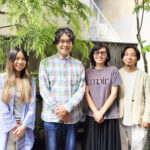
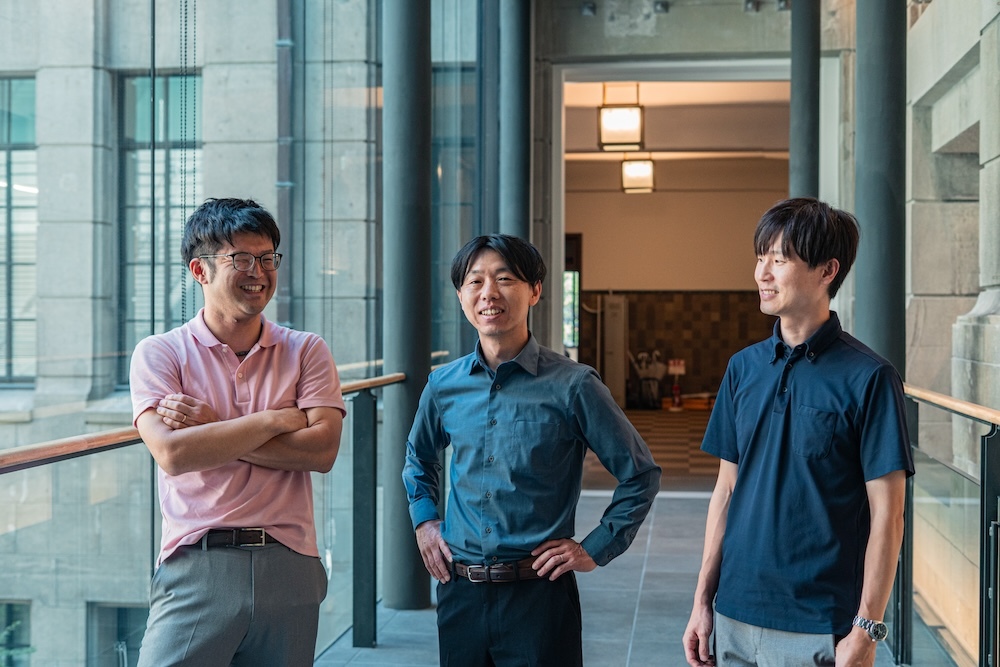
In this article, we spoke with Masanori Kimura, Taro Sakurai, and Tomohiro Ikeda of the Environment General Affairs Division, Environment Planning Department, Environmental Policy Bureau, City of Kyoto, about the background behind the city’s push toward a circular economy transition and the aims of this program.
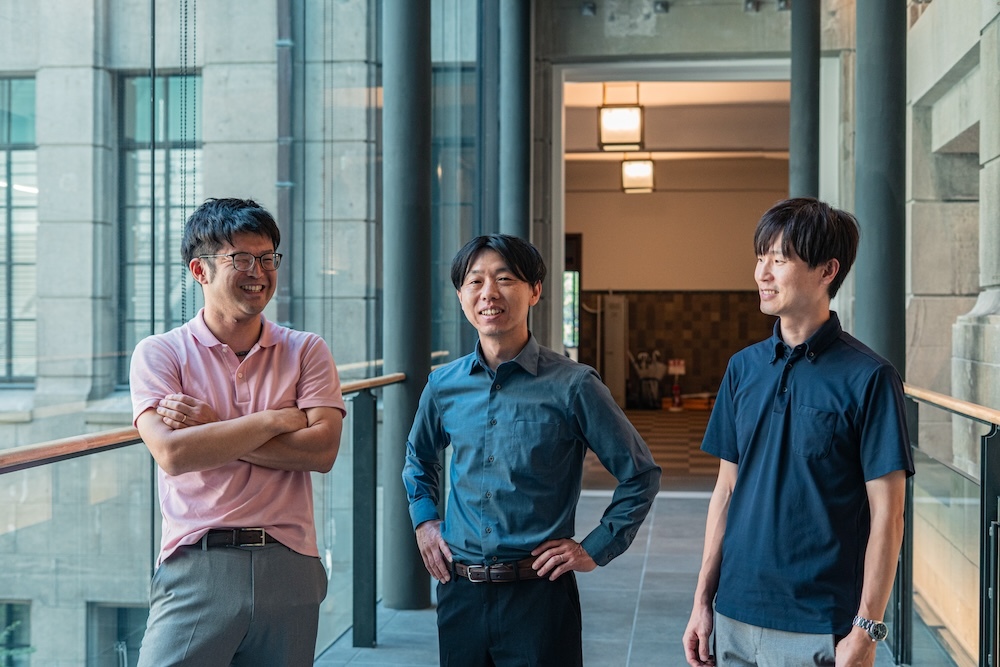
Speaker Profiles:
Masanori Kimura
Section Chief, Environment General Affairs Division, Environment Planning Department, Environmental Policy Bureau, City of Kyoto
Taro Sakurai
Subsection Chief, Environment General Affairs Division, Environment Planning Department, Environmental Policy Bureau, City of Kyoto
Tomohiro Ikeda
Senior Staff, Environment General Affairs Division, Environment Planning Department, Environmental Policy Bureau, City of Kyoto
Harmonizing Environment and Industry, Powered by 1,200 Years of Culture
As symbolized by the phrase “shimatsu no kokoro”—a spirit of using things and resources carefully, without waste—a culture of treating goods and resources with care has been passed down through people’s daily lives across more than 1,200 years of history. For a city like Kyoto, the concepts of “circular economy” and “circulation” are by no means new. Traditional crafts and techniques such as kuro-zome (black dyeing) and kintsugi (the art of repairing broken pottery with lacquer and gold) embody the essence of circular craftsmanship, and in recent years, new young artisans and successors have begun taking up these trades.
What’s more, a wide variety of projects are already underway within the City of Kyoto, including RELEASE⇔CATCH, a project aiming to circulate used clothing; food-waste composting initiatives to reduce food loss; and events centered on circulation such as Junkan Fes (Circulation Festival) and Toshi to Junkan (City and Circulation). Amid all this activity, why has the City of Kyoto now launched a new initiative to build a foundation for the circular economy?
Sakurai: “The City of Kyoto positioned the circular economy as one of its growth strategies in the Kyoto City Administrative and Fiscal Reform Plan (2021–2025), formulated in 2021. In 2023, we welcomed Akihiro Yasui, one of Japan’s leading circular economy experts, as an advisor, and last year the division we currently belong to, dedicated specifically to the circular economy, was launched.
Since the circular economy also has an economic policy dimension, we needed to consider measures extending beyond the traditional environmental field. We designed this initiative from the ground up, through interviews with businesses and consultations with the city’s industry-related departments.”
Kimura: “Within the City of Kyoto, a culture of environmentally conscious corporate management is already well established, and there is a diverse range of players—including universities, NPOs, and other intermediary support organizations—who could serve as partners. We felt the groundwork for a transition to a circular economy was already in place. At the same time, we recognized that awareness of the circular economy, and networks built around this theme, remained insufficient—which led us to design this initiative centered on a learning program.
Note that promoting the transition to a circular economy is positioned as one of the ‘Leading Projects’ in the New Kyoto Strategy, a policy roadmap through fiscal year 2027 formulated in March 2025.”
The transition to a circular economy requires a cross-sectoral approach that spans not only environmental challenges such as climate change, biodiversity, and waste, but also industry, urban development, and culture. Behind the City of Kyoto’s decision to go beyond conventional policy frameworks and launch this initiative to build a foundation for the circular economy lies a determination to create a new future for the city by fusing environmental and industrial policy, leveraging Kyoto’s historical and cultural assets as a strength.
The Circular Economy as a Business Opportunity to Open Up the Future
To bring this vision to life, the City of Kyoto is set to launch the “Circular Business Design School Kyoto,” a learning program on the circular economy for businesses within the city, starting in autumn 2025. While many businesses still see resource circulation and environmental consideration as a cost or burden, what aims lie behind the design of this program?
Sakurai: “At the very core of this program is a desire to change the notion that environment equals cost. We are determined not to let environmental initiatives be reduced to something people merely endure, a burden to be borne. By positively adding an environmental dimension to fields such as economic activity, local communities, and culture, we want to raise the inherent value of ‘the environment’ itself.”
Kimura: “Transforming a business all at once is extremely difficult and not realistic. But we can turn a crisis into an opportunity. In the future, resource depletion and other factors will inevitably bring tighter regulations and various constraints. In that sense, learning about the circular economy is also important as a way to prepare for risks that are not so far off.”
Indeed, in Europe, the New Circular Economy Action Plan was adopted in 2020 as one of the pillars of the European Green Deal announced in 2019, and regulations have since been rapidly introduced across the plan’s priority sectors—electronics and ICT, batteries and mobility, packaging, plastics, textiles, and construction—as well as across these sectors. With the Ecodesign for Sustainable Products Regulation (ESPR), which took effect in 2024, and the Corporate Sustainability Reporting Directive (CSRD), applicable from 2025, market rules are changing and many companies are being forced to respond.
In step with these global trends, Japan formulated its “Circular Economy Vision 2020” in May 2020 and its “Growth-Oriented Resource Autonomy Economy Strategy” in March 2023. The 2025 “Fifth Fundamental Plan for Establishing a Sound Material-Cycle Society” clearly positions the circular economy as a national strategy. Legislative groundwork for this transition is also progressing rapidly, with an amendment to the Act on the Promotion of Effective Utilisation of Resources passed in May 2025.
There is a Japanese saying that “there is no losing by following national policy” (kokusaku ni uri nashi), and moments like this—when national strategy and regulation undergo major shifts—are prime opportunities for generating new businesses and innovation.
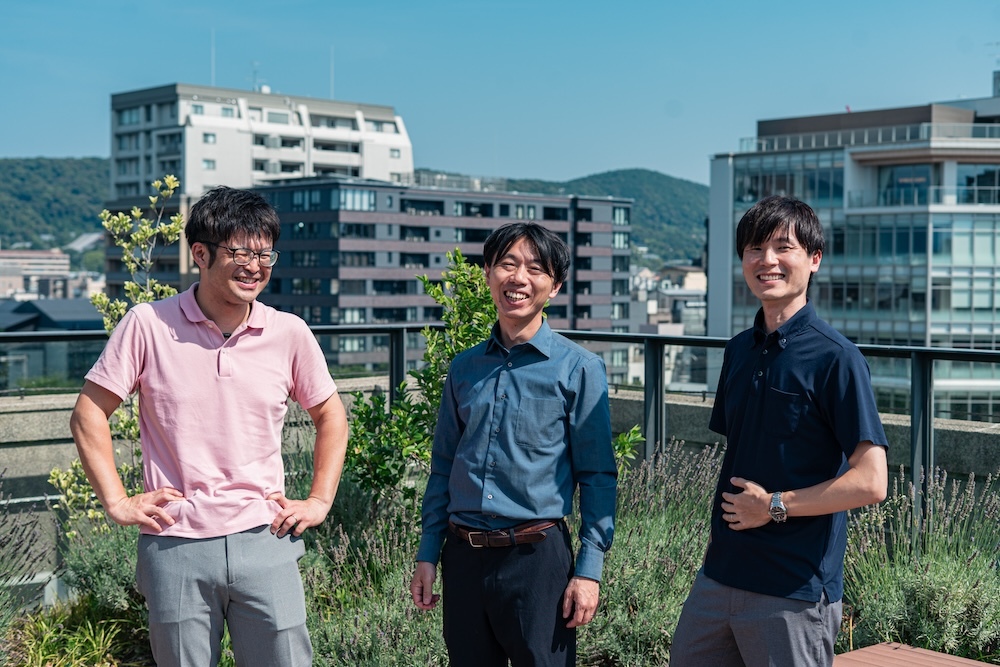
Sakurai: “We want businesses to see the circular economy as a ‘business opportunity’ for opening up the future. An executive practicing the circular economy, whom we interviewed previously, told us: ‘A company doesn’t need to change its entire business. But incorporating circular elements into even 10% or 20% of its operations, as a hedge against future risk, helps maintain the health of the business.’ The circular economy is less about environmental consideration and more a management strategy in itself for surviving into the future.”
Ikeda: “Ultimately, as a consumer myself, I’d like this program to generate products that make people think, ‘I’d like to try buying something like this.'”
In recent years, the number of companies and startups in Japan working to shift toward circular business models has grown, and interest from investors and financial institutions wanting to invest in or lend to the circular economy sector is rising. While it is difficult to arrive at a fully formed business model from the outset, using this program as a launchpad into this larger wave should allow businesses to get ahead of market changes that are yet to come.
Collaboration Across Sectoral Boundaries Brings New Business Opportunities
This program will be supported by experts and mentors active at the forefront of the circular economy not only within Kyoto but across Japan and the world. It will also include fieldwork both in the city center, where practical initiatives are already being carried out by many citizens and businesses, and in Keihoku, a forestry town in northern Kyoto that has long supported the city’s development and offers a firsthand experience of satoyama (traditional rural landscape) circulation.
The program also offers a multifaceted structure that supports businesses eager to embark on circular economy initiatives—from matching with the diverse partners essential to creating circular business models, and networking to build teams, to prototype development aimed at eventually implementing circular business models in society. What, in short, is the value of participating in this program?
Sakurai: “I believe there are three main sources of value. The first is the opportunity to develop prototypes through the program while receiving direct advice from a diverse range of experts and mentors. The second is the fieldwork, which spans everything from traditional industries to startups practicing the circular economy, offering access to the real, hands-on circular knowledge cultivated in Kyoto.”
Kimura: “And the third is the chance to meet diverse players from different industries who would otherwise be difficult to connect with through existing industry structures and communities. This program brings together players across industries under the theme of the circular economy—something not seen before. We’ve designed the space and mechanisms to spark chemical reactions among participants, without concentrating them in any particular industry. It’s a challenging endeavor, but we have high hopes for the new collaborations, partnerships, and circular businesses that will emerge from it.”
Sakurai: “What I find exciting is attempting an industrial approach centered on ‘the environment.’ What kind of chemical reactions will occur among the people who gather here? What next steps will emerge? I hope that as many of the seeds of ideas born from this program as possible will be implemented in society.”
A defining feature of this program is that the city’s Environmental Policy Bureau serves as a hub connecting diverse fields, supporting the creation of circular business models by linking industry and culture through an environmental lens. Designing spaces where diverse people can connect in this way is one of the essential approaches to realizing a circular economy. The more that people with diverse perspectives and values interact, the greater the likelihood that new value will naturally be discovered in existing assets and waste, increasing the feasibility of circular business models.
Through this program, a circular ecosystem will be built within the City of Kyoto, where participants influence one another and generate new ventures—points that will connect into lines, and lines into planes, ultimately achieving systemic change. What the City of Kyoto envisions beyond this program is a new growth trajectory for Kyoto centered on circulation.
Ikeda: “This program is also a major challenge for us in local government. We would be delighted if participants would take on this challenge together with us. We look forward to your applications.”
Editor’s Note
A circular future is a fitting one for Kyoto, a city where circular lifestyles and craftsmanship have long taken root. However, in today’s world—where mass production, consumption, and disposal have become the norm, and challenges such as climate change and resource constraints are increasingly apparent—creating that future requires the careful yet bold work of unpacking the wisdom embedded in culture and tradition, carrying forward its essence while generating innovation for the future. And that path will surely not be an easy one.
Yet to enjoy prosperity over the next thousand years within this new economic and social system called the circular economy, Kyoto must take up this challenge ahead of others. Fortunately, this program is backed by government officials, local intermediary organizations, partners, and experts genuinely committed to supporting that challenge.
For businesses hoping to seize new opportunities amid this moment of change, we encourage you to consider joining the program. Look ahead to society 10, 100, and even 1,000 years from now, and find new encounters and hints for business creation that will shape the future of your company—and of Kyoto.
Kyoto holds assets that continue to shine across the ages—cultivated over 1,200 years of history—including the spirit of shimatsu no kokoro, circular lifestyles, and a culture of craftsmanship. To realize the circular future needed as global challenges such as climate change and biodiversity loss intensify, we need the creativity to apply this wisdom to the present and carry it forward into the future. Hāchi Inc., which operates IDEAS FOR GOOD, will launch a learning program starting in October 2025 that combines the circular wisdom rooted in the city of Kyoto with a future-oriented outlook grounded in cutting-edge circular economy knowledge, so that we may together envision and realize the future we want. “Decode Culture, Design Future”—unraveling wisdom, crafting innovation. From Kyoto, a circular future that builds on tradition.
Website: https://cbdskyoto.jp/
Photo by Asuka Sasaki