※This article is republished from “Ideas for Good.”
[Kyoto Circular Economy Feature]
This feature is a special project developed jointly by IDEAS FOR GOOD and the City of Kyoto to examine the present and future of the circular economy in Kyoto. How can the spirit of “shimatsu no kokoro” (a Kyoto ethic of using resources thoughtfully and without waste) and the circular lifestyle and craftsmanship culture that have been passed down through Kyoto’s thousand-year history be developed into innovations that shape the Kyoto of the future—and into circular businesses that can carry on for the next thousand years? Together with the City of Kyoto, local businesses, and Akihiro Yasui, a policy advisor to the City of Kyoto, this series explores the value and potential of Kyoto from the perspective of the circular economy. (Kyoto Circular Economy Feature Top Page)
A single sheet of cardboard—something we pick up in our daily lives without much thought. Many of us probably think of it simply as a box for wrapping products. But from a resource circulation perspective, cardboard actually boasts a recovery rate of 95%(*), is lightweight and thus cheap to transport, and is a relatively low-impact material for the environment.
Rakusai Shikou Co., Ltd., a cardboard manufacturer in Kyoto marking its 65th year in business, is looking to make the most of this highly recyclable material by exploring new—and sometimes unexpected—uses for it. The company also hopes to use cardboard as a “tool” to help cultivate a culture of purchasing decisions made with a long-term view, rather than one focused solely on short-term profit.
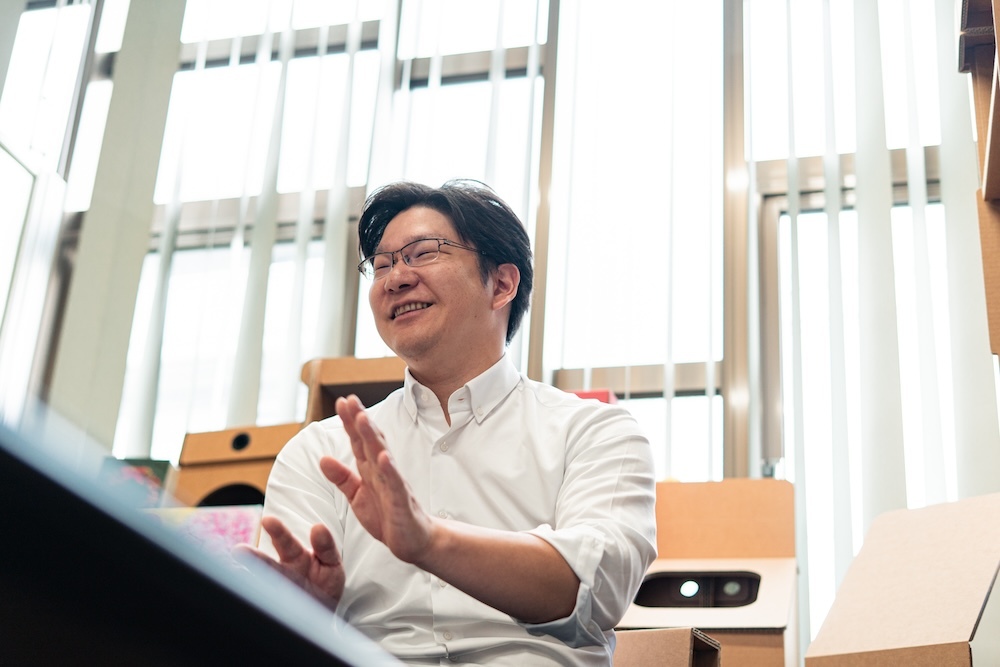
We spoke with Tomohide Oda, a director at Rakusai Shikou, about the specifics of the company’s work, and about the role cardboard could play in realizing the circular economy—a concept now drawing serious attention even in national economic policy.
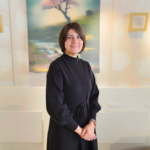
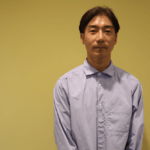
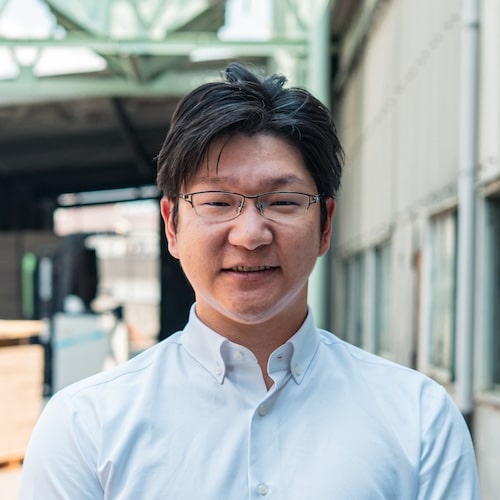 Born in Tochigi Prefecture in 1991.
After graduating from Waseda University, he worked in sales at TOTO Ltd. for six years before joining Rakusai Shikou Co., Ltd. in 2020. He works to create new value that goes beyond cardboard as mere packaging material, tackling community challenges in areas such as education, disaster prevention, and the environment.
Cardboard as a “Tool” for Creating Social Value
Since its founding in 1960, Rakusai Shikou’s core business has remained unchanged: manufacturing cardboard boxes to pack, protect, and transport goods. But Oda’s gaze extends beyond the box itself, toward the connections it creates with society.
“Cardboard’s appeal lies in the fact that it’s a familiar material for most people. And although it’s not widely known, in Japan it already boasts a recovery rate of over 95%, making it a highly circular material. It’s also easy to process, which means it can be shaped into many forms beyond boxes.
I’m not the founder of this company—I took over the family business, and I didn’t originally enter this industry because I wanted to make cardboard. Perhaps because of that, I’m always thinking not just about pursuing profit, but about what kind of value this company can leave for society, using cardboard—our core strength—as a ‘tool.’ Once I started thinking that way, it felt like a huge waste to limit its use to packaging material alone.”
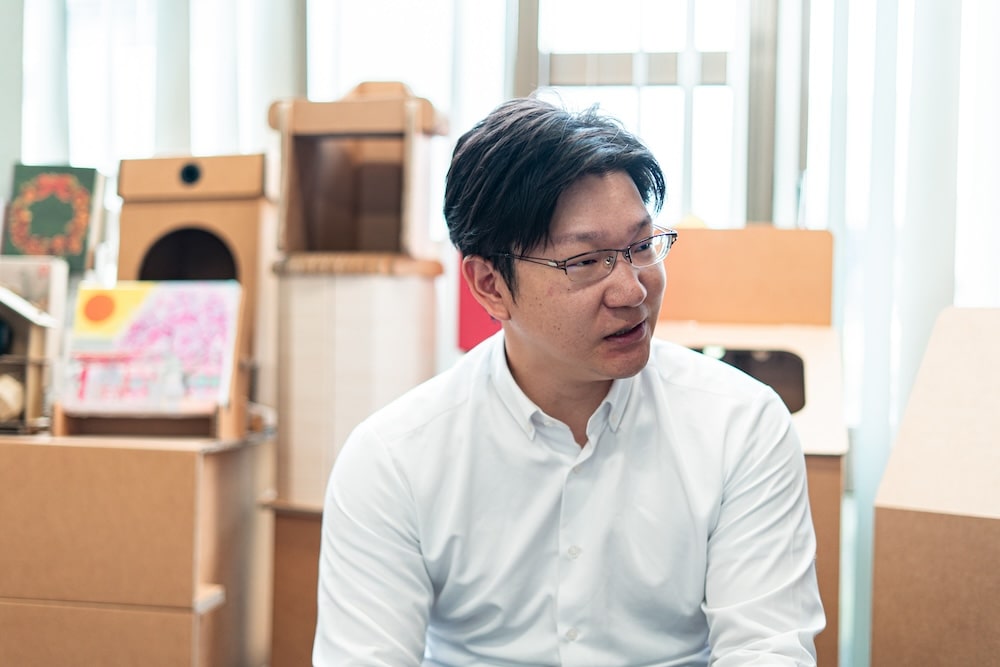
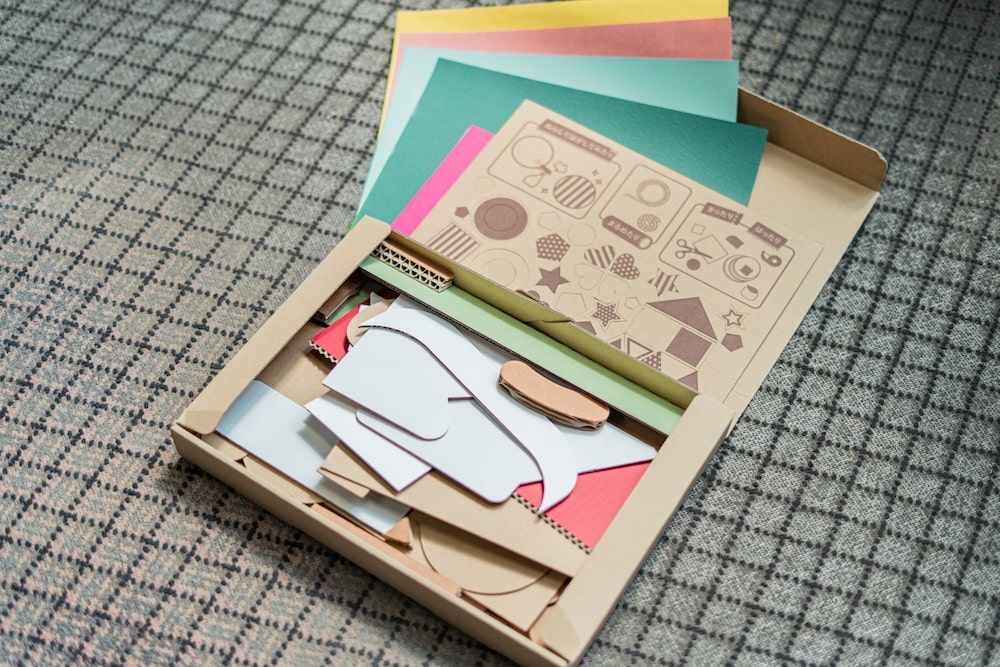
That vision has taken shape through concrete action. One example is “SDKids,” an educational craft kit made from the random offcuts generated during manufacturing. It began through a connection with Takagi Housou Co., Ltd. in Nara Prefecture, and later grew richer in content through collaboration with students from Kyoto University of the Arts and local companies including Marushige Shiki, becoming an initiative that crosses industry boundaries.
Precisely because cardboard is a low-impact material, the search continues for further ways it can serve society—and that search is expanding what cardboard can be.
Shifting from Price Competition to Value Creation
Yet this kind of social value is difficult to measure by conventional business yardsticks. What’s more, the cardboard industry—where differentiation is hard to achieve—is fiercely price-competitive, with even a single yen of difference determining which product is chosen. Within that environment, Rakusai Shikou has deliberately raised social impact as a new standard of value, posing a question to the wider world.
“Say there’s a tender from the City of Kyoto. Even if our product is one yen more expensive than a competitor’s, purchasing it can help support educational activities that build the futures of Kyoto’s children—a value that doesn’t show up in the numbers. Buying our product can lead indirectly to a social contribution. We want to build that kind of relationship together with our customers.”
Whether to prioritize short-term economic rationality or to also factor in long-term social value—this is, in a sense, a question of “which future you’re voting for.” Oda sees this long-term perspective as already embedded in Kyoto’s culture, a place that has long valued relationships and corporate integrity throughout its long history.
“I’m not originally from Kyoto, but my grandparents live here, and some of our clients are companies we’ve worked with for more than 50 years. Other regions may have this too, but in Kyoto in particular, I feel that decisions are made with sustainability in mind, not just economic rationality.”
Rising Demand, and the Challenge of Visualizing Impact
Alongside its own product development and outreach, the company says it is already sensing growing interest in cardboard as a material.
“We’ve been getting a lot of inquiries recently. The uses and the people asking vary widely—requests like ‘we want to build exhibition fixtures’ or ‘we need tables and chairs for an event’ are common. This is especially true for exhibition booths used for just a few days: building them out of wood is costly, and disposing of them afterward becomes a major problem.
Cardboard, by contrast, is light, efficient to transport, and recyclable after use. I think this kind of demand is growing, partly due to rising interest in sustainability.”
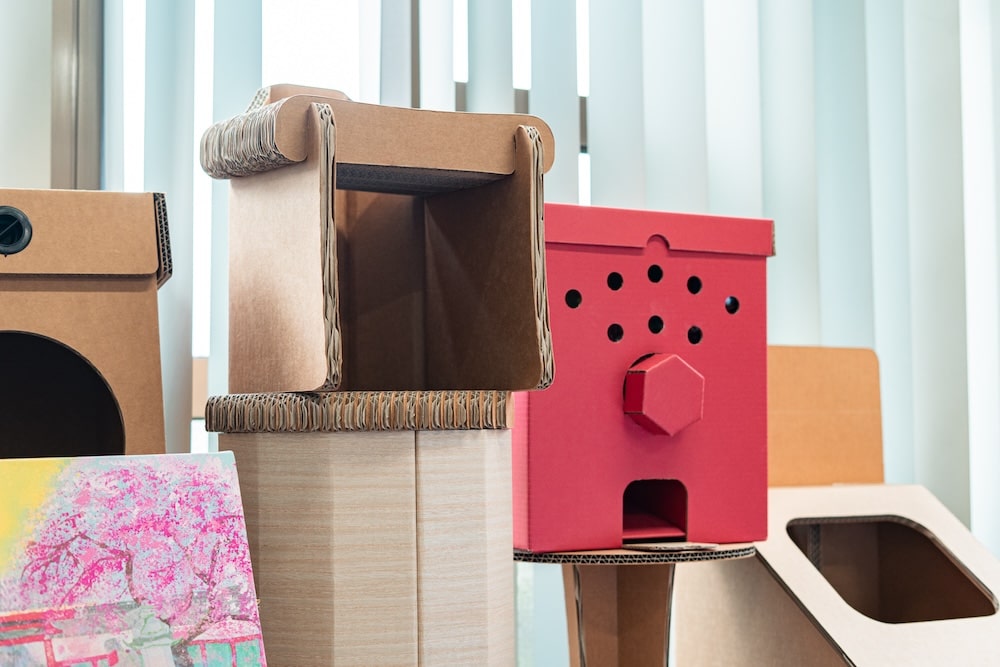
At the same time, the company is facing new challenges precisely because its uses are expanding.
“Our biggest challenge right now is that we haven’t fully communicated why cardboard should be chosen. For example, cardboard fixtures compete with other material industries like woodworking. Beyond short-term advantages like being light, durable, and cheap, we want to show, in numbers, how much impact a product has on society when viewed across the entire supply chain—from raw material sourcing to manufacturing, transport, and disposal. But it’s extremely difficult for a small or medium-sized company like ours to calculate the impact of each individual step in the manufacturing process, and we’re still only partway there.
Making that value visible—balancing economic rationality with more than just the emotional appeal of being ‘good for the environment’—is our biggest challenge right now.”
Purchasing as a Statement About the Future
Our society runs on the countless small purchasing decisions we make every day. But even if we understand that “shopping is voting,” and even if we have knowledge about environmental impact, it’s hard to shop every day while imagining not just the price but also what will happen when we eventually dispose of the item.
“When people buy cheap plastic products, few of them probably imagine the future cost or environmental impact of disposing of that item. That’s exactly why I think it’s necessary for companies like ours to make an effort: to communicate, when a product is chosen, the story behind it—what kind of circulation it creates and whose future it’s connected to—and to make the costs and environmental impact visible.”
Rather than getting stuck debating whether producers or consumers should be the ones to change, Rakusai Shikou chose instead to become, itself, a storyteller of a “tangible circular story.”
“Imagine a cardboard box that a consumer receives through online shopping being reshaped and returned to them as a product for their own child. If people could feel that kind of domestic resource circulation story more vividly, I think an awareness that considers what happens when we let go of something would naturally grow when choosing what to buy.”
Editor’s Note
Unpacking Rakusai Shikou’s challenge reveals an underlying theme of “learning together.” This runs through the educational kit made from offcuts mentioned earlier, the company’s efforts to “visualize” its own impact, and also a collaborative project with local high school students. Product ideas conceived by students are turned into actual products, with the profits shared three ways among the students, the school, and the company—creating opportunities for hands-on, meaningful product development.
Rather than viewing cardboard merely as a “commodity,” the company considers it a “medium” through which to create learning with others—whoever and whatever that learning may involve. With this broad perspective, Rakusai Shikou is taking steady, long-term steps toward the circular economy, always rooted in its local community. Kyoto’s cultural foundation—one that values more than just economic rationality—seems to offer hints of a new kind of prosperity for modern society.
[Reference site] Rakusai Shikou Co., Ltd.
[Reference site] Launch of “SDKids Kyoto Edition,” an educational kit made from cardboard offcuts (September 2023)
Kyoto is home to assets that have continued to shine across the ages, cultivated over its 1,200-year history—the spirit of “shimatsu no kokoro,” a circular way of life, and a culture of craftsmanship. As global challenges such as climate change and biodiversity loss intensify, realizing the circular future the world needs will require creativity that puts this accumulated wisdom to work for the present and carries it forward into the future. That is why Hearch Inc., which operates IDEAS FOR GOOD, has launched a learning program starting in October 2025 that combines the circular wisdom rooted in the city of Kyoto with a future-oriented outlook grounded in cutting-edge circular economy knowledge, aiming to envision and realize together the future we want. “Decode Culture, Design Future”—unraveling wisdom, crafting innovation—a circular future that continues beyond tradition, starting from Kyoto.
Website: https://cbdskyoto.jp/
Photo by Asuka Sasaki
Edited by Natsuki