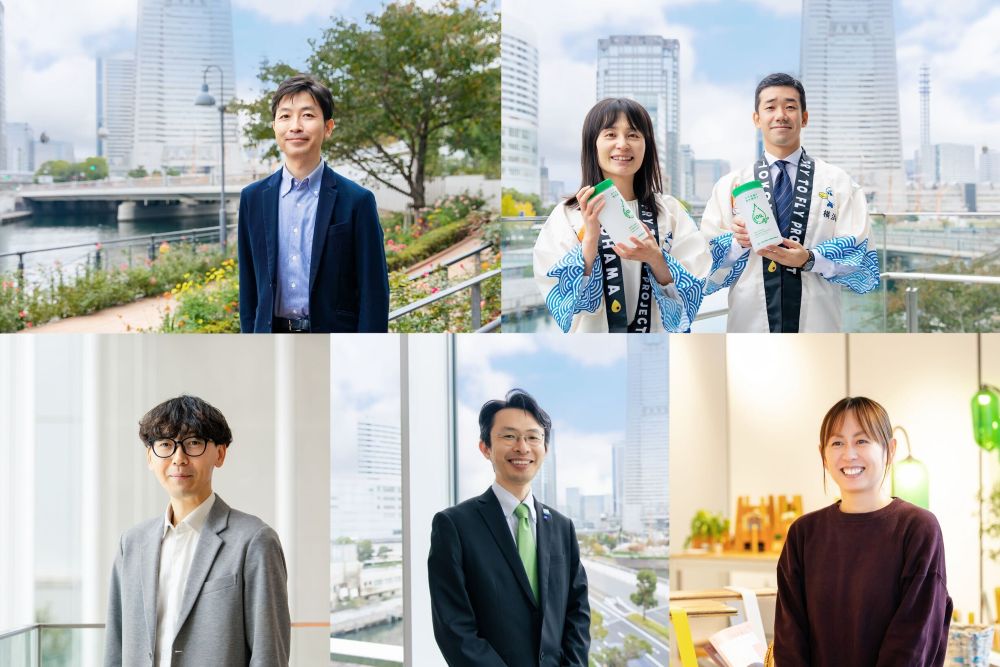
※This article is a translated and partially edited version of an article published in January 2026 on “Green Hub in Asia,” operated by the Yokohama City International Bureau. It was produced by Harch Inc., which operates Circular Economy Hub, based on interviews with Yokohama City officials.
In Yokohama, efforts to realise a “circular city” are now moving into their next phase.
What is driving this momentum is not cutting-edge technology or ambitious targets alone. It is the trust built through dialogue among government, residents, and businesses that is moving the city forward.
In the first instalment of this series, we introduced the historical and cultural context that formed the starting point for resource circulation, as well as the resource circulation initiatives that began with the “G30 Plan” (Yokohama’s landmark waste-reduction programme launched in 2003).
How has the experience of G30 expanded into cross-sector collaboration and creative initiatives? In this article, drawing on interviews with the Yokohama City officials responsible for each programme, we introduce the cutting edge of Yokohama’s pursuit of a “circular city.”
Turning the City’s Memory into Future Value: The Cultural Reuse of Historic Buildings
When we think about the circular economy in an urban context, the resources that can be circulated are not limited to physical materials. Could “memory” and “time” also be passed on to the future?
Under its philosophy of “city-building that makes the most of history,” Yokohama City preserves and activates historically significant buildings — such as Berrick Hall and the former Oka Family Long House Gate — as part of its parks, keeping their exteriors largely intact. Meanwhile, the Red Brick Warehouse and the Kishamichi Promenade (a former railway corridor including its bridges), which convey the scenery of the old port town, have been sensitively redeveloped with respect for their historical character into commercial facilities and a waterfront promenade that now attract more than ten million visitors a year. (Source: YMM21)
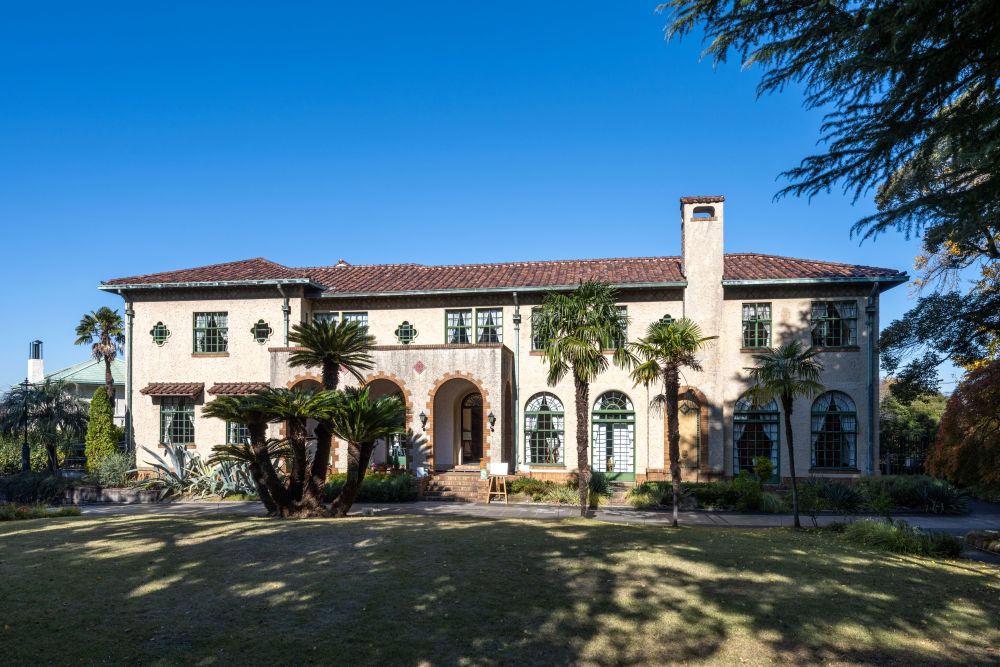
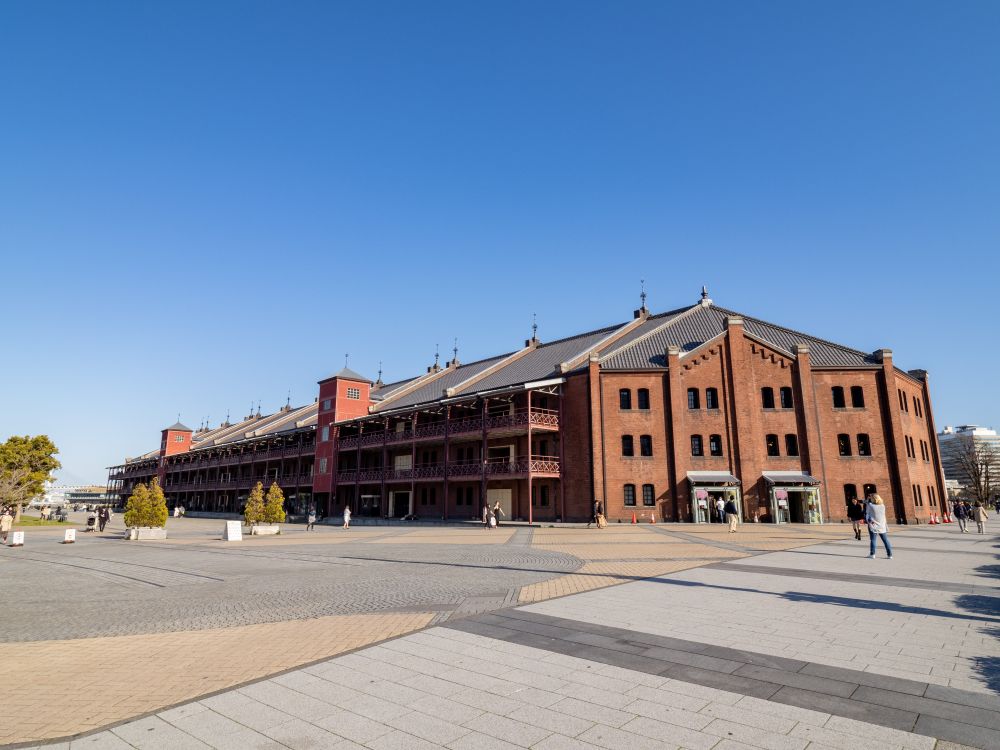
Building on this philosophy of “city-building that makes the most of history,” Yokohama City has translated it into policy through its “Yokohama — Creative City of Culture and Arts” initiative. This programme activates dormant urban assets — historic buildings and underused properties — through the power of culture and the arts, generating new appeal and vitality.
The initiative has its roots in the following context.
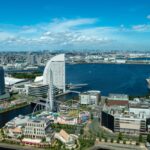
The waterfront area of the city, which developed as a port, was designated in 1981 as the “Minato Mirai 21 District” (hereafter “MM21 District”), the new centre of urban development. The construction of expressways and distinctive commercial facilities brought new energy to the area.
Meanwhile, the Kannai District — adjacent to MM21 and long the heart of Yokohama since the port opened — was gradually losing its vitality, both economically and culturally. Many of the Western-style and modern buildings that had conveyed the area’s history were disappearing one by one, and office vacancy rates were rising.
Against this backdrop, Yokohama City turned its attention to the “Creative City” urban vision that had been advocated since the 1990s, and a diverse range of initiatives making use of historic buildings and idle spaces has been taking shape.
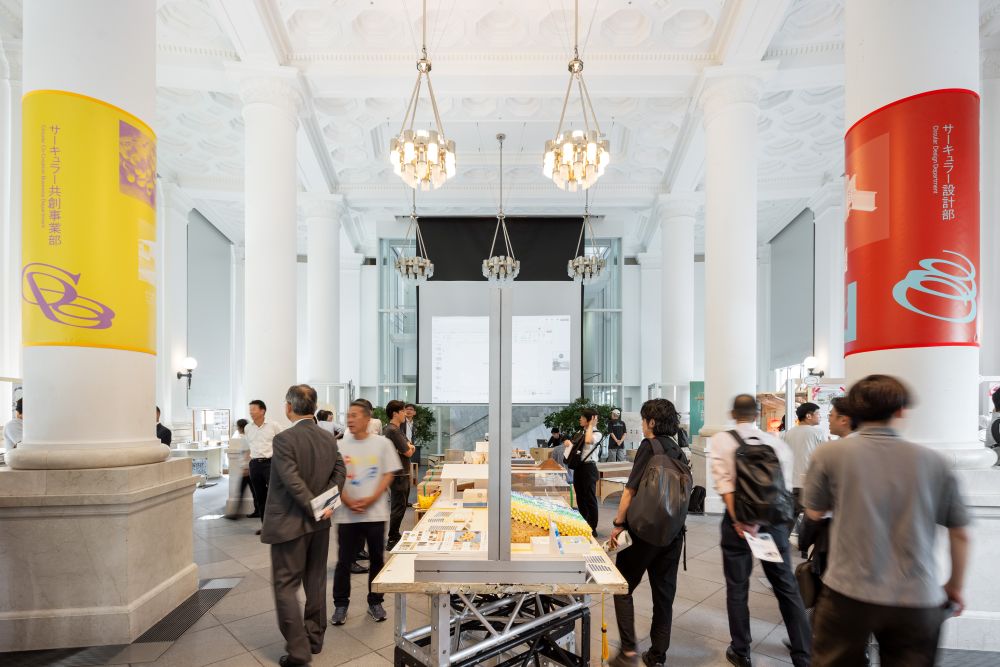
While these hubs have long been actively used, particularly in the arts, since 2025 new circular economy hubs have emerged that incorporate a circular economy perspective. The most recent and emblematic example is the former First Bank of Japan Yokohama Branch.
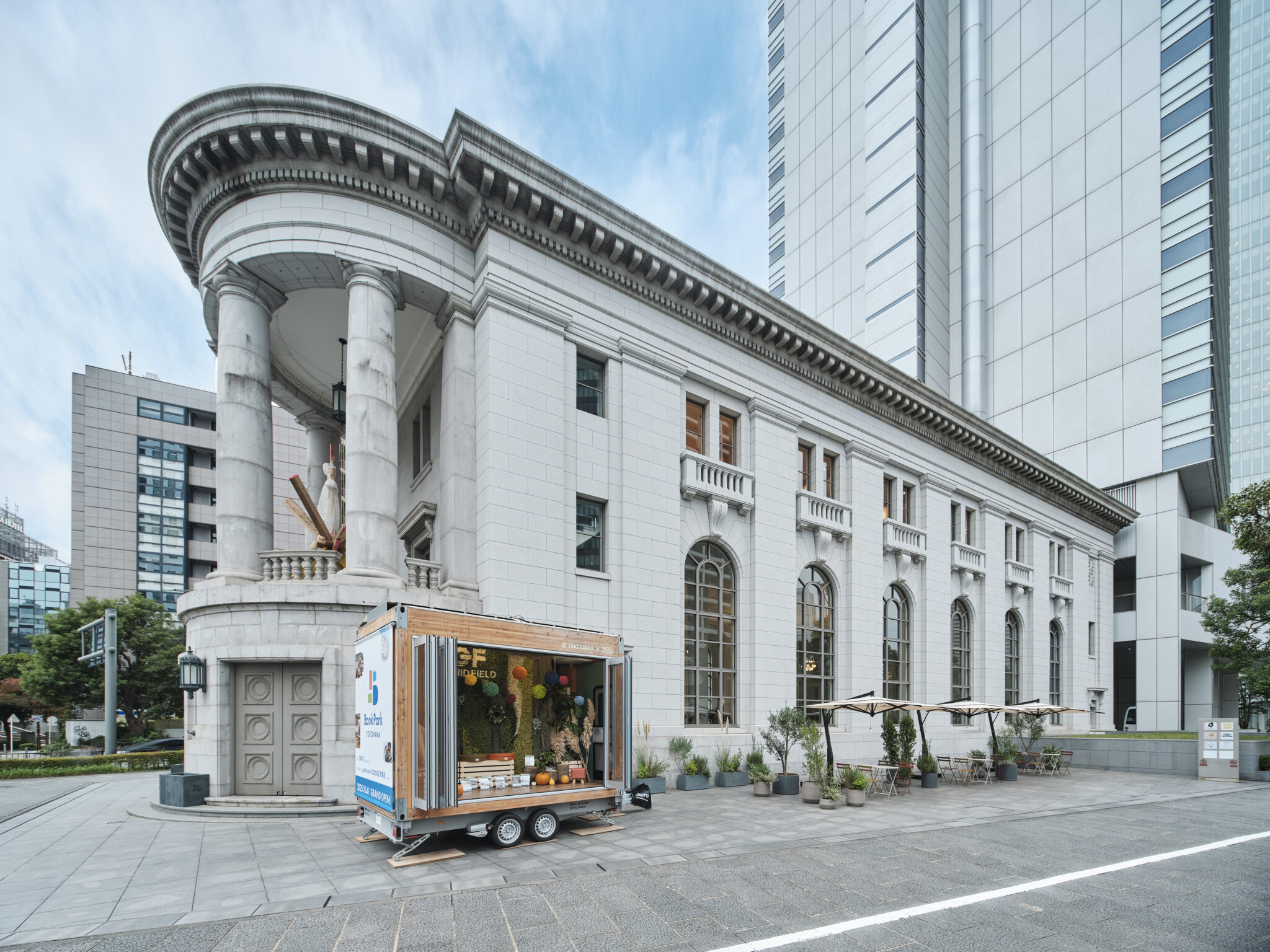
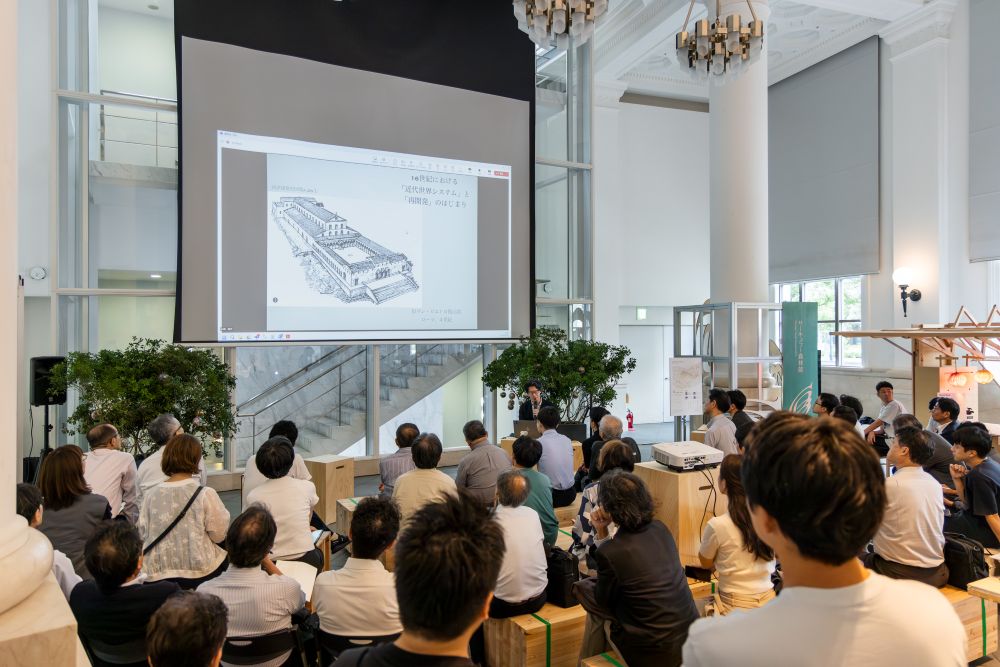
In autumn 2025, in partnership with a private operator, the building had its grand opening as a new facility named “BankPark YOKOHAMA.” The interior also serves as a co-creation hub for the circular economy, hosting events on circular themes such as talk sessions with experts and workshops using reclaimed materials. A historic building has been reborn — through a public-private partnership — as a base for creating the circular society of the future.
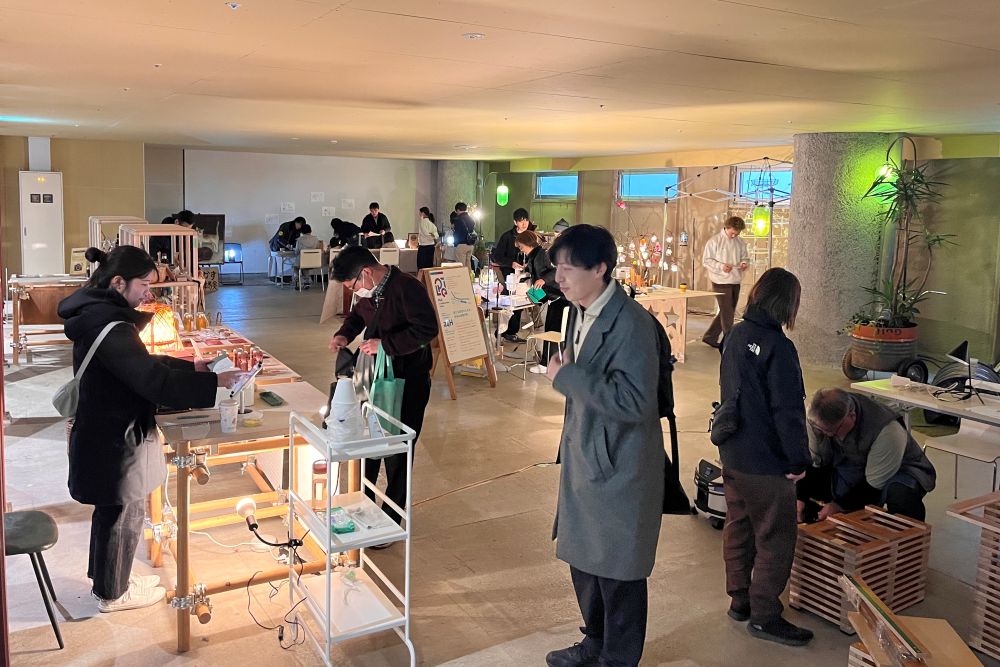
This movement is now spreading beyond the urban waterfront area — including the MM21 District, which has been the centre of development — into the residential inland areas of the city. In 2026, the city’s first suburban creative hub, the “Creative Circular Culture Center,” is scheduled to open in Hodogaya Ward in the central part of the city. This facility is expected to serve as a base for generating locally rooted circulation, featuring a “Material Library” that displays and provides resources no longer needed in the community, as well as citizen-participatory art projects themed around circulation and the arts.
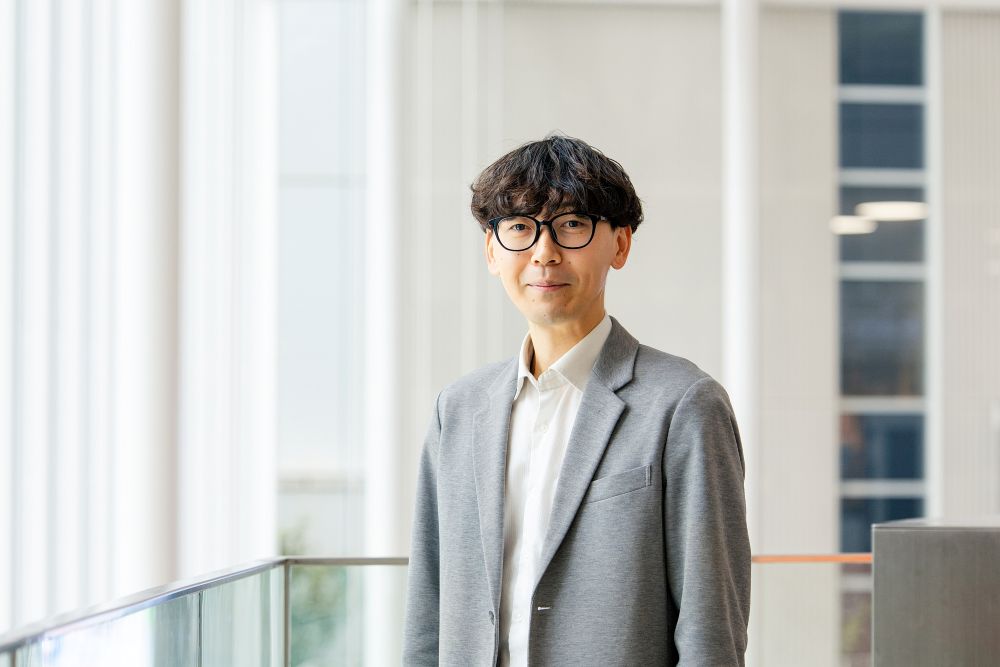
Daisuke Sonoda of the Vitality, Sports and Culture Bureau (にぎわいスポーツ文化局), who oversees this project, describes the background to the initiative as follows.
Sonoda: “The origin of the Creative City initiative was to breathe new value into historic buildings that were being lost and idle spaces lying dormant between development projects, using the power of culture and the arts to bring vitality back to the city. Looking back, this may well connect with the philosophy of the circular economy, in the sense that it is about reusing resources.
Going forward, we want to extend the initiatives we have developed in the urban waterfront area to suburban communities like Hoshikawa, and by combining the creative ideas of private businesses with spaces that have yet to be fully utilised, transform them into hubs that unlock the potential of those communities. Through that process, we hope to generate new cycles of circulation, nurture connections within local communities, and bring vitality to the city as a whole.”
School Gymnasium Floors Carrying Memories into the Future: The “REYO Project”
This philosophy of “treating memory and time as resources” is also being put into practice in places closer to residents’ everyday lives. One such example is the “REYO (Reuse Yokohama) — Yokohama City Reclaimed Materials Project,” promoted by the Architecture Bureau.
This initiative upcycles reclaimed timber from public buildings in Yokohama into new forms of value. Its concept is: “Materials full of memories — kept alive for the future.” Working in partnership with private businesses inside and outside the city, it promotes the circulation of waste materials generated from public buildings and connects this to the advancement of the circular economy.
At present, the project is focusing particularly on upcycling gymnasium floor materials generated when public schools in the city are rebuilt or renovated. Through reuse in city-led school construction projects, and through the hands of partner private businesses in the city, these materials are transformed into fixtures for commercial facilities and play equipment for children — circulating throughout the city as items that carry residents’ affection and stories into the future.
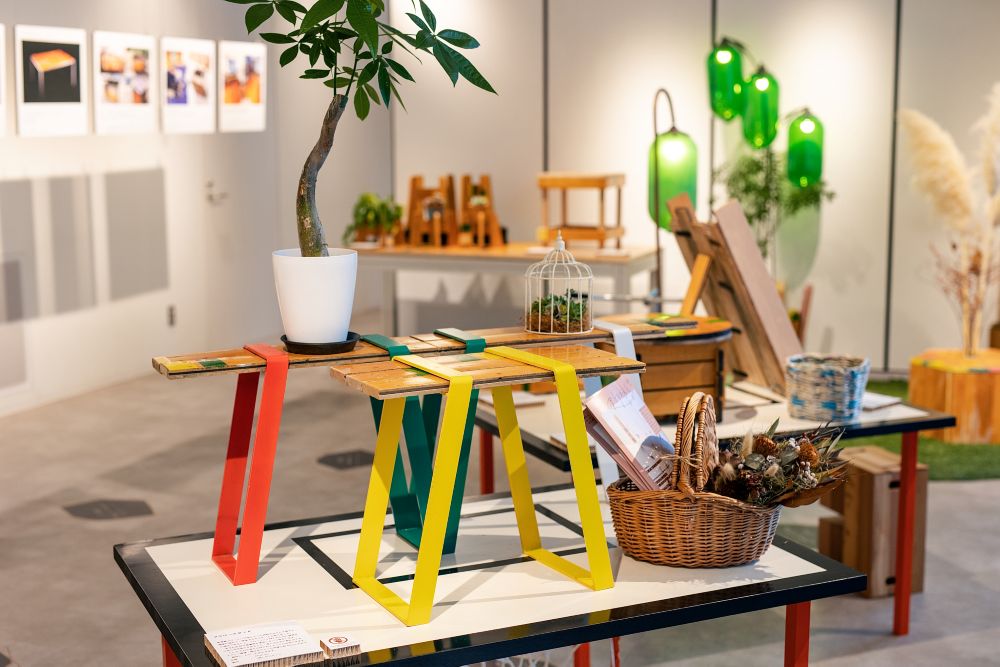
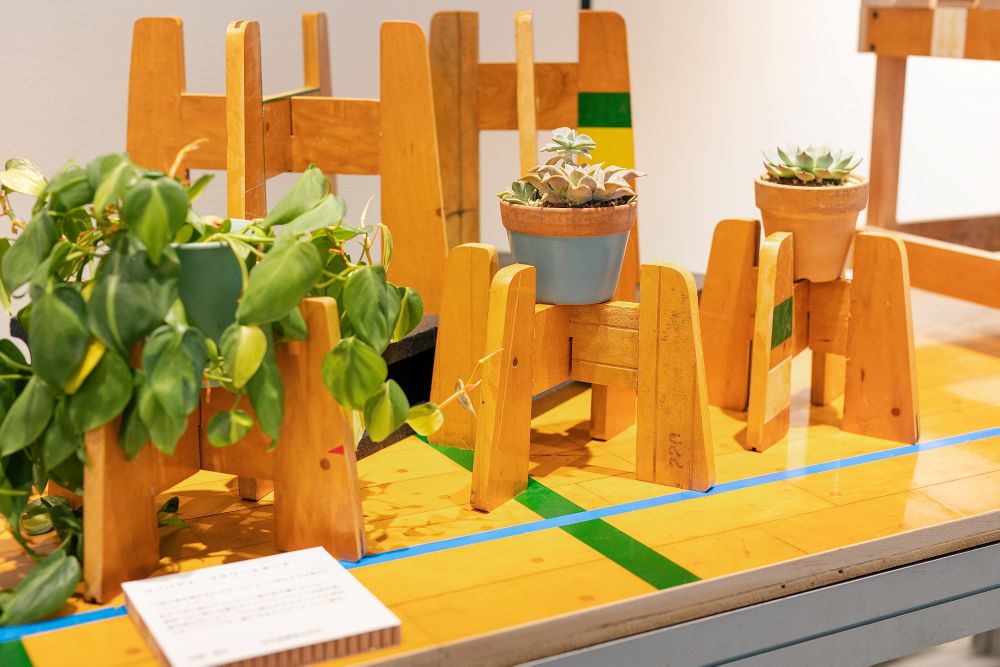
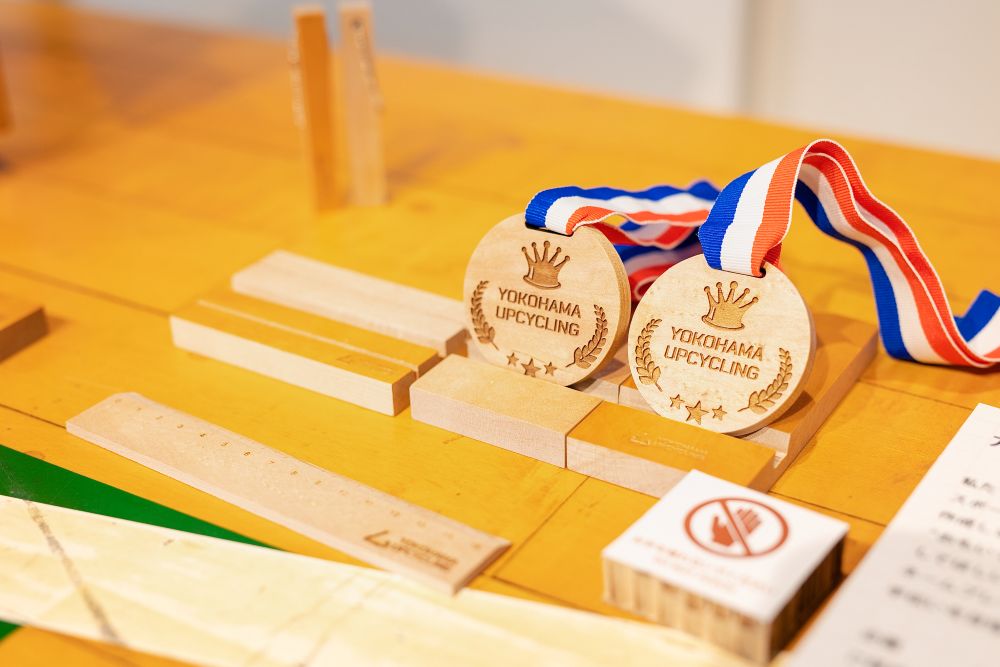
Saki Joko of the Architecture Bureau’s School Facilities Division explains the thinking behind the initiative:
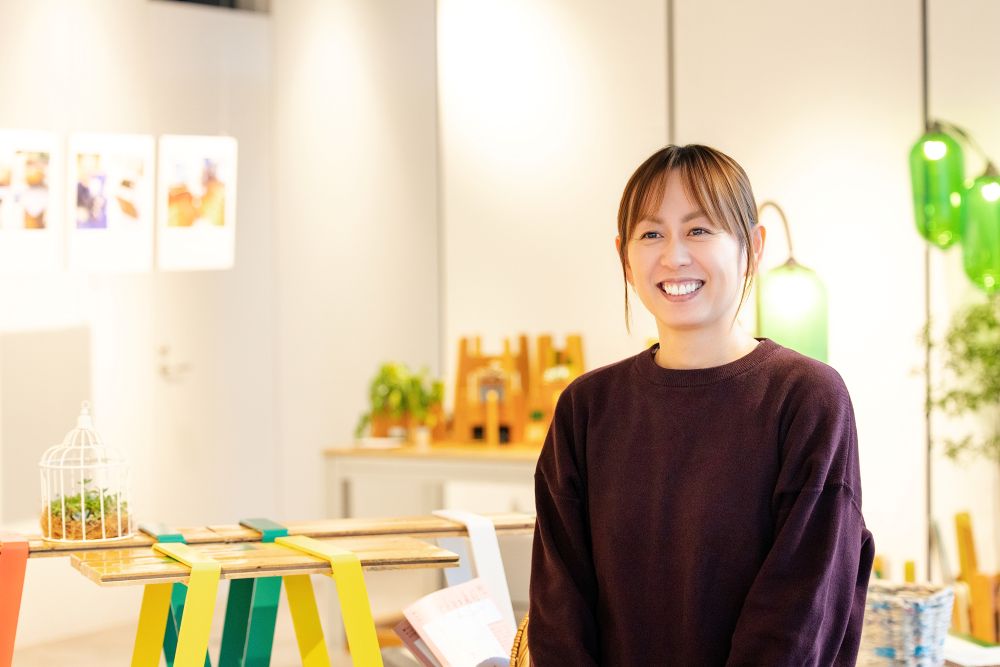
Joko: “School gymnasium floors are a ‘shared language’ that everyone knows. The memories of running around as a child, the sound of a bouncing ball — those recollections are embedded in this material. Every time someone tells us it feels ‘nostalgic’ or ‘calming,’ we are reminded of the power of the material itself. REYO is an attempt to make these invisible values visible and carry them into the future. What has supported this challenge is the ingenuity and skill of our private-sector partners. It is thanks to their efforts that we were able to receive an Encouragement Award at the JAPAN WOOD DESIGN AWARD 2025. Going forward, we want to go beyond gymnasium floors and take on other materials from public buildings, expanding the circle of circulation even further.”
An Urban Circular Economy Laboratory: The Public-Private Co-Creation Model in Minato Mirai
How can the philosophy of “circulation” be realised within the complex economic systems of a modern city? The Minato Mirai 21 District in Yokohama is a place where diverse stakeholders have been experimenting and iterating in pursuit of an answer to this question.
As of 2024, approximately 2,010 companies have offices or research and development bases in the MM21 District. The area also hosts MICE facilities such as an international exhibition centre, as well as a wide variety of commercial facilities, attracting 82.6 million visitors a year. In this district, where diverse business activities are concentrated, public-private collaboration is opening up the possibility of circular systems that reconcile environmental performance with economic viability.
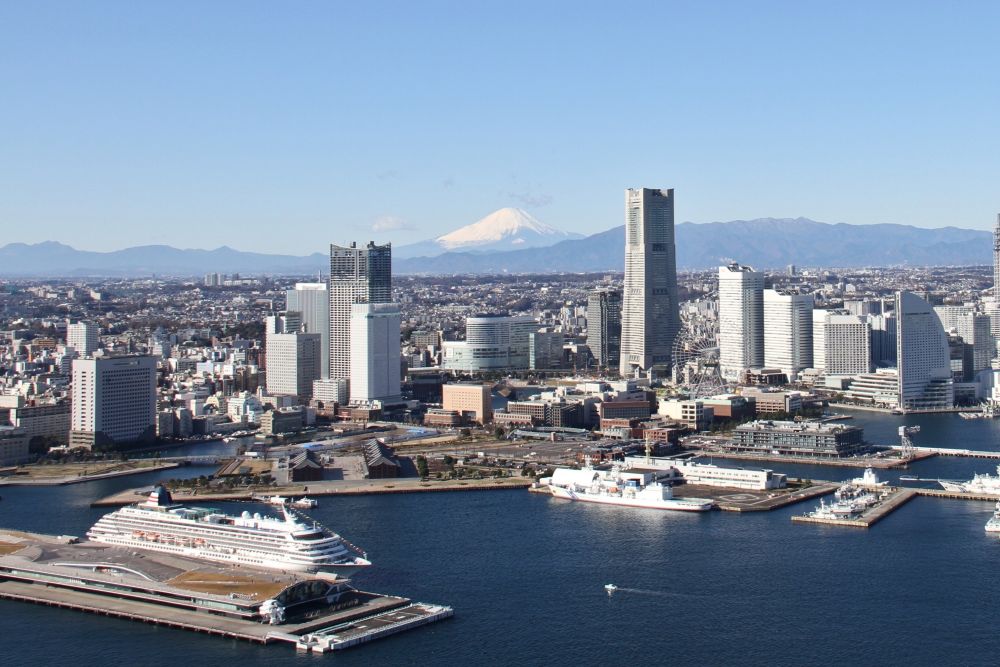
In April 2022, the MM21 District was designated by the Ministry of the Environment as a “Carbon-Neutral Leading Area” (脱炭素先行地域; a national designation for districts that pioneer decarbonisation ahead of the rest of Japan), and has since been advancing a range of decarbonisation initiatives. Several circular systems that balance environmental performance with economic viability through public-private collaboration are already operating in this area.
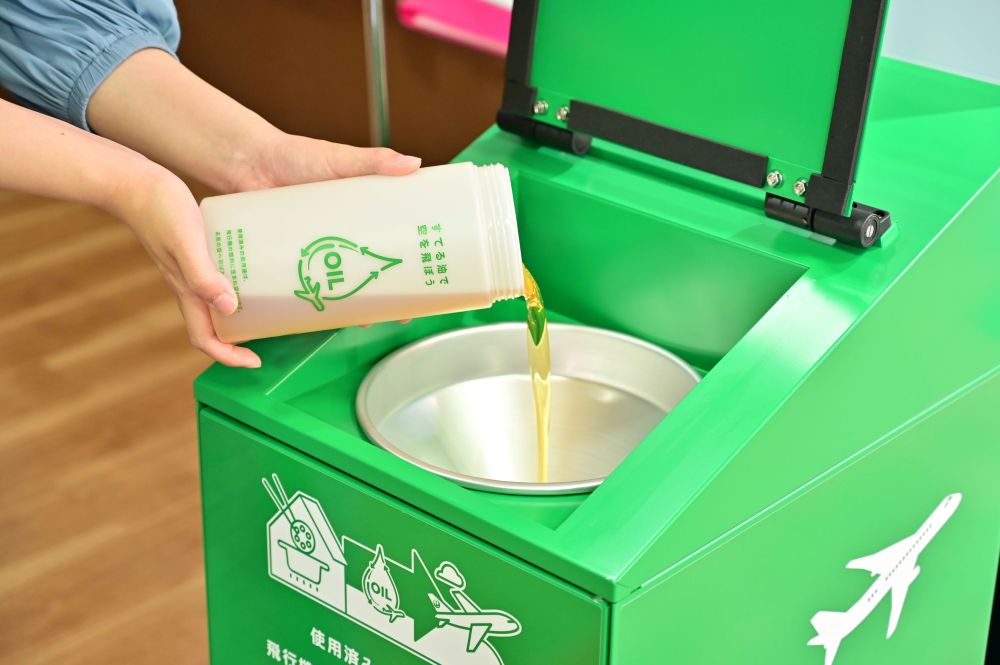
One example is the “FRY to FLY PROJECT,” which collects used cooking oil from households and converts it into Sustainable Aviation Fuel (SAF). Aviation fuel derived from used cooking oil is said to reduce lifecycle CO2 emissions by approximately 80% compared with conventional fuel. (Source: JGC Holdings Corporation “Fry to Fly Project” official website) In Japan, JGC Holdings Corporation, headquartered in Yokohama’s Minato Mirai, launched the project and has put in place a framework that allows any company, local government, or organisation that supports the initiative’s aims to participate.
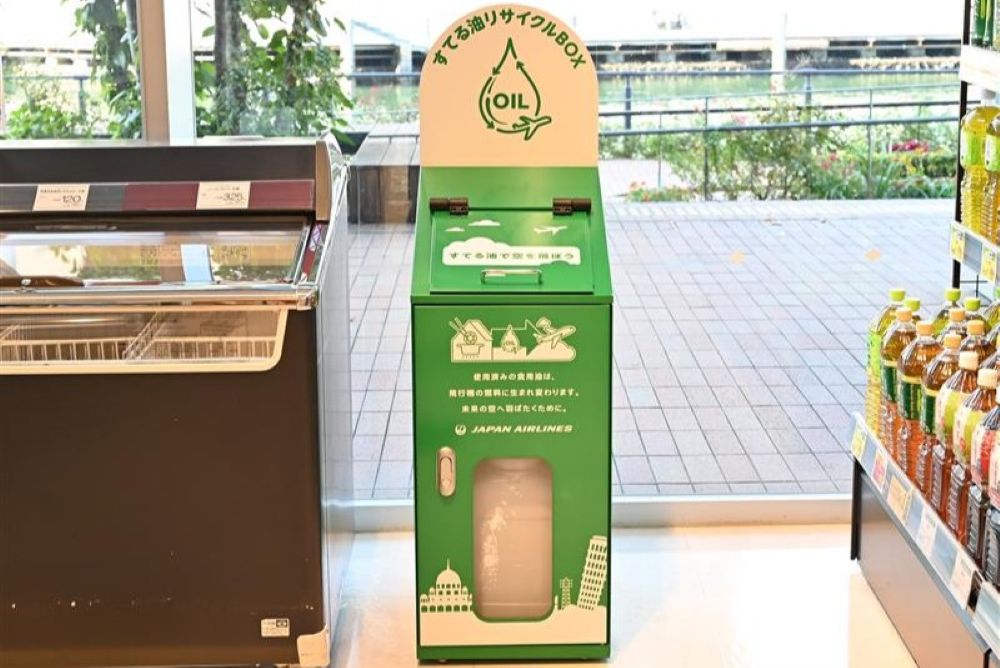
Yokohama City joined the initiative in April 2023. From June 2024, in partnership with Japan Airlines Co., Ltd., used cooking oil collection from individual households has been progressing through supermarkets across the city. As of the end of October 2025, there are 23 collection points, and a cumulative total of approximately 7,900 litres of used cooking oil has been gathered.
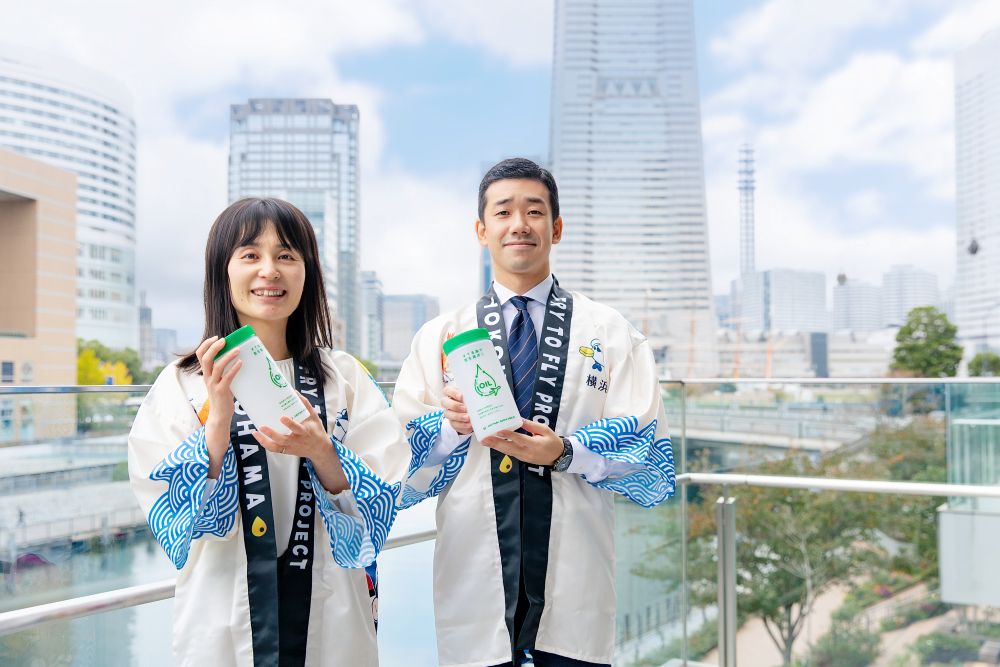
Yuka Sasaki and Kazuki Yamagata, who work daily to strengthen collaboration with city businesses and collection points, share the following:
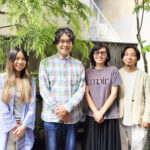
“To create an environment where residents can easily participate in used cooking oil collection, we need to increase the number of collection points. To that end, we visit the relevant departments of supermarkets across the city ourselves and invite them to join the initiative. We are also deepening ties with local sports teams, schools, and communities to raise awareness and increase collection volumes. At newly participating stores, we run promotional activities together with Japan Airlines Co., Ltd. staff, giving away dedicated collection bottles. Through conversations with shoppers, we can see that awareness of SAF is growing, and we feel that this is becoming an accessible entry point for residents to engage with resource circulation in their daily lives.”
Data as a “Common Language” for Advancing Urban Circulation
In recent years, as an initiative to further enhance circulation across the entire district, Japan’s first “district-level material flow visualisation” has been getting under way. To map in data how much of which resources flow into, are consumed within, and flow out of the MM21 District, the city is working with commercial facilities and office buildings in the district to collect and analyse waste data.
As this visualisation and the accuracy of the data improve, it will become possible to look across the district as a whole and improve resource management that has until now been optimised on a facility-by-facility basis. And as discussions grounded in shared data progress, it should also become easier to work on improving circular systems at the urban level.
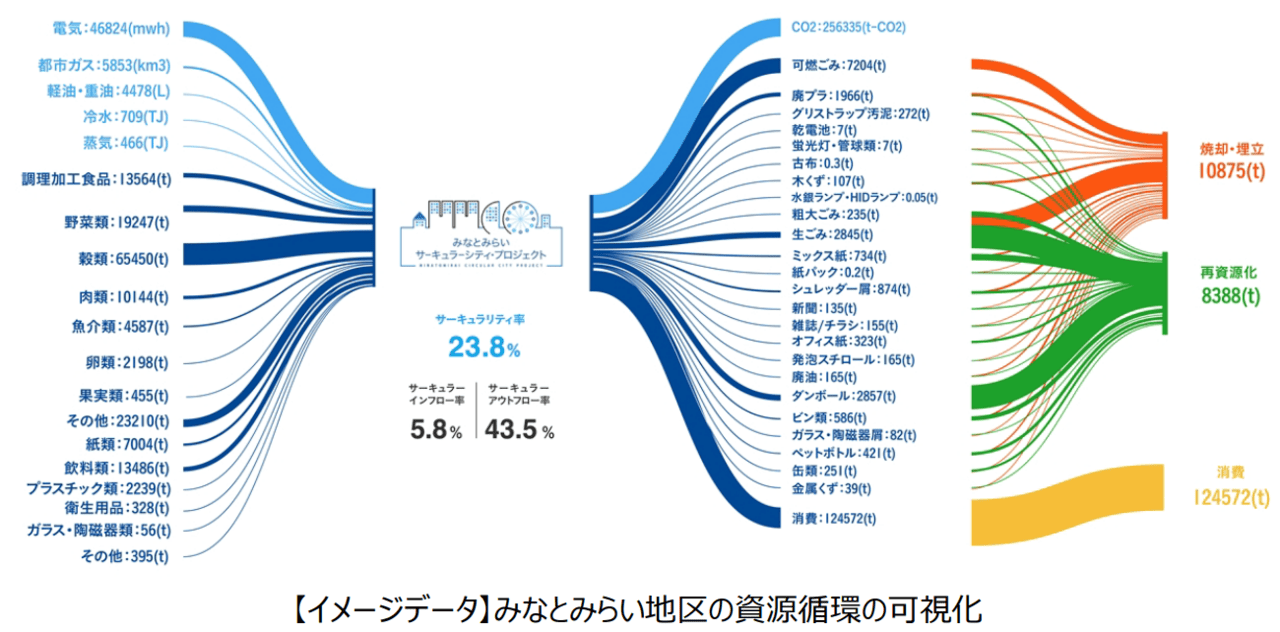
In 2024, collaboration with 13 facilities was achieved, and efforts to strengthen partnerships with businesses in the district continue with a view to further improving data accuracy.
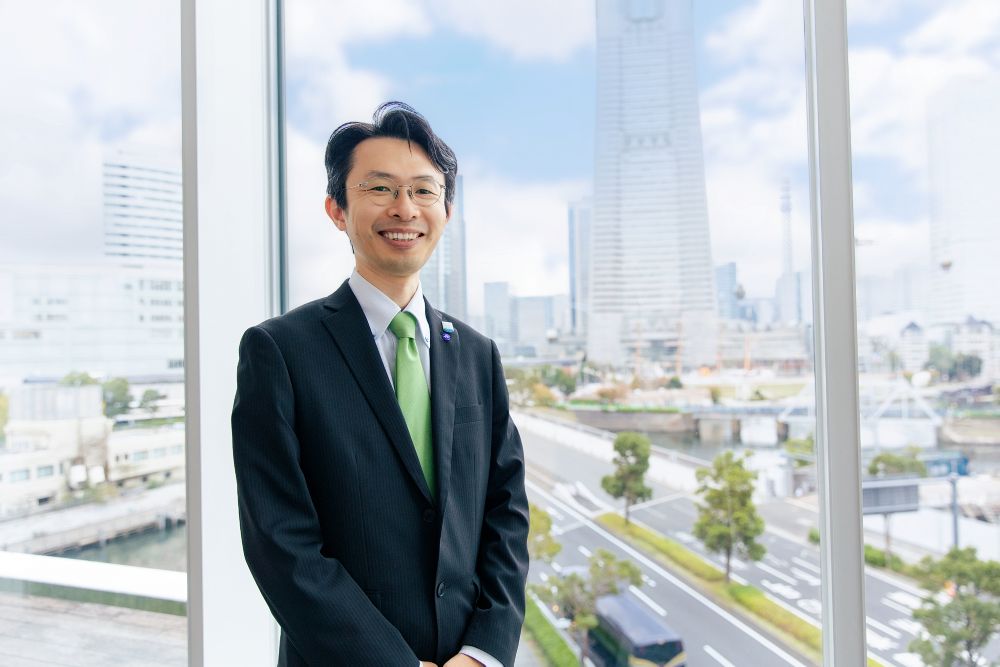
We asked Yuta Murao of the Decarbonisation and GREEN×EXPO Promotion Bureau about the background to the circular economy initiatives in the MM21 District.
Murao: “The MM21 District — Yokohama’s iconic waterfront — is home to hotels and commercial facilities that represent the face of Yokohama, as well as the headquarters and research and development facilities of global companies with a high level of environmental awareness. Working together with Yokohama City and area management organisations, we have been advancing resource circulation in an urban setting.
Until now, cities have been ‘places of consumption.’ But in the circular society of the future, cities will be required to transform into ‘places of production’ — new starting points for resource loops.
Sustainable procurement, sorting that leads to material recovery, efficient resource collection, and consideration of reuse and upcycling to return materials to the loop — developing a material flow diagram is the first step toward improving resource circulation rates. By using data as a ‘common language,’ government bodies and area management organisations can facilitate dialogue among the various players involved in urban activity — businesses, residents, and others — and together consider what the city of the ‘future’ (mirai) should look like.”
The bureau is also putting effort into the “Style100” initiative, which supports the practice of decarbonisation and circular economy principles. This programme collects and showcases “100 styles of decarbonisation” — actions that companies and organisations in the city take in the course of their daily operations — and is expected to develop into a platform through which diverse stakeholders share circular behaviours with one another.
Across the city, these small acts of practice are accumulating, and new seeds of circulation are taking root in communities throughout Yokohama.
From Yokohama to Asia: The Next Course Charted by an Open Port
The knowledge and ideas accumulated through dialogue with residents and co-creation with businesses are not confined to Yokohama alone. Yokohama City, with its history of welcoming cultures from around the world and developing alongside them since the port opened, is leveraging that experience to contribute to the global transition to a circular economy, while also deepening its own learning from the practices of cities around the world.
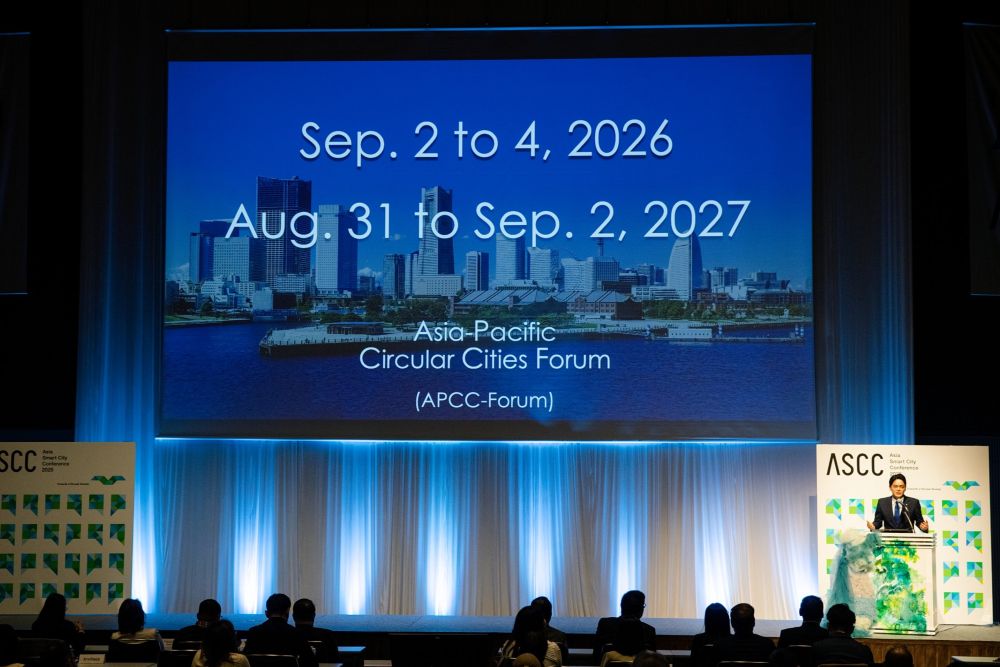
One of the key platforms through which Yokohama connects with overseas cities is the “Asia Smart City Conference (ASCC),” which Yokohama City has hosted since 2012. Established with the aim of realising sustainable cities that reconcile economic development with a high-quality urban environment, the conference has brought together leaders and practitioners from Asian cities, along with representatives of international organisations, government bodies, academic institutions, and private companies, to discuss and share good practices and common challenges in addressing global issues such as climate change.
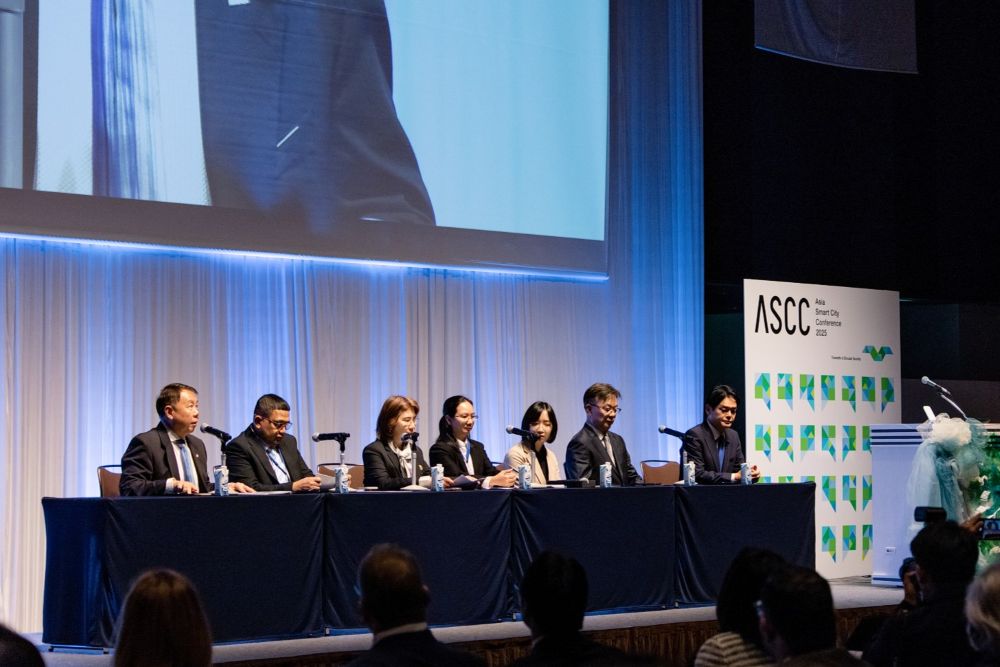
On the topic of circular city-building and inter-city collaboration, Europe already has a framework — the “European Circular Cities Declaration” — under which many cities have set circular economy targets and are working toward the transition to a circular city at a regional level through a shared network. In Asia, meanwhile, interest in the circular economy is growing rapidly, but until now there has been no region-wide framework comparable to Europe’s.
Yokohama City therefore took a new step forward together with Asian cities. At ASCC 2025, held in November 2025, it publicly called on international organisations and diverse stakeholders to establish an Asian equivalent of the “Circular Cities Declaration.”
As a result, ICLEI (※) Japan announced the establishment of an Asian Circular Cities Declaration framework, and Yokohama City became the first city to sign.
※ A global network of more than 2,500 local and regional governments committed to sustainable urban development, which speaks on their behalf to the United Nations. ICLEI Europe plays a central role in the European Circular Cities Declaration.
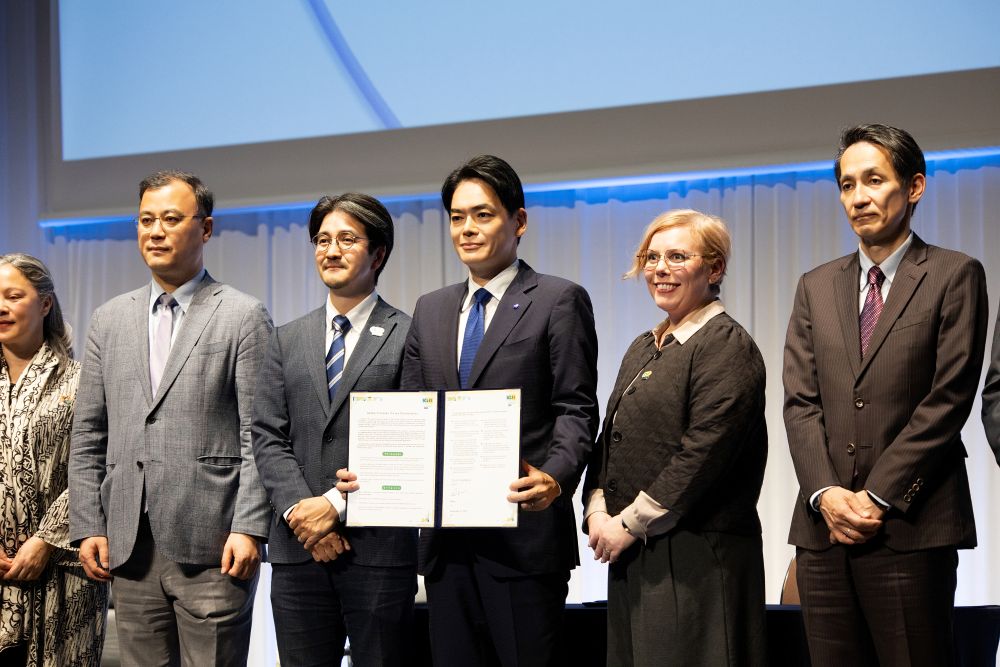
What this declaration aims for is more than a mere statement. Many cities across Asia share the common experience of rising resource consumption amid dynamic economic growth — a path that Yokohama itself has walked. The declaration aims to generate a virtuous cycle of “peer learning,” in which cities respect one another’s unique cultures and stages of development while learning from each other’s policies, success stories, and even the challenges they face.
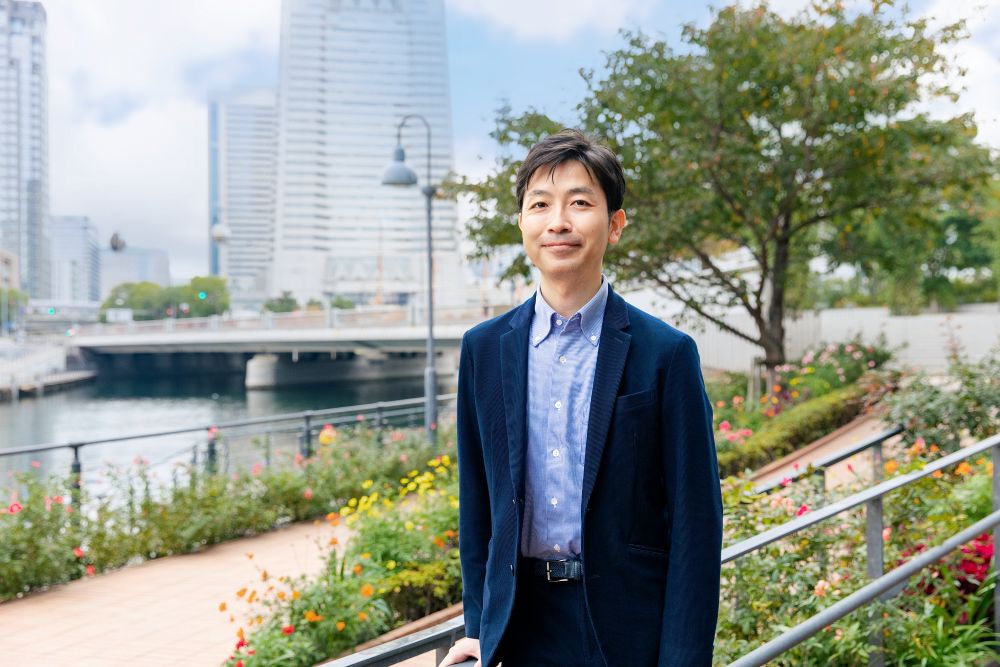
Toshikazu Yazawa of the International Bureau’s Global Network Promotion Division, who is involved in this initiative, explains the intent:
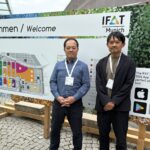
Yazawa: “Our attempt at this ASCC was a major challenge. We sought to create a new framework to support the transition to circular cities across the entire Asian region. Toward a sustainable society in which the environment and the economy coexist, cities — which are close to residents’ lives and business activities — must have a unique role to play. We therefore concluded that it was necessary for cities sharing the same vision to form a network and expand the circle of action. And for the cities that gather under this framework to convey the distinctive perspectives and ‘local voices’ of Asian cities to the world would also contribute constructively to international discussions. We believe that this kind of international collaboration holds great potential — ultimately boosting civic pride and having a positive impact on corporate behaviour and local economies.”
From 2026, the ASCC will be renamed the “Asia-Pacific Circular Cities Forum (APCC-Forum).” By making it a platform for sharing knowledge on circular cities, signatory cities will gather at the APCC-Forum to share their efforts toward the transition to circular cities and mutually strengthen their policy capabilities.
For the cities that gather under this framework to convey the distinctive perspectives and “local voices” of Asian cities to the world will also contribute constructively to international discussions. And this kind of international collaboration holds great potential — ultimately boosting residents’ civic pride and having a positive impact on corporate behaviour and local economies.
Toward GREEN×EXPO 2027: Start Your Partnership with Yokohama Here
The “trust” cultivated through sustained dialogue with residents has transformed the city’s memories into value and generated mechanisms that move the economy. And now, the steps built on that trust are reaching across the sea toward collaboration with cities across Asia.
A major milestone in this journey is GREEN×EXPO 2027 (the 2027 International Horticultural Exposition), to be held in the Kamiseya District in 2027.
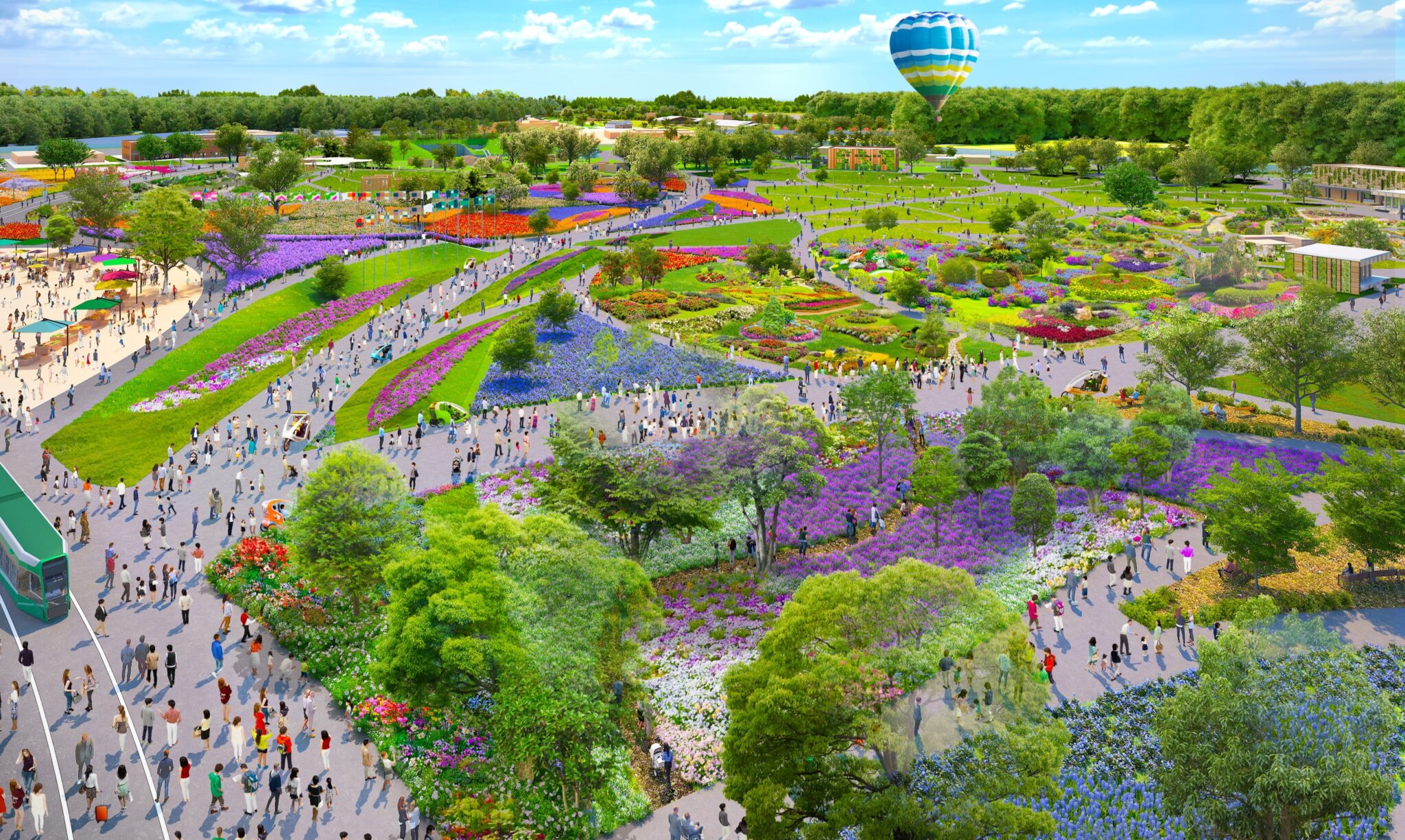
A circular society cannot be achieved by a single city alone. Yokohama, which has developed through its relationships with partners around the world since the port opened, aims to walk this path together with cities across Asia and beyond.
We hope that the APCC-Forum, to be held annually from now on, and GREEN×EXPO 2027 will become invaluable opportunities to share practices and discuss a sustainable future together.
Photography (in part): Chikako Togo
【Related article】Reducing Food Loss Through Ease and Connection: Why Yokohama City’s SDGs Lockers Are Attracting Attention
【Related article】Asian Circular Cities Declaration Officially Launched: Yokohama City Becomes the First Signatory
【Related article】Yokohama City Launches Japan’s First District-Level Resource Circulation Visualisation in Minato Mirai
【Related article】A Place to Connect Ideas and Resources: How GREEN×EXPO 2027 Plans to Let Visitors Experience a Circular Society
【Reference article】Launching Japan’s First “District-Level Resource Circulation Visualisation” to Accelerate the Transition to a Circular Society | Yokohama City Decarbonisation and GREEN×EXPO Promotion Bureau
【Reference article】Launching Closed-Loop (Bottle-to-Bottle) PET Bottle Recycling in the Minato Mirai 21 District | Yokohama City Decarbonisation and GREEN×EXPO Promotion Bureau
【Reference article】Initiatives for Converting Used Cooking Oil into SAF (Sustainable Aviation Fuel) | Yokohama City Decarbonisation and GREEN×EXPO Promotion Bureau
【Reference article】Fiscal Year 2023 Yokohama City Tourism Trends and Consumer Spending Survey Report | Yokohama City Vitality, Sports and Culture Bureau
【Reference article】On the Promotion of “City-Building That Makes the Most of History” | Yokohama City
【Reference site】Minato Mirai Area Management
【Reference article】Holding the “Takenaka Corporation Circular Branch” Exhibition Introducing Initiatives Toward Realising the Circular Economy